WILLEM VERMOERE (BE): Photography
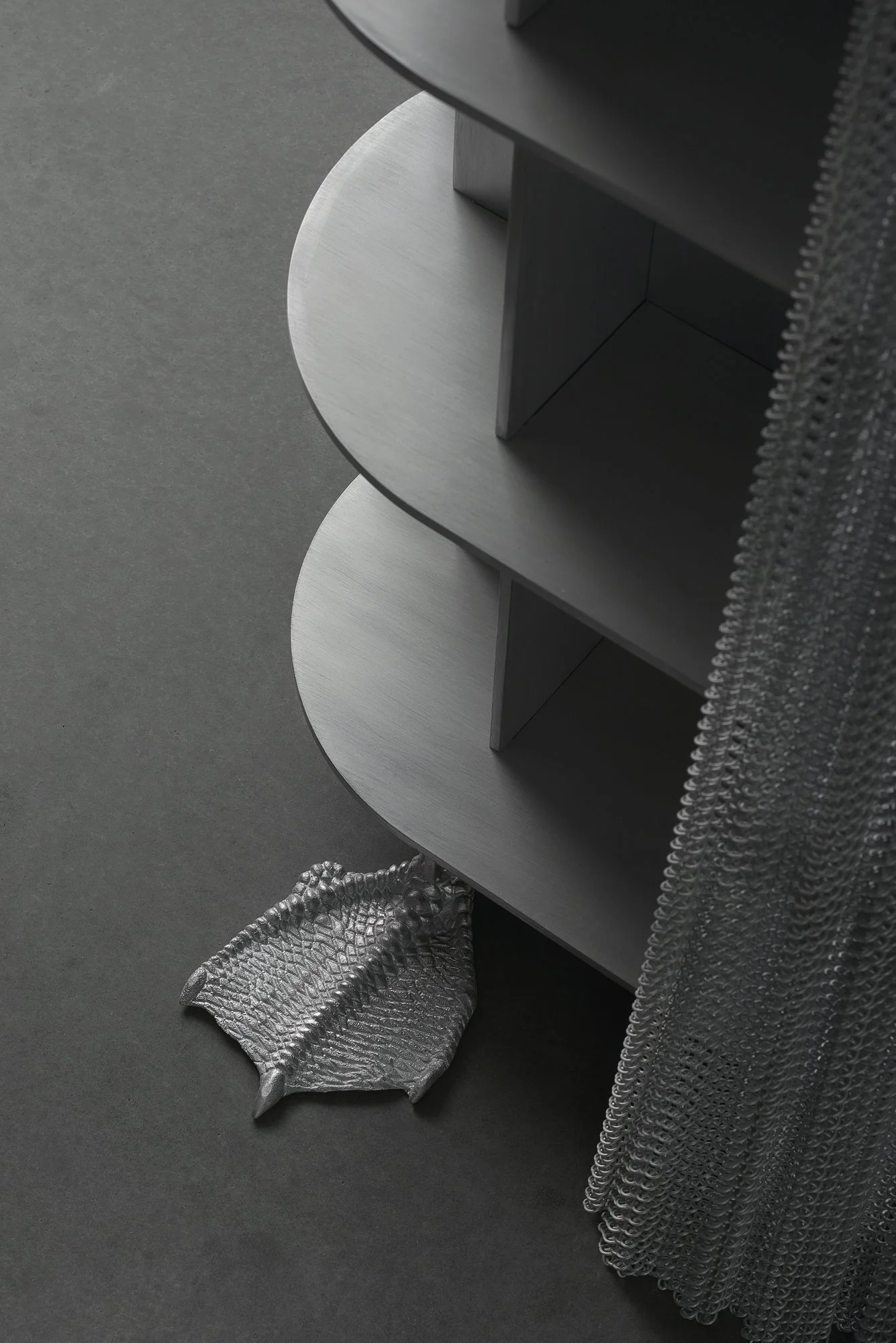
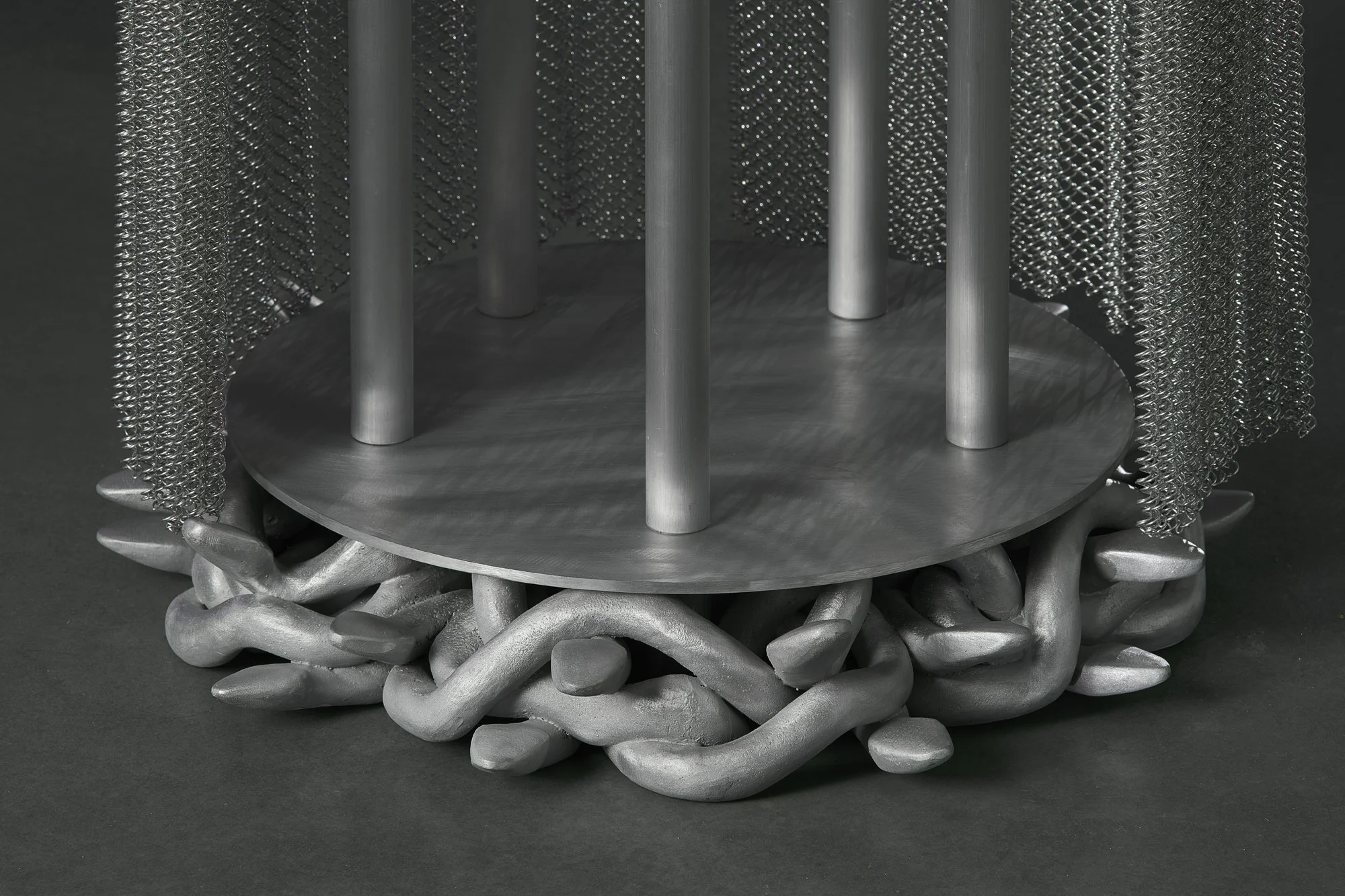
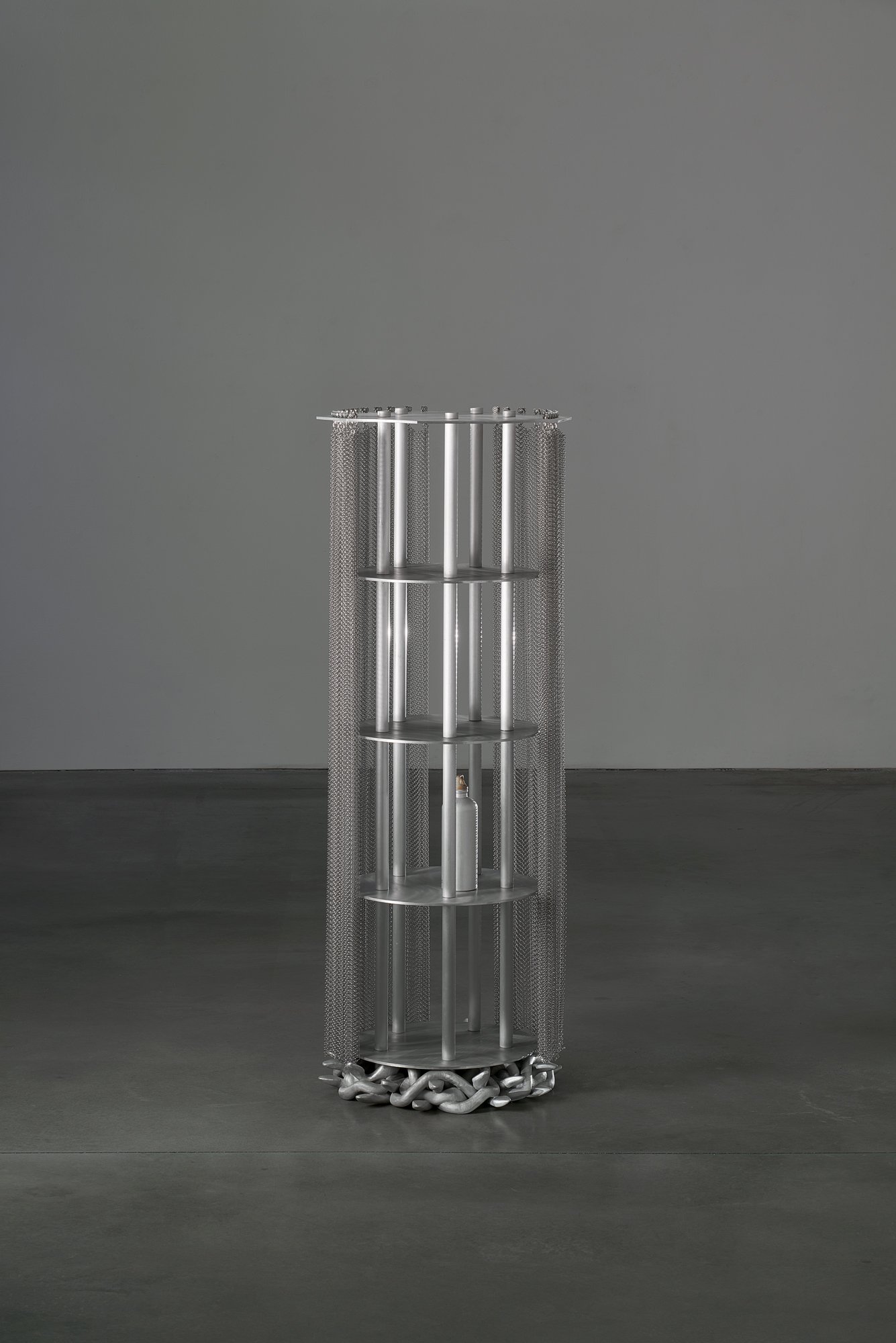
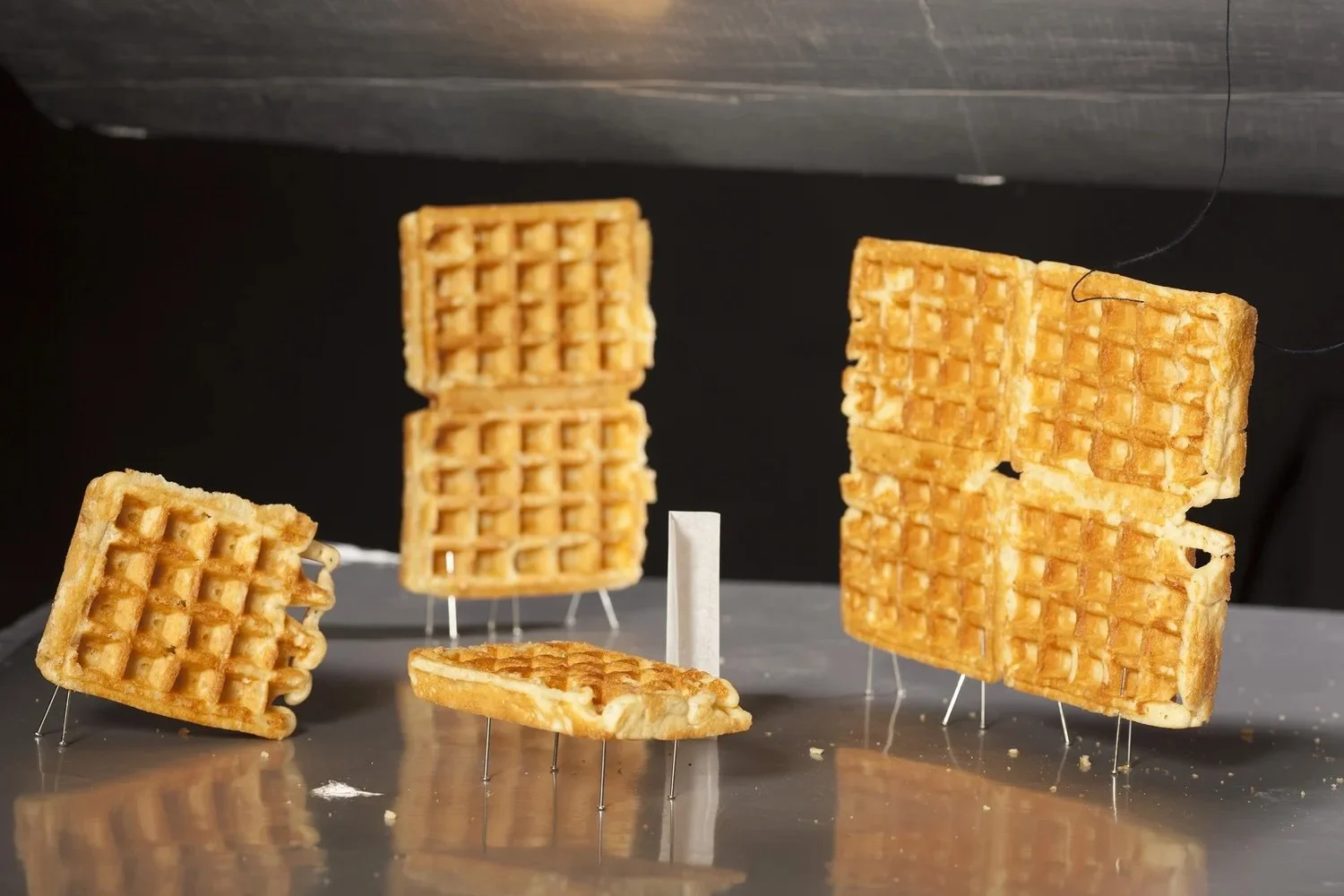
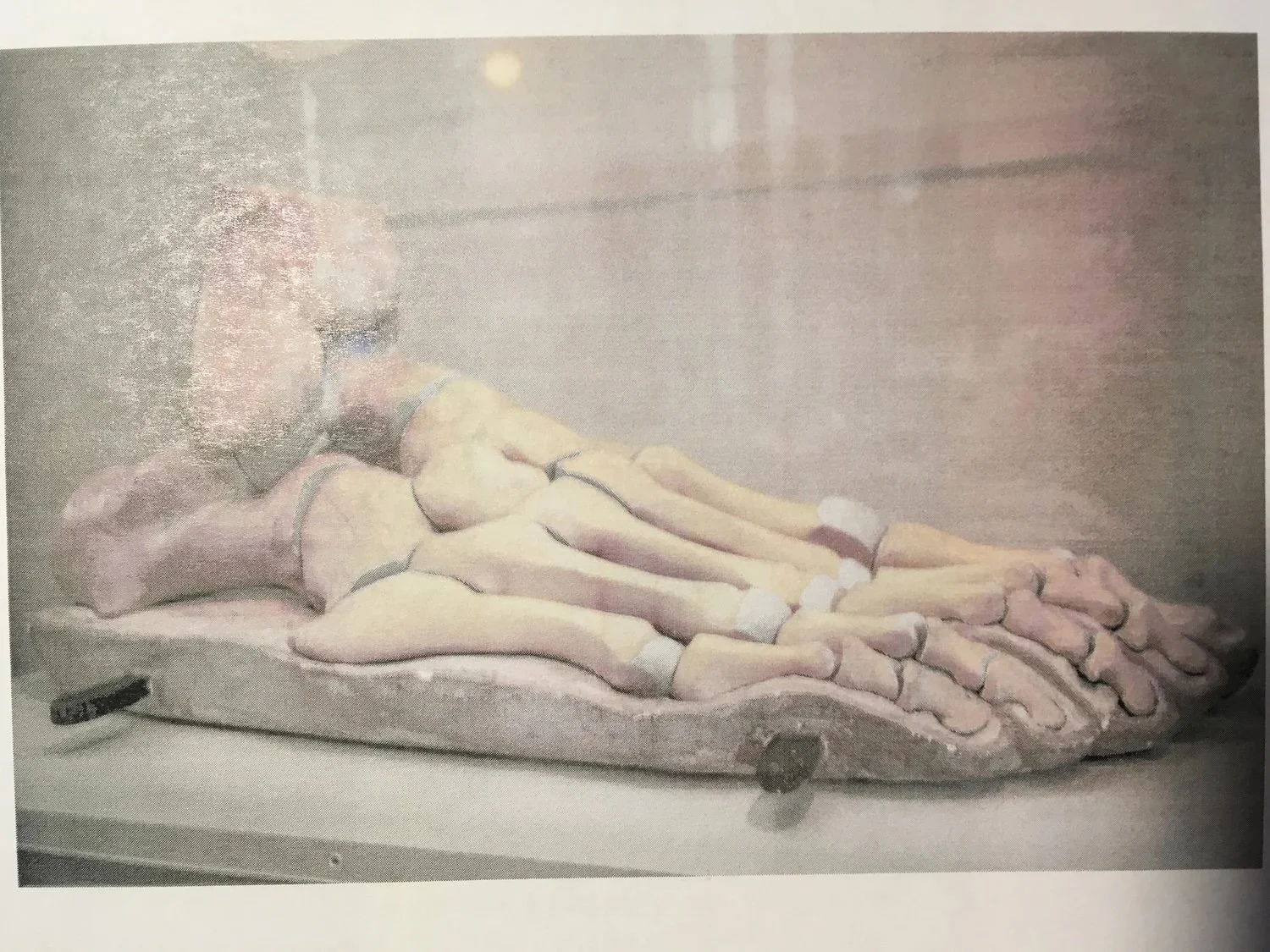
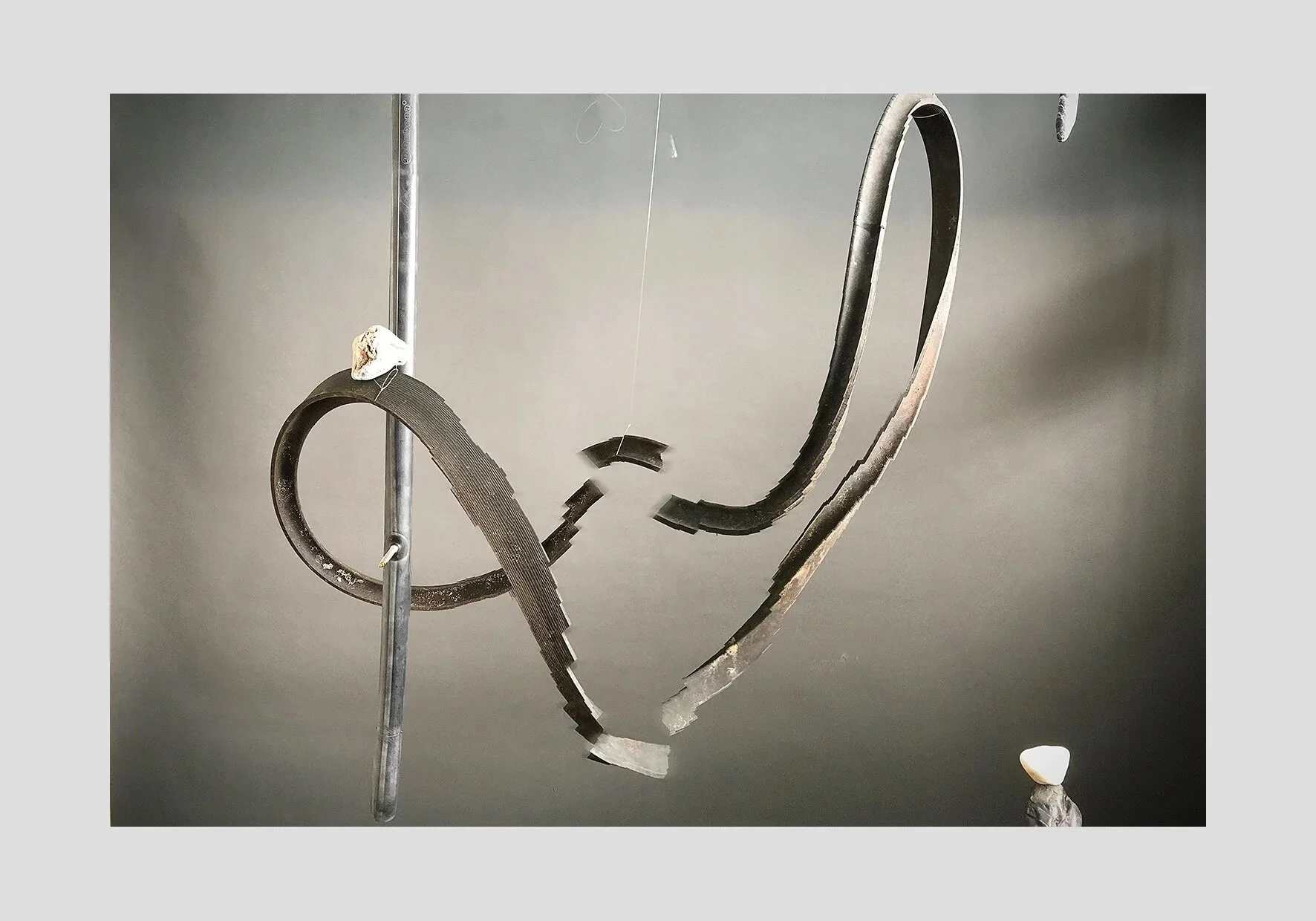
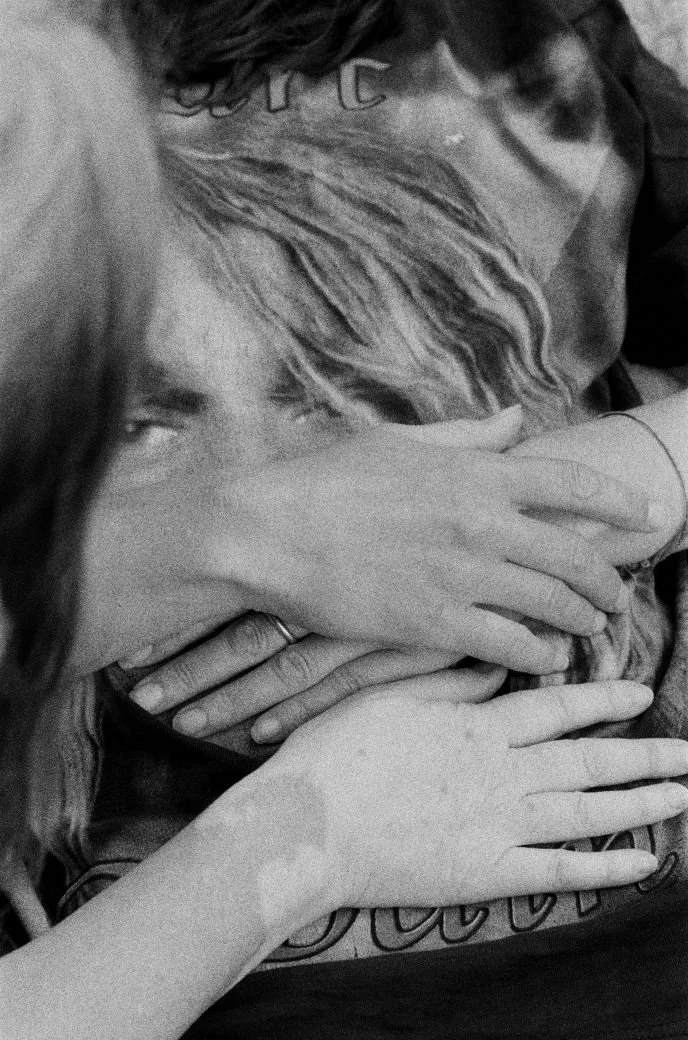
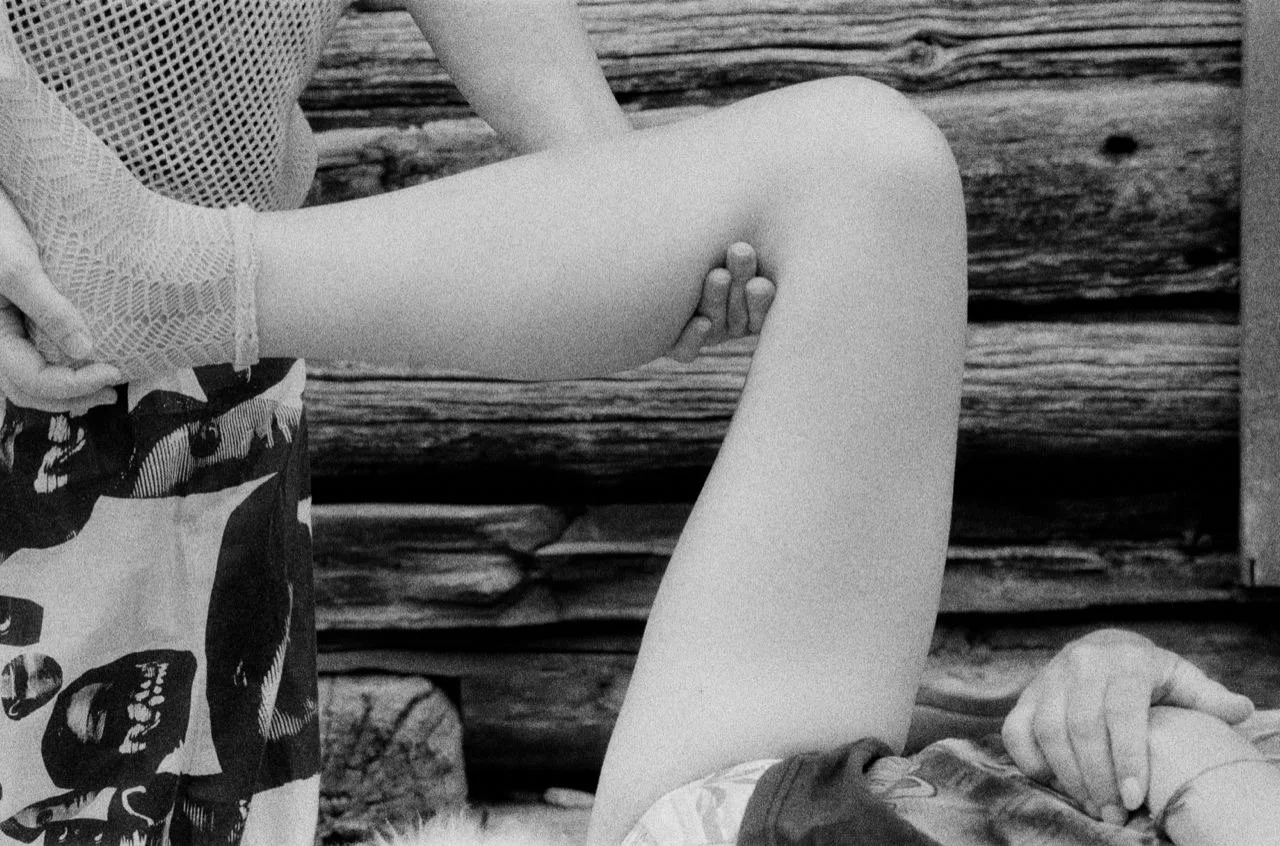
Willem Vermoere (b. 1960 B) studied cinearts and photography at KASK, the royal Academy of Fine Arts in Gent, Belgium in the eighties. After a brief career in video production and in commercial photography he started teaching at KASK. Teaching photography and ‘fine arts’ students alike, the art practice position he stood for was about the place of photography within the fine arts. Meanwhile Willem Vermoere developed an art practice concentrated on constructed photography, figures of speech and theatrical performance in or outside the studio environment. Recent exhibitions (2018-25) include: The Golden Ass (g), Cargo Cult (g), De Maat der Dingen (s), Leçons de choses (s), Constellaties (duo), Chalk & Cheese (s) and HOLA! (g) Mr. Man, CHIVALRY IS DEAD January 2026 (with Lotte Toke Lelo Maes)
FREDERIK SCHNIEDERS (BE): Painting
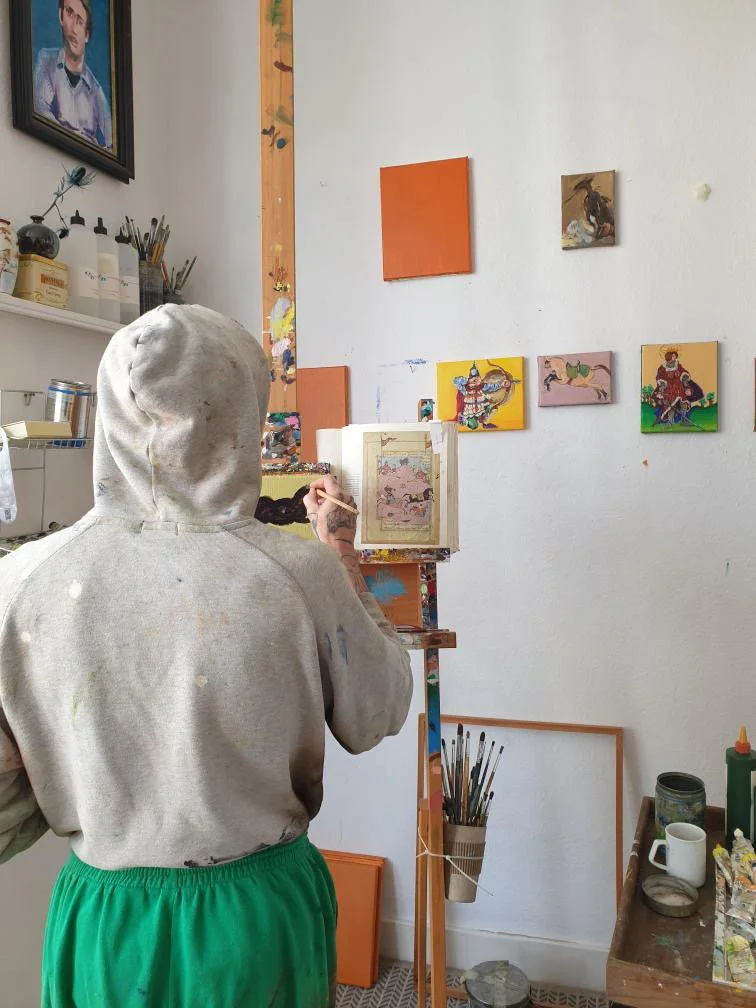
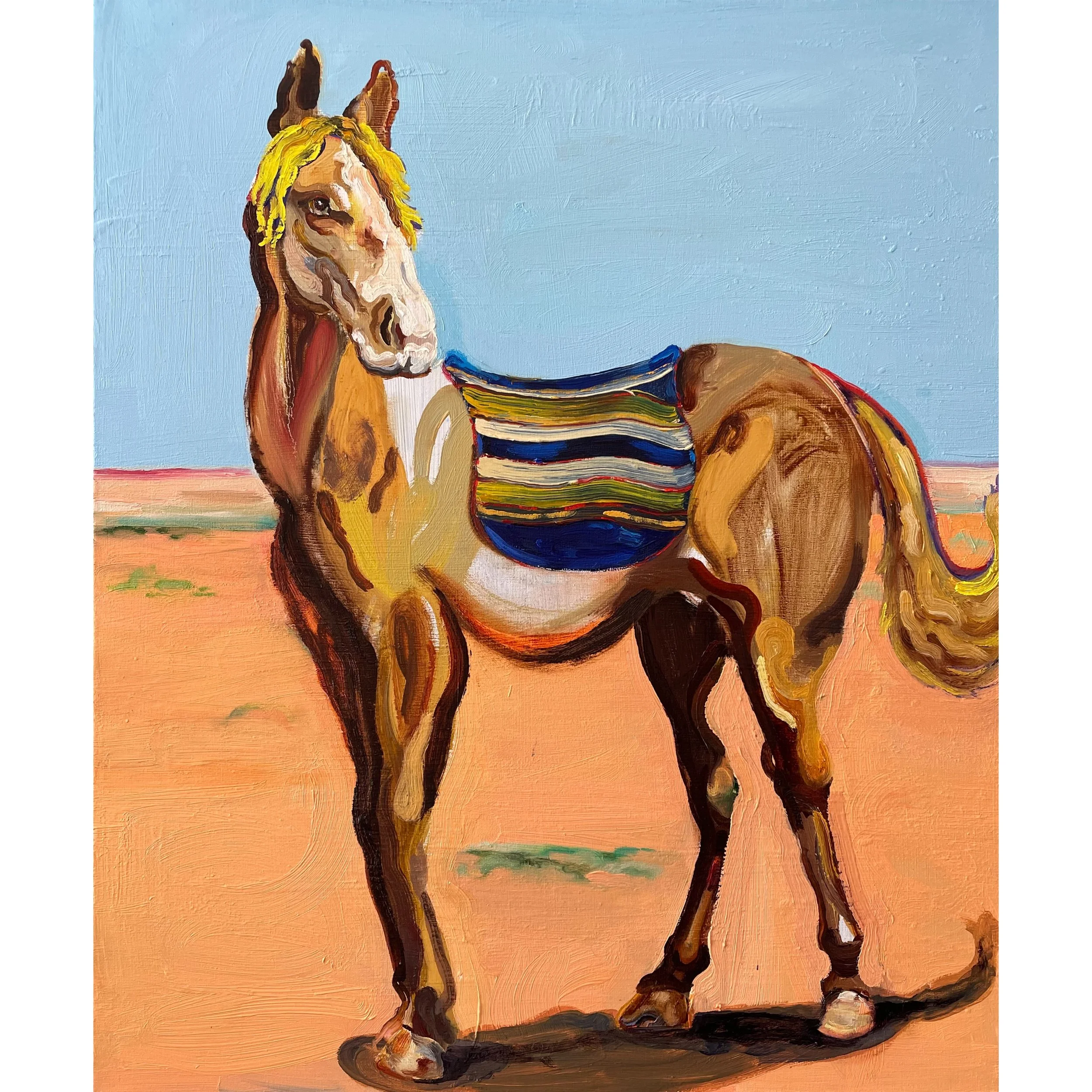
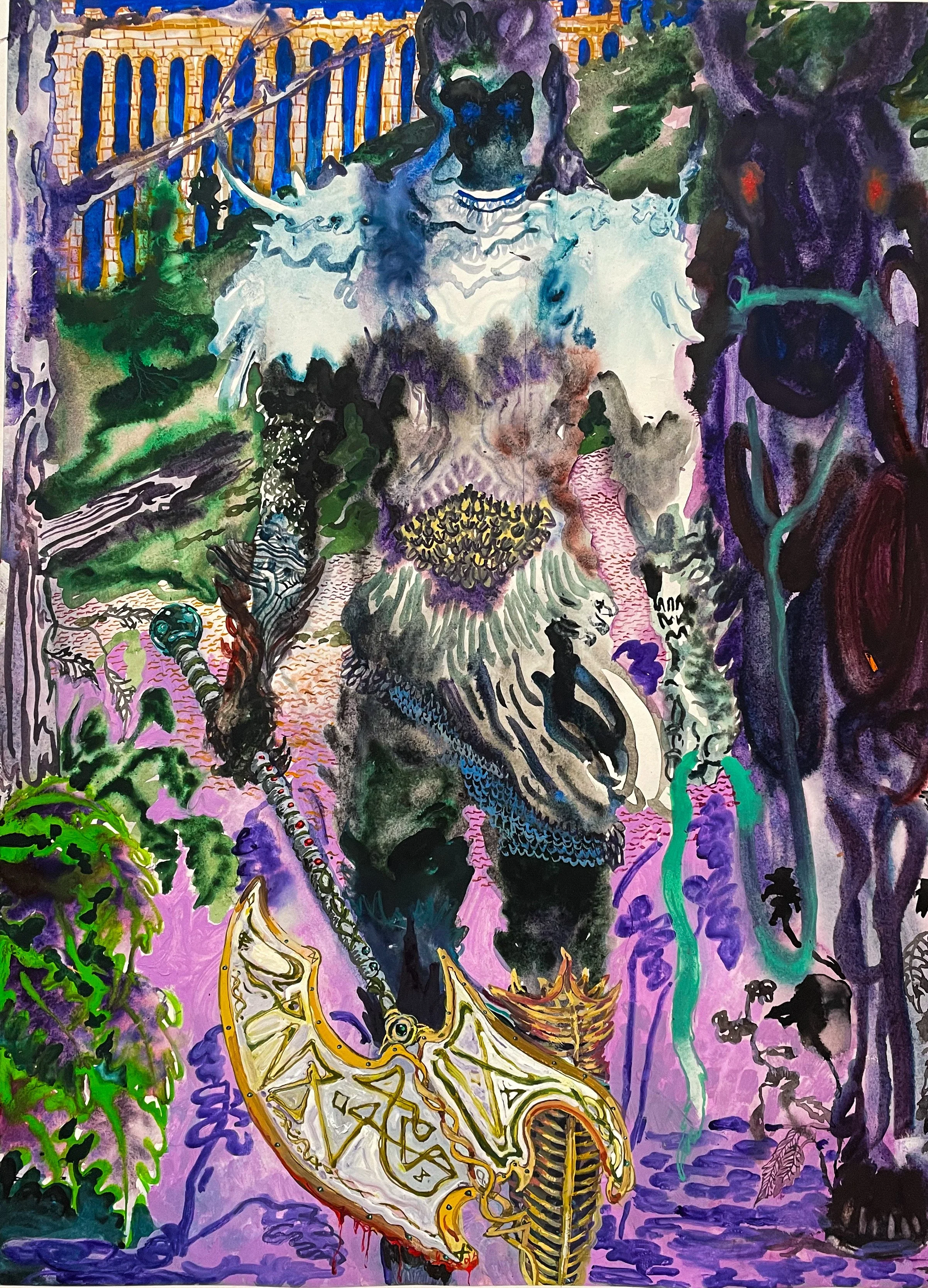
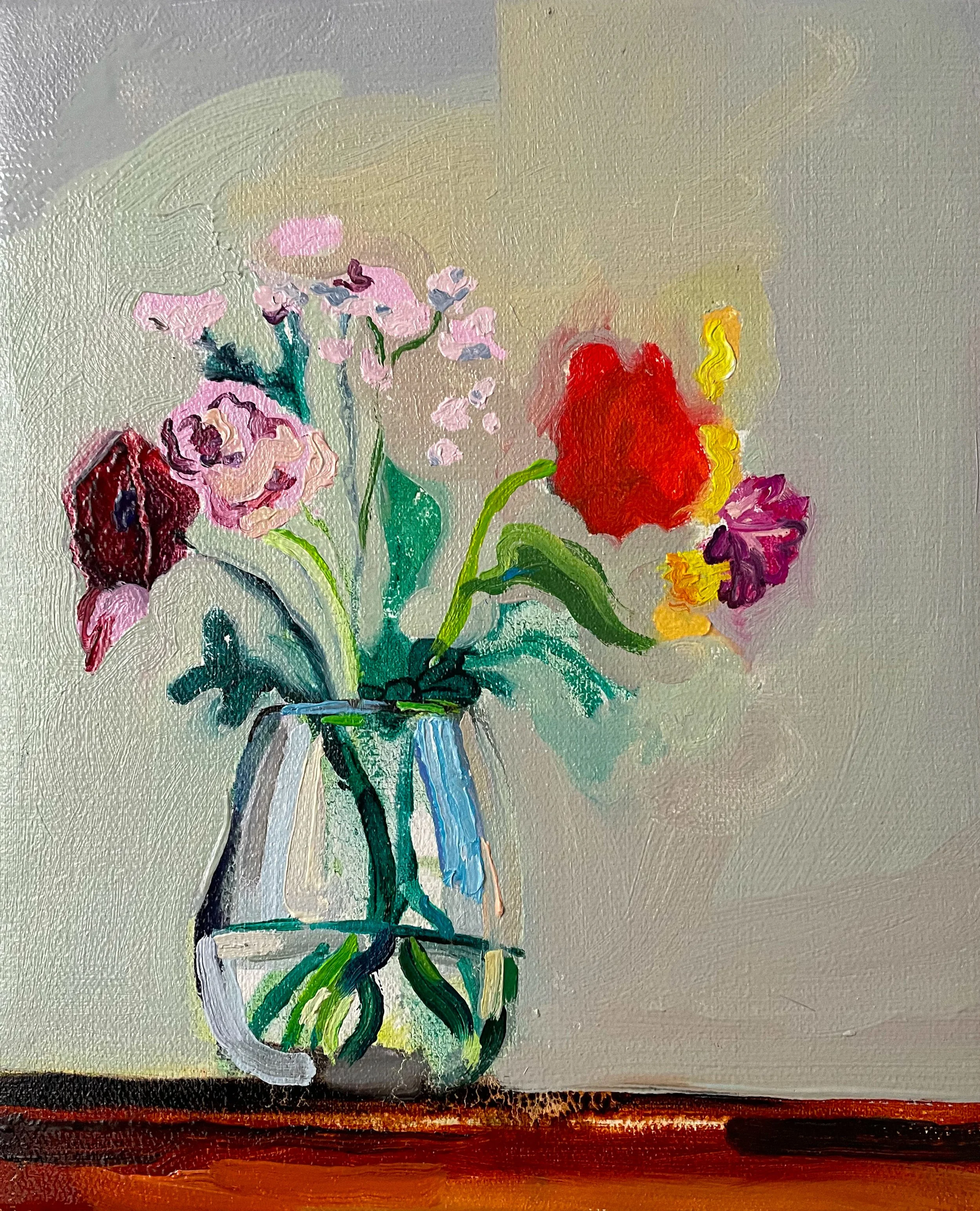
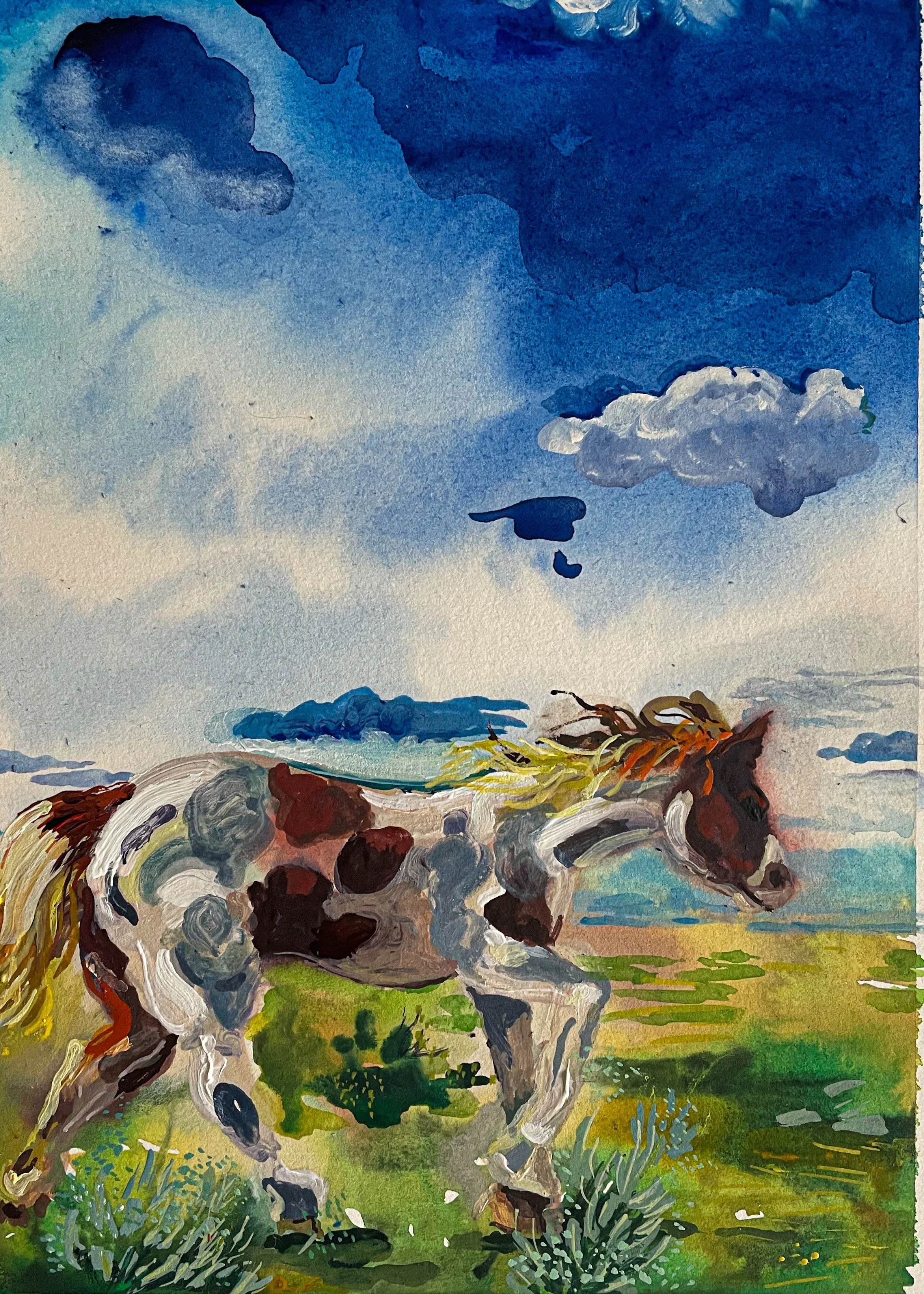
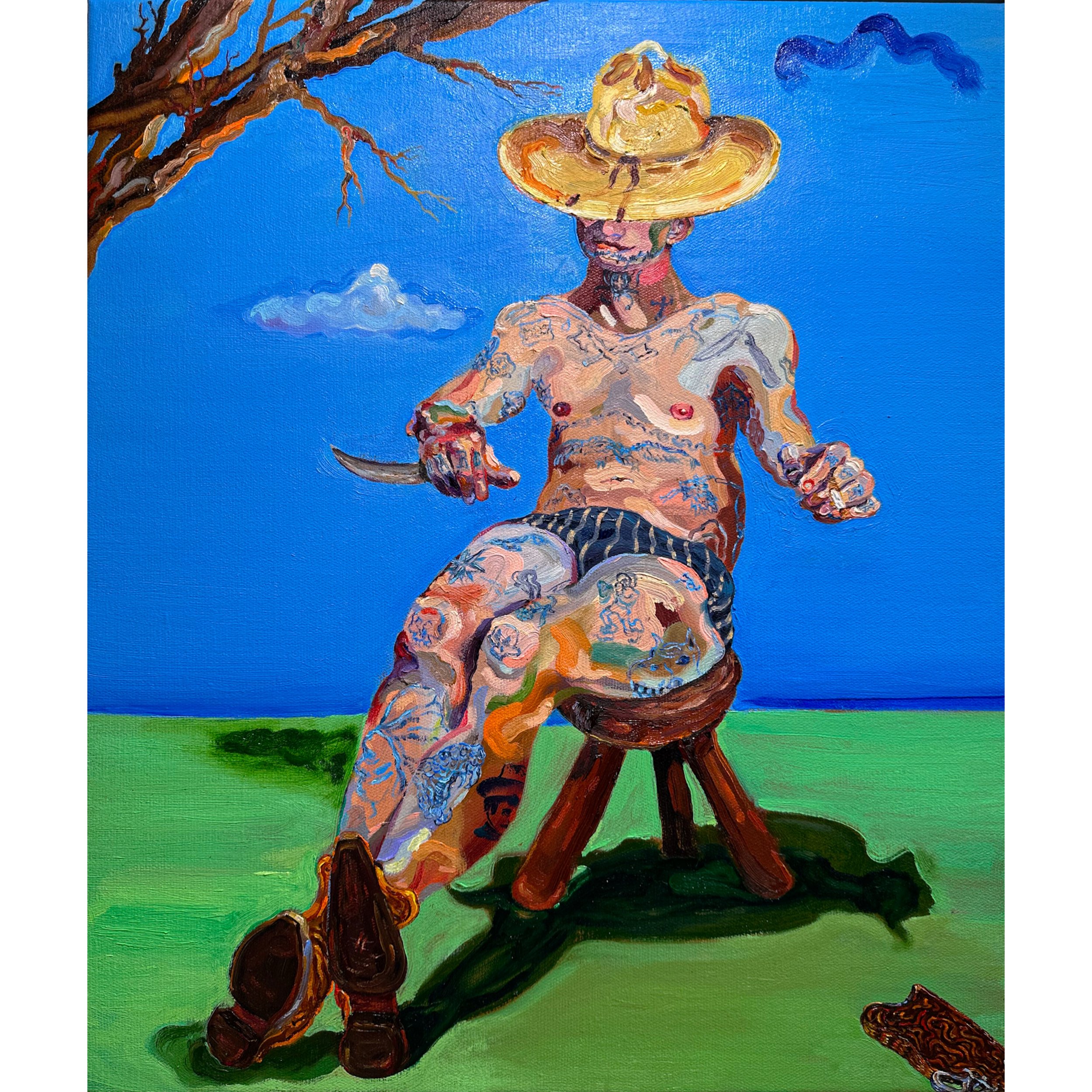
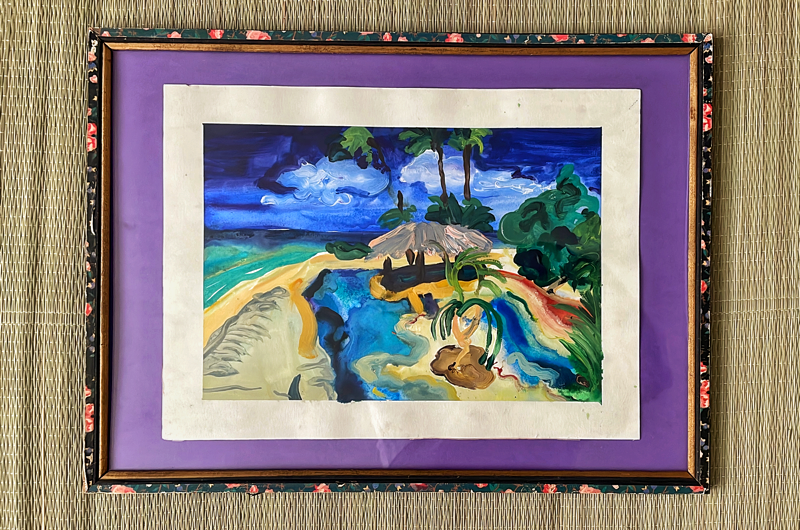
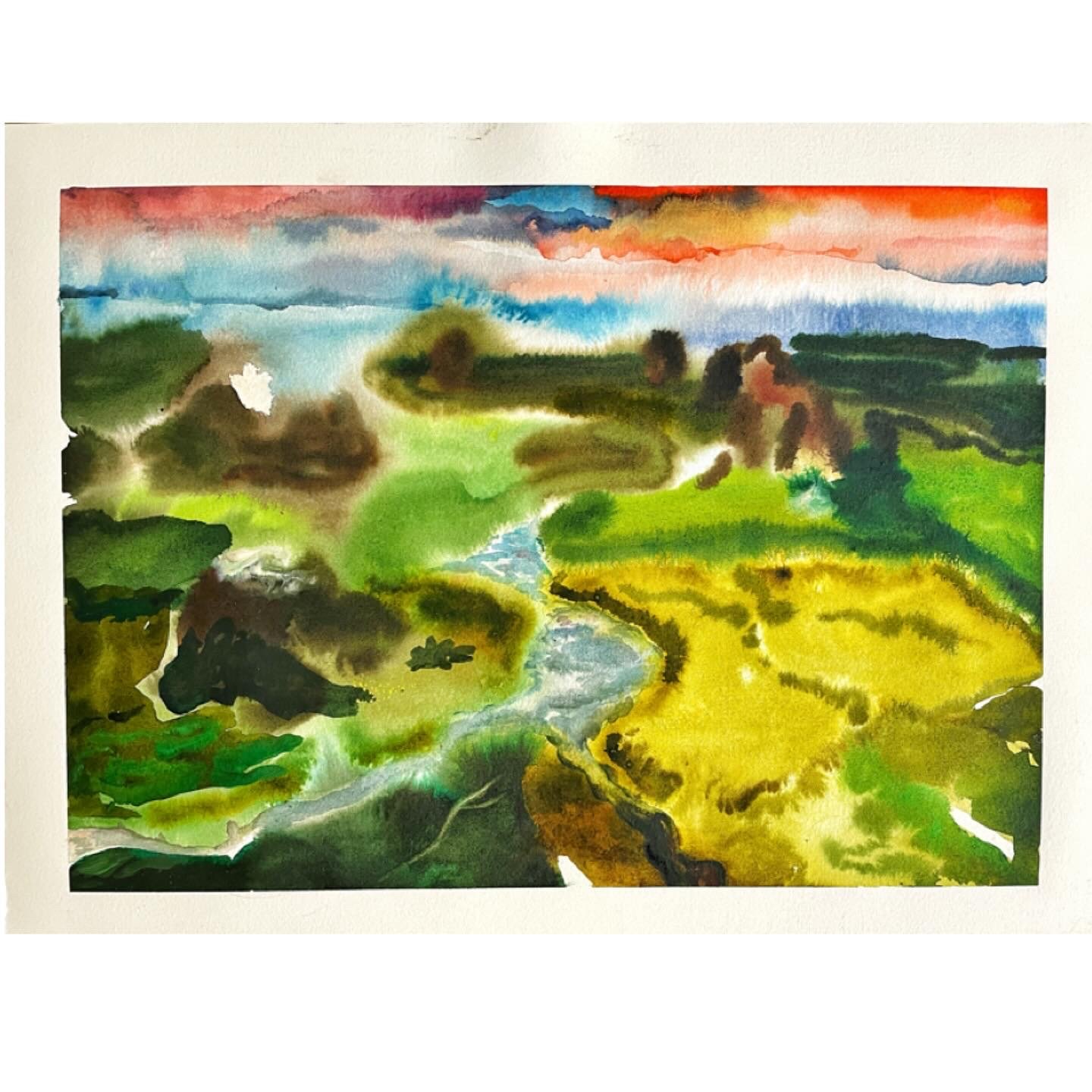
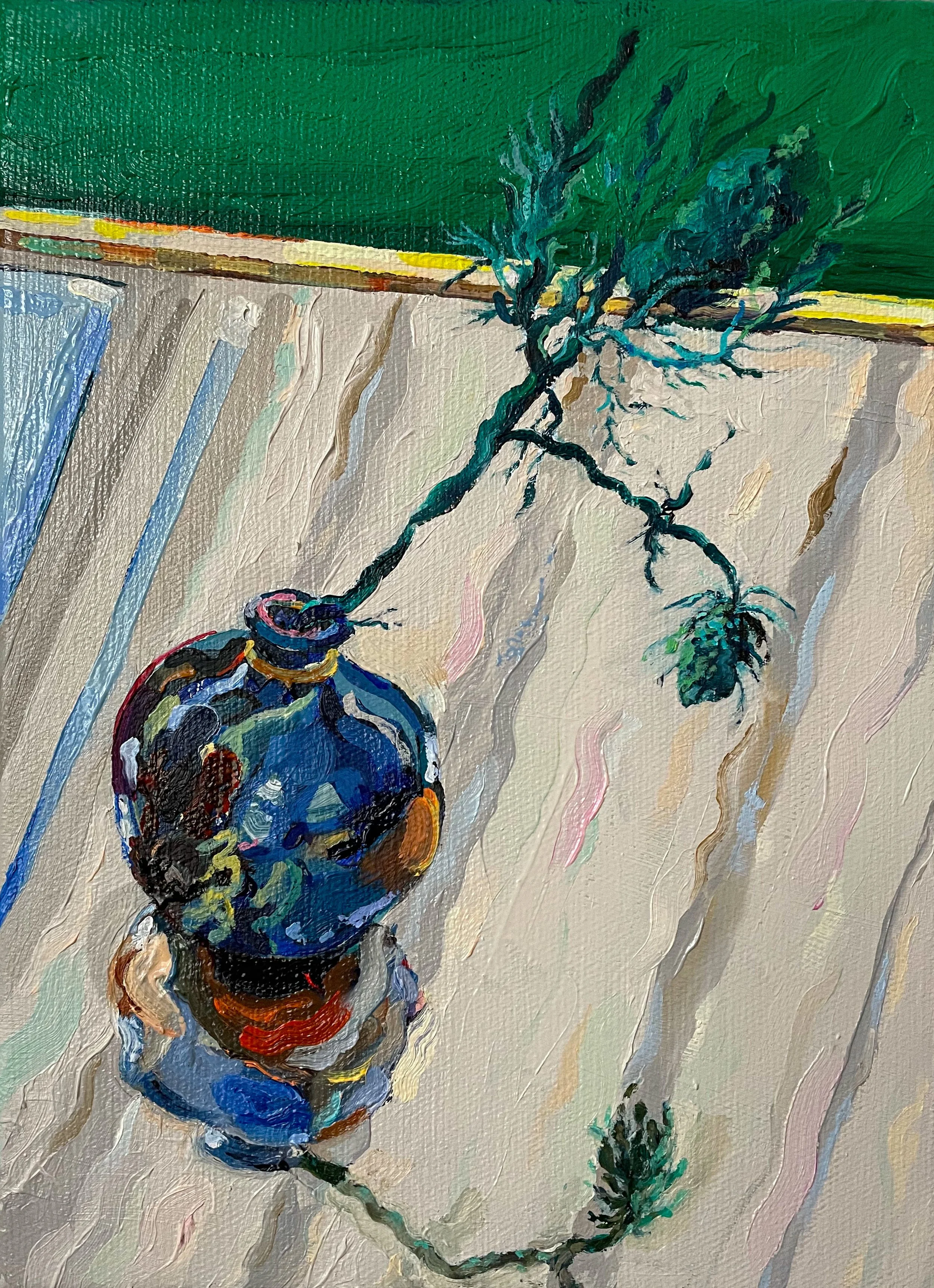
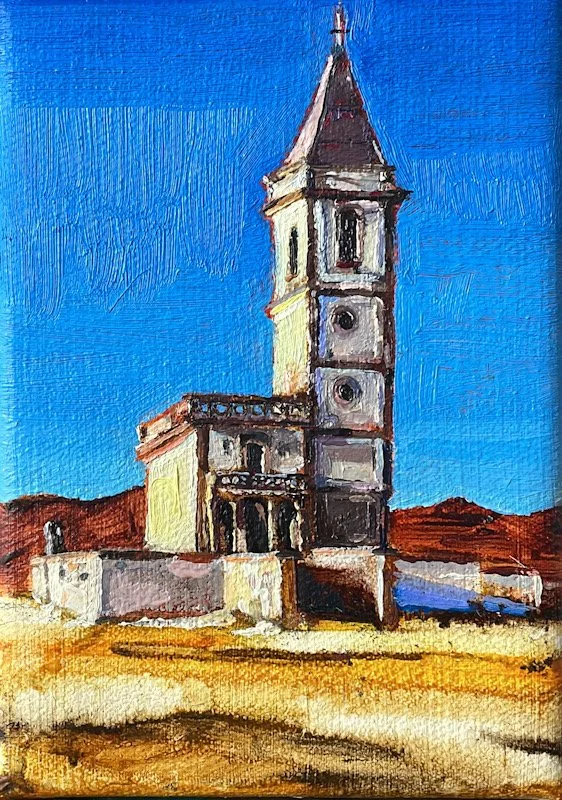
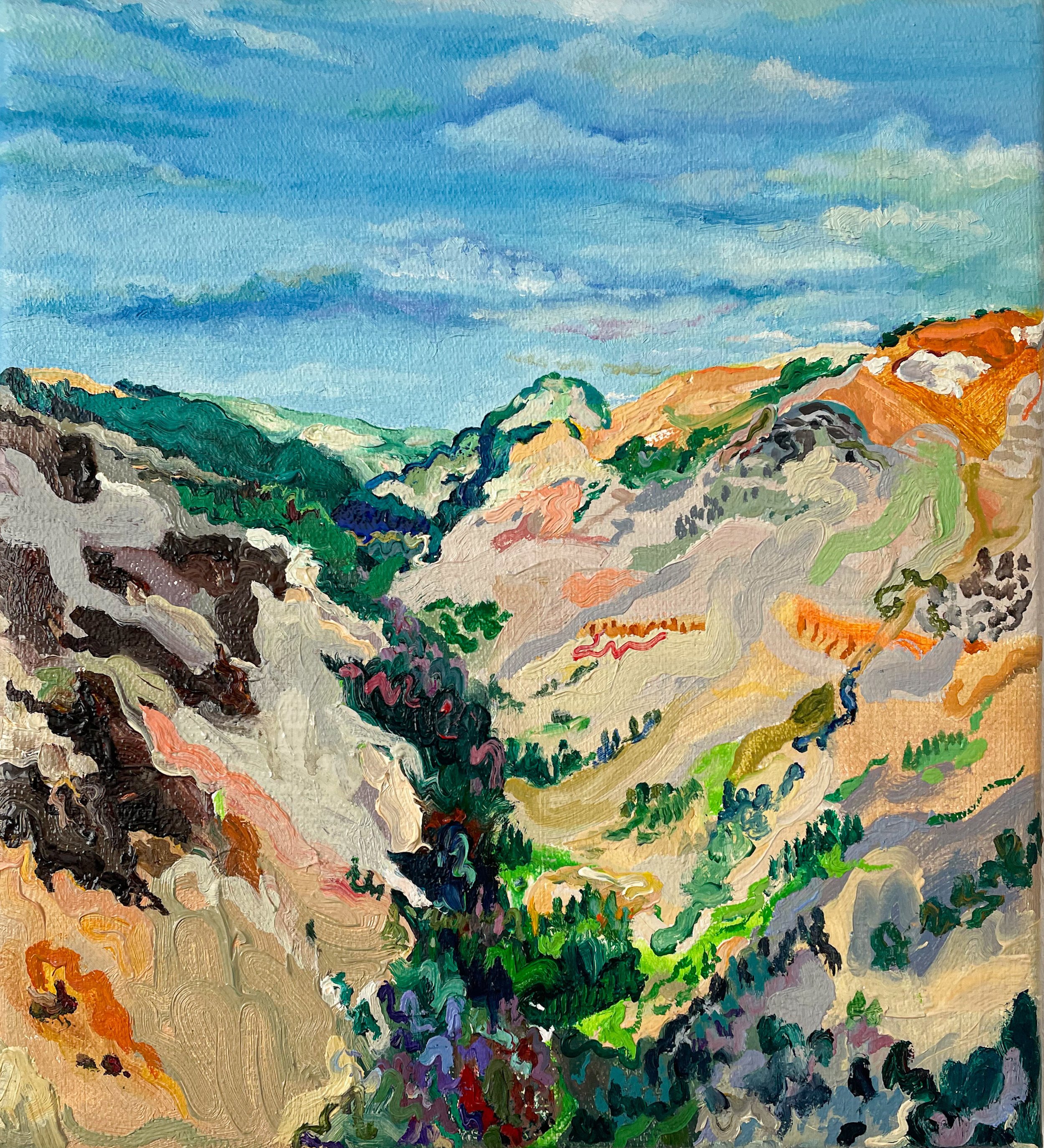
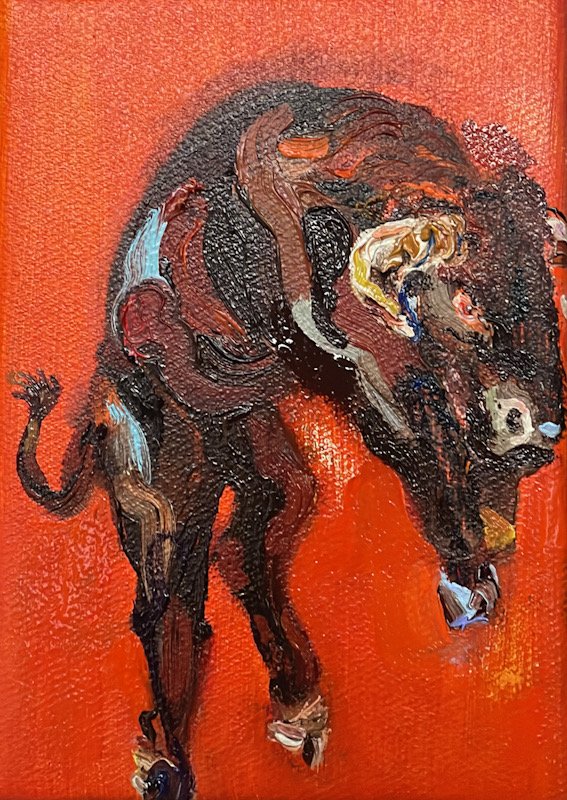
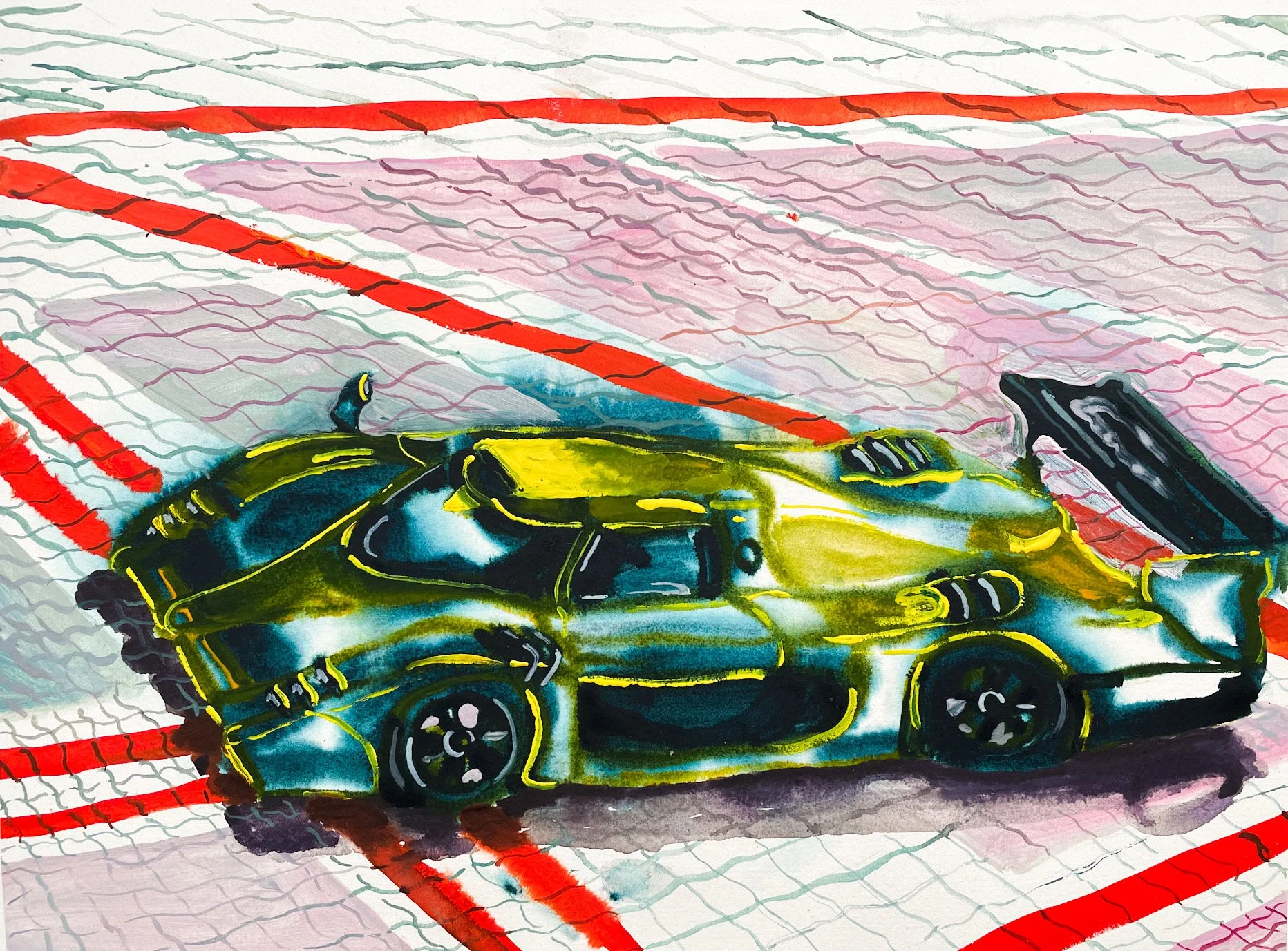
Frederik Schnieders, a 45-year-old Antwerp-based painter, is renowned for his evocative and dynamic approach to art. His work blends the boundaries of impressionism, realism, and surrealism, creating a vivid and expressive narrative on canvas and paper. Graduating from the esteemed Academy of Fine Arts in Antwerp, Schnieders' passion for portraiture and figurative art was kindled through intensive figure drawing studies. This foundational experience propelled him into an in-depth exploration of oil painting, where he strives to balance color and technique, drawing inspiration from both the Impressionists and Renaissance masters. Schnieders' subjects are eclectic, drawn from his immediate environment, the vast expanse of the internet, video stills, and his extensive magazine collection. This diverse range of sources fosters a constant dialogue within his paintings, allowing the figures and personas depicted to evolve and offer viewers a thoughtful and authentic perspective. Shifting between oil and watercolors, Schnieders' recent works are a testament to his adventurous spirit, delving into various pigmentations and color thresholds. His art is characterized by its multi-layered complexity, producing a lush oasis of color and depth that captivates the observer. Apart from his artistic pursuits, Schnieders is an avid surfer and has a deep appreciation for new wave and electronica music. His interests extend to Japanese culture and history, as well as vintage fashion from Italy, England, and France. As Schnieders continues to refine his technique, his focus remains on expanding the scale of his work, aiming to translate his intricate and vibrant style onto larger formats. This ongoing journey of artistic development ensures that his work remains fresh, engaging, and profoundly impactful.
GRACE KATIE DIXON (CA): Illustration
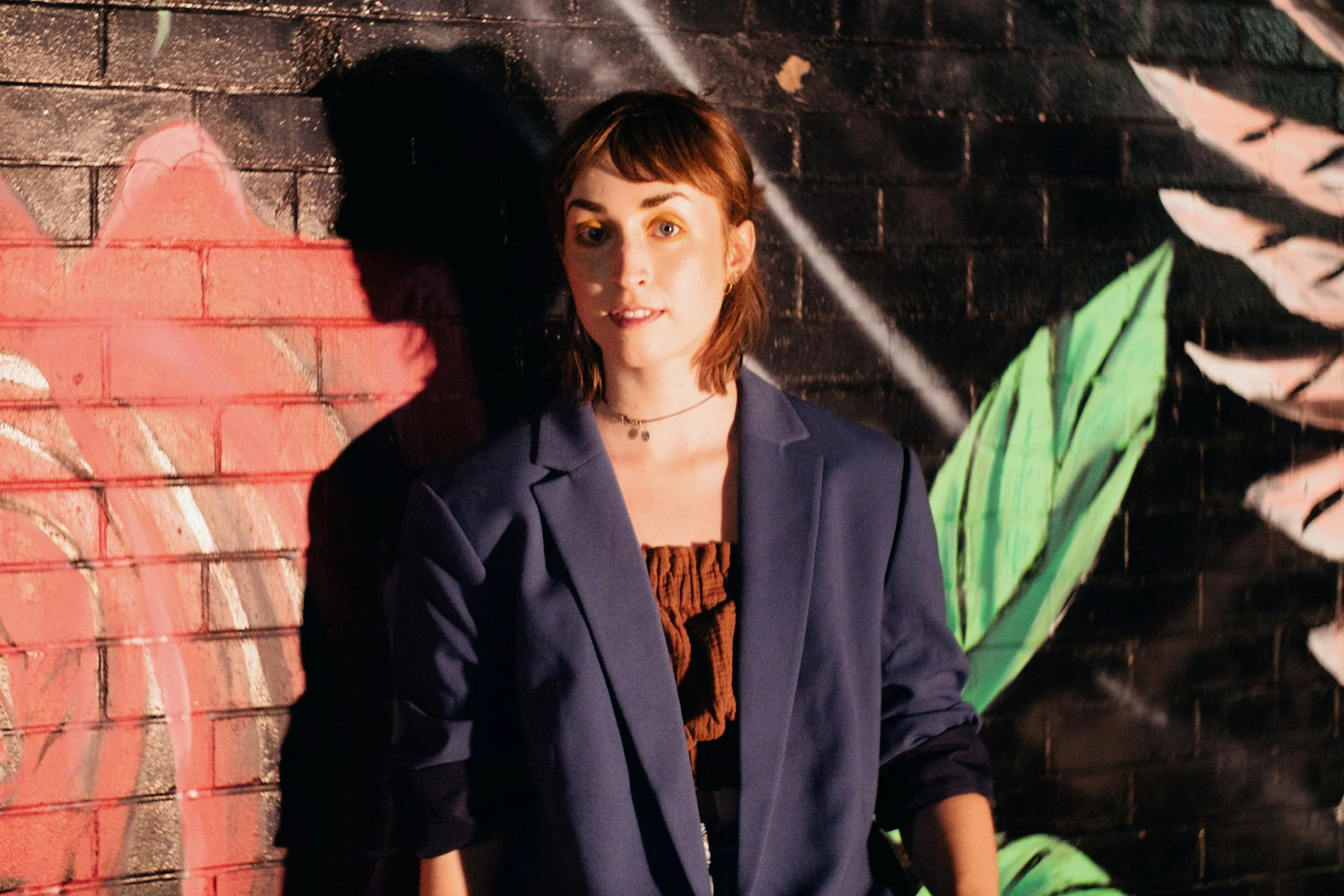
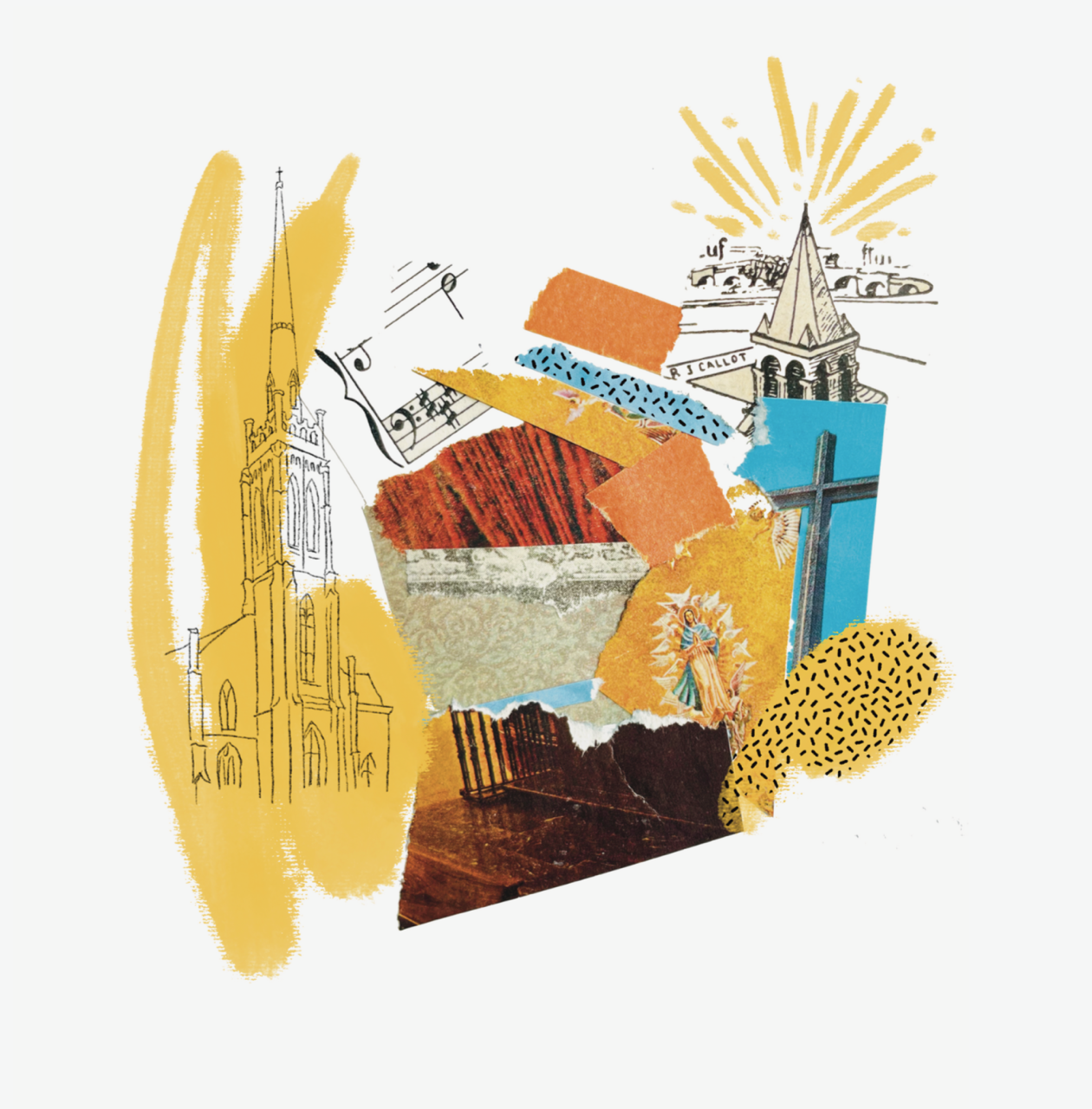
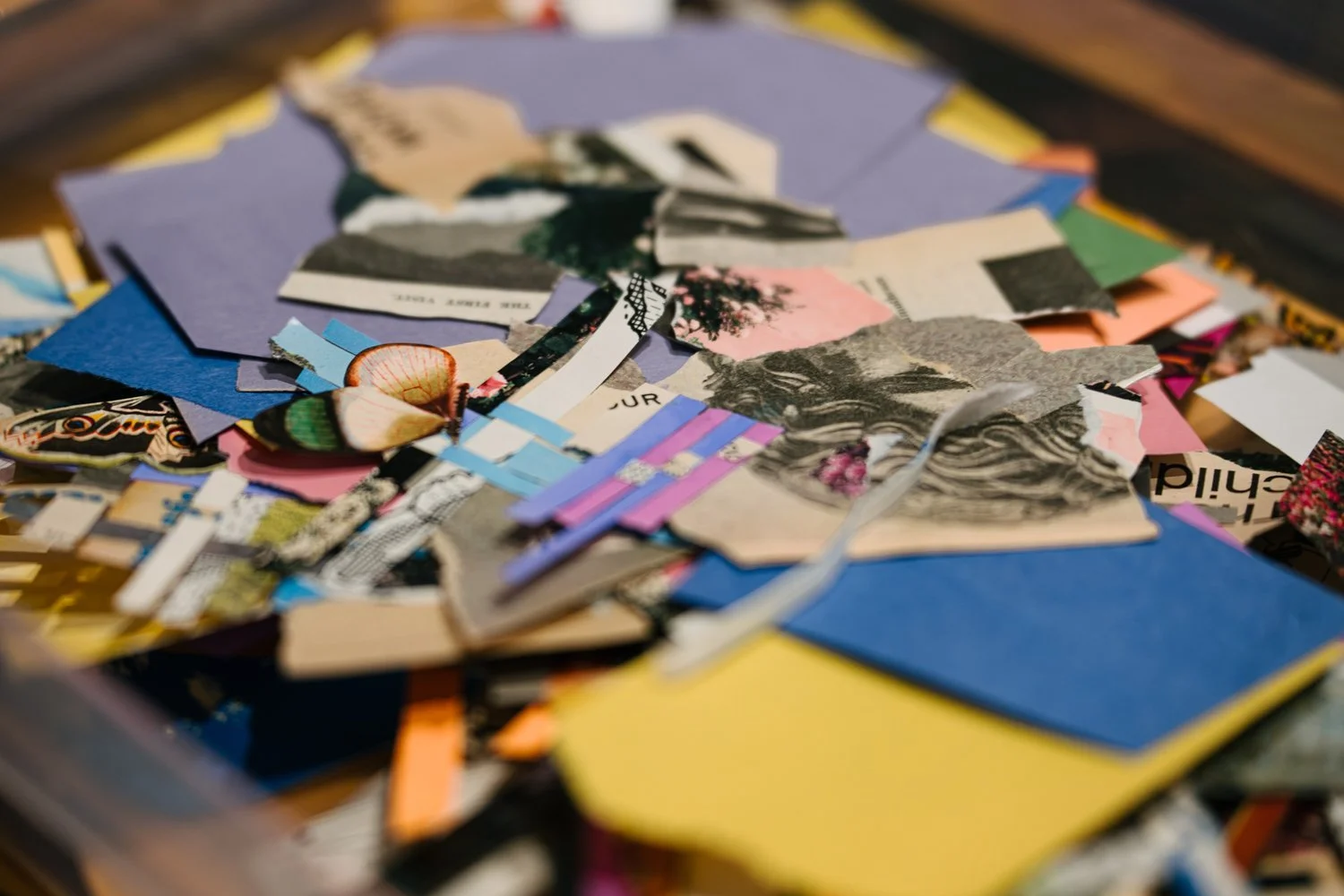
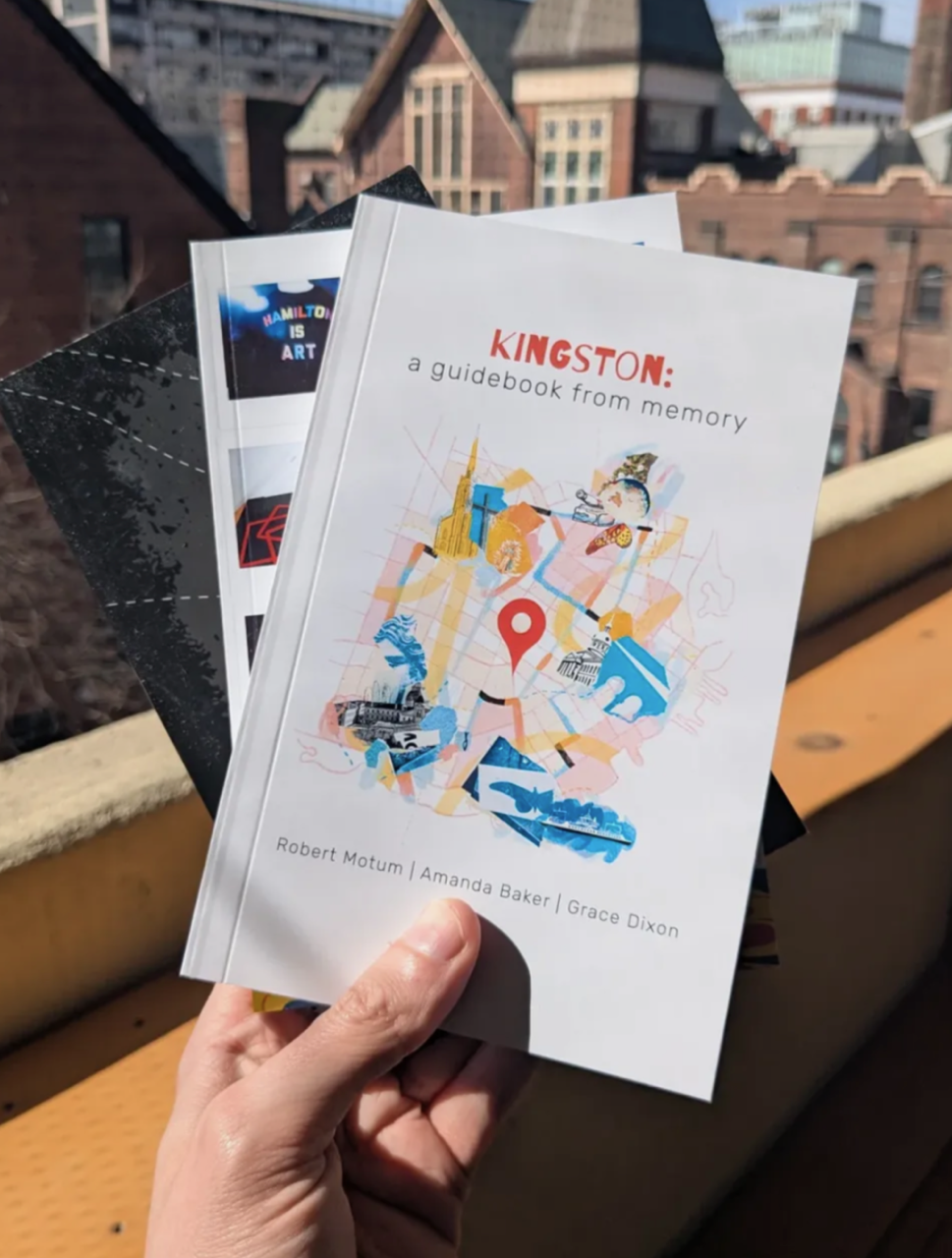
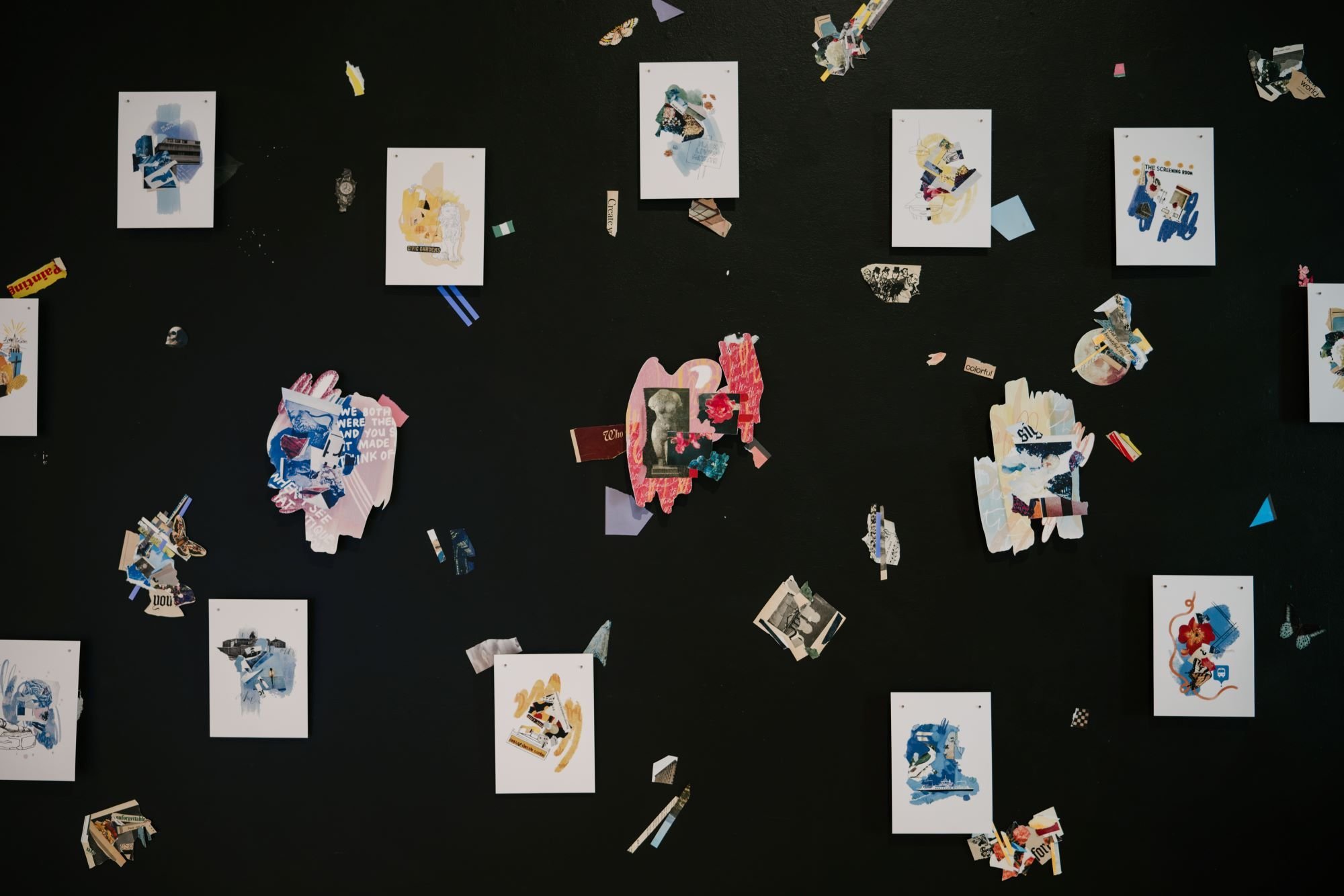
Grace Katie Dixon (she/they) is an illustrator, writer and musician based in Katarowki Kingston whose love of storytelling and connection is woven into her work. Through the use of textures, nostalgic references and dissonance she explores and embraces emotive design. Her work has appeared in partnership with entities such as the Kingston Canadian Film Festival, the film A Queer’s Guide to Spiritual Living, Providence Centre’s Justice, Peace and Integrity of Creation, Modern Fuel Artist Run Centre, Canadian Association of Theatre Research and Queen’s University among others. They seek collaborative opportunities often and appreciate community-centred art as an important catalyst for growth.
PAULA KUEHN (DE): Painting (returning artist)
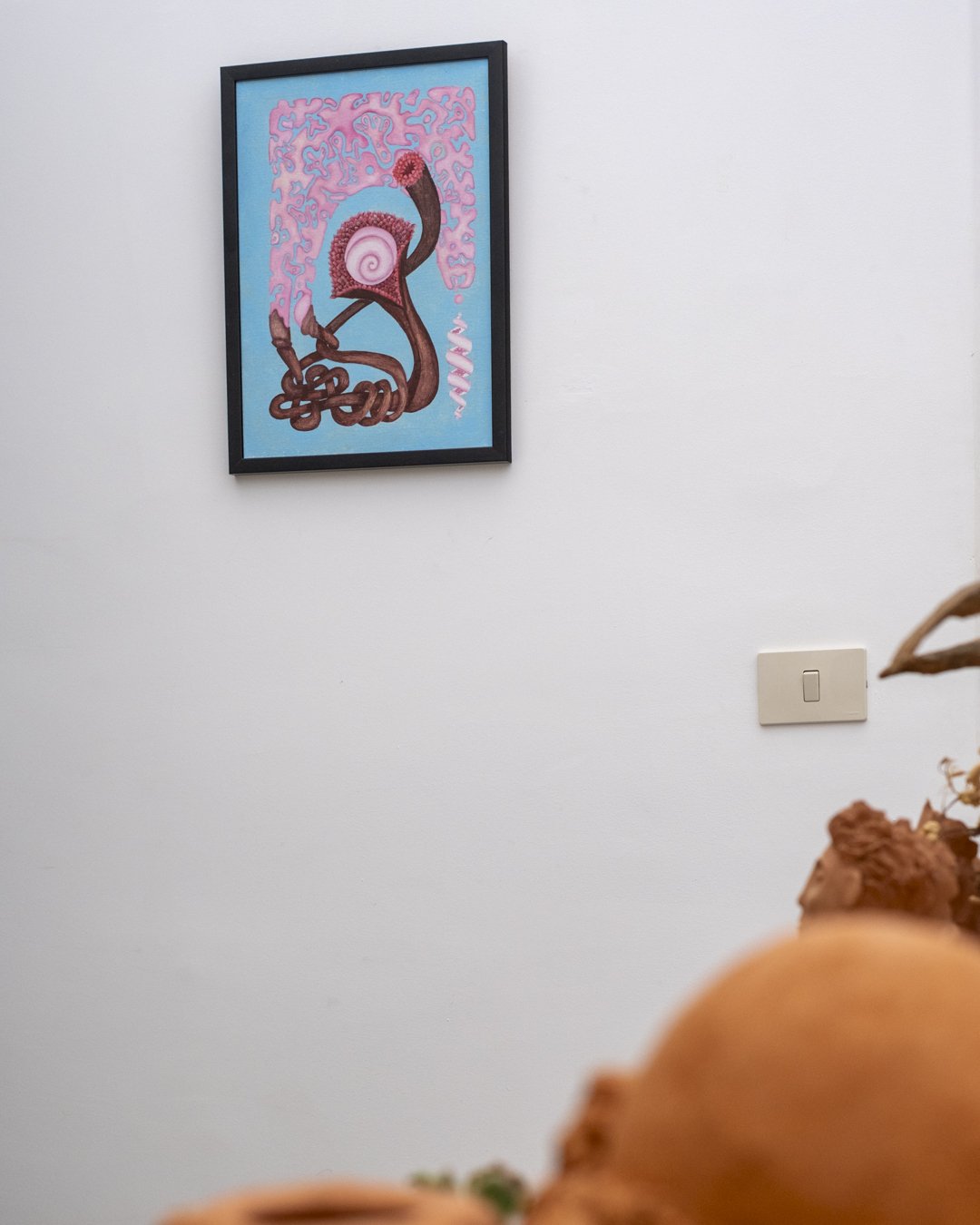
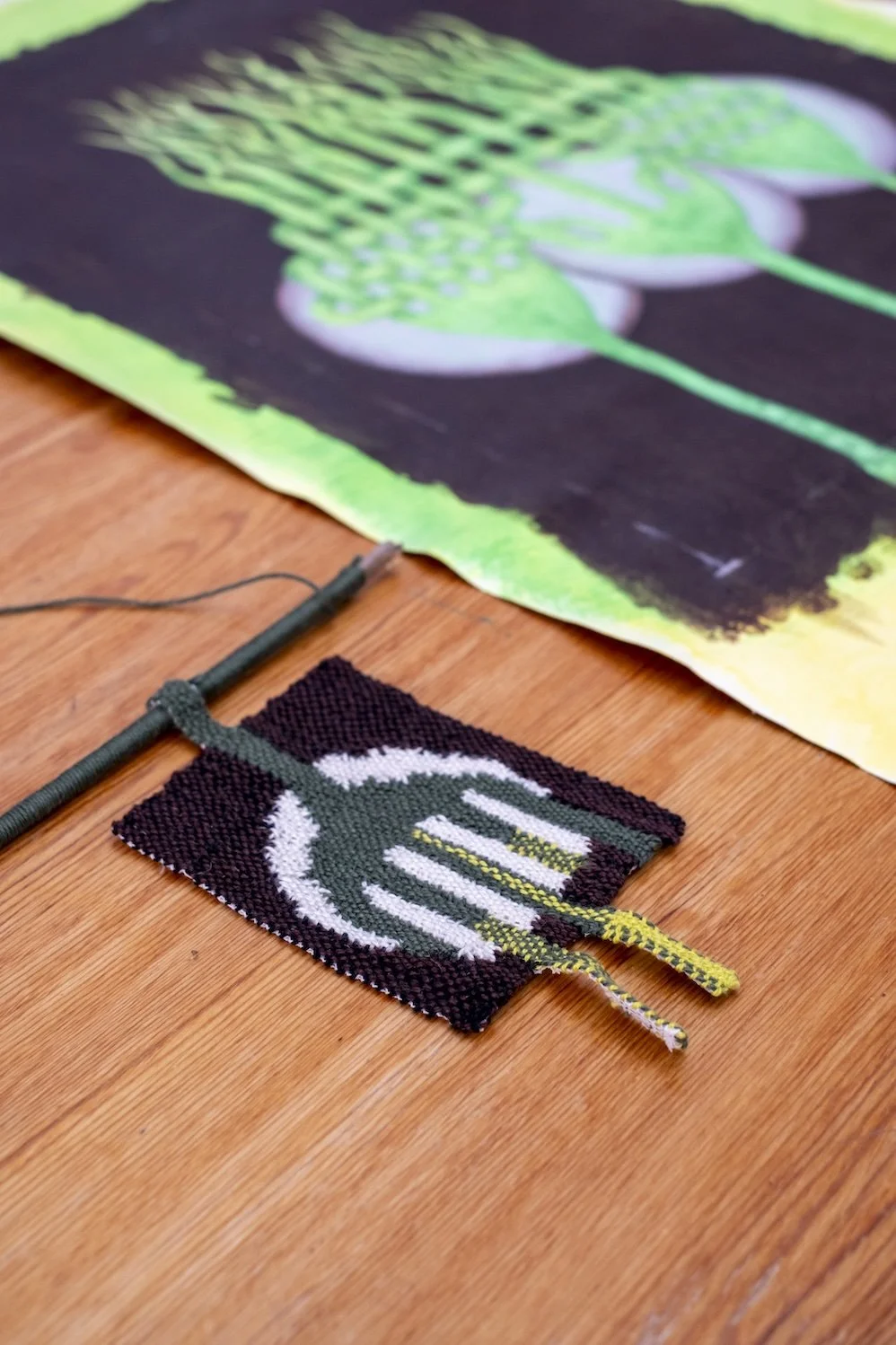
My project explores the fusion of physical and digital elements to create a multimedia experience. I will incorporate textile components alongside 3D and mixed reality technologies, drawing inspiration from Lanzarote's unique landscapes, structures, and natural features to develop a dynamic work that bridges the digital and physical worlds.
JOVANA OBRADOVIC (US/RS): Photography
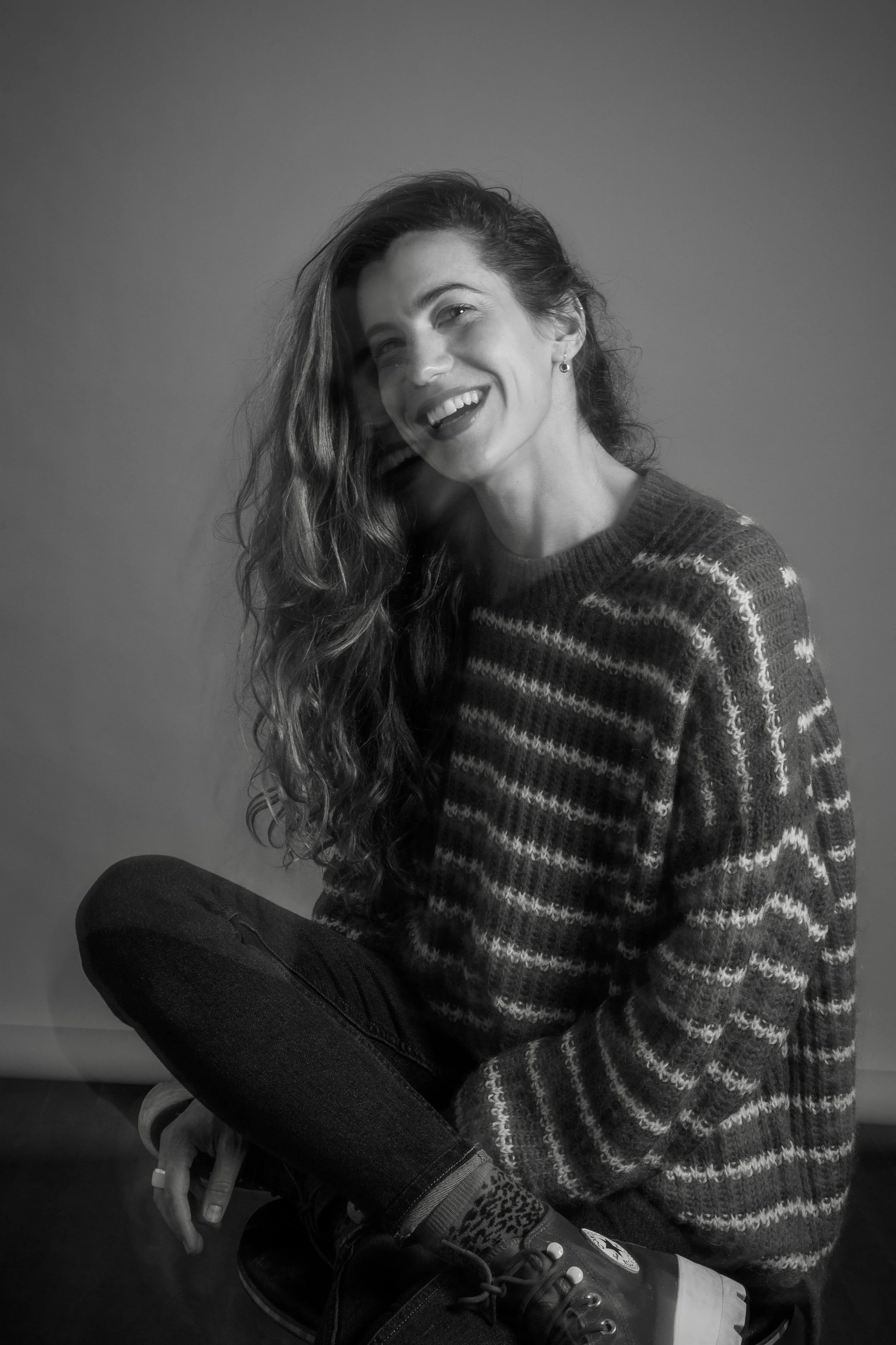
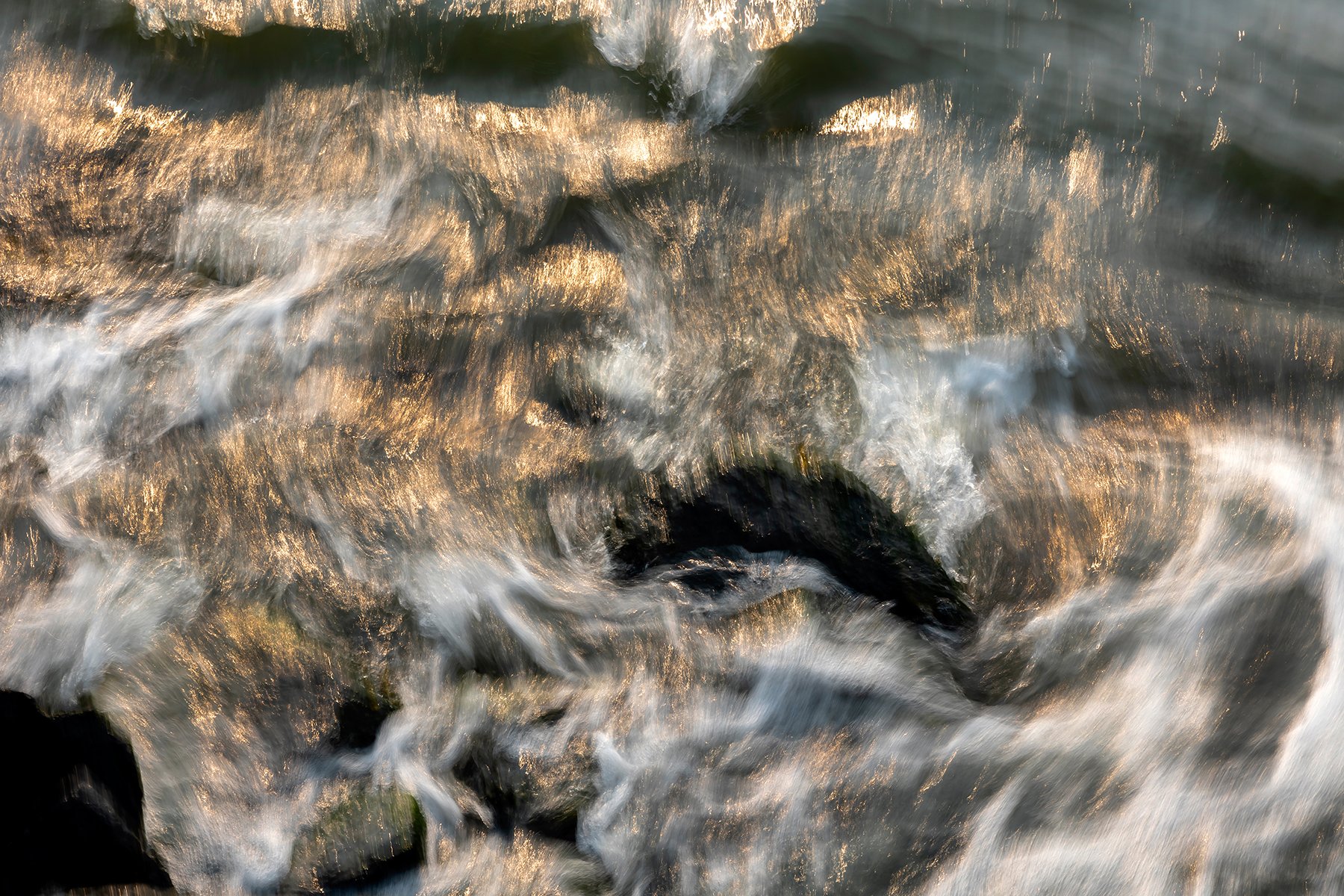
Jovana Obradovic is a Serbian-born photographer and visual storyteller based in New York. With over 18 years of international experience, her practice spans commercial photography, personal art projects, and fine art work. After beginning her career in publishing in the Middle East, she transitioned toward more intimate, human-nature centered storytelling through freelance work in New York.
Her artistic journey is a pilgrimage of self-discovery, exploring the spaces between opposing forces, softness and structure, freedom and limitation, the organic and the constructed. Through attention to details, gestures, and textures, she reflects on the subtle relationships between people, place and the natural world. Her goal as an artist is to evoke a visceral response and stir the spirit, bridging the gap between the tangible and intangible, while reflecting a sensitivity to interconnectedness and care capturing the small gestures that nurture life and community, and inviting viewers to notice the extraordinary in everyday moments and the quiet rhythms that shape them.
During my two-week solo residency, I want to treat the time as a period of quiet immersion - allowing the place, its rhythms and its relationships to guide the work, rather than arriving with a fixed outcome.
Working with photography and short-form video, I’ll focus on the ecosystem of Hektor and its surroundings - the land, animals, gestures of care, daily routines and the in-between moments that often go unnoticed. I’m drawn to how ideas like interconnectedness, coexistence and respect for all living beings are expressed through everyday actions, not as concepts but as something lived.
I also feel a strong pull to extend this observation across the island - to spend time with its landscapes and natural rhythms, and to sense what connects them. Lanzarote’s volcanic ground carries a quiet intensity - a force of both creation and destruction - and I’m interested in how that presence is felt, subtly, across different environments and moments.
The work will unfold slowly, shaped by attention to light, texture, sound and timing - observing relationships between human and animal, body and landscape, effort and rest. Rather than directing the process, I want to follow what naturally calls my attention and stay close to the quieter moments where meaning reveals itself.
This time is also a space for reflection - to sit with what these experiences open up and what they leave behind. I’m interested in working in a simple, intuitive way, allowing room for spontaneity, presence and not knowing.
MEILIN FU (CN/UK): Cross-media
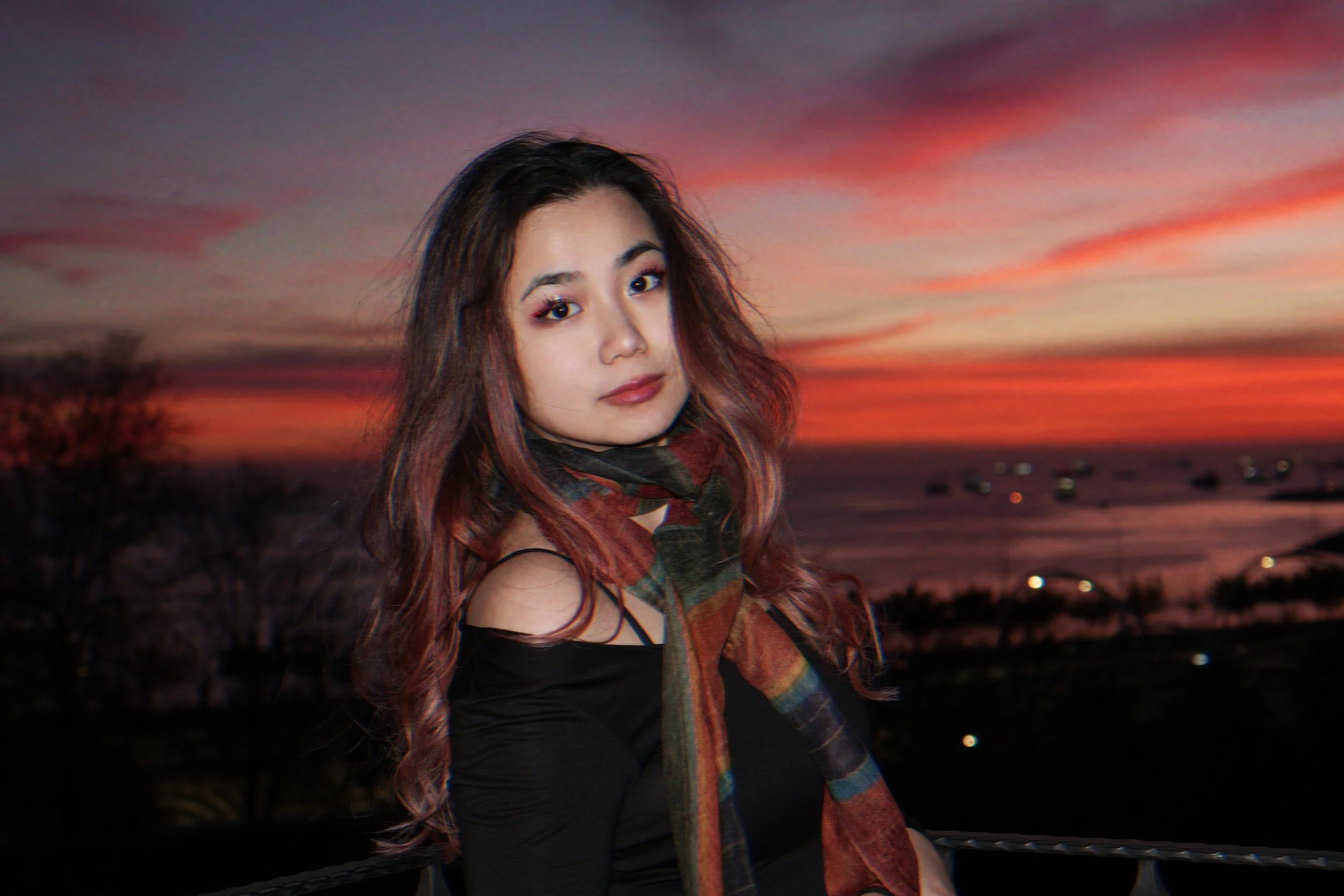
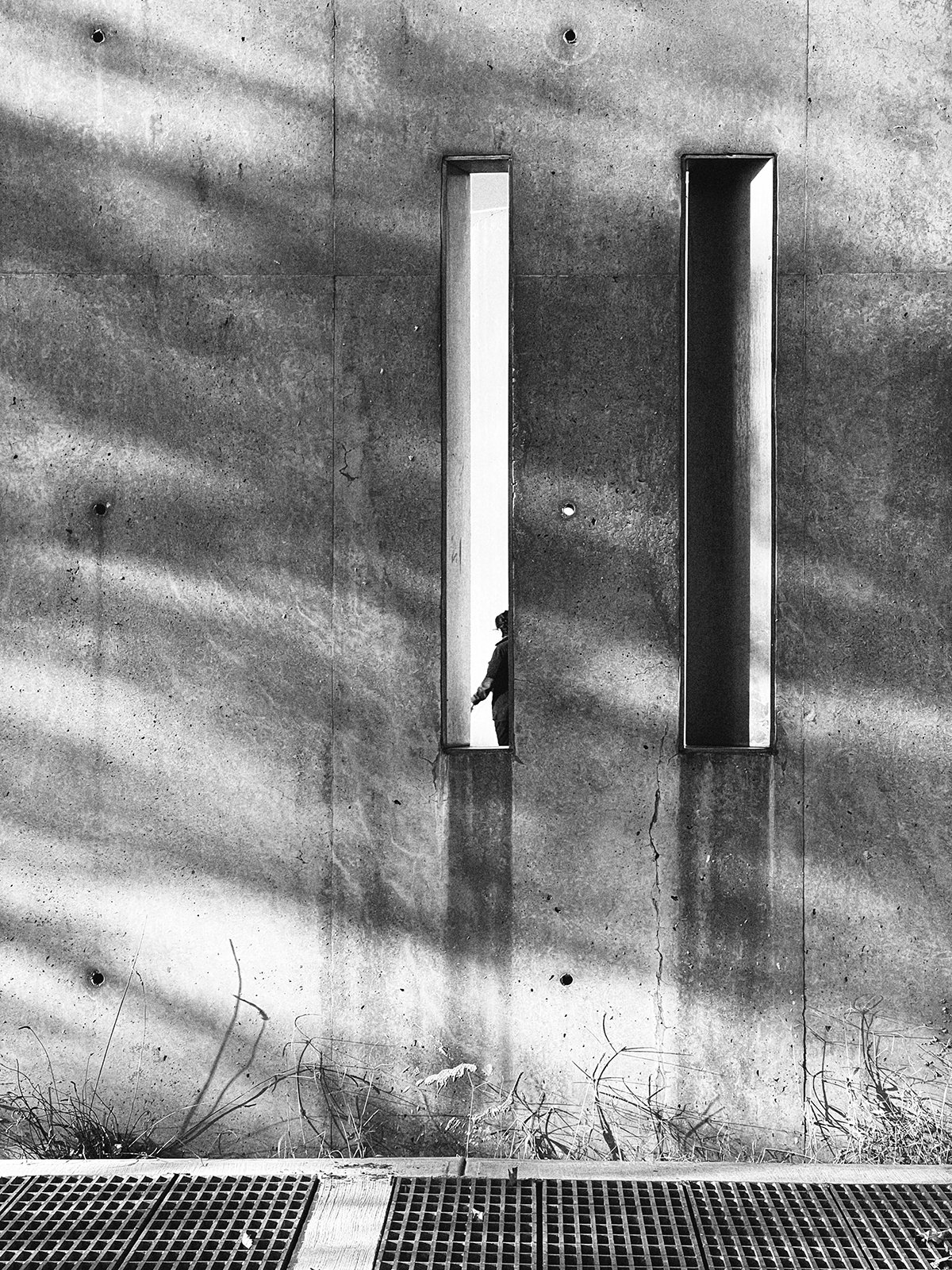
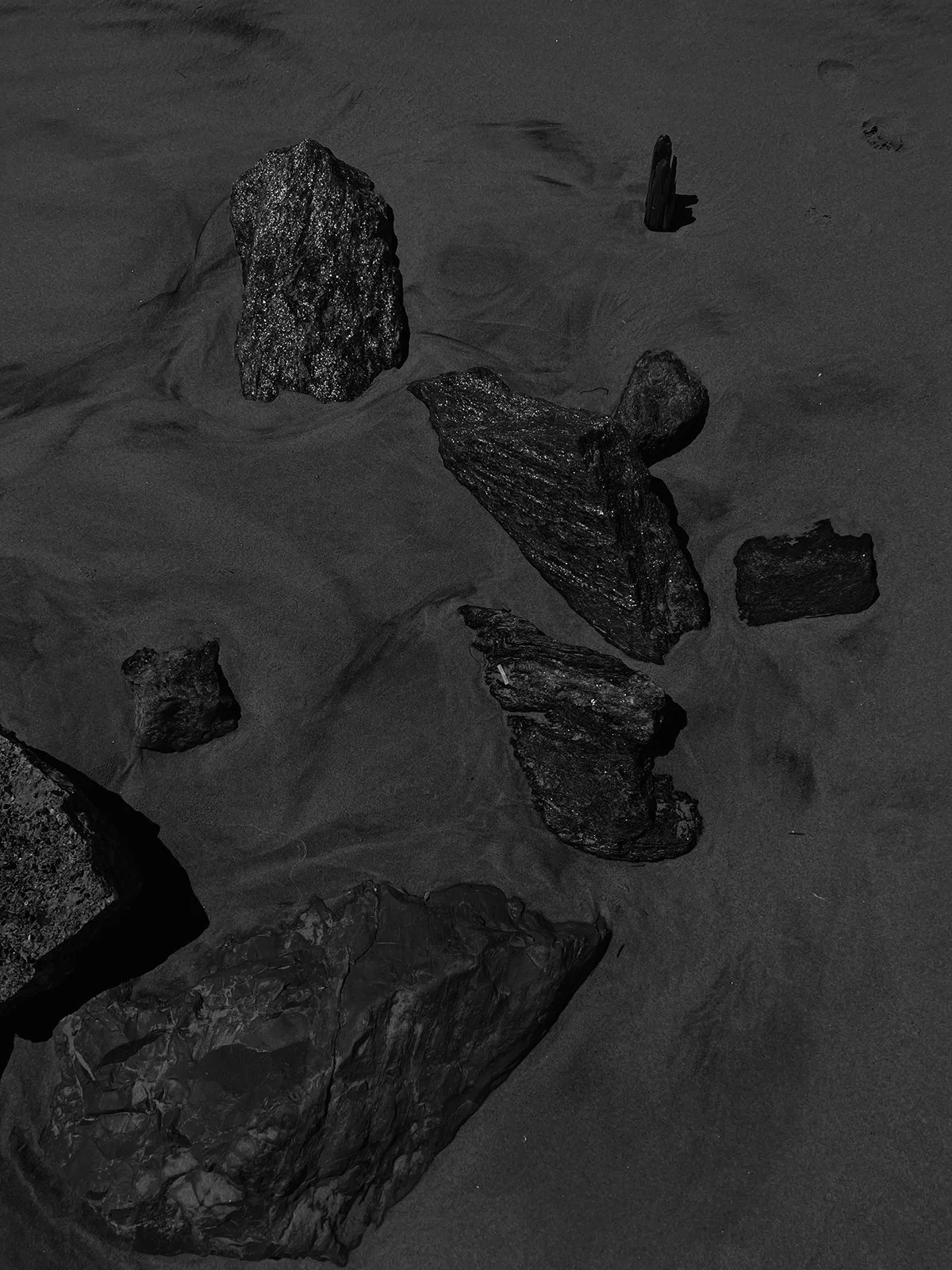
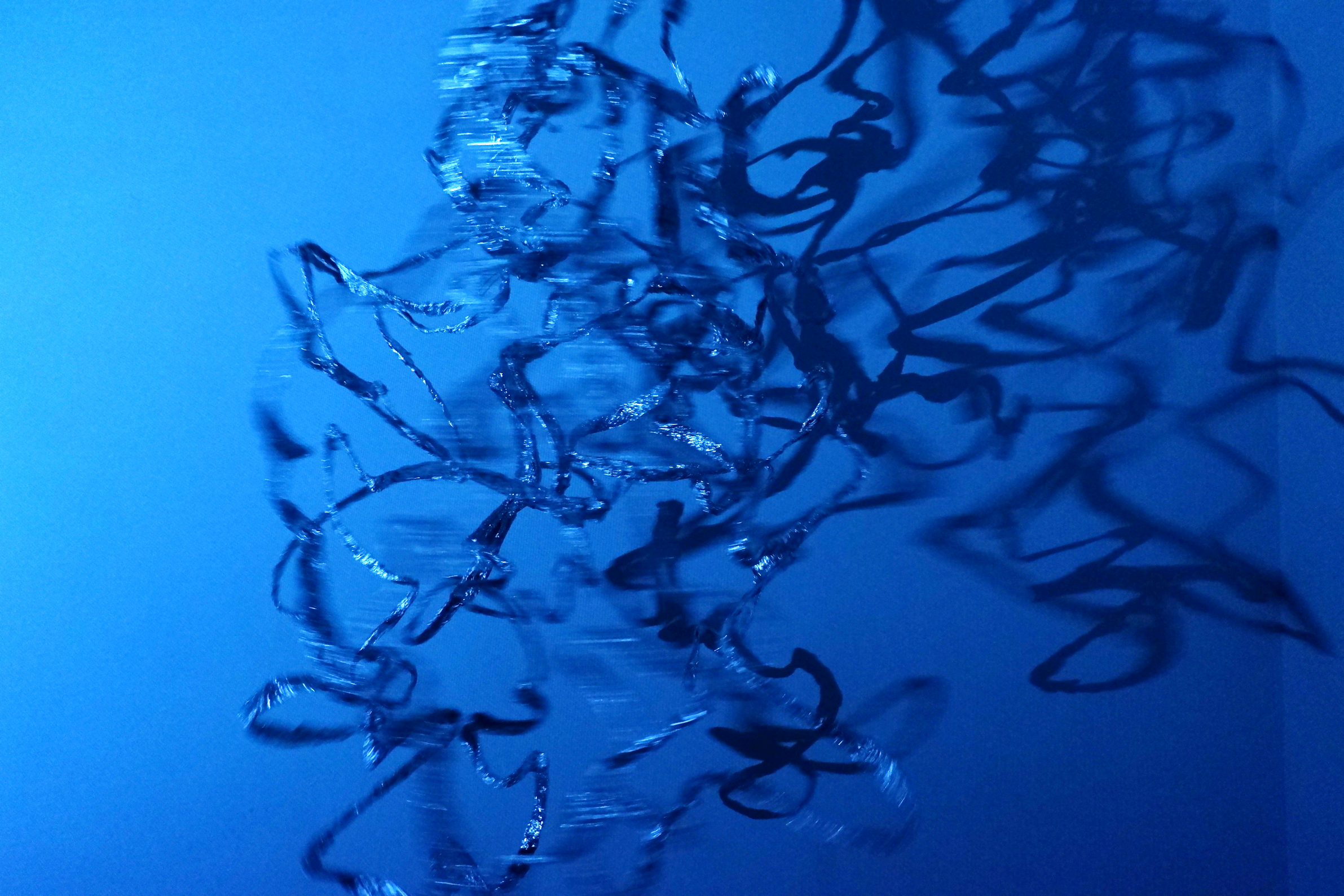
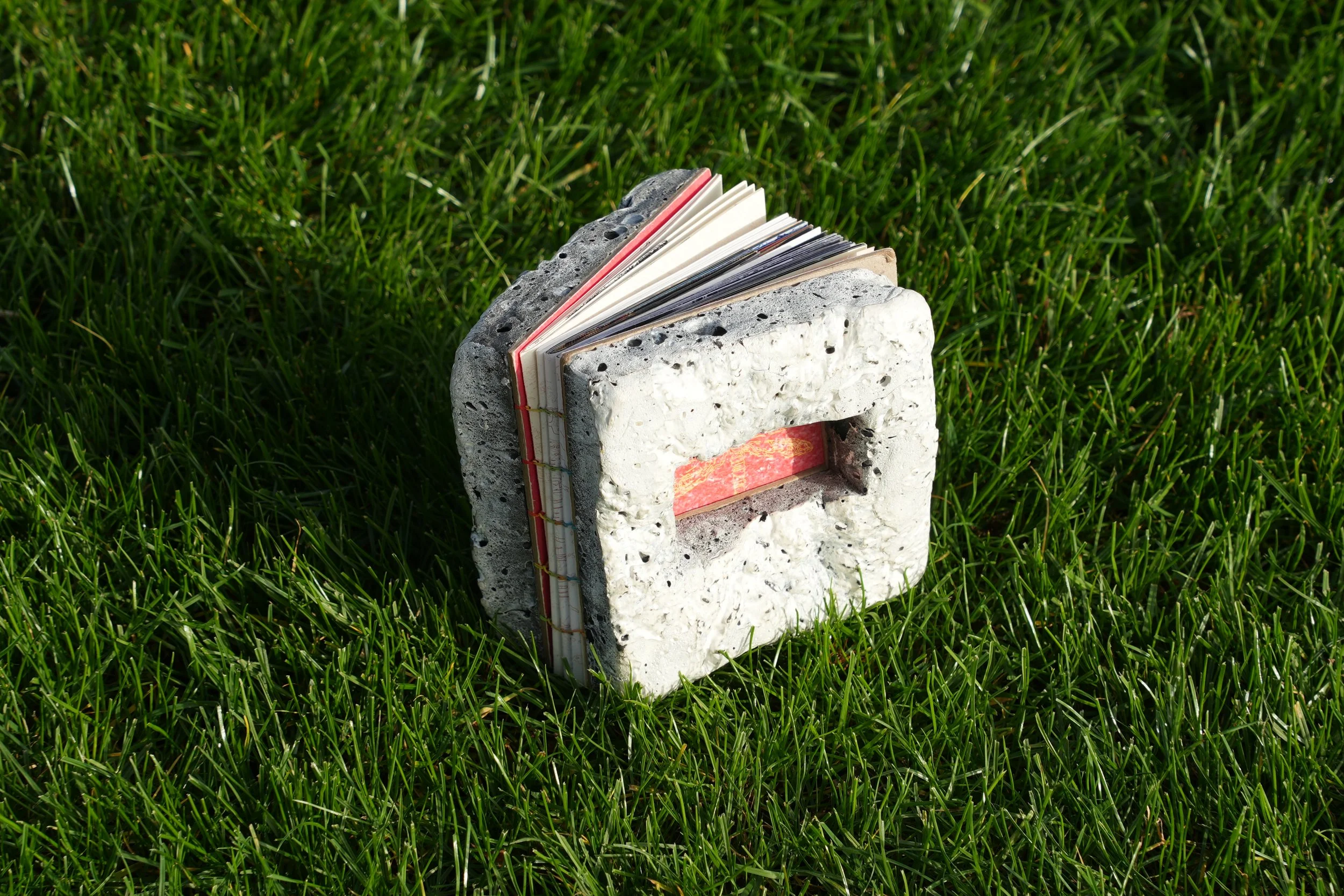
Meilin Fu is a cross-media artist currently living and studying in London, pursuing an MFA in Fine Art at Goldsmiths, University of London. Her practice unfolds between embodied experience and historical fragments, working through moving image, sculpture, installation, artist books, and painting to explore memory, religion, modernity, and the material forms of time.
Her methodology carries an ongoing “archaeological” sensibility: drawing on fragments, relics, texts, and site-based observation, she moves between intuition and research to construct a visual grammar situated between personal narrative and collective history. She is particularly concerned with the contemporary translations of ancient and sacred moments—layers of time, the materiality of belief, ruptures in history, echoes of language, and the ways in which matter becomes a vessel for memory and historical presence.
Meilin has maintained a nomadic presence within the field of contemporary art through short-term residencies, field-based travel, collaborative projects, and interdisciplinary moving-image practices. Her work aims to cultivate an ongoing methodology: continuously recording the temporalities of body and spirit, allowing materials and ideas, individuals and communities, the ancient and the modern to collide and generate new forms within her practice.
My practice often begins by entering a place and paying attention to how a local environment shapes people’s rhythms, relationships, beliefs, and ways of understanding life. Through moving image, text, and installation, I try to turn these observations into questions. My previous residency experiences have deeply influenced this approach. Spending time in a place removed from urbanised rhythms prompted me to reflect on how a landscape can shape our consciousness, and how we might cultivate a more humble attitude towards nature.
In Lanzarote, I would like to continue this line of inquiry within the context of the farm and the island. I am interested in how land, daily routines, ecological conditions, and a slower communal atmosphere might open different forms of awareness. This way of working begins with observation and embodied experience, then grows through cross-media forms of recording and reflection. Combined with the unpredictable possibilities that Lanzarote may offer, I see this developing into a research-based project whose final form will emerge through the residency itself. It may become a moving-image piece, an installation, a work combining text and material fragments, or an action shaped by the place and its encounters. For me, this is also a way of understanding art as change-making: by making space for reflection and shifting awareness through place-based experience.
GUGLIELMO DALVIT (FR/IT)
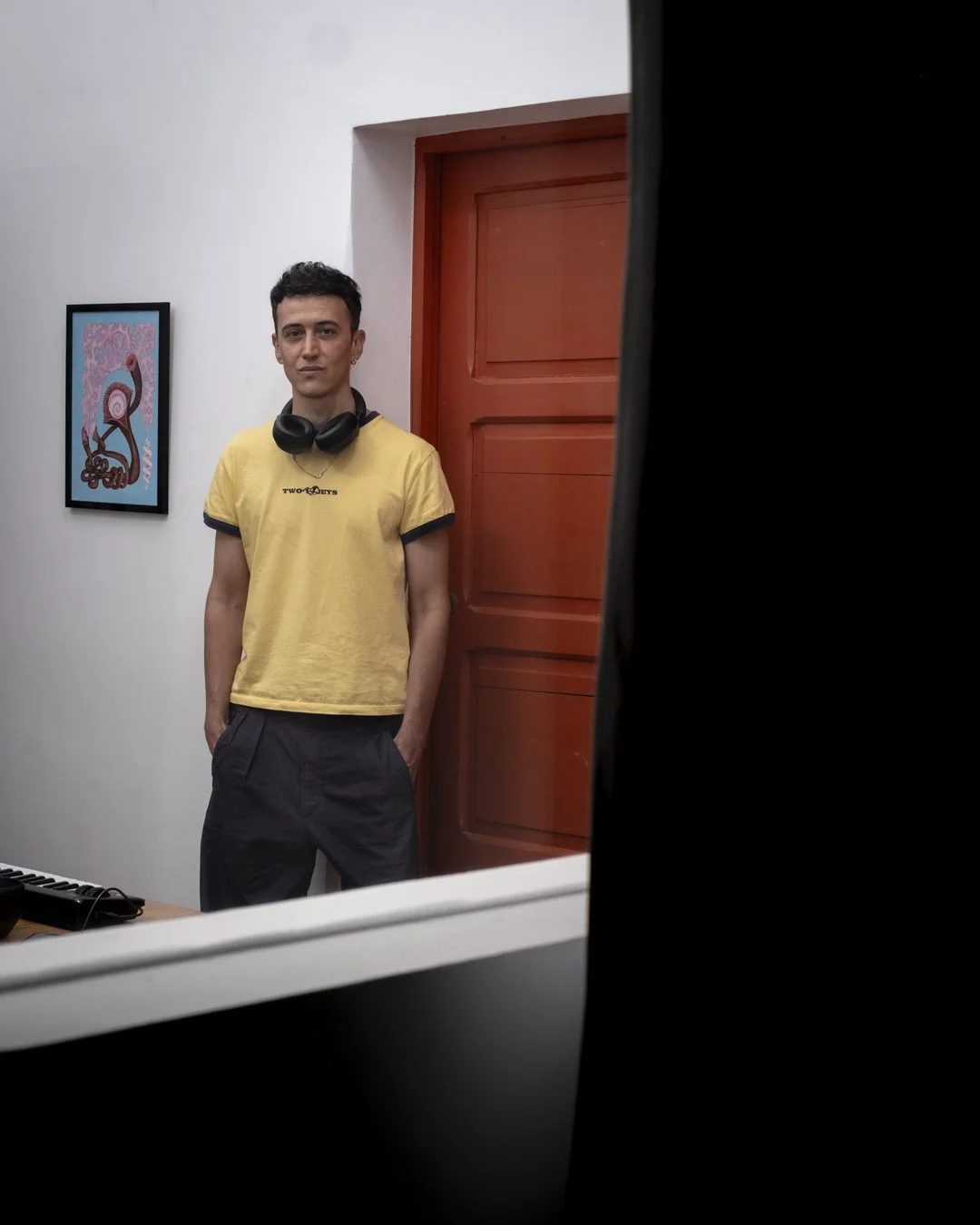
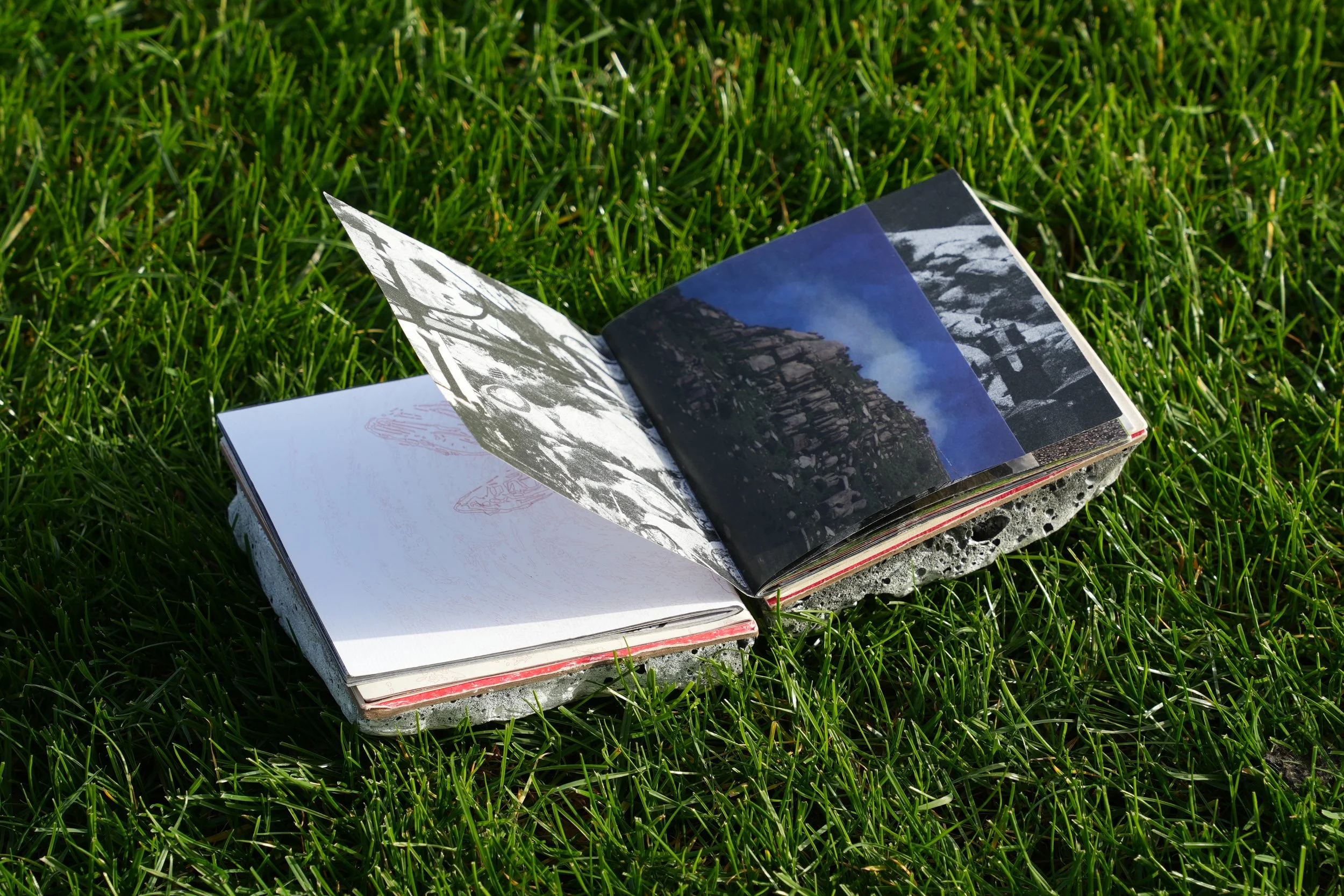
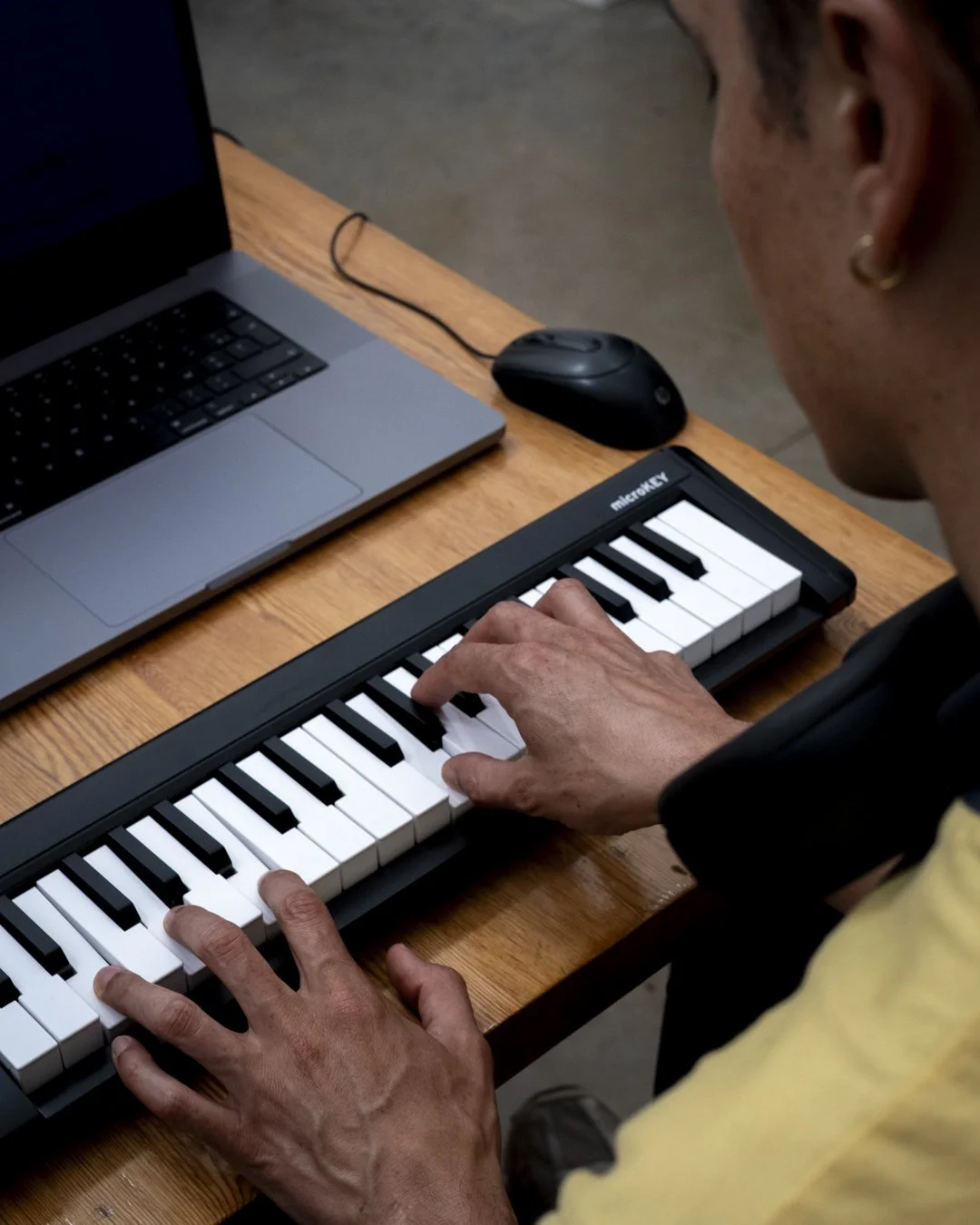
Currently based in Paris but born and raised in northern Italy, Guglielmo had a classical training as a cello and saxophone player.
However, from an early age he developed a keen interest in composing, rather than performing himself.
He released three albums, three EPs and two singles since 2020.
The exploration of a physical place is strongly influenced by one's state of mind and subjective perception.
As we translate our experiences into words, music, or any other form of art, we give our perceptions a new shape. One that is visible, audible, or tangible.
A first encounter with a new place is filled with excitement and discovery. Over time, however, our perception gradually evolves as that place becomes familiar and turns into a nest of memories and internalized consciousness.
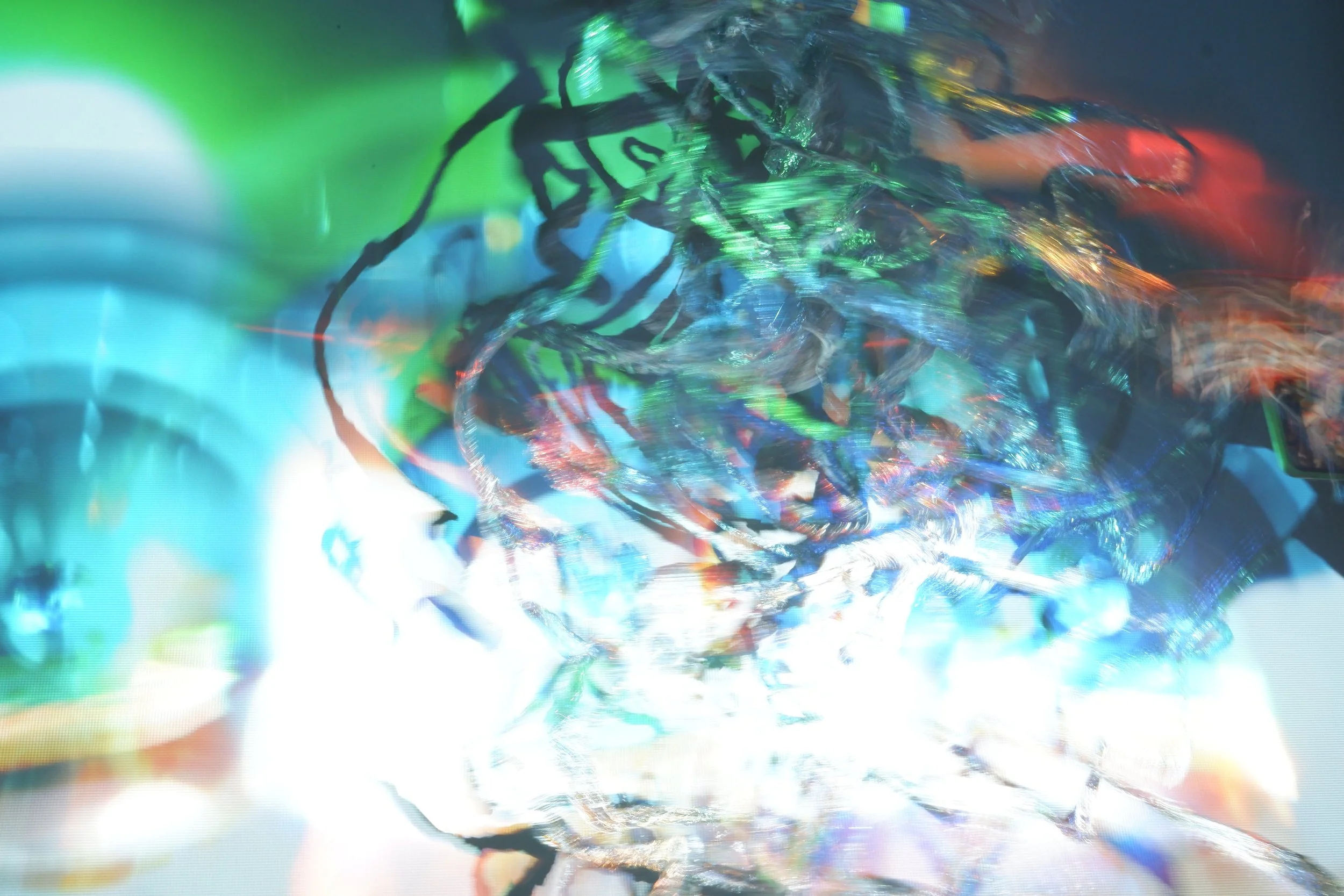
I am about to travel to Lanzarote for the third time in my life, and I feel that the works I have created over the past years at Hektor are some kind of diary, documenting the evolution of my experience of the island.
I intend to use this third residency to complete a three-year soundtrack that embraces familiar patterns and changes, such as the challenging year behind me and my commitment to a vegan mindset, both of which have inevitably had an impact on my approach to the world.
CONSTANT FAZILLEAU (FR): Ceramics
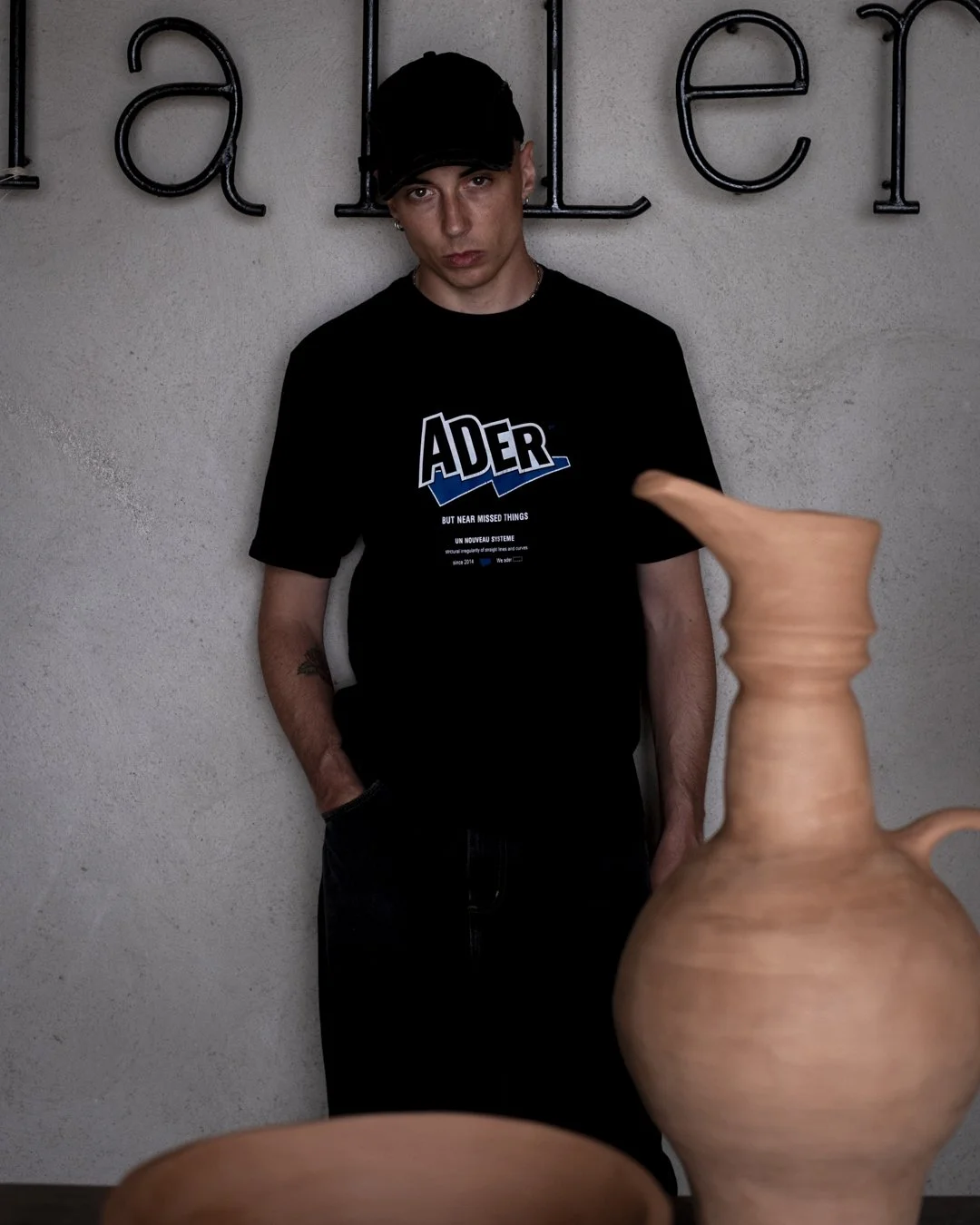
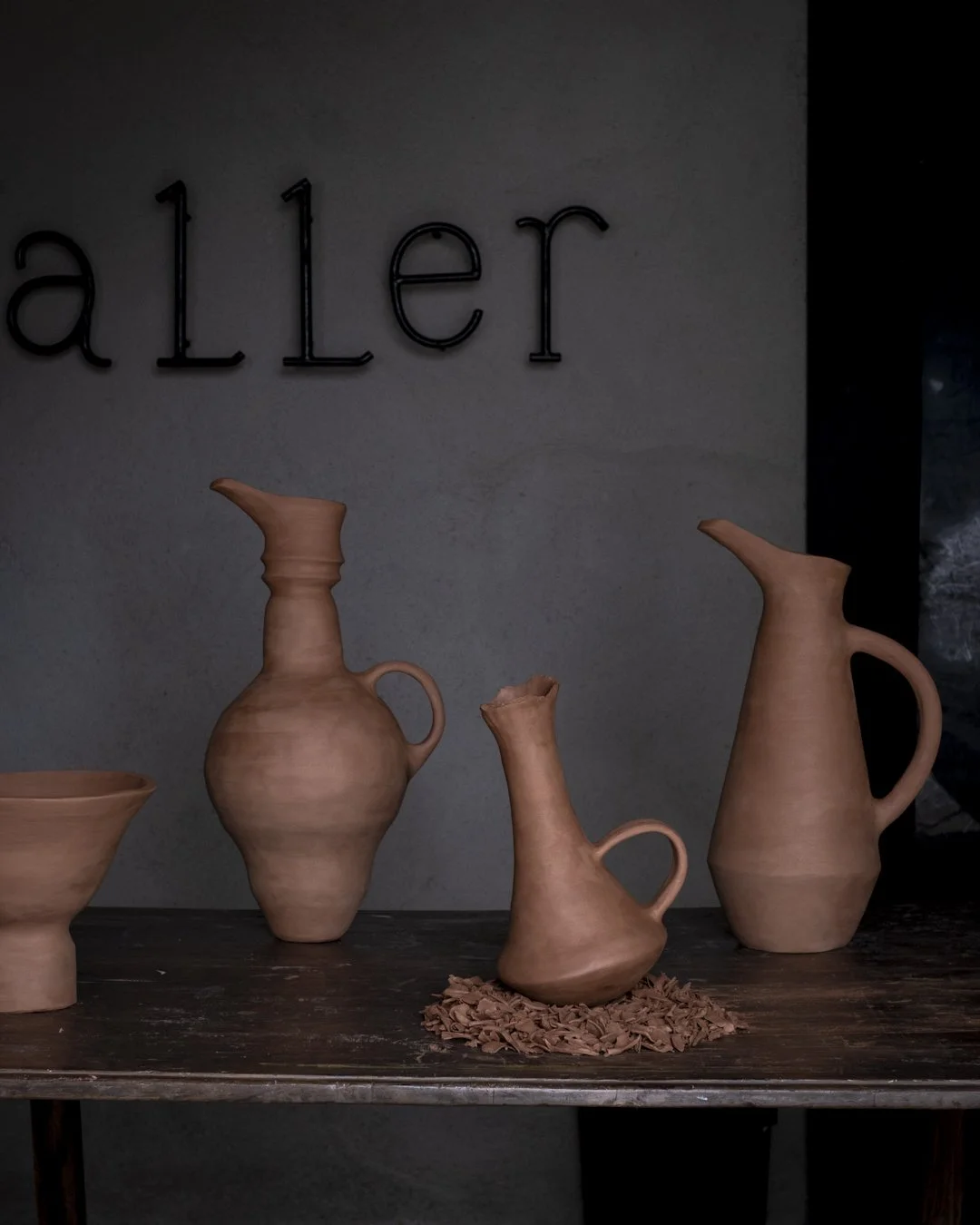
Working in Paris, France, Constant Fazilleau is an artist working primarily with ceramics, photography, video and writing. His ongoing project, Domestic Theatre, explores the poetic, symbolic and political dimensions of everyday objects and domestic rituals.
Through handcrafted ceramic forms inspired by vernacular vessels and daily use, he investigates how ordinary objects can become tools for storytelling, contemplation and social reflection. His practice combines making, documentation and essayistic research, often bringing together objects, landscapes, texts and moving images into interconnected bodies of work.
Recent projects have explored themes of fragility, resource scarcity and the relationship between domestic culture and place, notably through research developed on the island of Lanzarote.
During the residency, I will continue developing Domestic Theatre, an ongoing artistic research project exploring the relationship between everyday objects, domestic rituals and place.
Returning to Lanzarote, I will use ceramics, photography, video and writing to investigate the island’s landscape, vernacular forms and local ways of inhabiting a territory shaped by limited natural resources.
The residency will be approached as a new chapter within a long-term body of work, combining the creation of ceramic pieces with a visual and written essay documenting observations, gestures of making and encounters with the island.

JESUS VACAS (ES): Painting
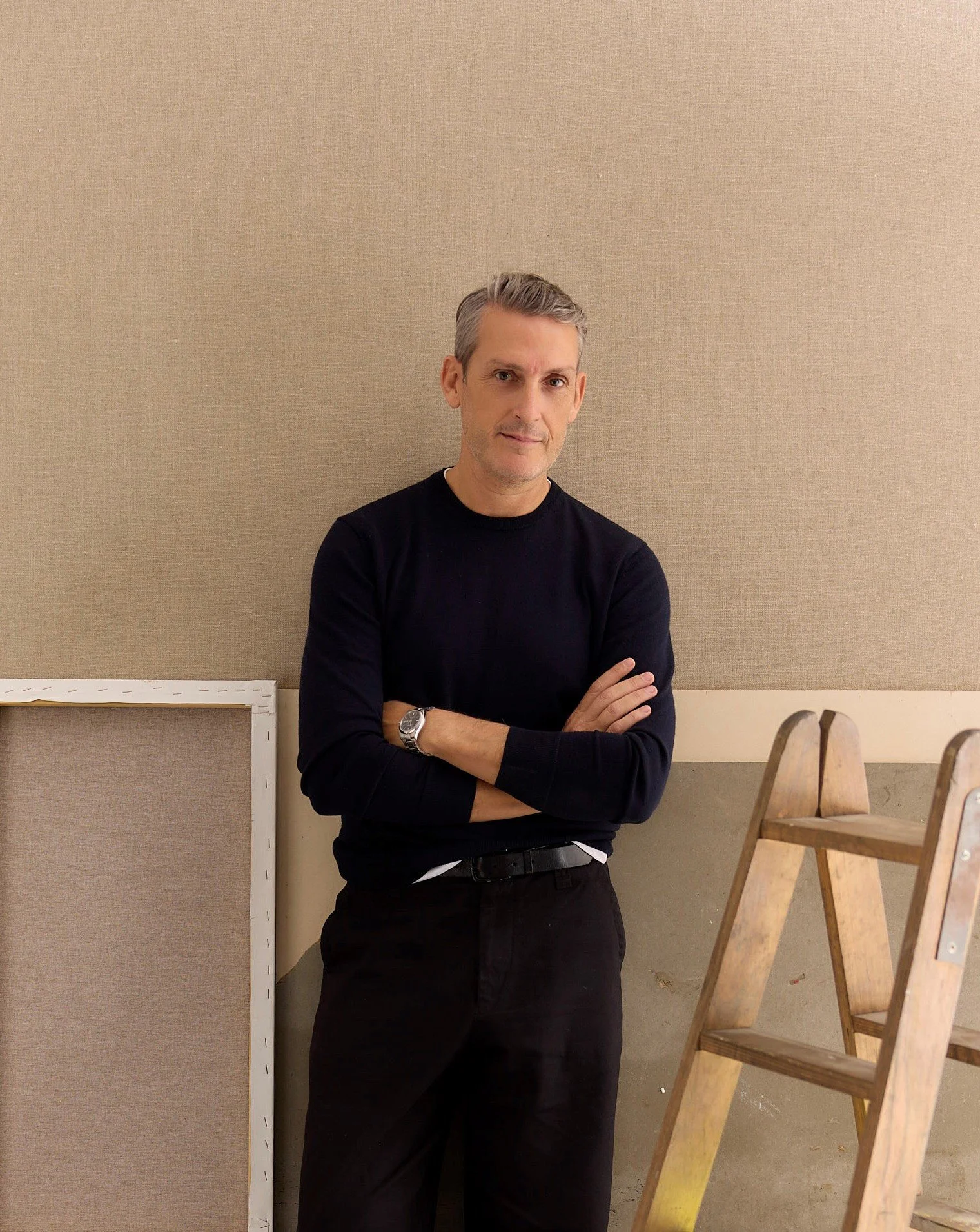
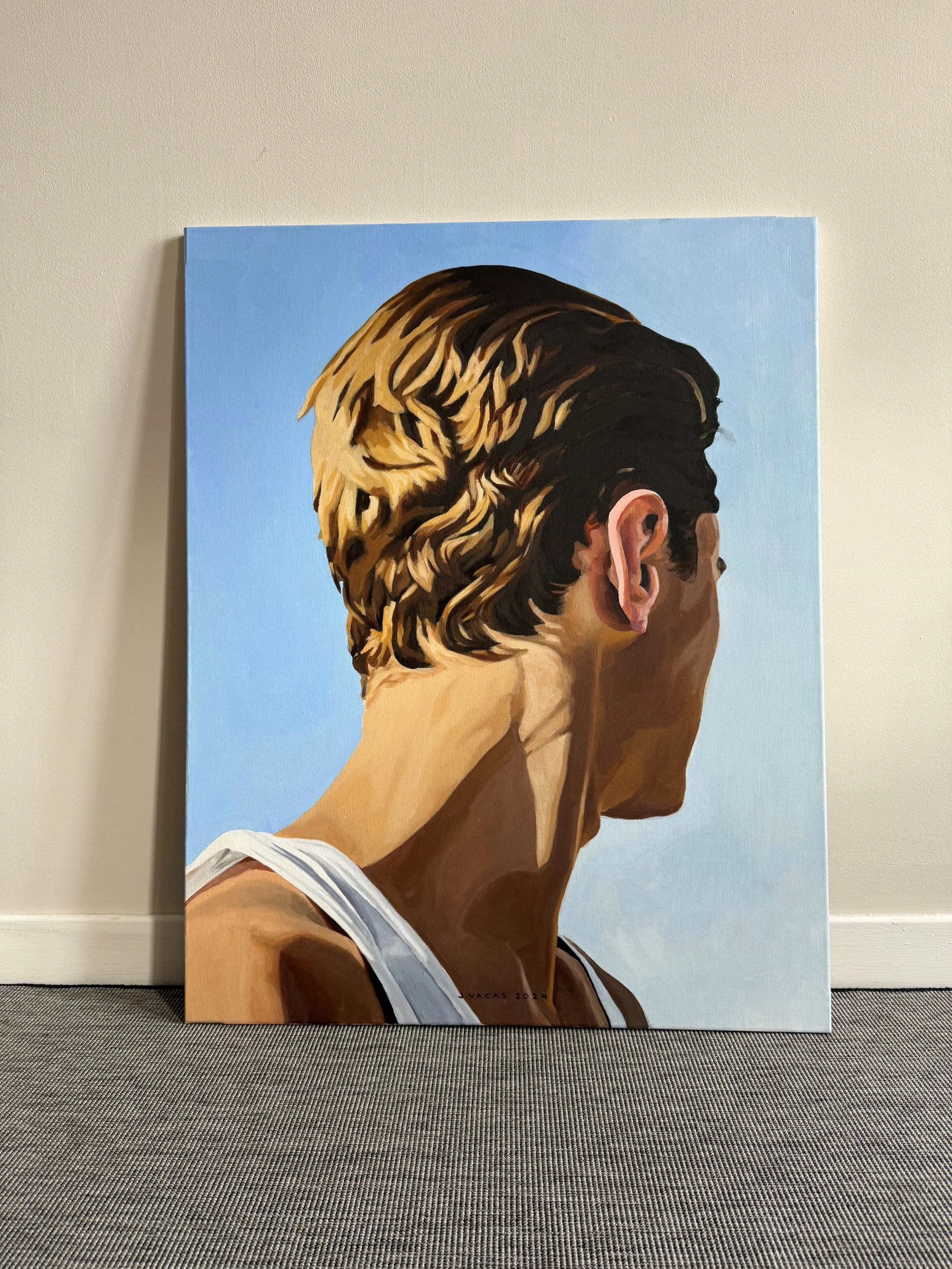
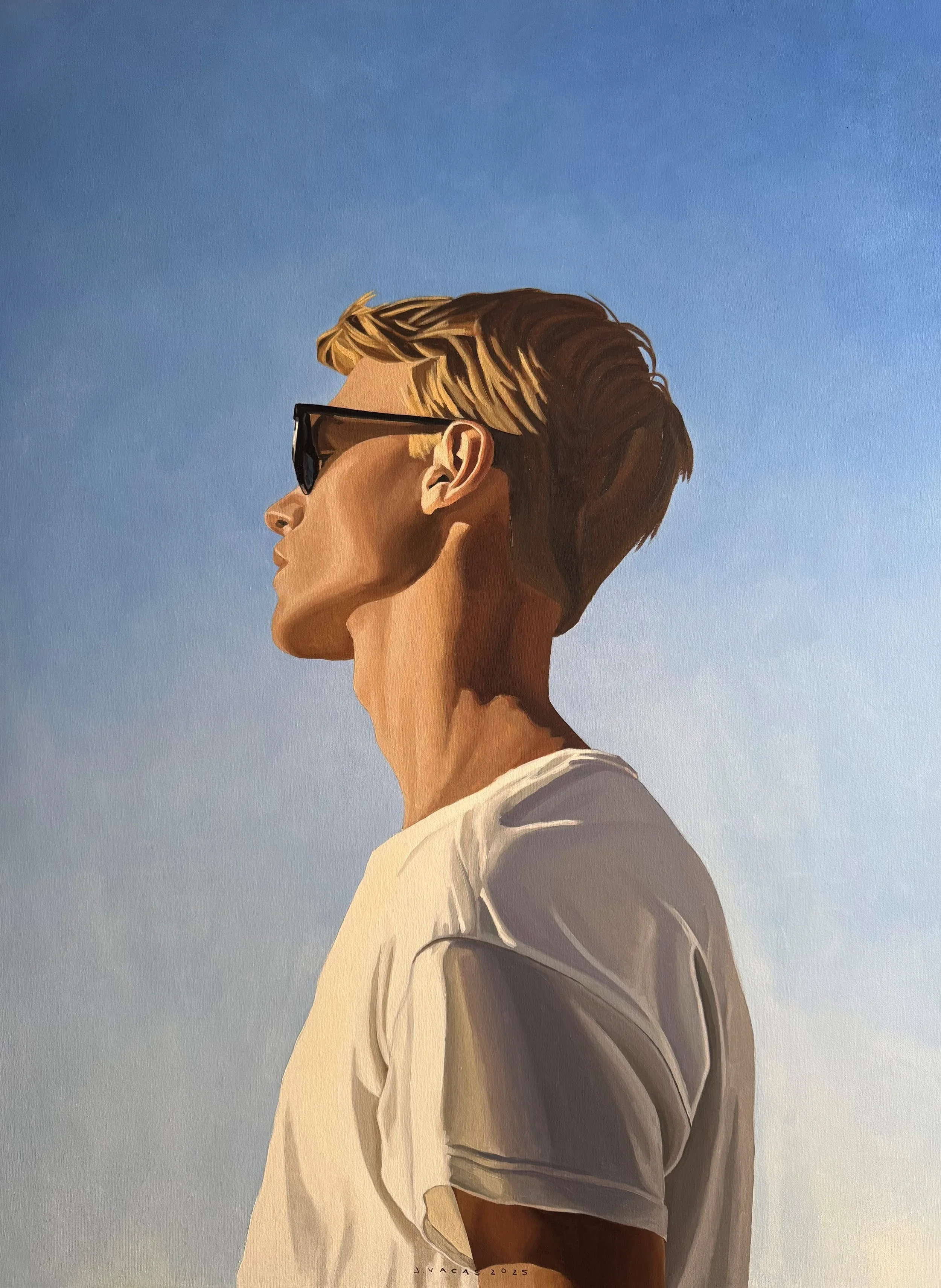
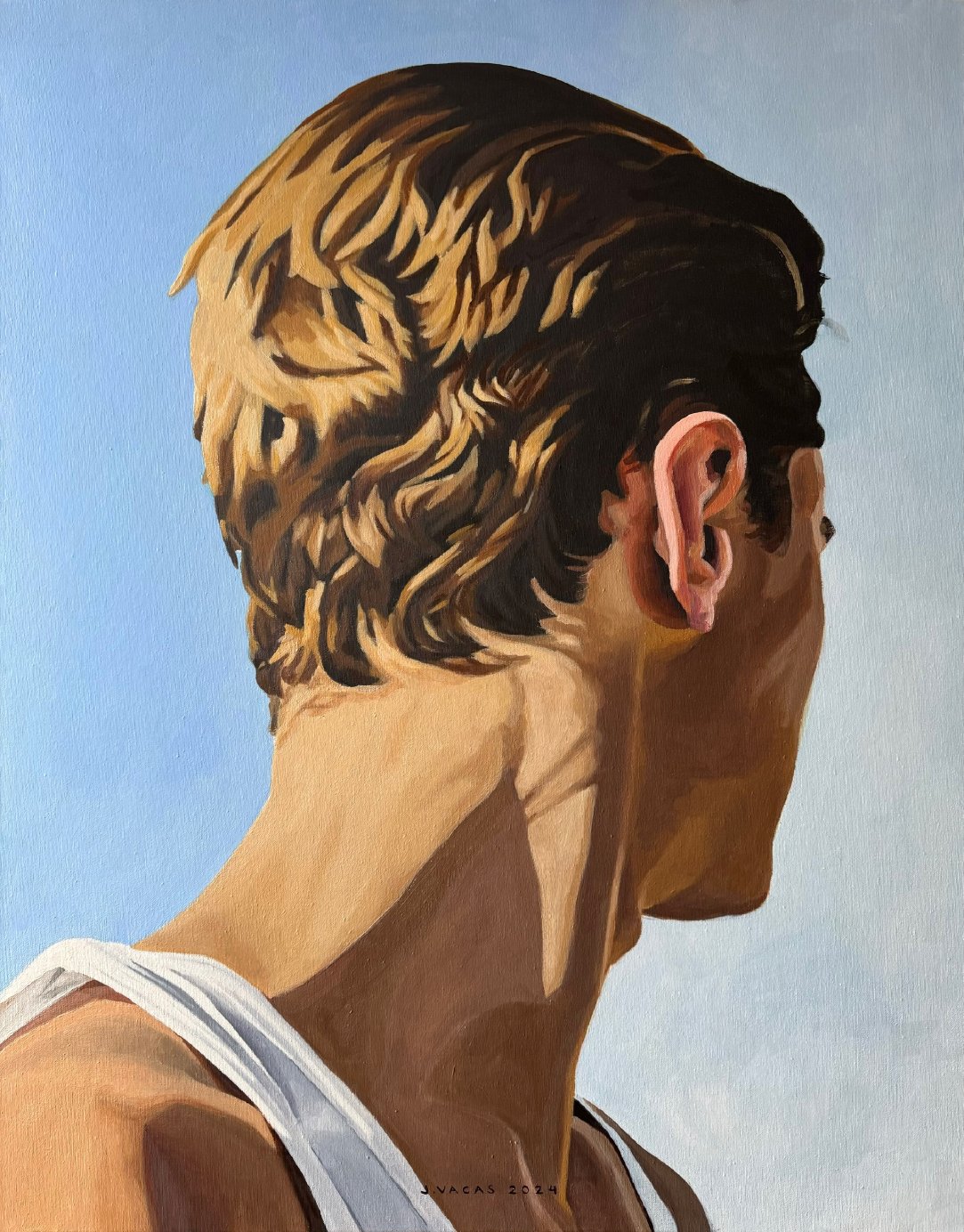
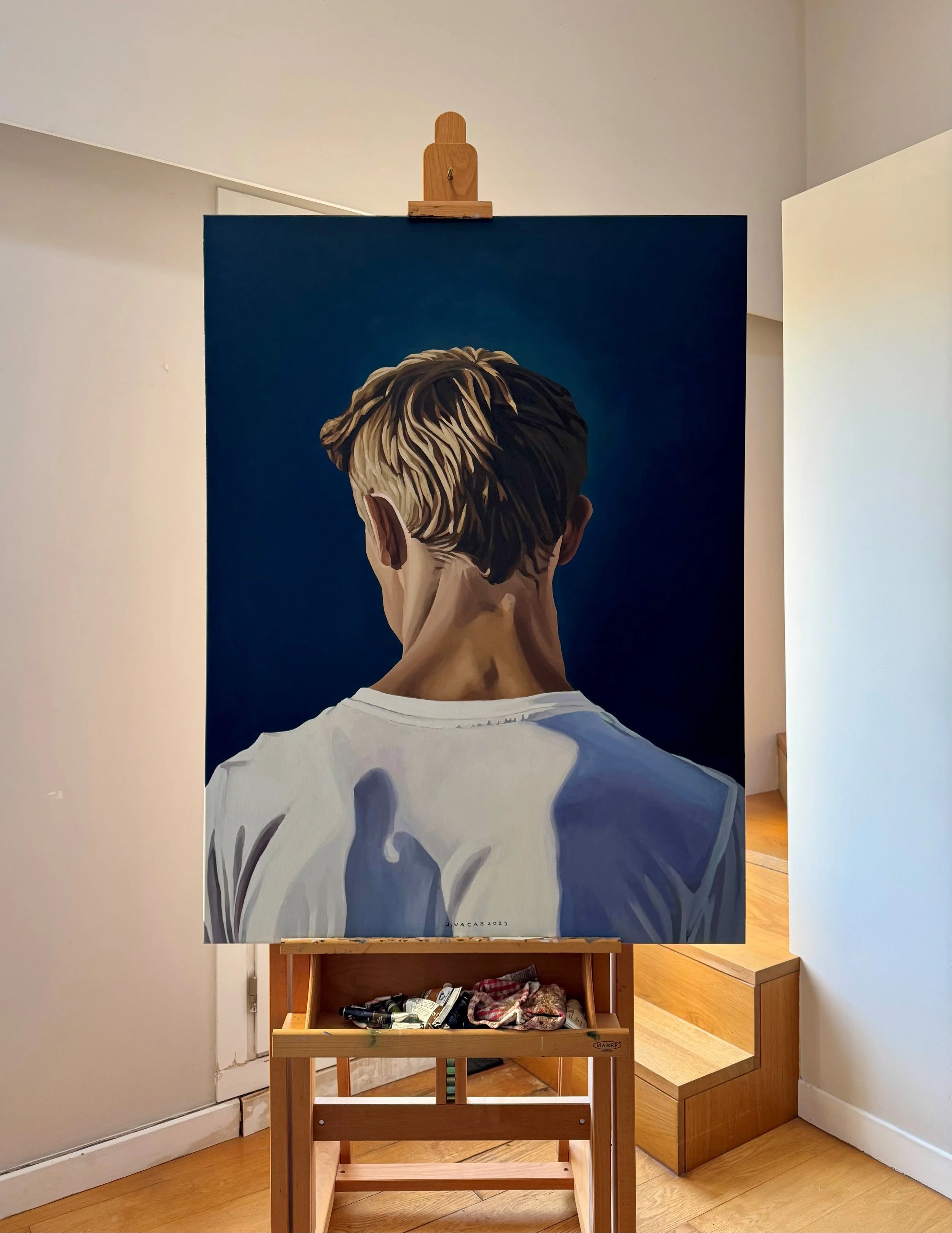
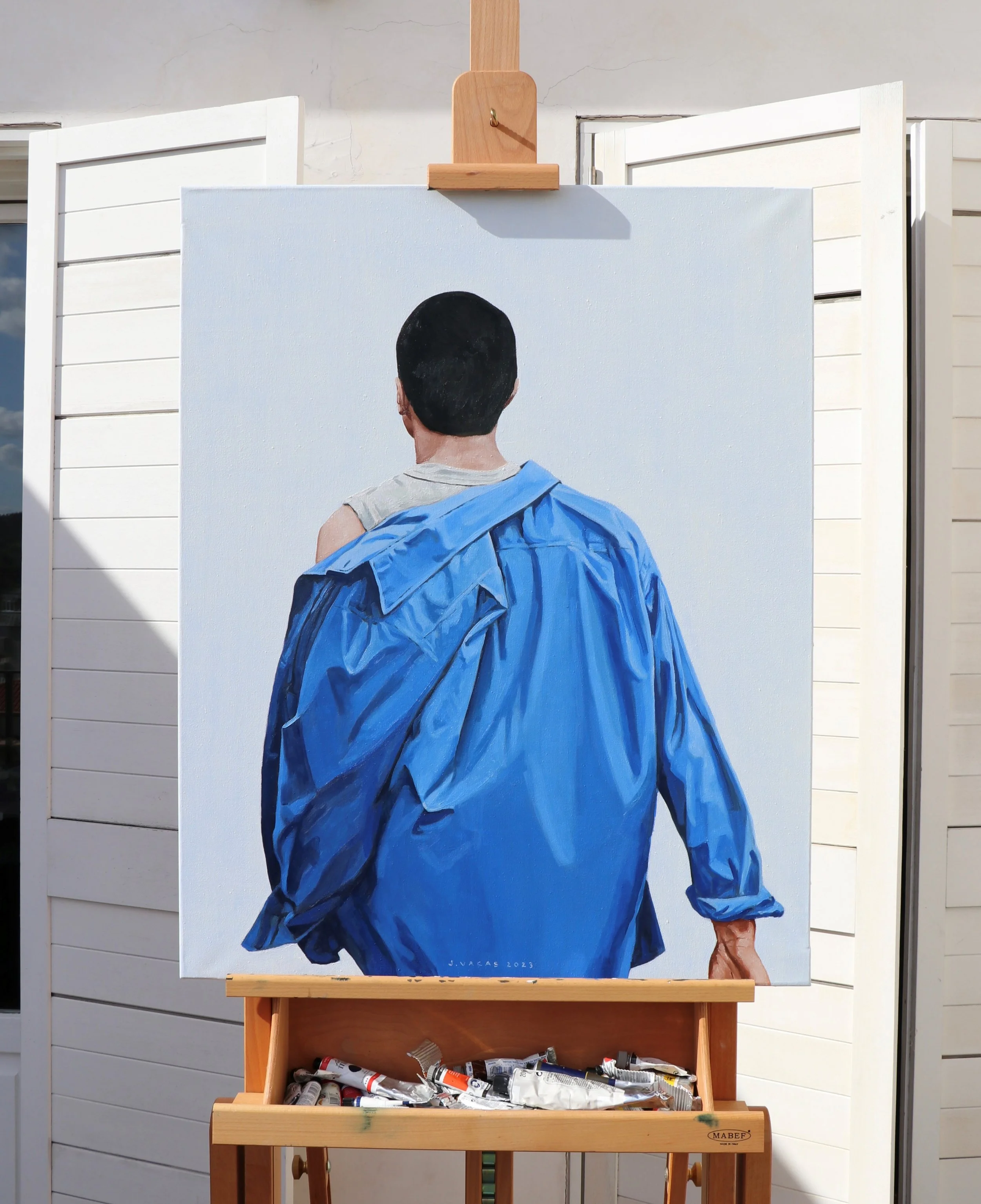
Jesús Vacas (Seville, 1977) is a Spanish artist and designer. He holds a degree in Fine Arts from the University of Seville and furthered his studies in Madrid, where his exposure to the world of fashion would decisively shape his career. He currently divides his time between Galicia and Madrid, combining his work as a menswear designer with his passion for oil painting.
His work focuses on the male figure, blending the rigor of classical training with a contemporary perspective influenced by fashion. Intimate and direct, his paintings o er a pause from the fast pace of the digital world, inviting us to rediscover the simple beauty of being human.
HANNAH RICHARDS (US): Painting, Print-making
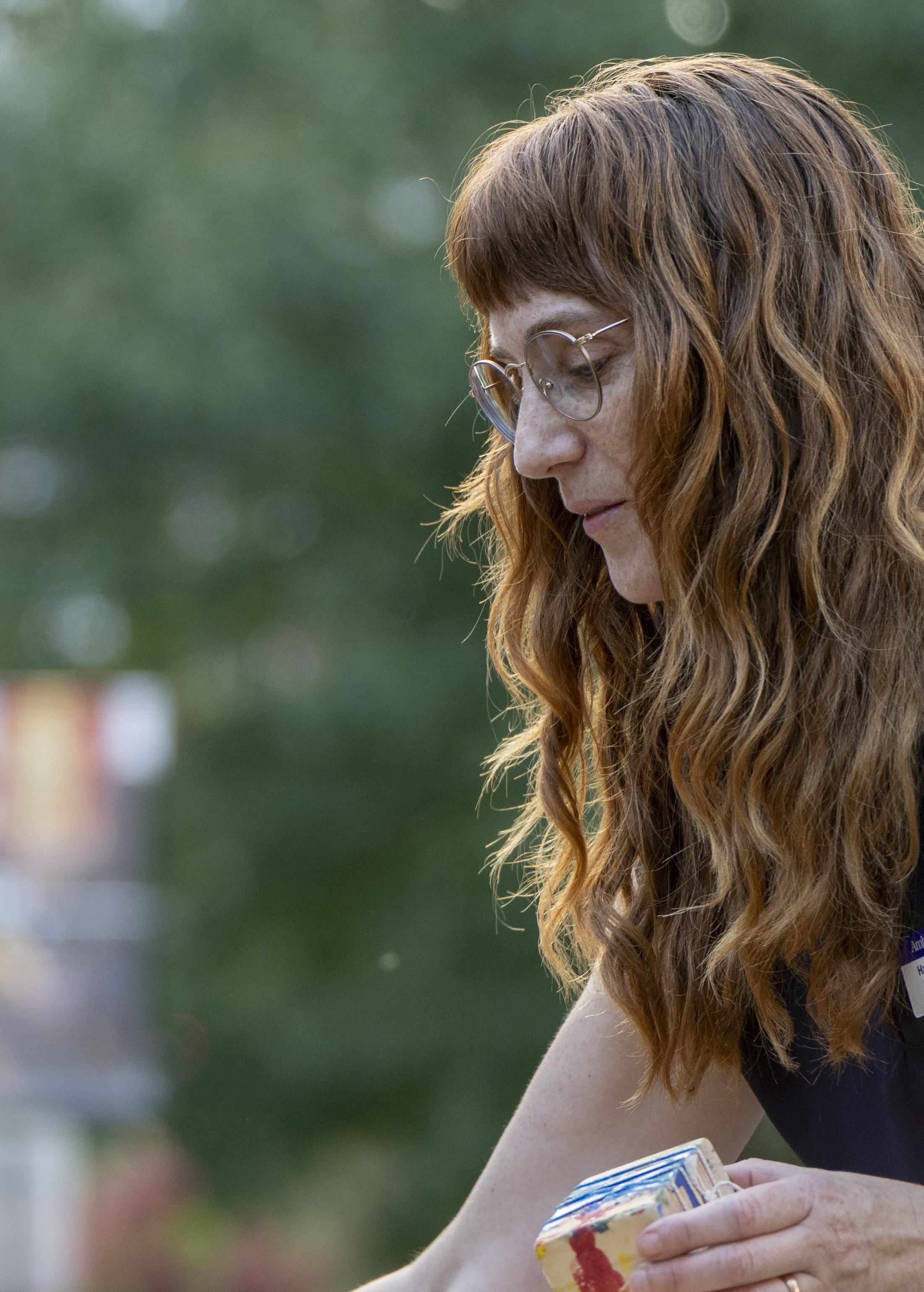
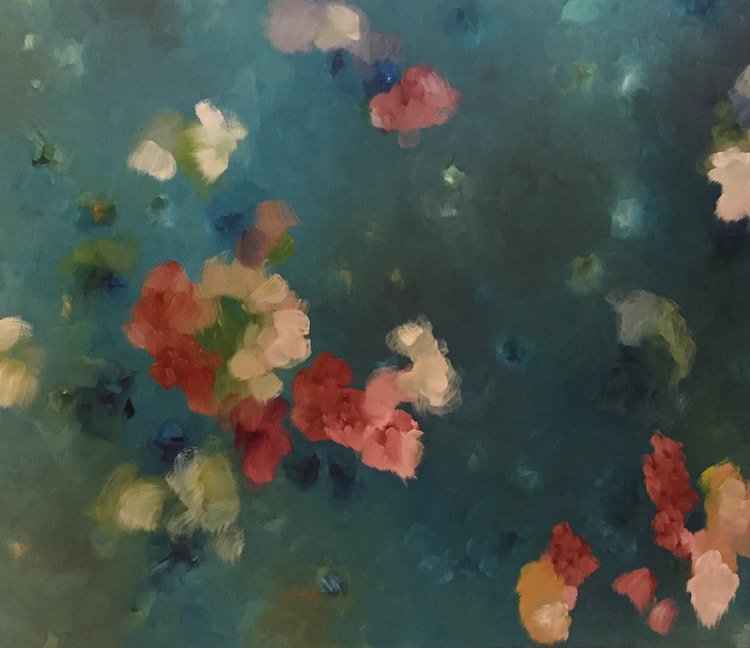
Hannah makes mostly prints and paintings, and sometimes things from paper and clay. They hold an MFA from UMass at Amherst and BA from Smith College, and were awarded a Kahn Foundation Fellowship in interdisciplinary studies in 2006 and a Schultz Foundation Grant for biology research in 2003. She's been a resident artist at Studios@MASS MoCA, Azule, Horned Dorset Colony, and Turkey Land Cove Foundation. Their work has been exhibited internationally, in several shows across the UK and at Manhattan Graphics Center. After many years teaching studio art, she now spends her days with students of all ages at the Mead Museum at Amherst College.
In my time at Hektor, I plan to work on a series in printmaking (monotype, no press needed) from exclusively reused materials as and on handmade paper. This includes intaglio printmaking on tetrapak plates, making sculptural bas-relief prints with paper pulp and natural materials found locally, and imagery inspired by local plant life and the environment on the finca and other parts of the island. It may also include experiments with hand-building small vessels from natural materials and paper pulp clay.
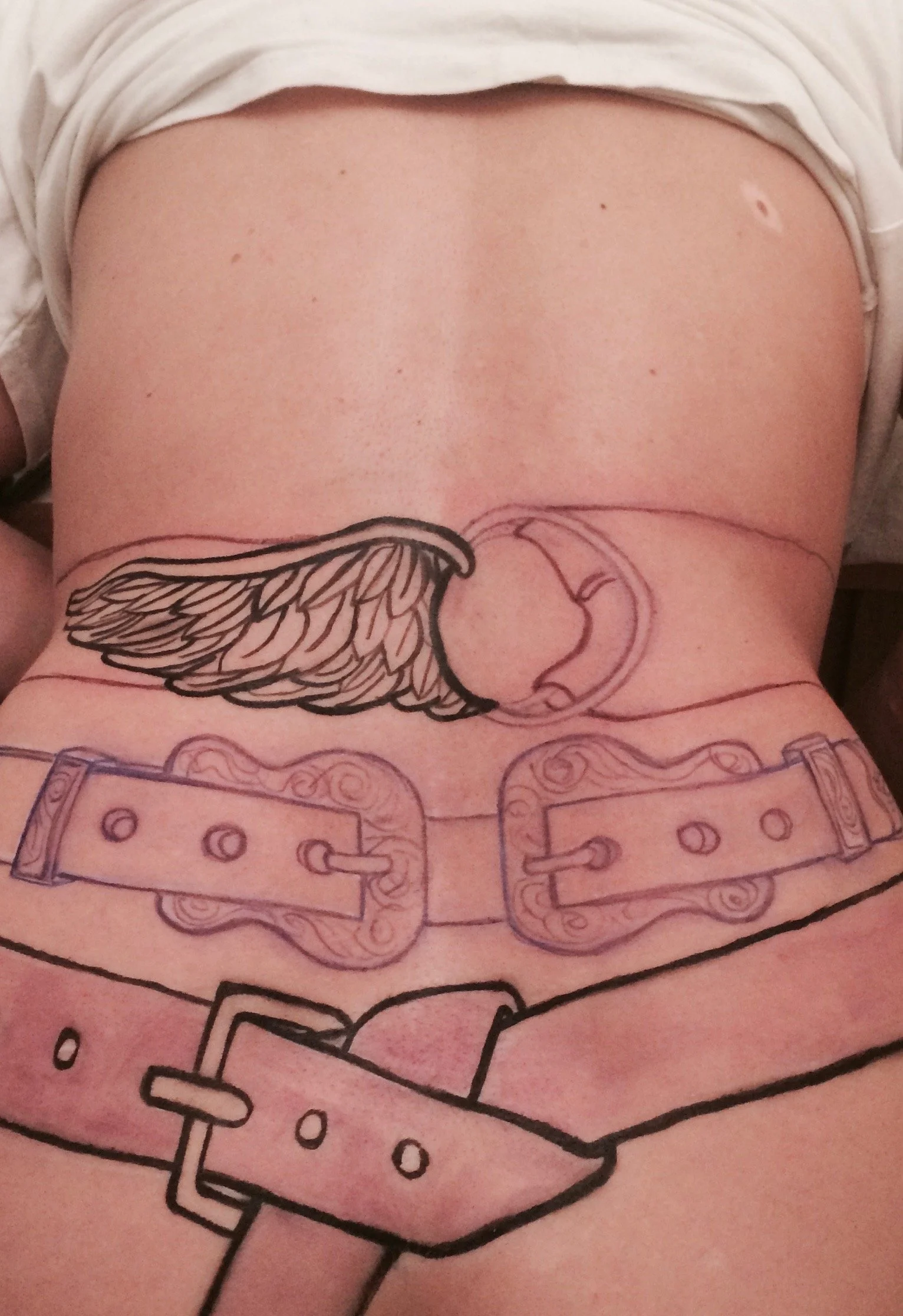
PRISKA MORGER (CH): Fashion
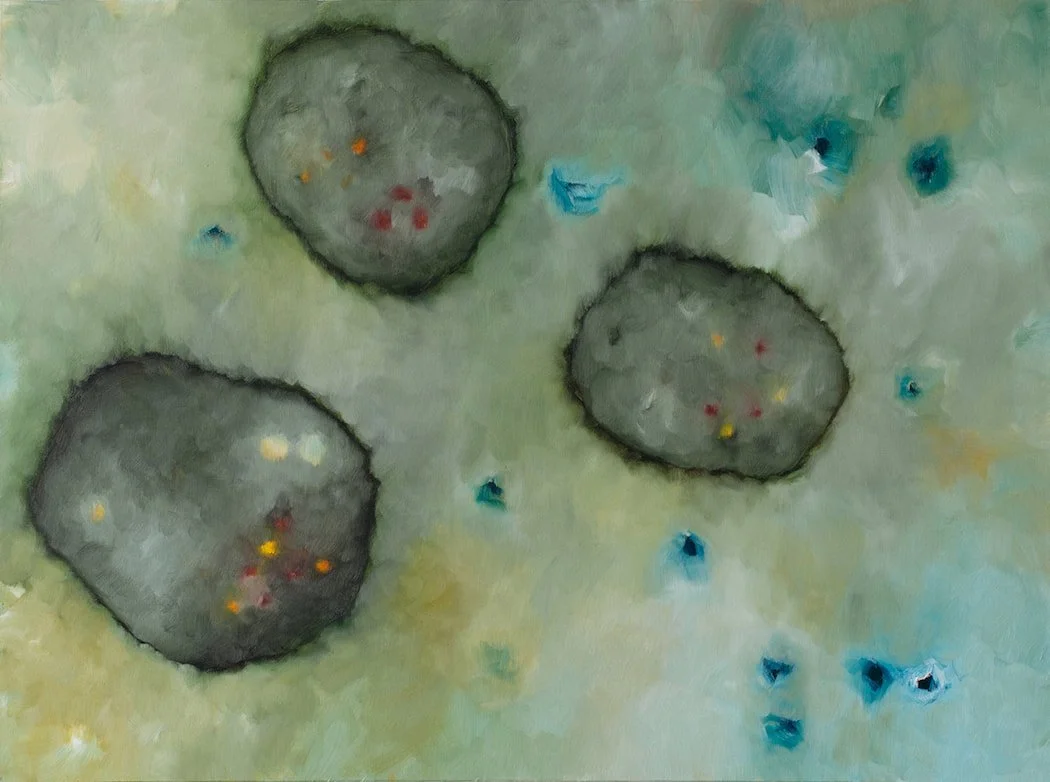
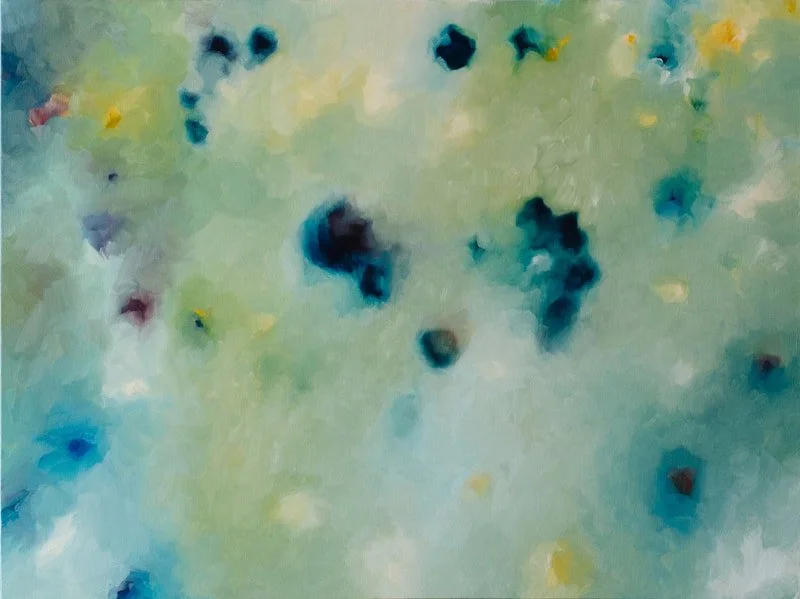
priskAMORger
I am an artist, therapist, and educator whose work unfolds as a radical somatic image practice.
Rooted in Eutony — the sensory practice developed by Gerda Alexander — I approach the body as a method, an archive, and a site of transformation. In this practice, perception becomes tangible material to work with. Muscular tone and tension are not obstacles but forms of expression - a language the body is contsantly speaking.
I work in layers.
Nail polish over nail polish.
Image over image.
Gesture over gesture.
Nothing is erased. Everything accumulates.
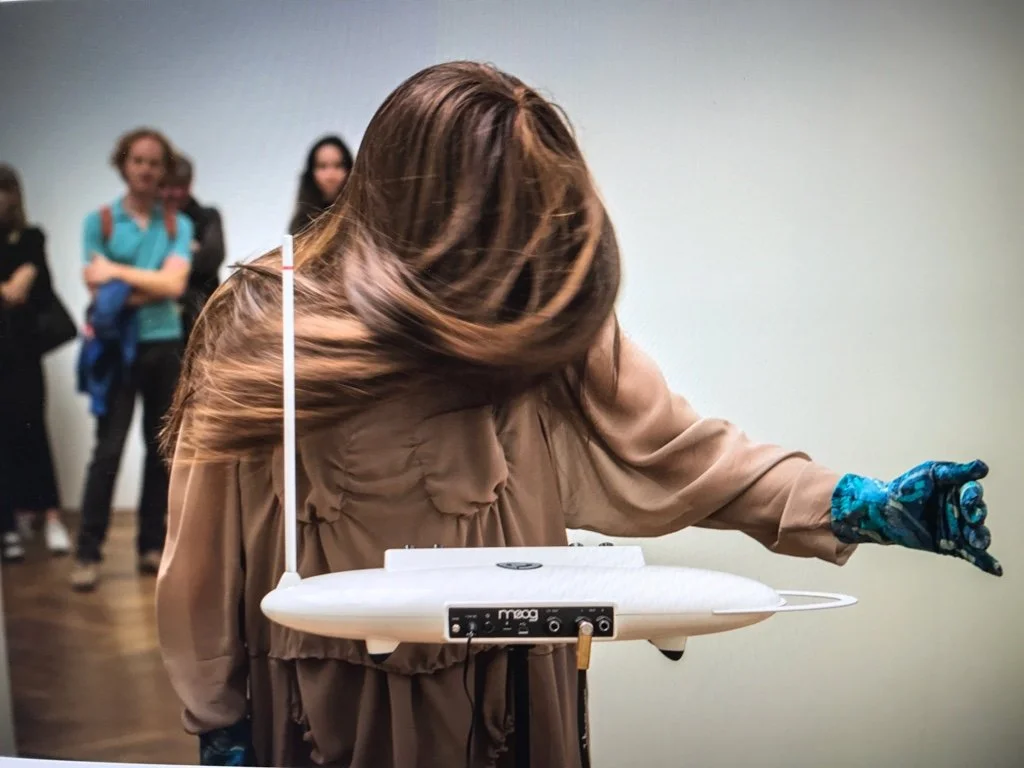
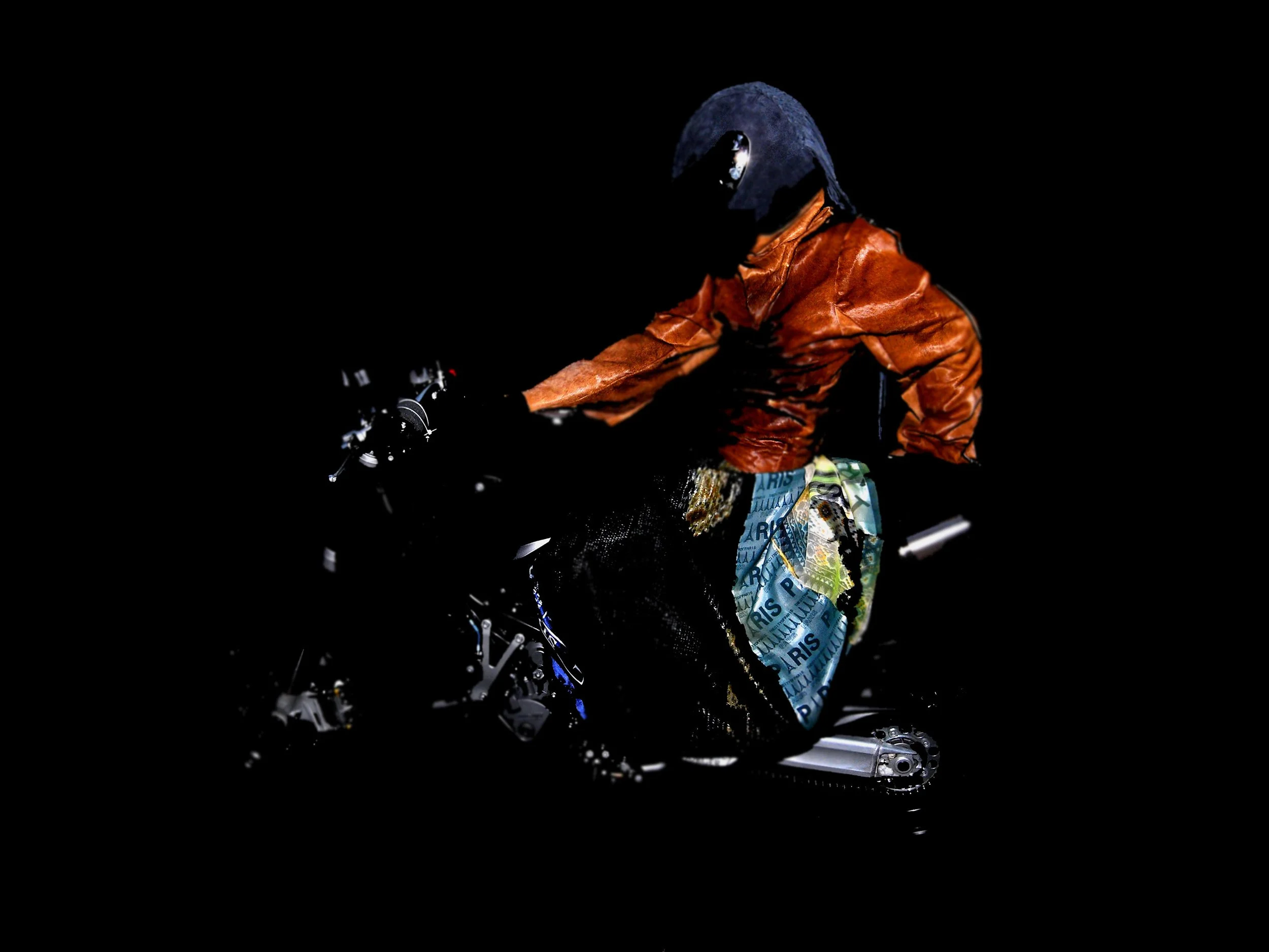
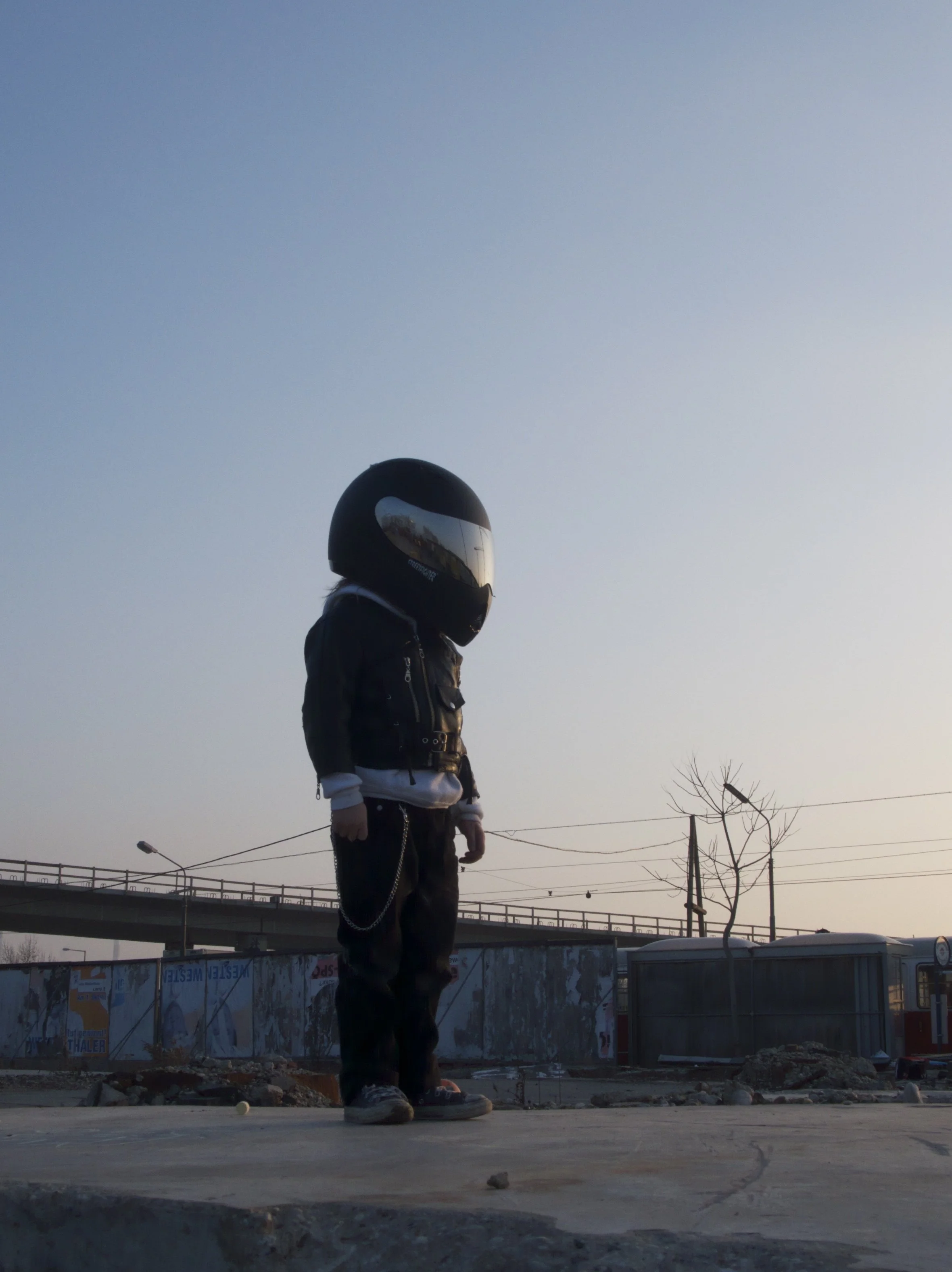
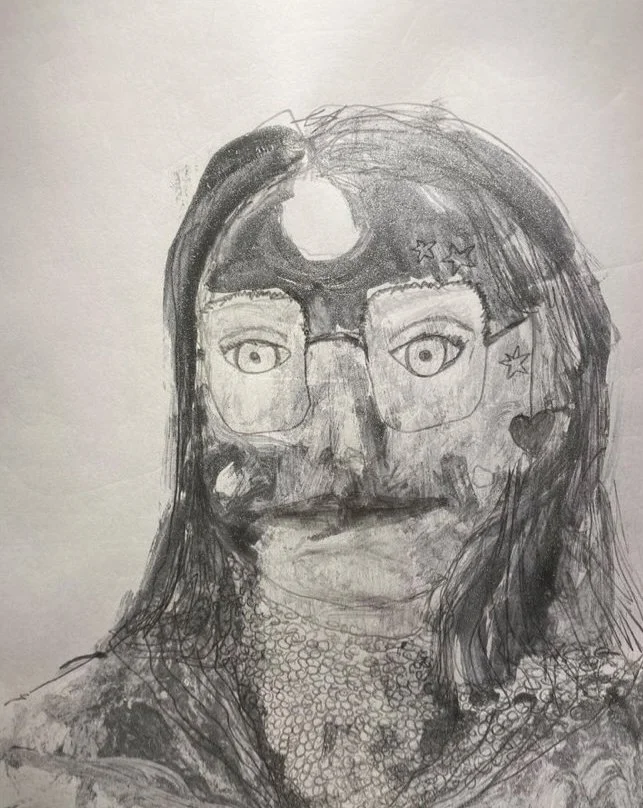
My practice transforms fashion from surface into frequency — from product into a process against the norm. Through clothing, make-up, masks, and performance, I amplify. The body speaks in signals. Proximity becomes sound. Distance becomes tension. The invisible becomes audible.
What began as a response to the gaze — to the marking of the vitiligo body — evolved into a methodology:
to redirect the gaze,
to turn exposure into agency,
to honor vulnerability with care.
Aura is not decoration. Aura is strategy.
Normal never was.
My ongoing research, «New Bodies Taking Shape», proposes fashion as a transformative, embodied discipline — a daily ritual of sensory recalibration. The “Tolerance Suit” becomes a practice of examining non-verbal language, confronting inherited codes, and embodying values rather than merely displaying them.
This is not self-styling.
This is structural recalibration.
Fashion as fear-negating magic.
Fashion as signal transmission.
The body as manifesto.
About
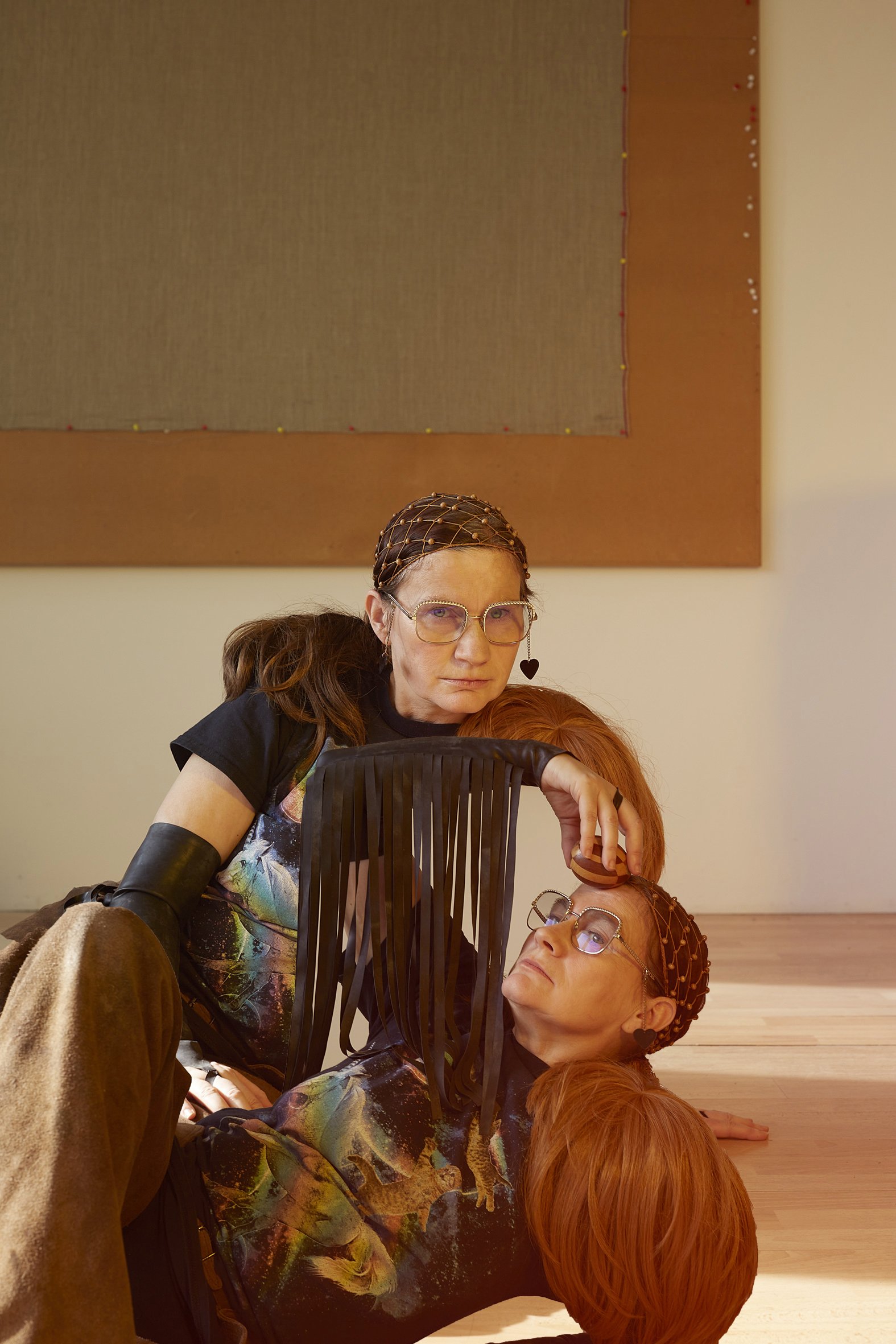
Picture by Yasmina Haddad
prof.priskAMORger studied at the Basel School of Design before moving to Antwerp, where she worked as first creative assistant to Raf Simons and later as a freelance consultant for Haider Ackermann. After ten years in Belgium, she continued her academic path at the University of Applied Arts Vienna, working as a creative assistant to Professor Veronique Branquinho in Fashion Design and Theory. During this time, she co-founded the label Radic/Morger with Danijel Radic. The label became known for its outstanding guerrilla actions during Paris Fashion Week.
Since 2009, she has been teaching at HGK Basel – Academy of Art and Design, University of Applied Sciences and Arts Northwestern Switzerland. From 2011 to 2021, she shaped the BA program Doing Fashion as Creative Lead. Her practice redefines fashion education as a holistic, embodied, and performative field, bridging Eutony (developed by Gerda Alexander) with non-standardized fashion design, critical reflection, and radical experimentation.
She initiated and developed the award-winning Doing Fashion Paper publication series (Issues 0–7), recipient of the Design Prize Langenthal (Switzerland) for Communication. The publication established a platform for artistic research, connecting BA and MA student work with contemporary discourse.
Her experience across independent label practice, high-end fashion, and academic research informs her current work: connecting radical and holistic design experimentation with critical reflection and institutional transformation. She actively fosters a nationwide network of designers and promotes alternative concepts capable of functioning within — and challenging — today’s fashion industry.
Her practice unfolds as a continuous dialogue between making, teaching, and critical inquiry. Her current research centers on the development of an embodied design toolbox titled NEW BODIES TAKING SHAPE, rooted in the practice of Eutony as developed by Gerda Alexander. It proposes fashion as a transformative practice — one that listens to the body rather than producing normative ideals.
Alongside her academic work, she maintains an expanded artistic practice grounded in a holistic approach that moves between fashion, lecture performance and sound art. Her work has been presented at Kunstmuseum Basel with Intuitive Stimulans Loves You – Future Arena of Wellbeing, at Kunsthalle Basel with Look Therapy, at Ausstellungsraum Klingental Basel and at Sexyland Amsterdram with Avant-Gradening, and at Humbug Basel with Normal Never Was. Her nail polish edition was presented at the off-space of AMORE Basel during Art Basel. In Vienna, she participated in TOMBOLA V at the offspace we love SCHOOL and contributed the lecture performance doing fashion look therapy to the symposium practice based fashion theory at MAK – Museum für angewandte Kunst, organized by the Academy of Fine Arts Vienna, Institute for Art Education.


FLORE TANGHE (BE): multimedia
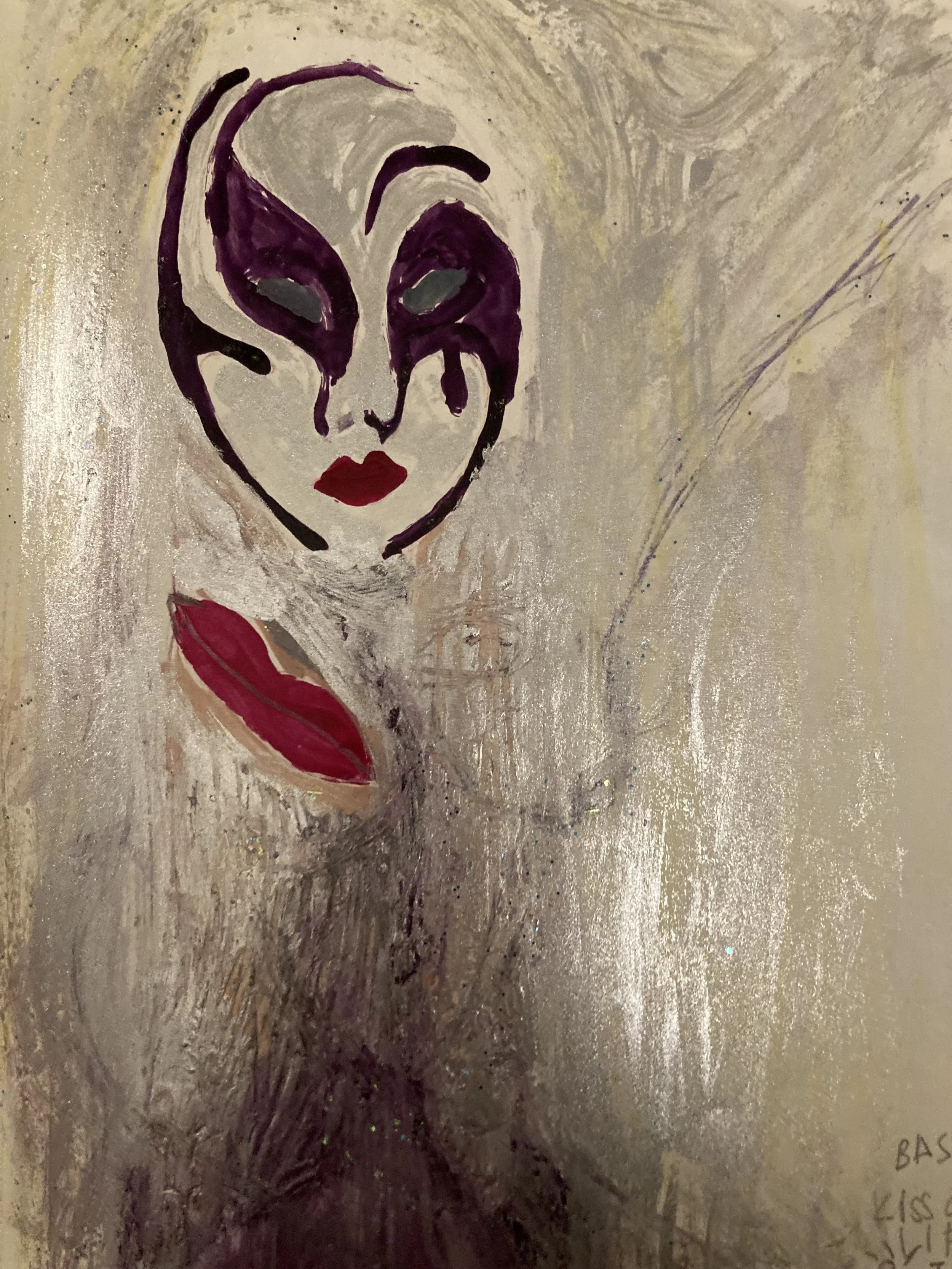
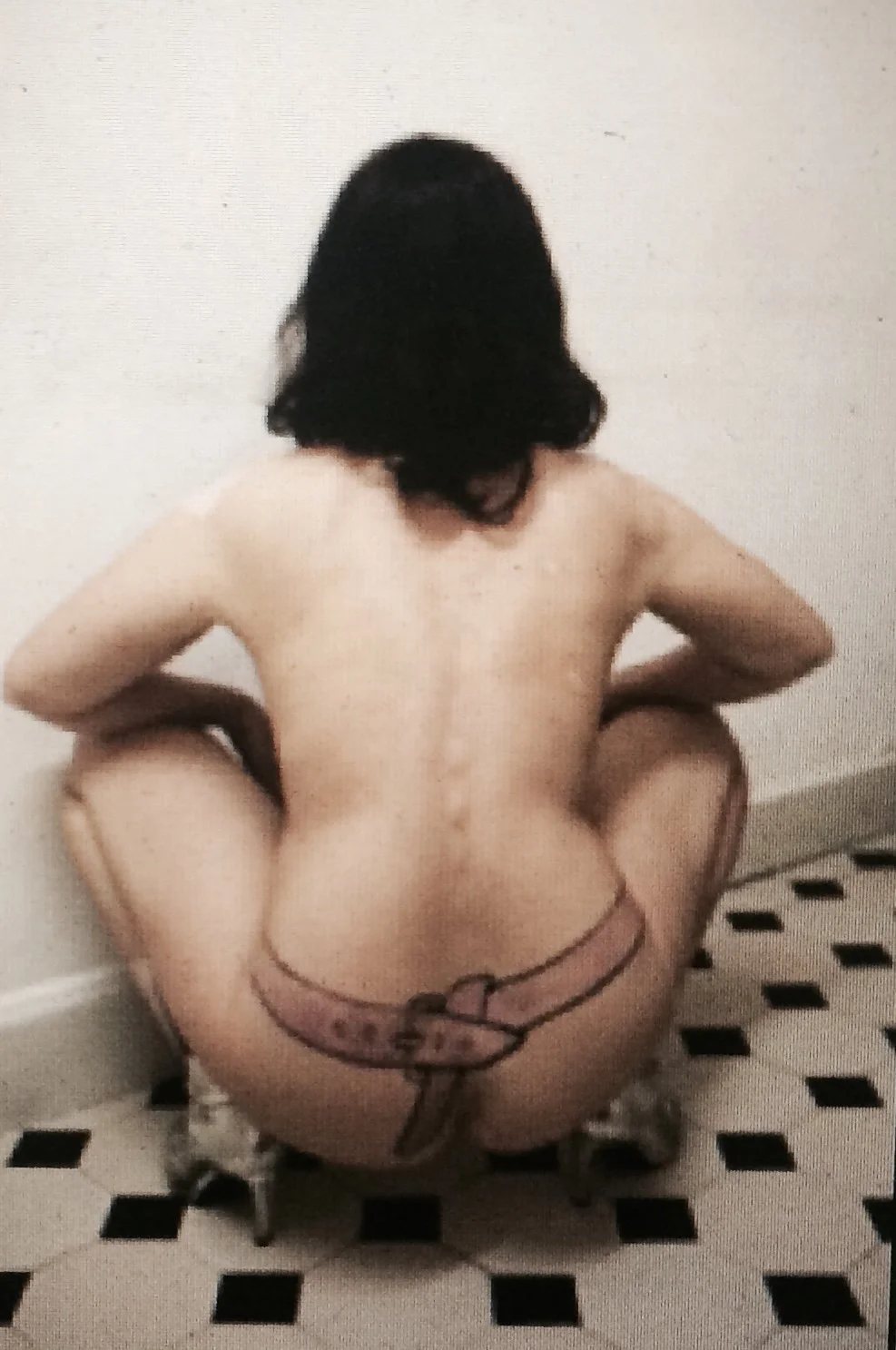
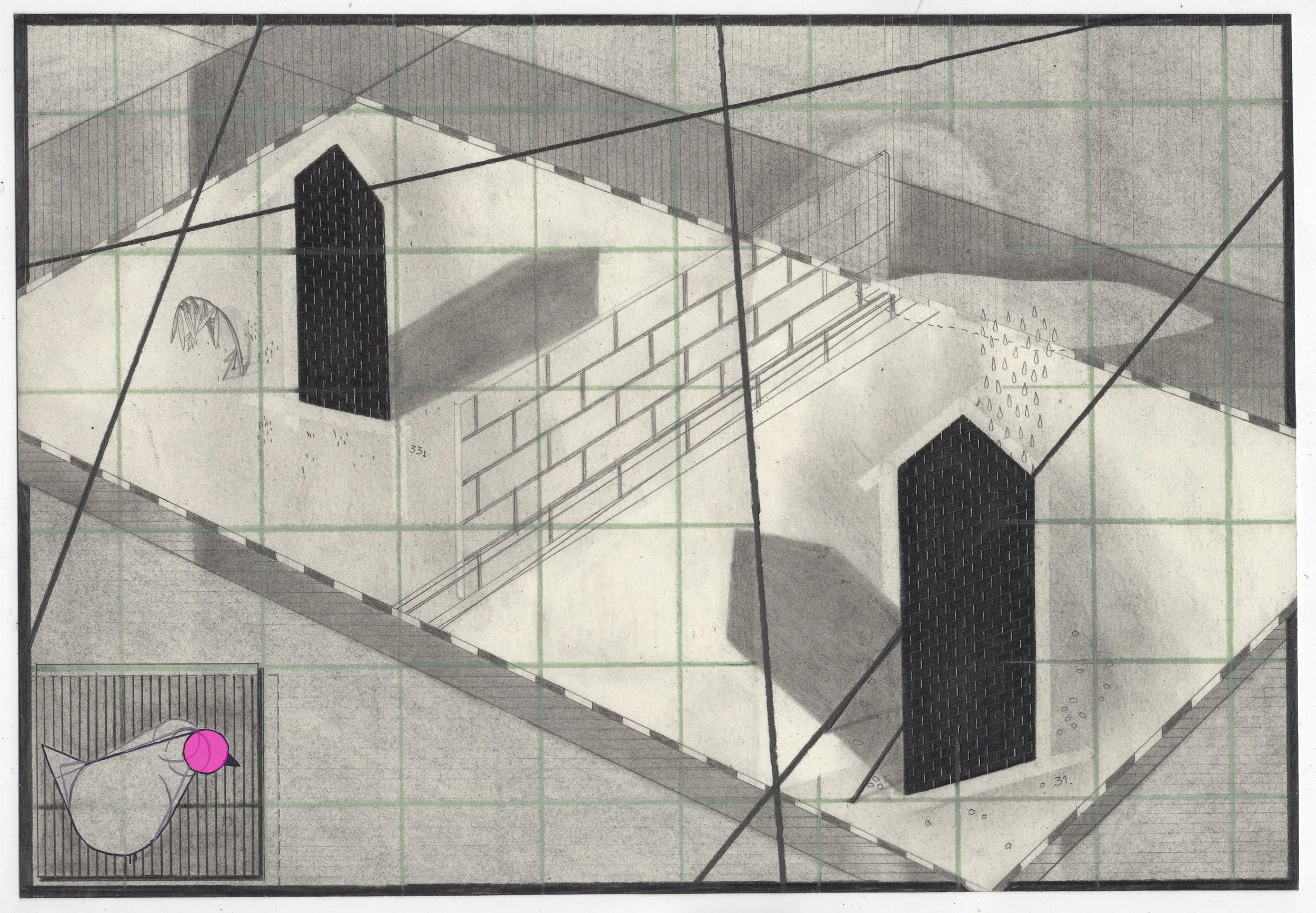
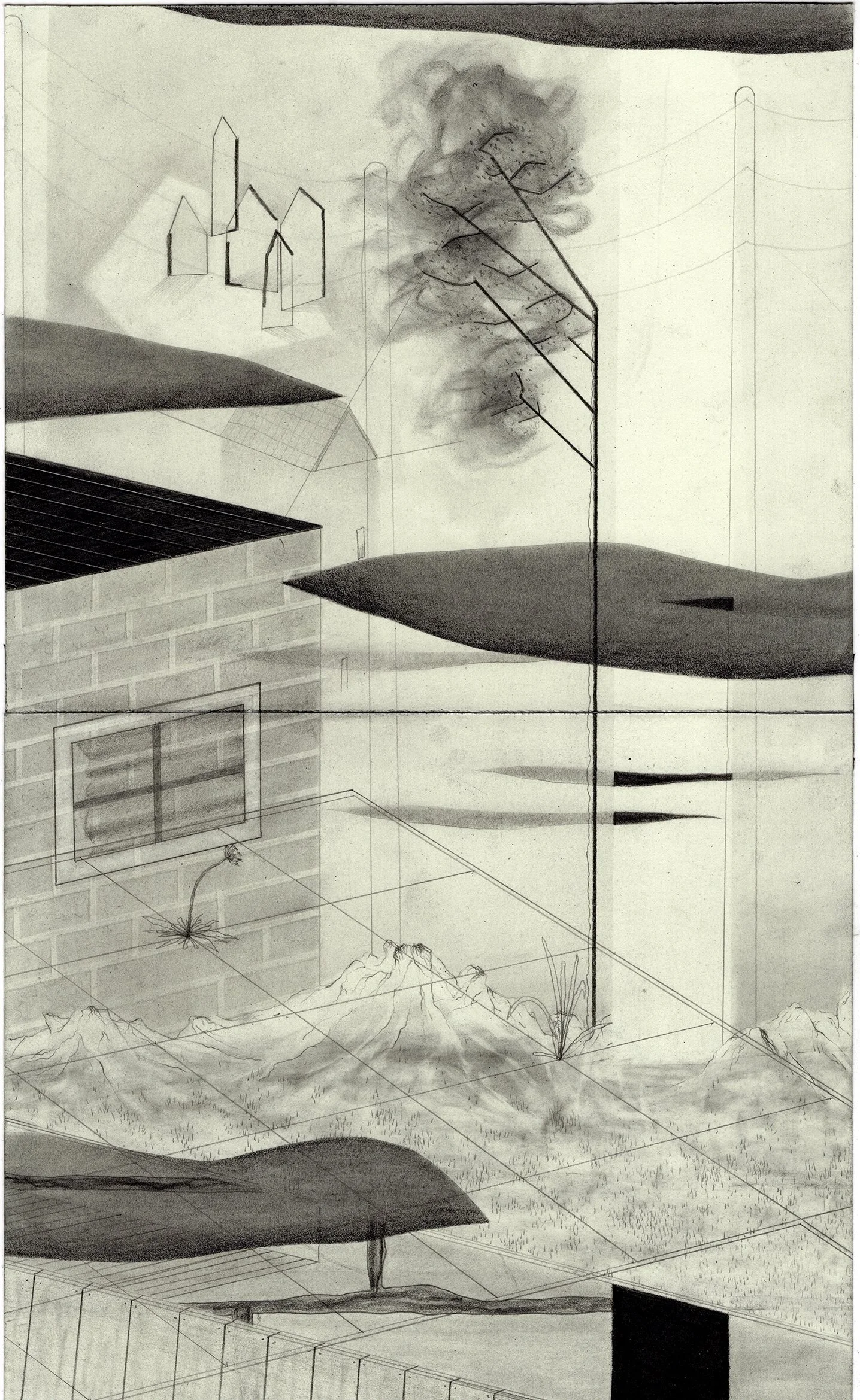
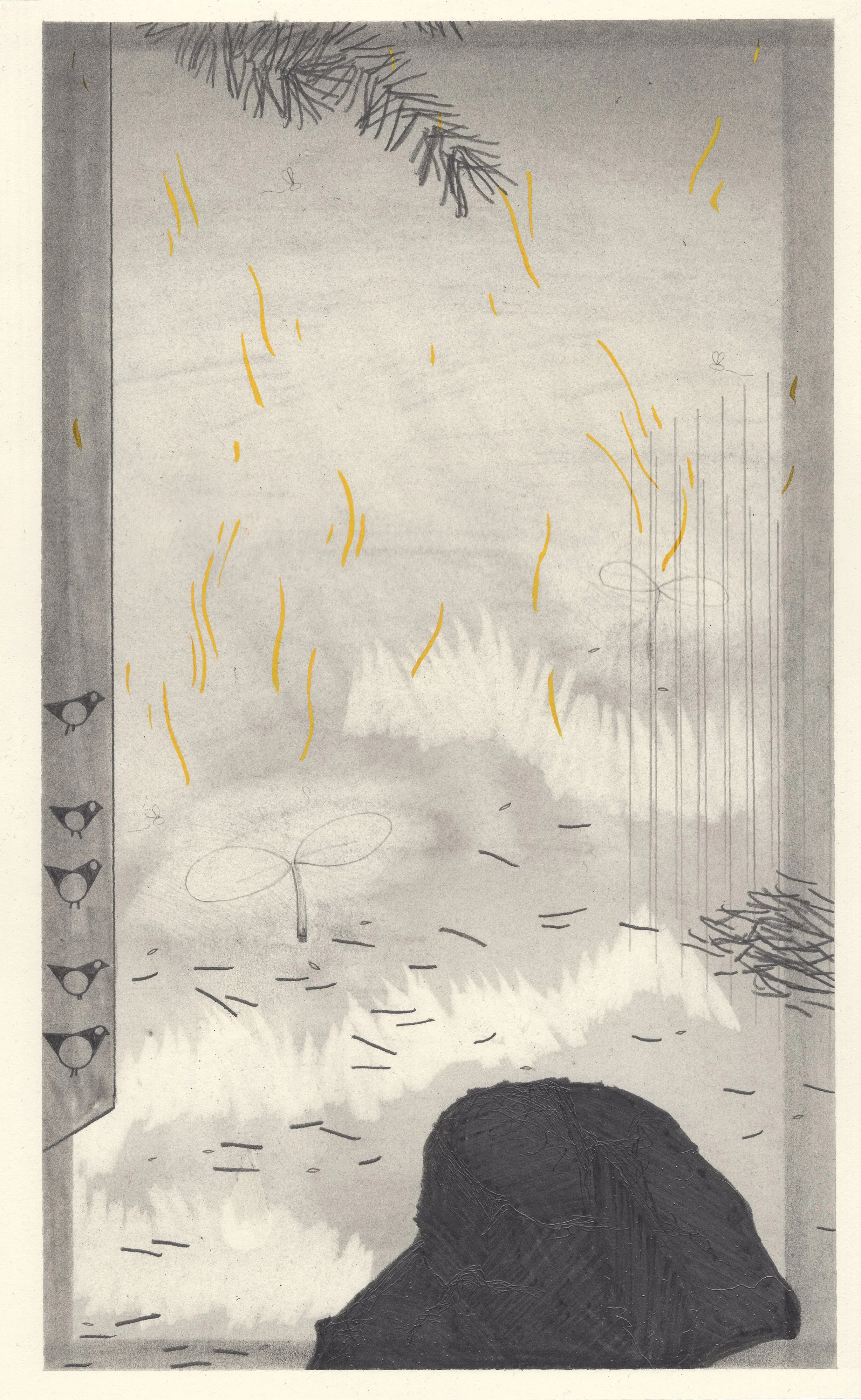
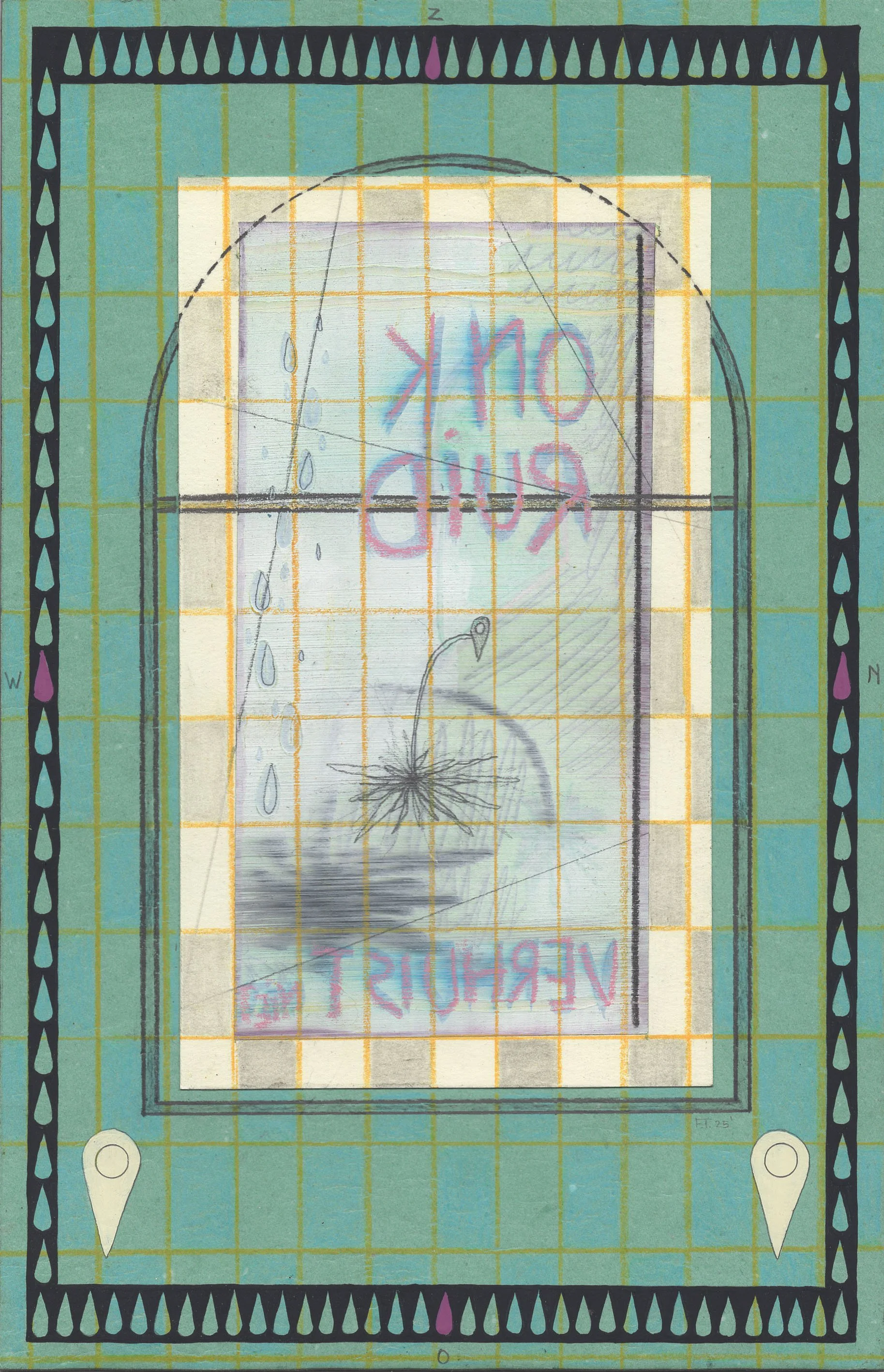
Flore Tanghe (1991) is a visual artist based in Ghent, tracing the space around her while navigating the complexity of daily life. Everyday elements return as recurring motifs that carry layered and shifting meanings, echoing the repetitiveness of her feelings, surroundings, interactions and situations. Through drawings, scale models, photographs and prints, she constructs quiet constellations in an attempt to grasp and reorder her world. While the human figure remains absent, the work is built from personal experience, unfolding through architectural, natural and spatial elements shaped by processes of recreation and simplification.
My work consists of drawings, scale models/objects, and graphic art to process experiences, translate desires, and immortalize observations. Space is invariably how I give form to these elements, and the human figure is absent even though it is the subject.
As a child, I grew up in a village and in the weekends I went to the countryside where cows, frogs, grasshoppers, rivers, eels, long grass, … where making my playground. Now I have been living in the city for years and long increasingly for the countryside, where I find peace and am deeply inspired artistically. Animals, plants, walks—the tranquility is something I try to seek out in every spare moment. In recent years, thoughts about how the nature around us is increasingly man-made and altered have come to the surface. It feels like a loss of wild nature, I feel sad I will maybe never ‘know’ true wild nature anymore. And I feel partly responsible for it. We as humans are not the center of the world, even though the majority thinks and behaves as if we are and this idea is on the surface a lot. This is a theme that is also beginning to influence my visual art, and I am seeking a period of focus to allow this to unfold in my work. For this, I am looking for a place surrounded by nature, tranquility, and animals. Apart from that, I am currently trying to strengthen the connection between my drawings, objects, and printmaking.
So I would mainly use this period to draw and let spatial elements grow closer together. The spatial aspect often stems from small objects or textures I find in my surroundings, which emerge from my drawings or are subsequently incorporated back into my drawings as images. I hope to find different types of stones on this island, collect bits of debris, use other textures… and, above all, let myself be inspired by a different environment.
SARA DAL MAS (IT): Ceramics
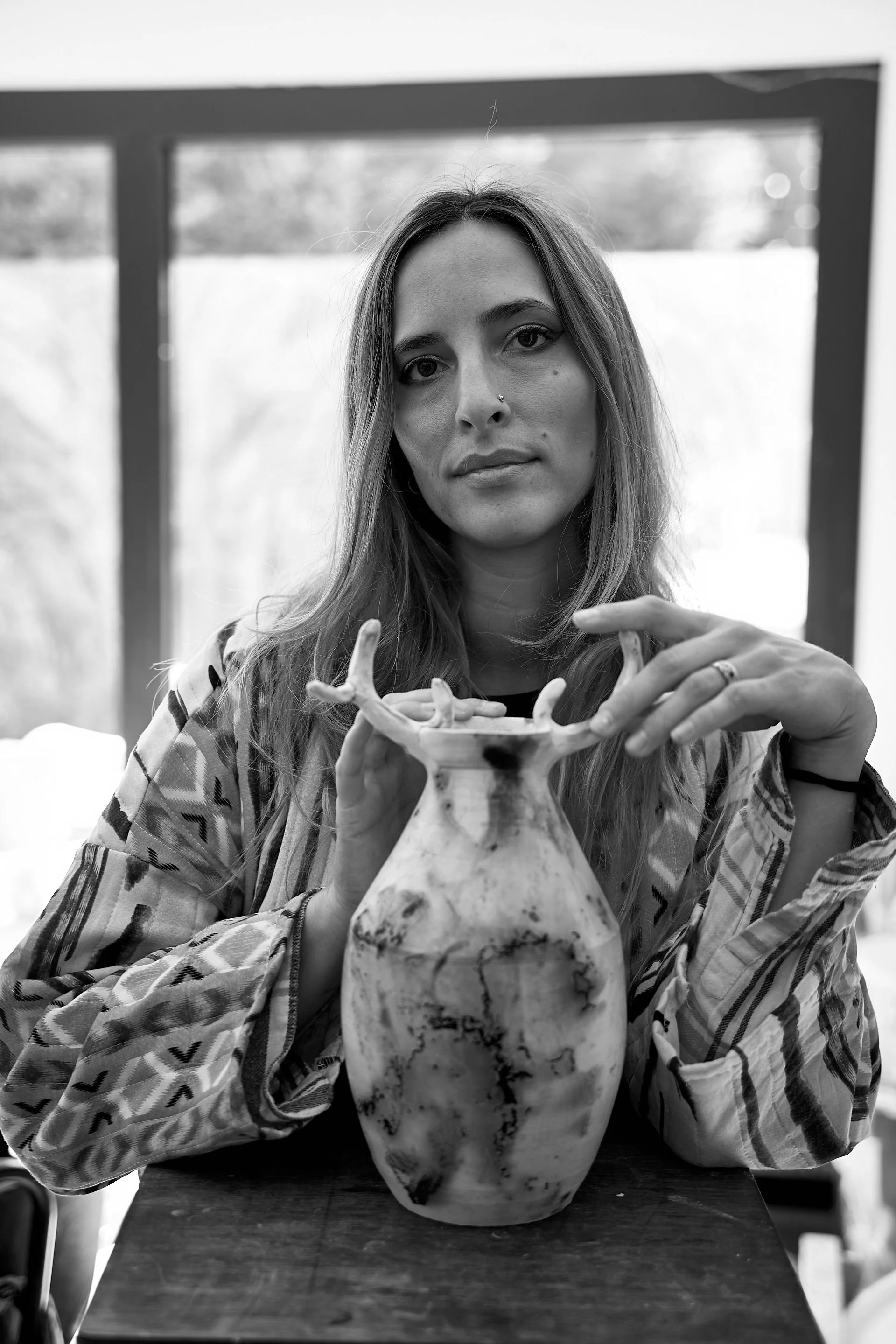
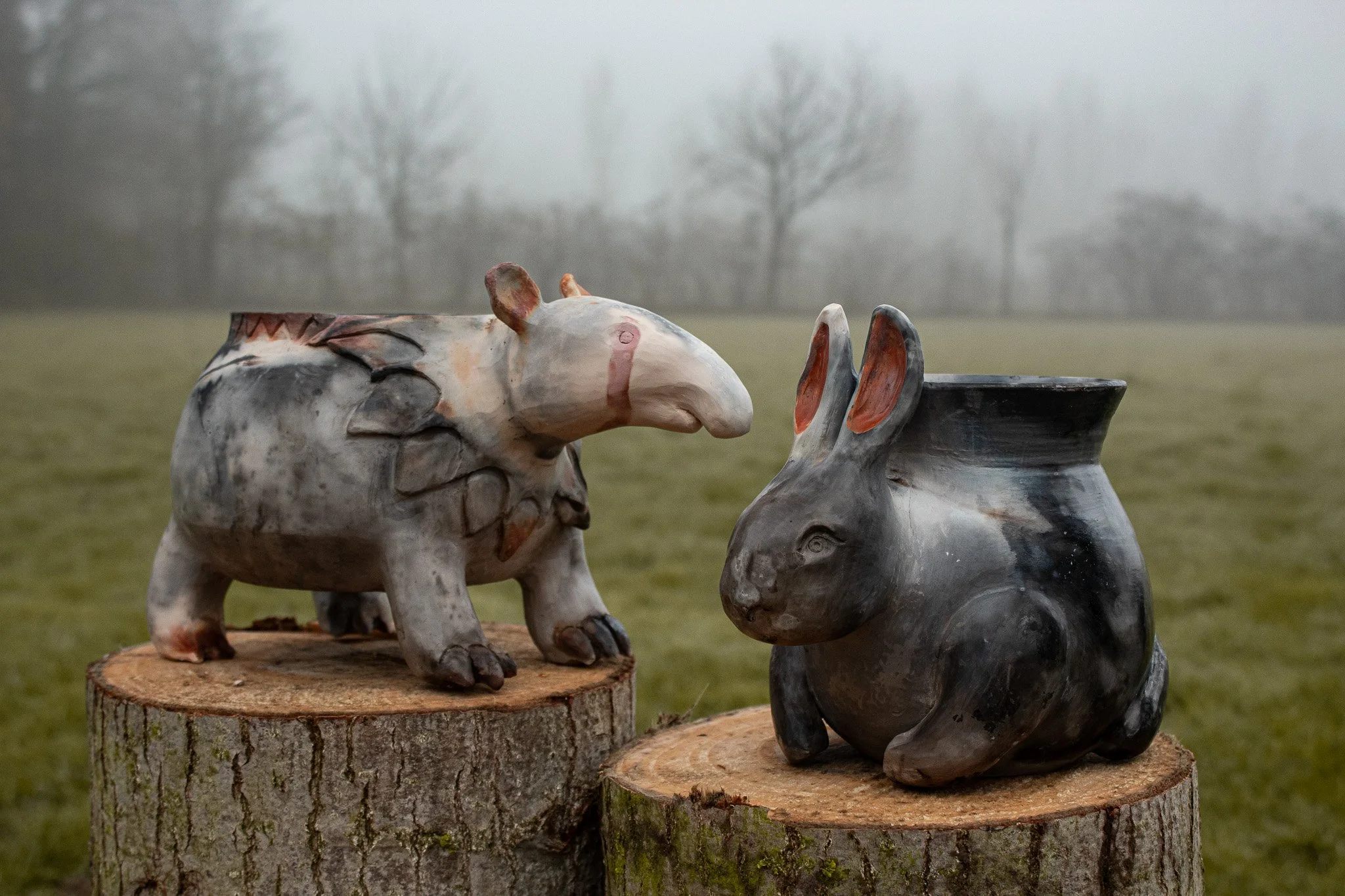
Sara Dal Mas is a ceramic artist based in Venice, Italy. She runs her studio, Verderame Pottery, where she works as an artist and ceramic instructor, organizing workshops, teaching ceramics, and collaborating with schools.
She was born on January 26, 1995, and graduated with honors (cum laude) in Painting and Decoration from the Academy of Fine Arts of Venice.
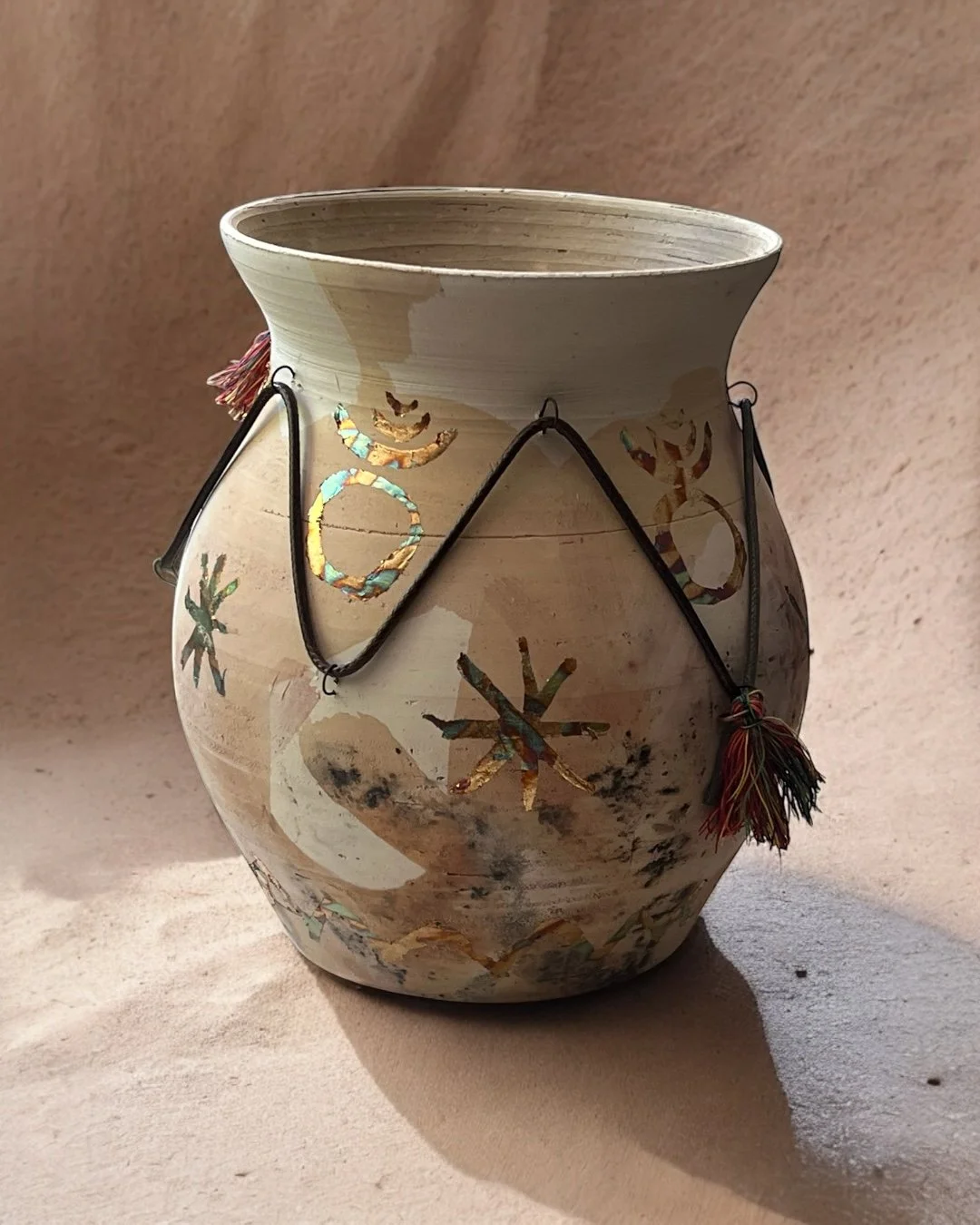
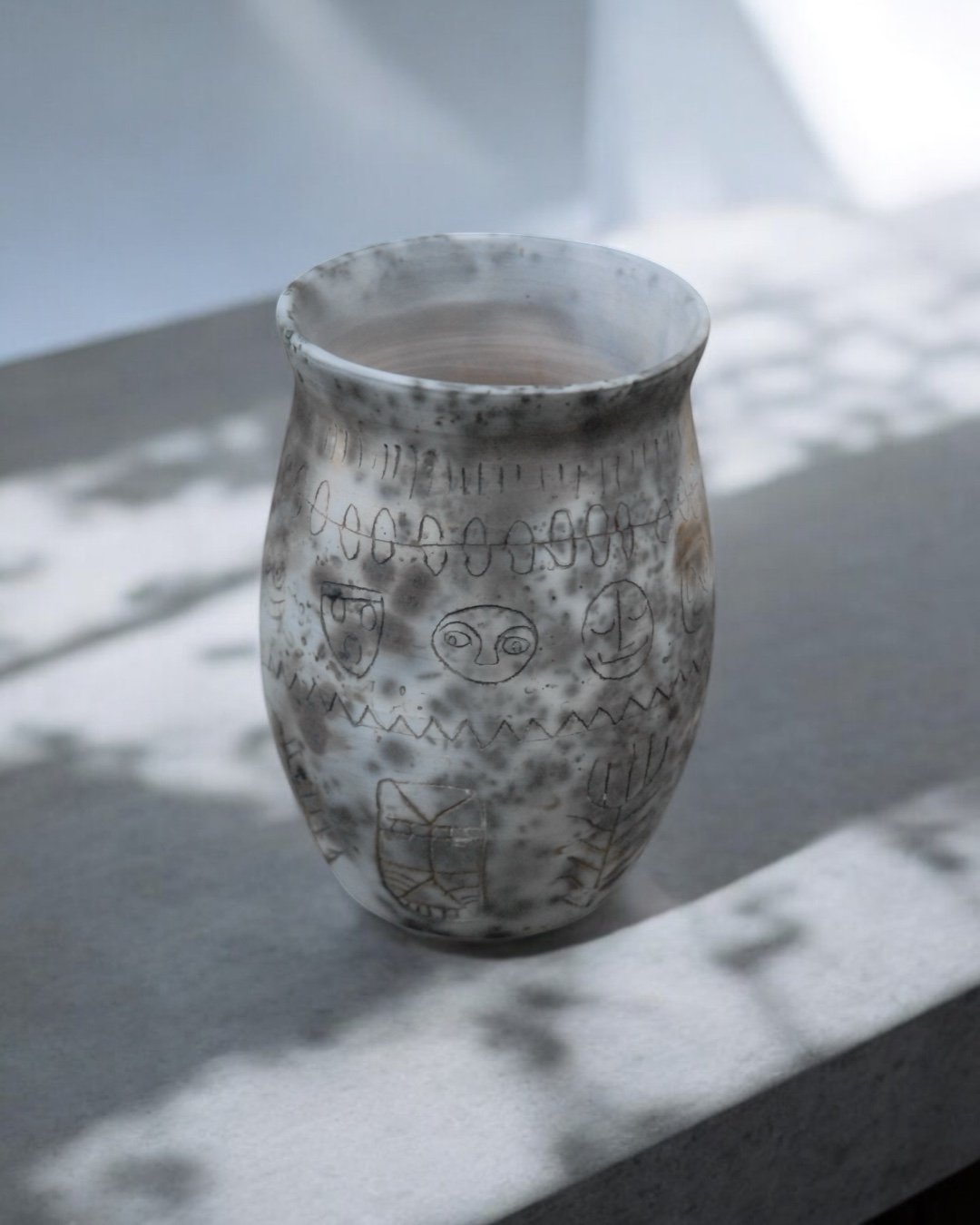
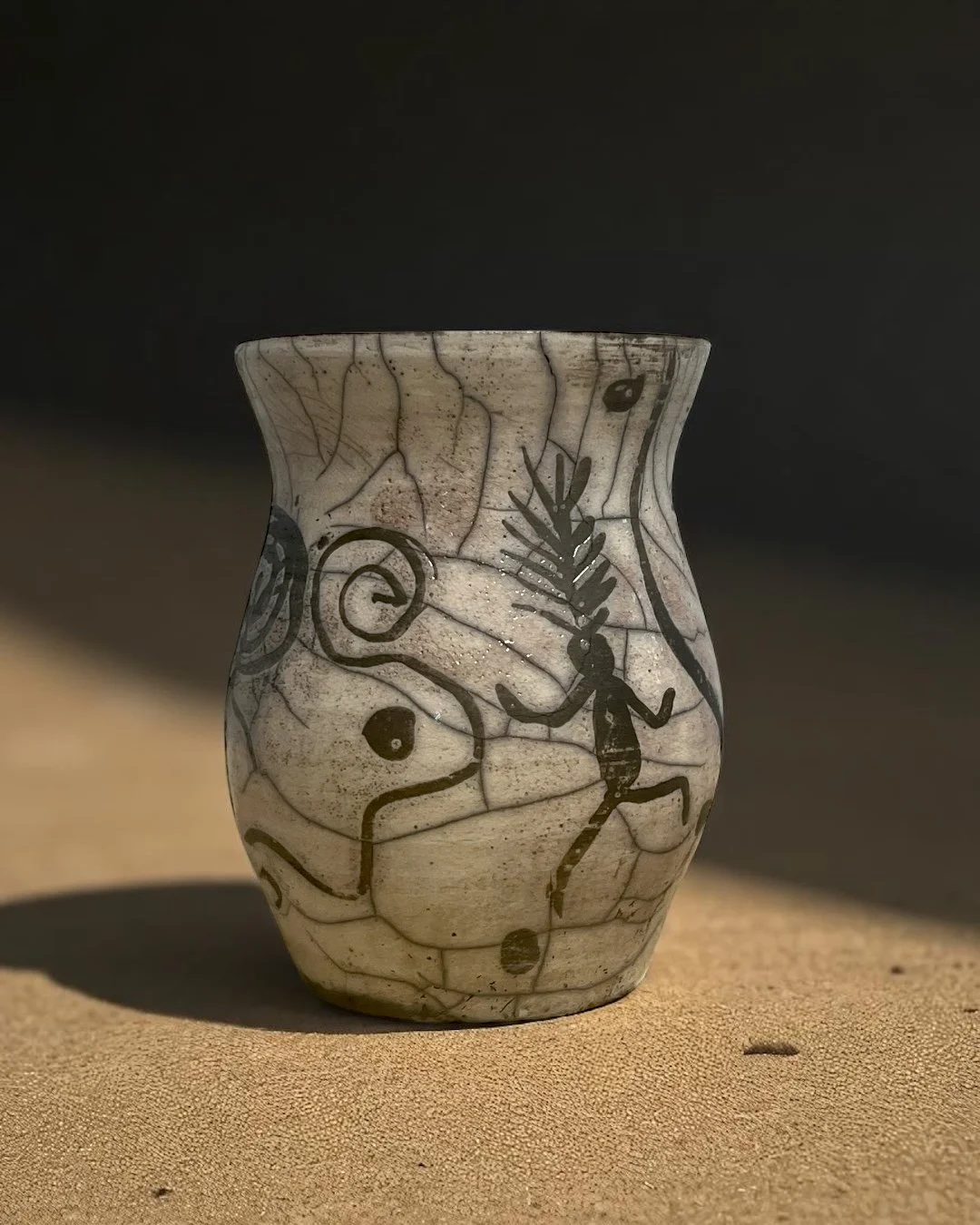
Her practice focuses on ceramics, combining wheel-thrown and hand-built processes, and is influenced by folklore, popular myths, and traditional narratives.
Alongside her studio activity, she is a part of a cultural association and she organizes a book club, reflecting her strong interest in literature and storytelling as part of her artistic research.
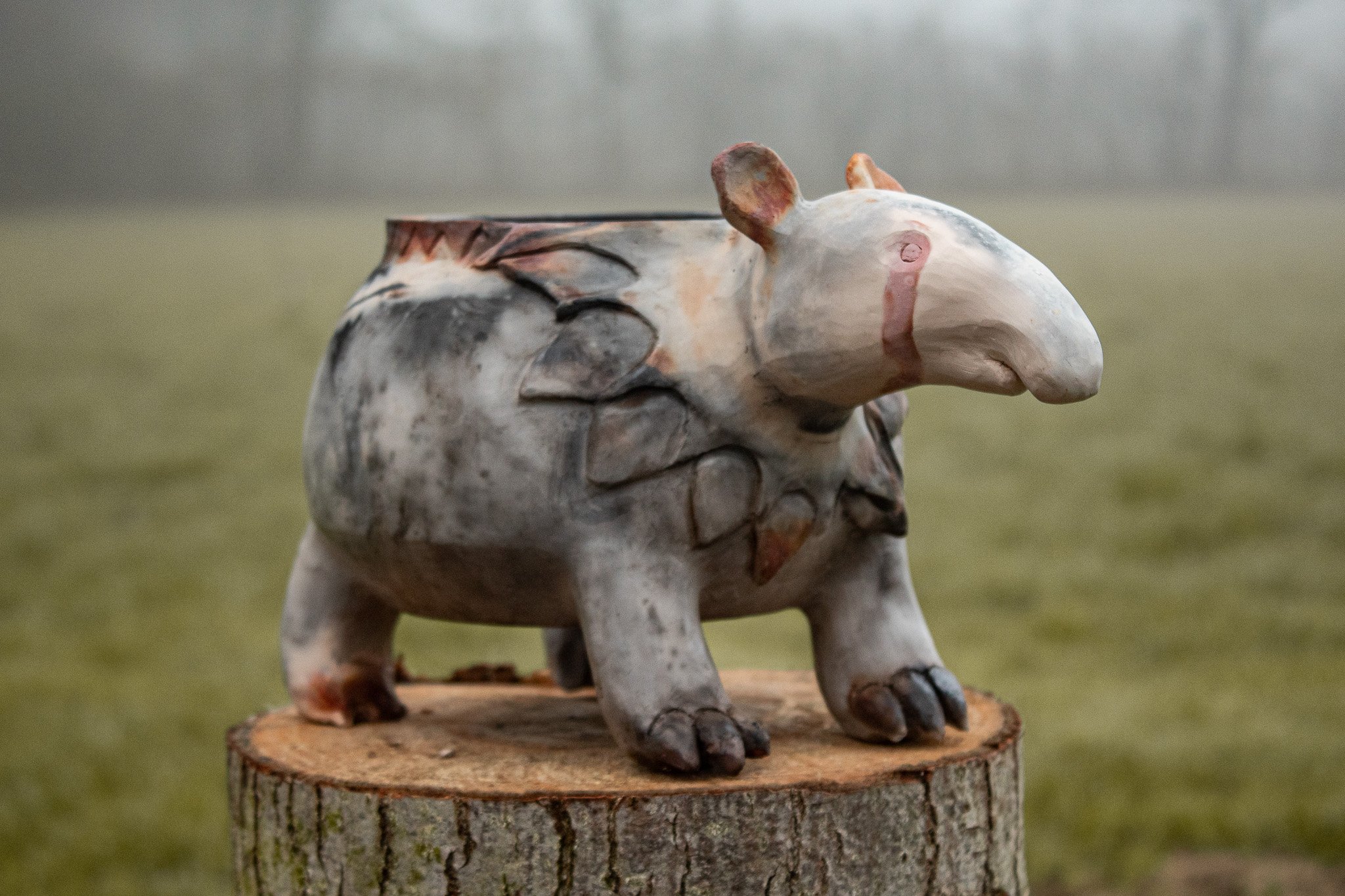
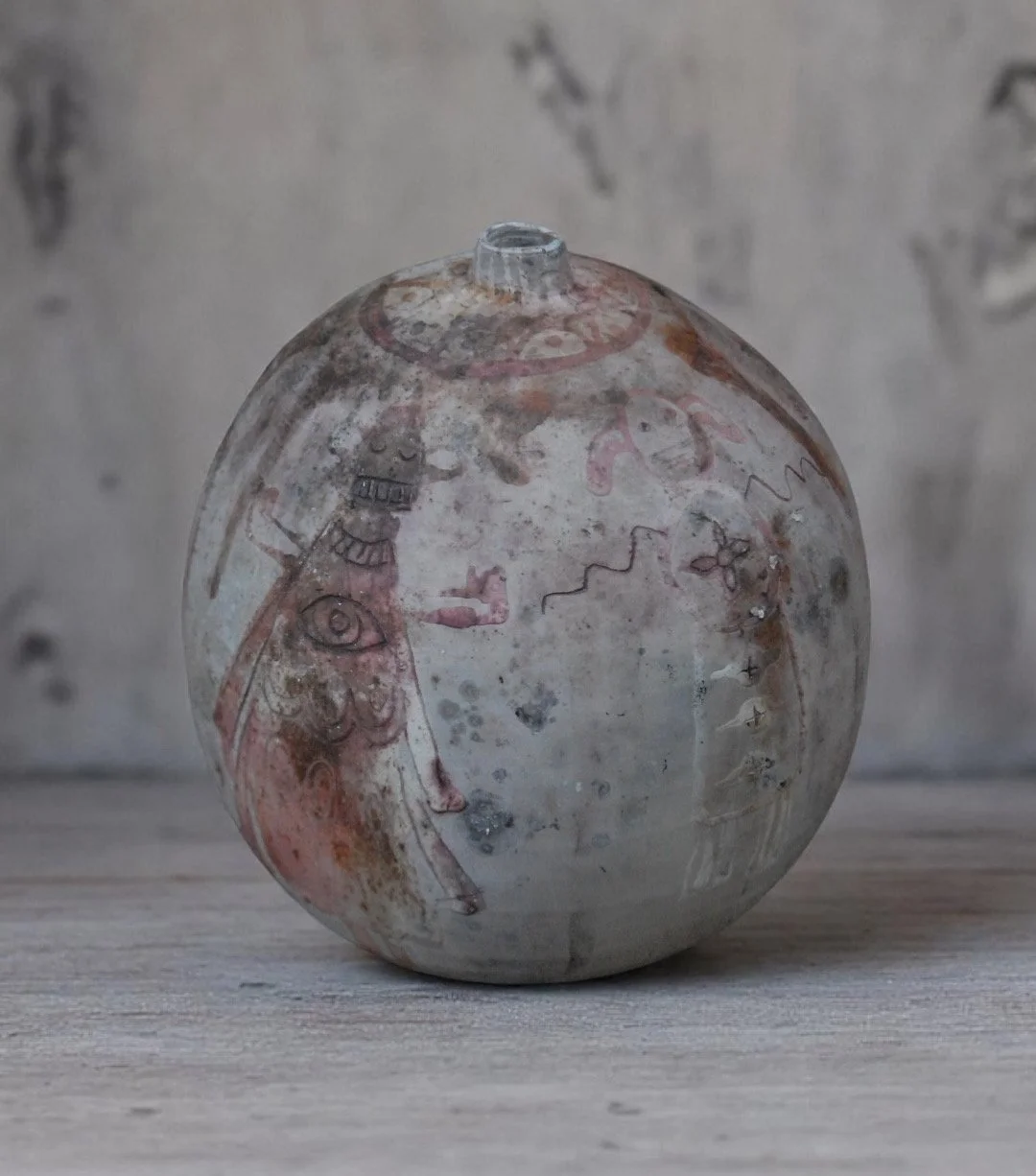
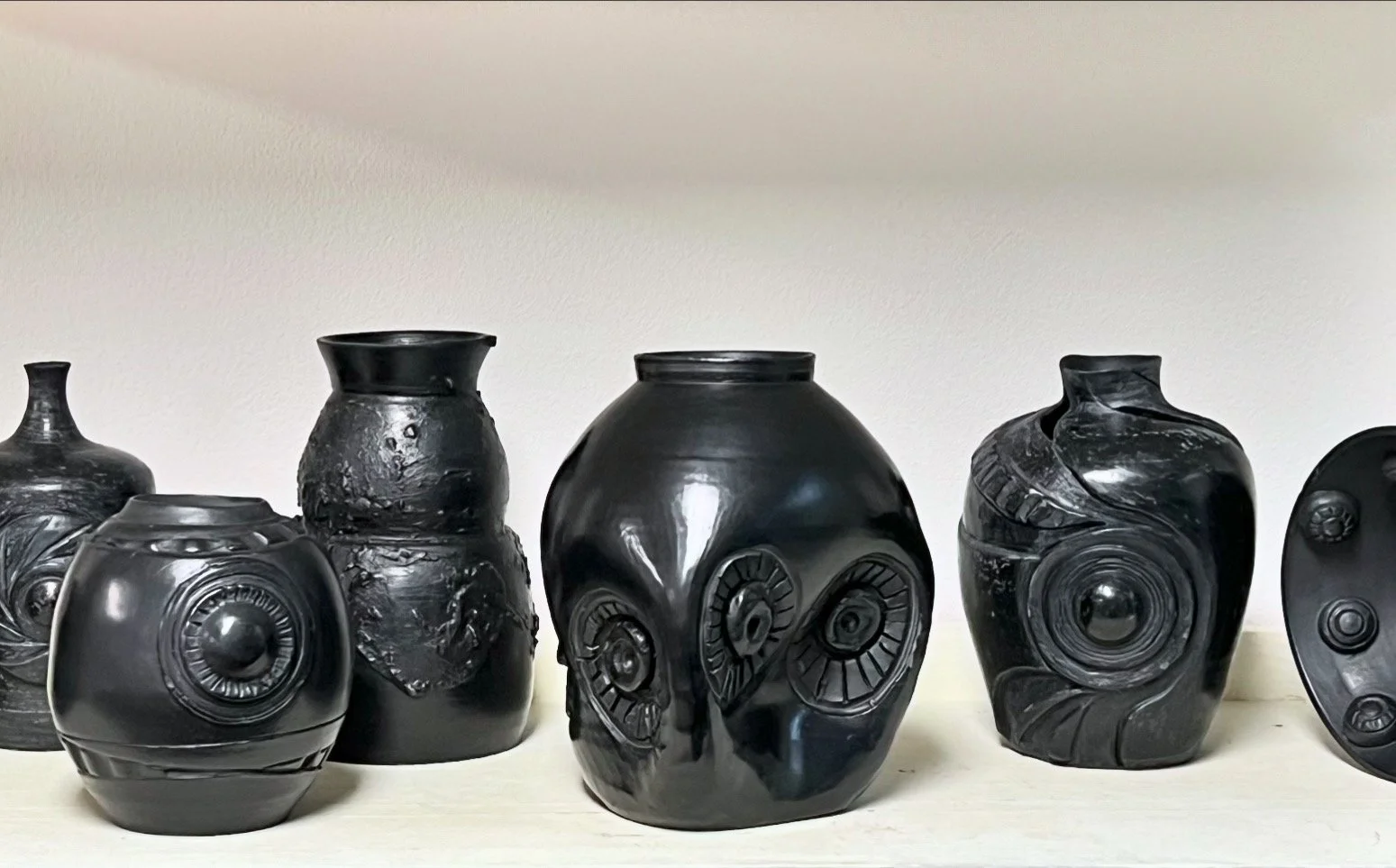
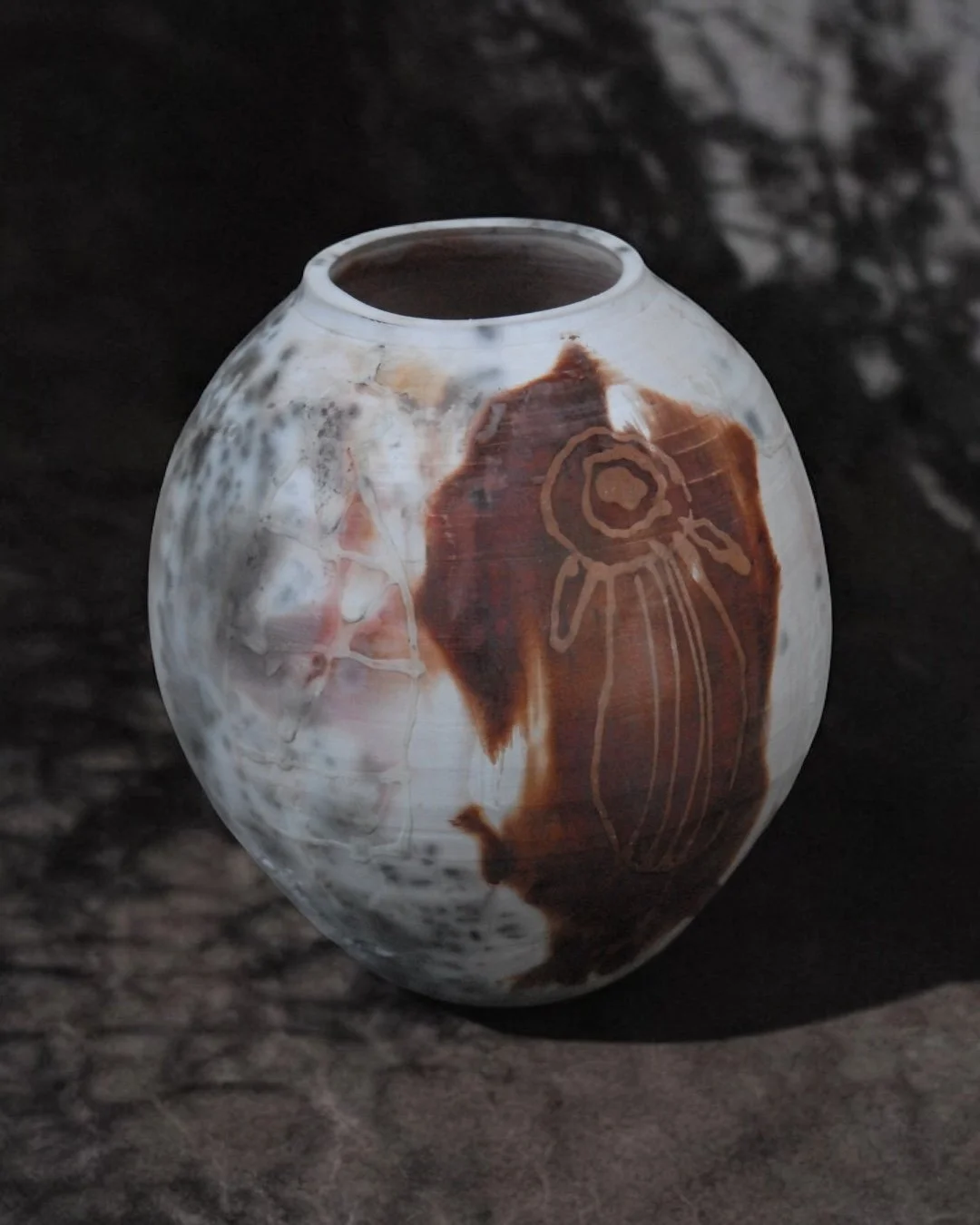
During the residency, I plan to develop a series of ceramic sculptures and vessels that combine wheel-thrown forms with hand-built elements, inspired by the volcanic landscape, local folklore, and the relationship between humans and elemental forces.
My research focuses on creating objects that feel both functional and symbolic, exploring clay as an ancient material connected to ritual, memory, and transformation. I am particularly interested in experimenting with surface treatments and atmospheric firing to reflect the raw, mineral qualities of the island.
The project will be a visual and material dialogue between my personal language and the territory of Lanzarote.
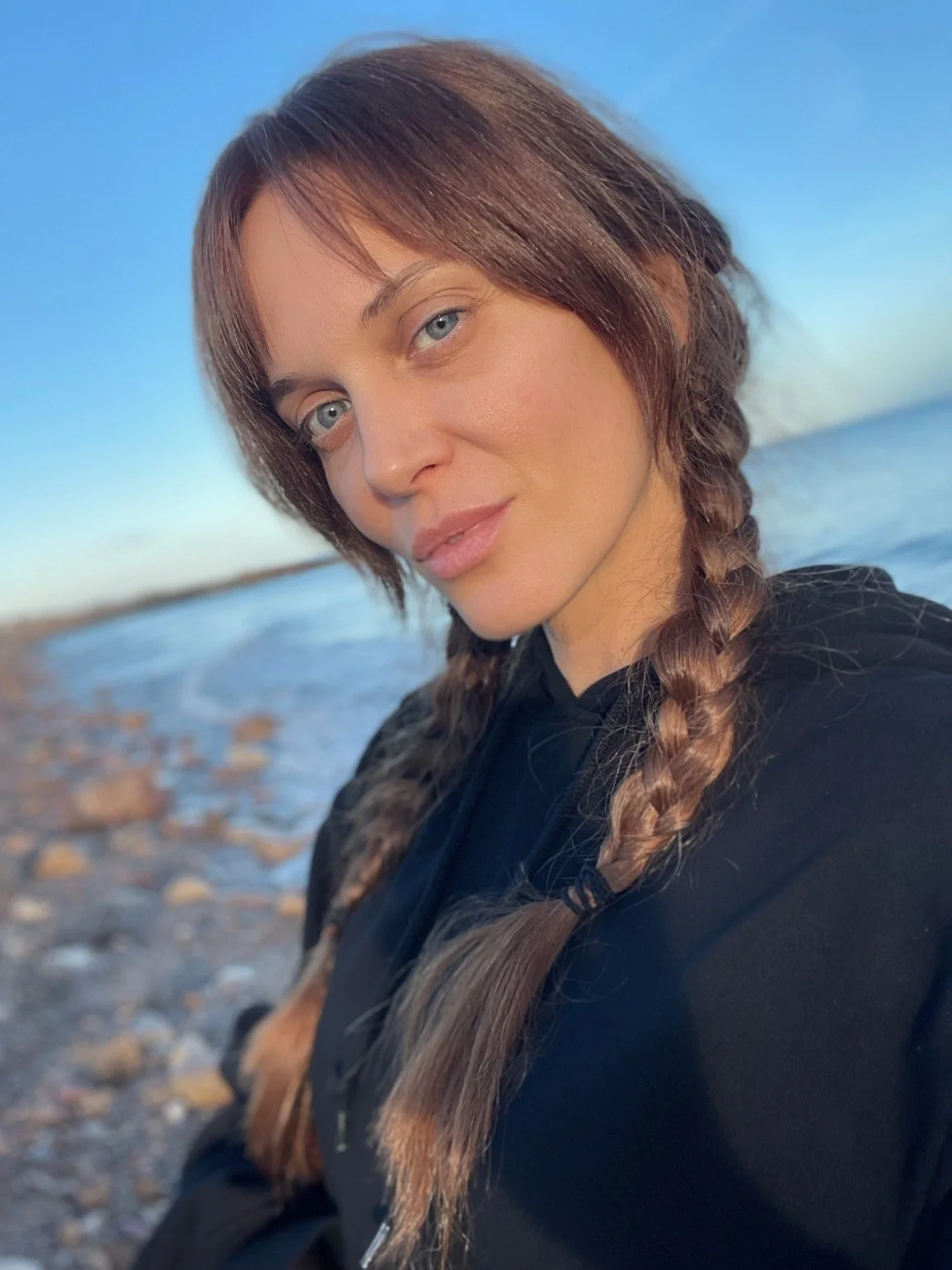
ELENA POSOKHOVA (FR/ES): Artist Residency Research
Elena Posokhova is a Paris-based contemporary art curator with over ten years of experience in interdisciplinary projects that merge ecology, nature, culture and art across Europe.
In her practice, she explores the creative process that connects various artistic fields, practices, sectors, and disciplines while simultaneously interacting with natural and cultural landscapes. She raises the question of how creativity and context shape each other, focusing on coastal and island territories as resources of imagination. Her work encompasses collaborative experiences that intersect historical and contemporary issues of life organization, where artistic creativity becomes a tool for understanding and dialogue between territories.
Elena holds a master’s Master’s in Art & Vision (MAVI) , Paris 1 Panthéon-Sorbonne and is pursuing a doctorate at Visual Arts and Art Sciences Paris 1 Panthéon-Sorbonne, researching art, science, and sustainability.
Key Projects
Elena has led EU and UN- supported projects like MARITIMA 01 and MARLANDS, also International Art&Science program represented by UCV - IMEDMAR and ART MADE association, uniting artists, scientists, and communities to explore Mediterranean ecosystems and heritage.
“Archipelago as Perspective” is a research project mapping contemporary artistic practices rooted in island territories — tracing the knowledge, sensibilities, and visual languages shaped by specific insular geographies. A residency on Lanzarote extends this cartography through direct fieldwork: visiting symbolic sites and local archives to document the island’s living memory; interviewing artists based on or working with Lanzarote about the distinctive features of its landscape, materiality, and history as sources of inspiration; and researching techniques and materials specific to contemporary art production on the island. This on-site inquiry will contribute to a broader archipelagic mapping of island artistic practices across the Mediterranean and Atlantic.
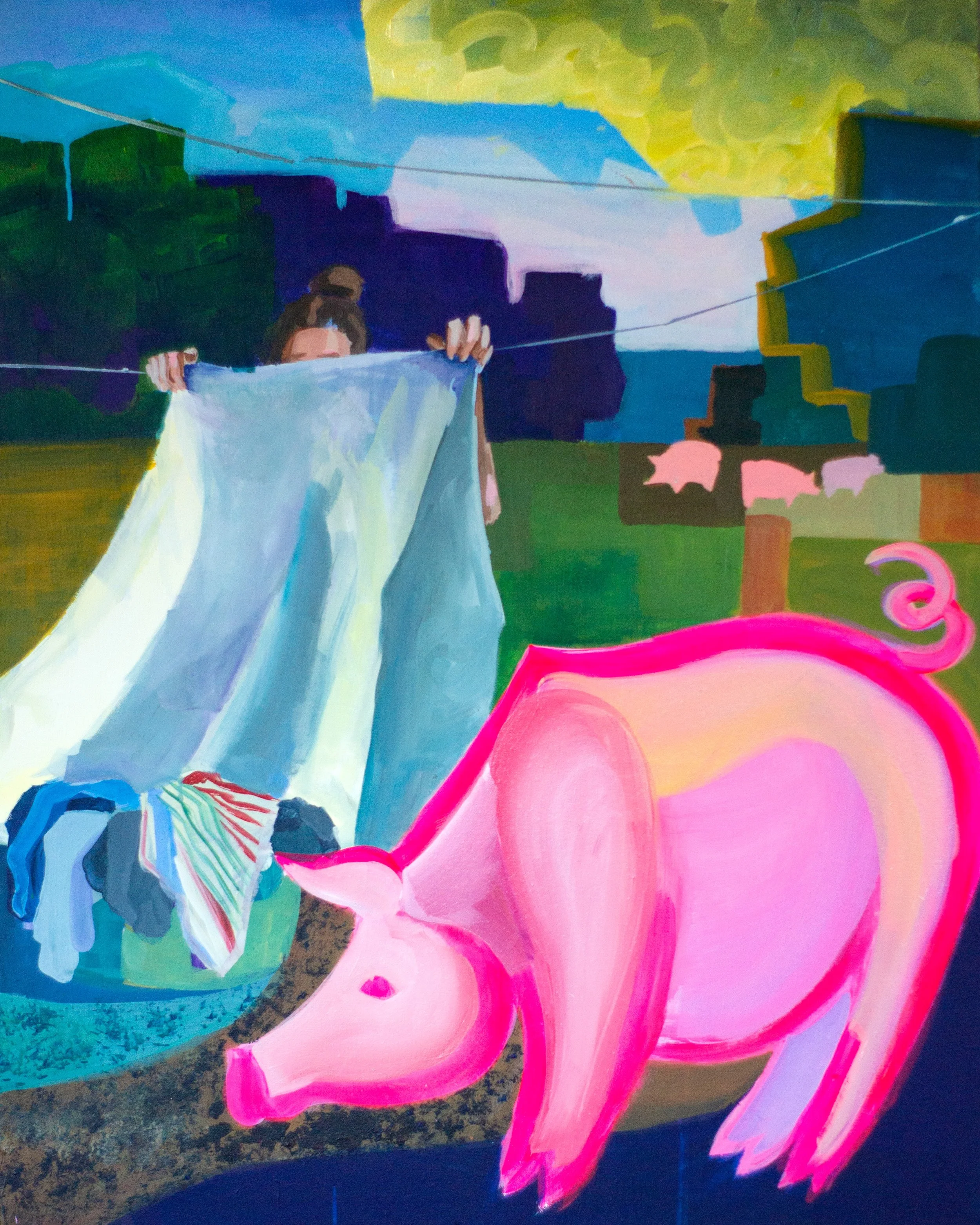
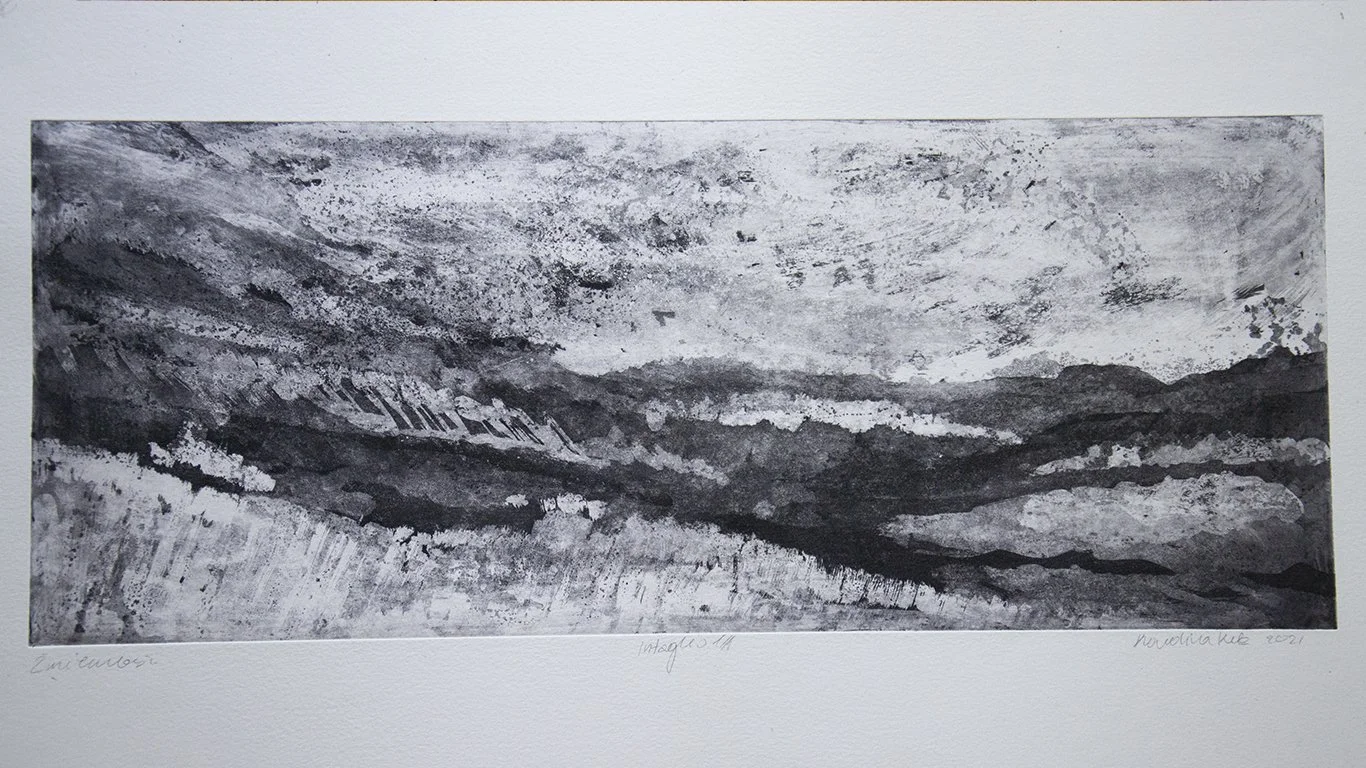
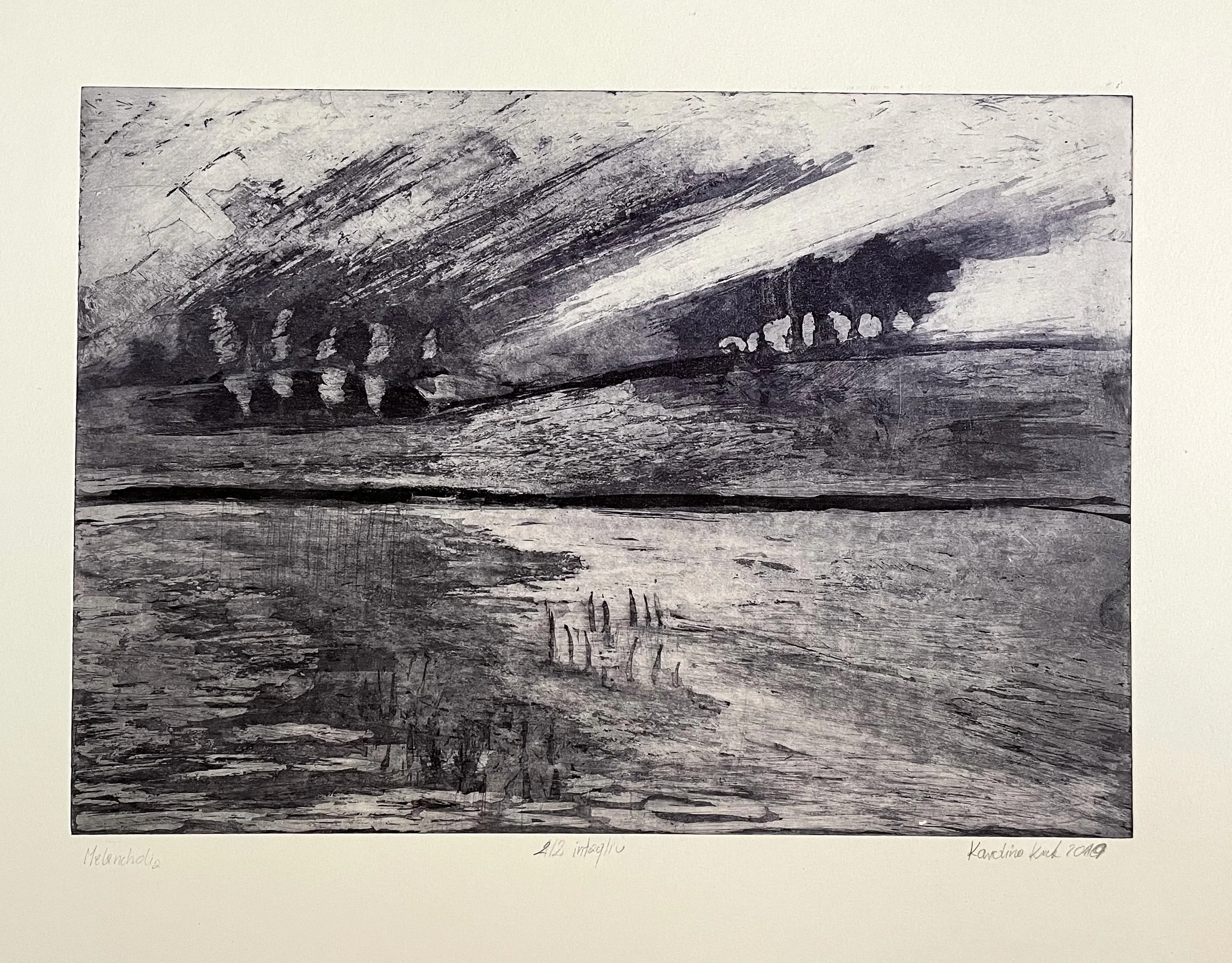
KAROLINA KRUK (PL): Graphic art, painting
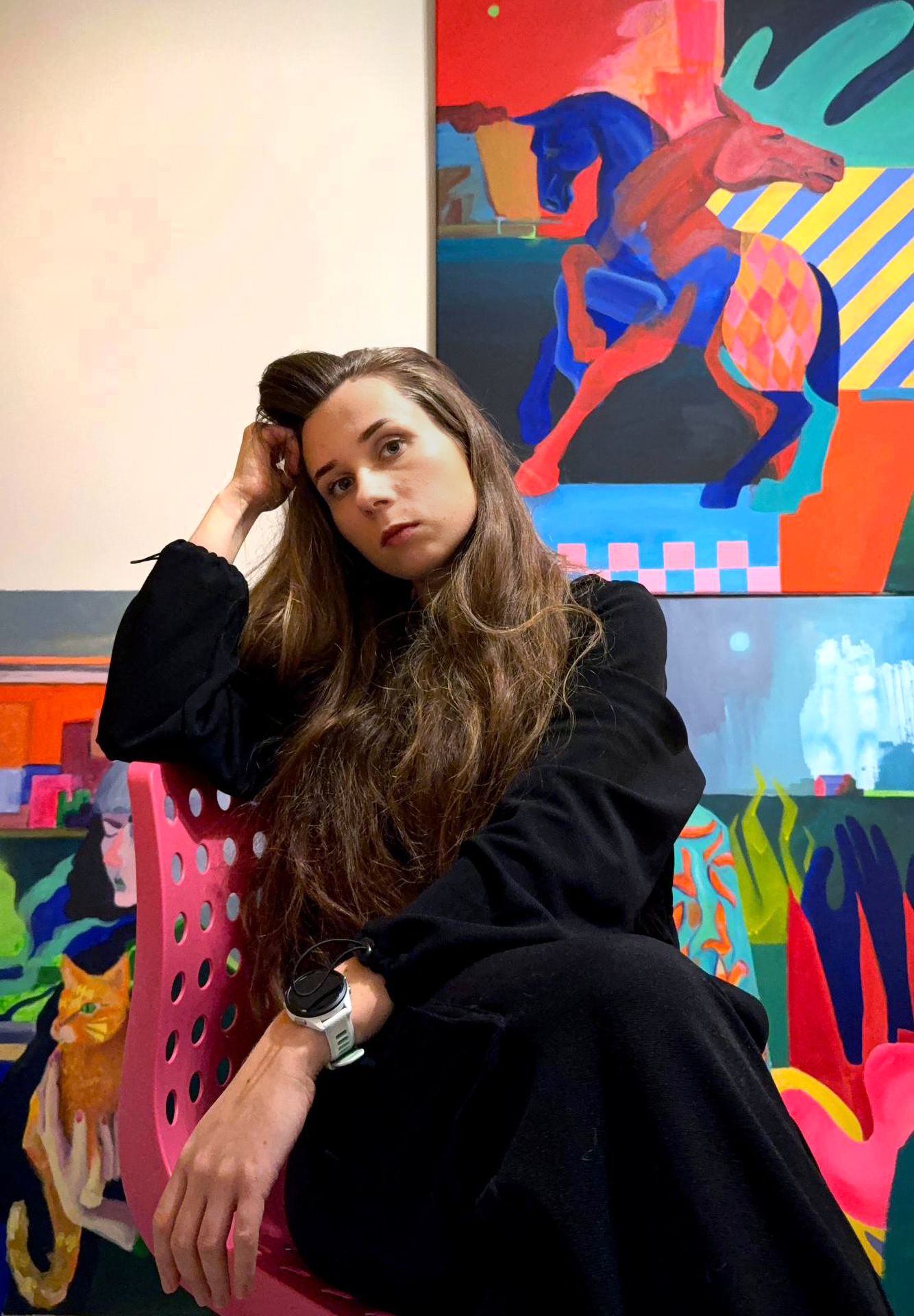
Born 1997, Białystok, Poland
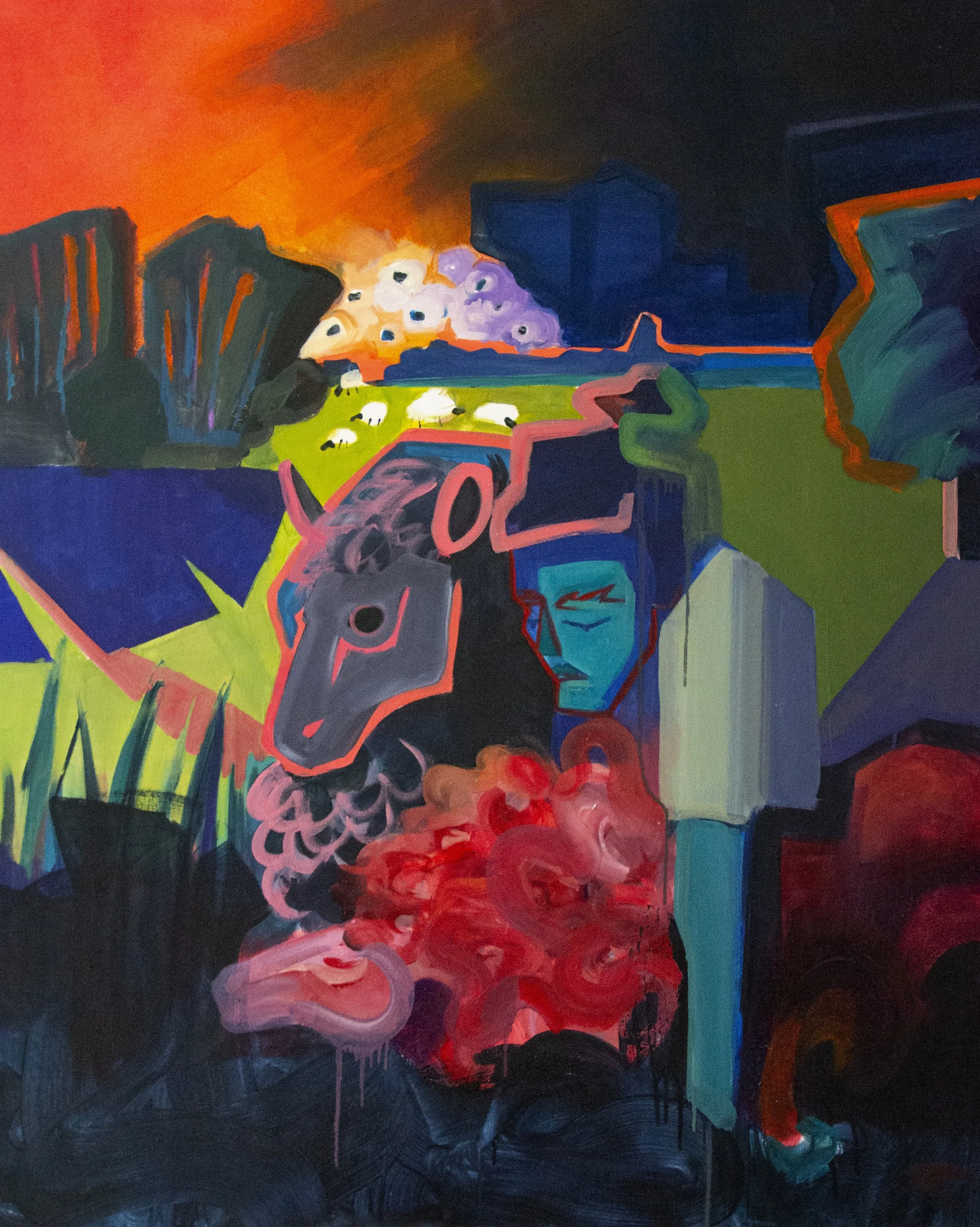
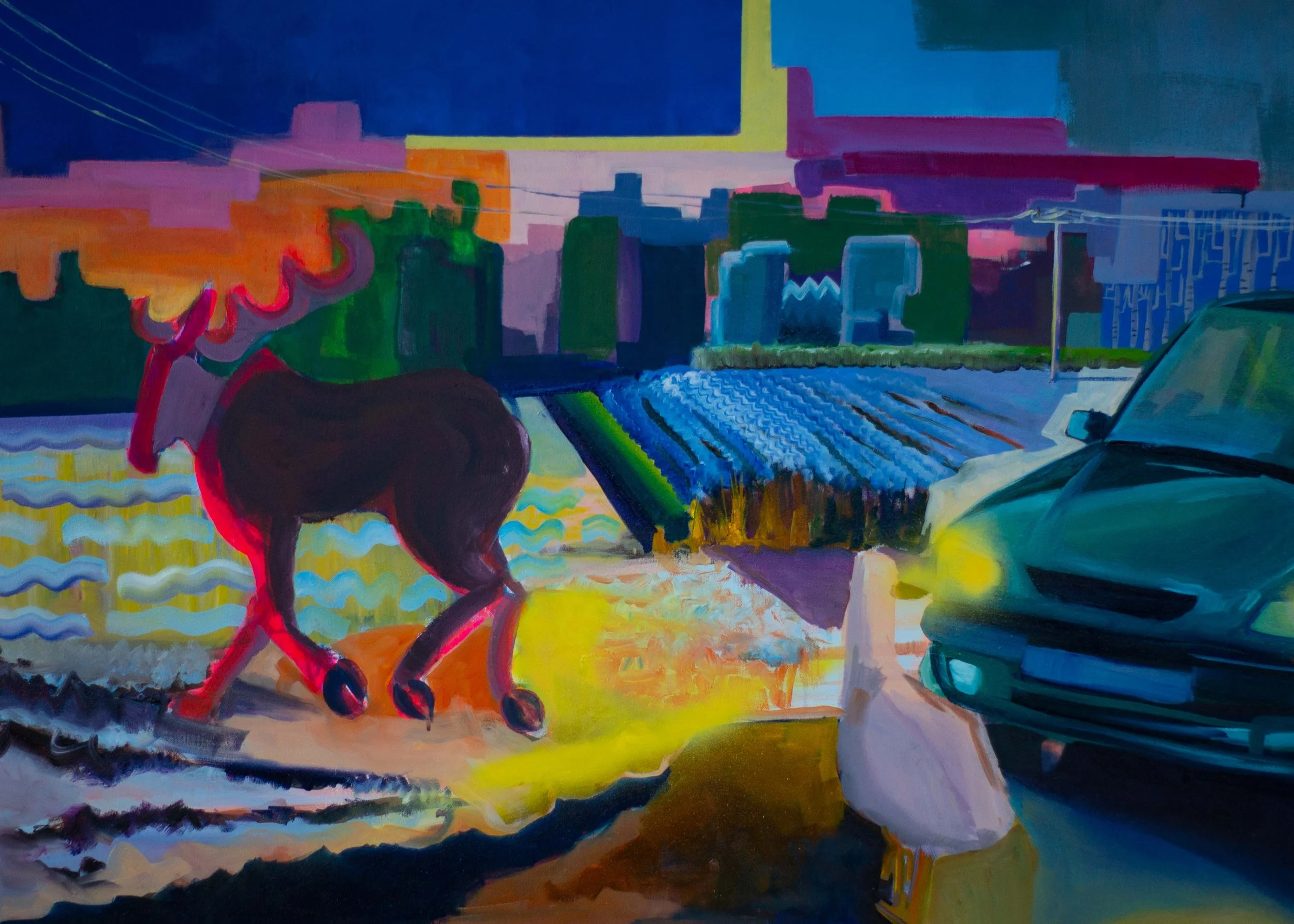
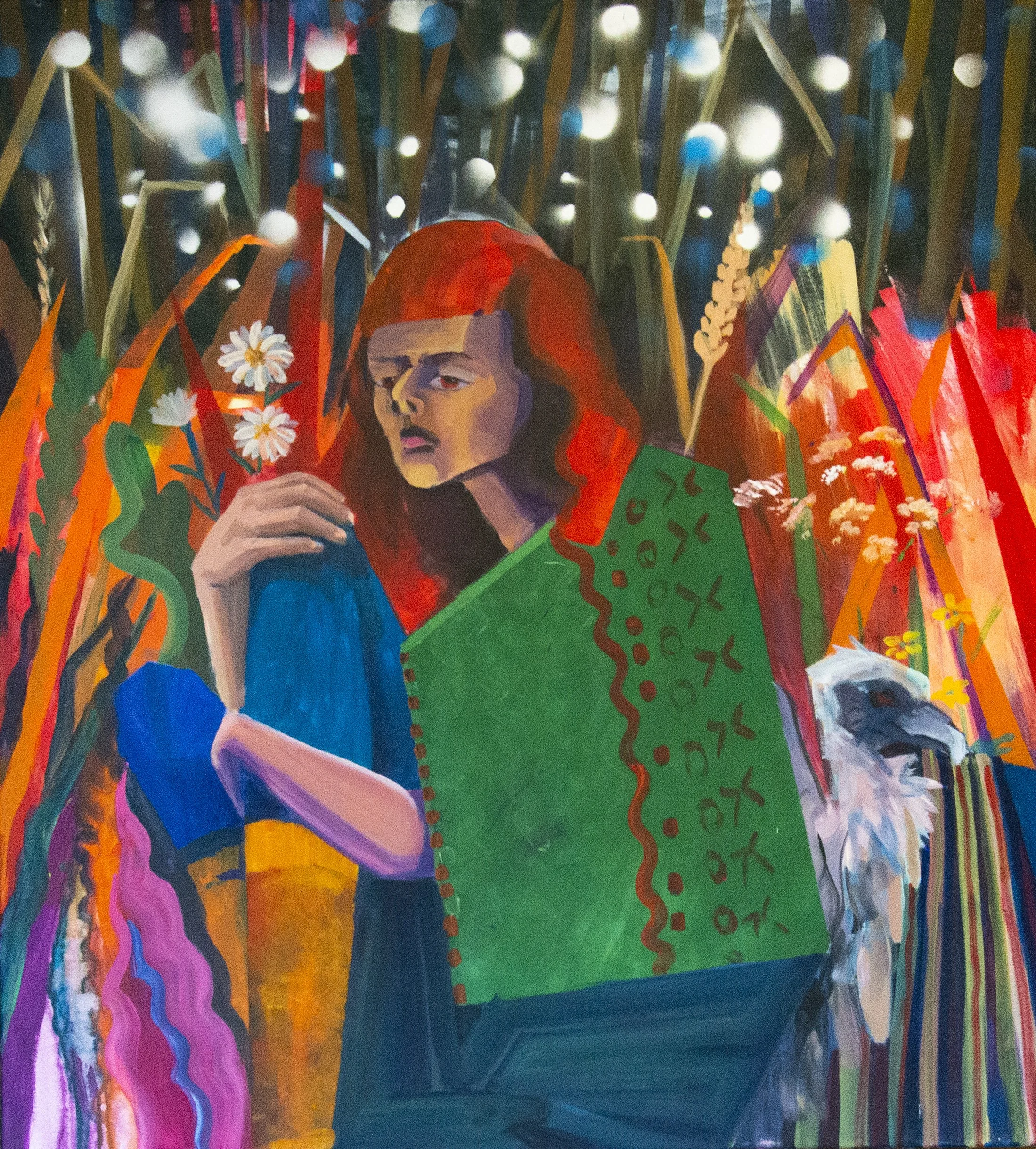
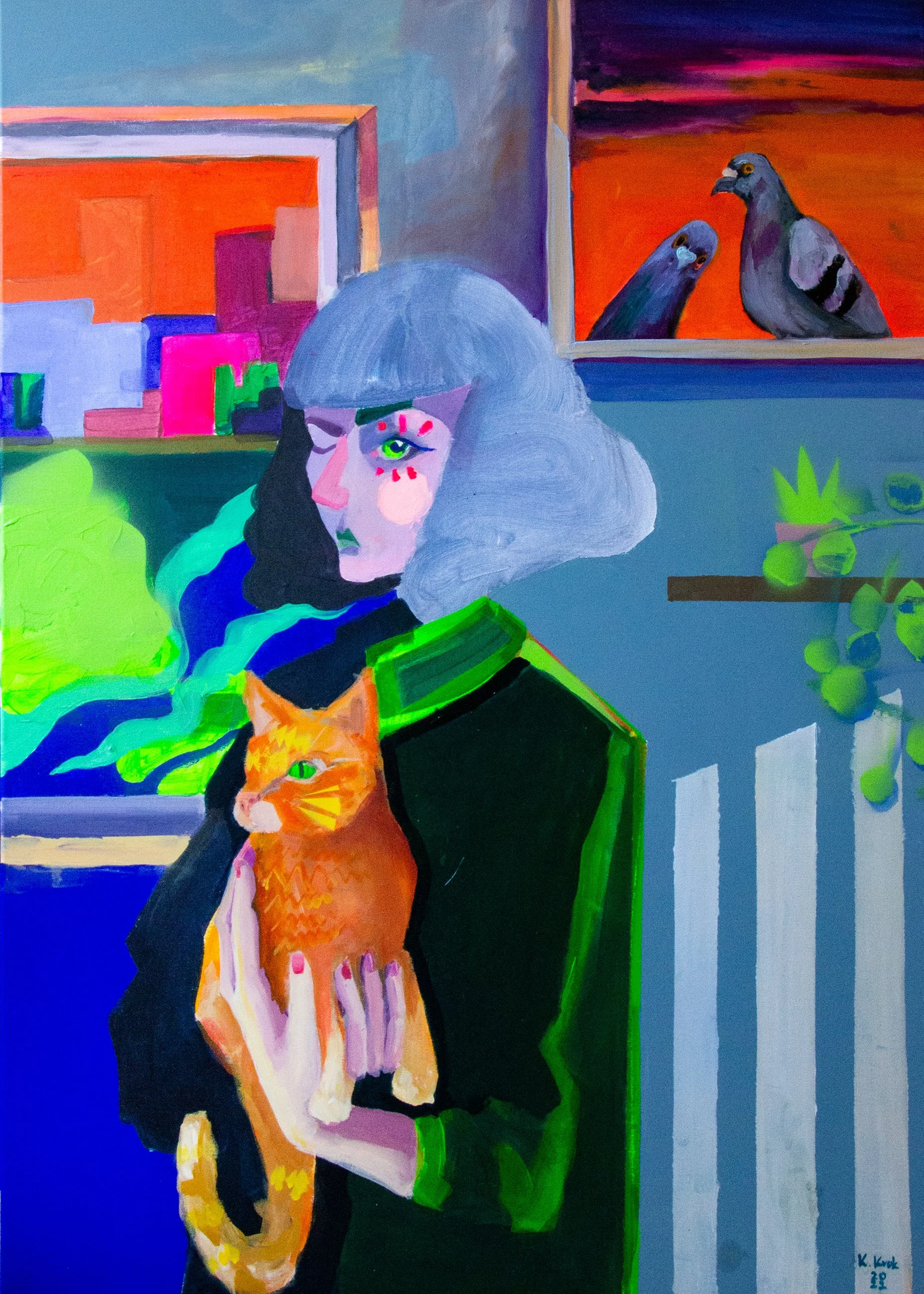
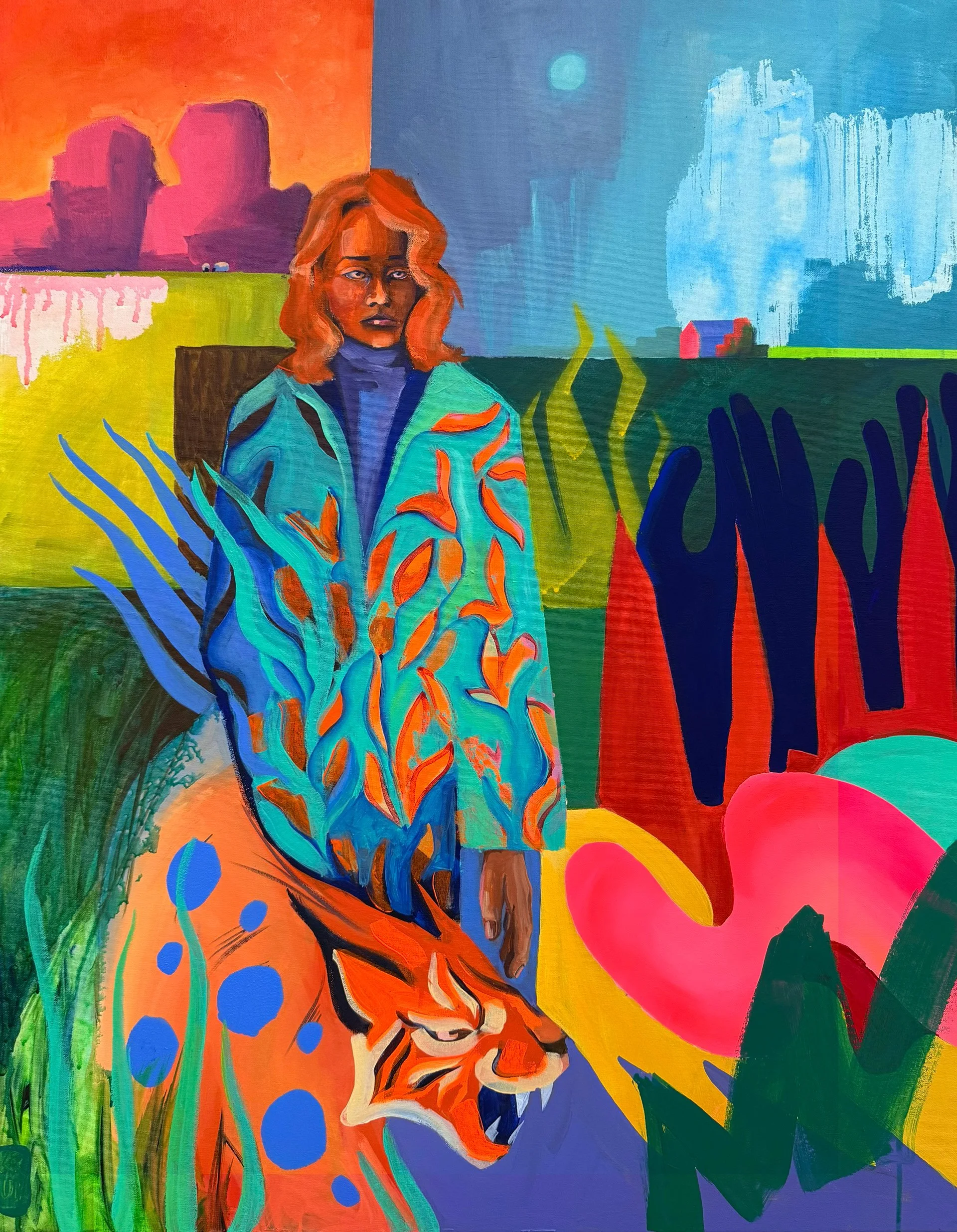
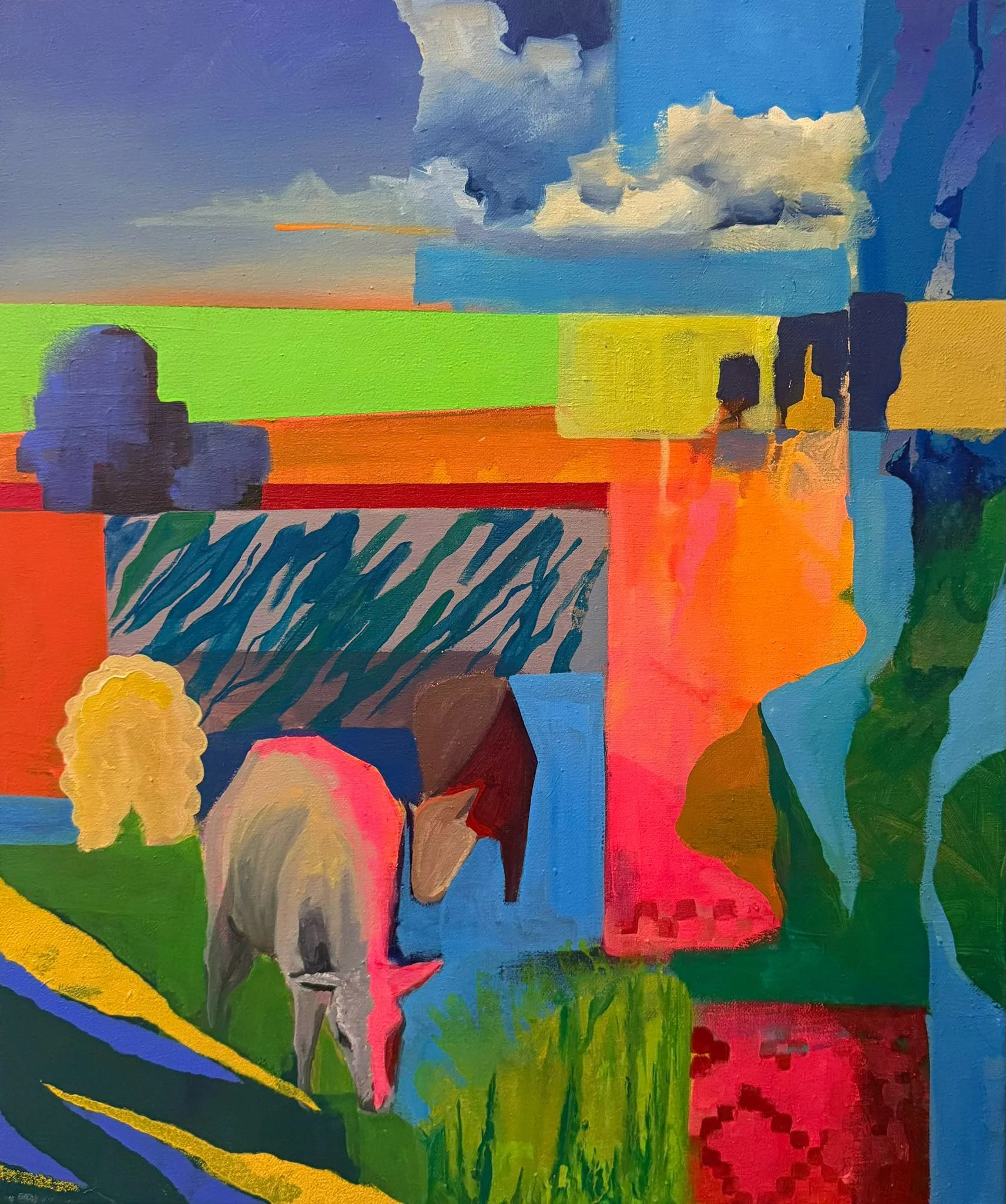
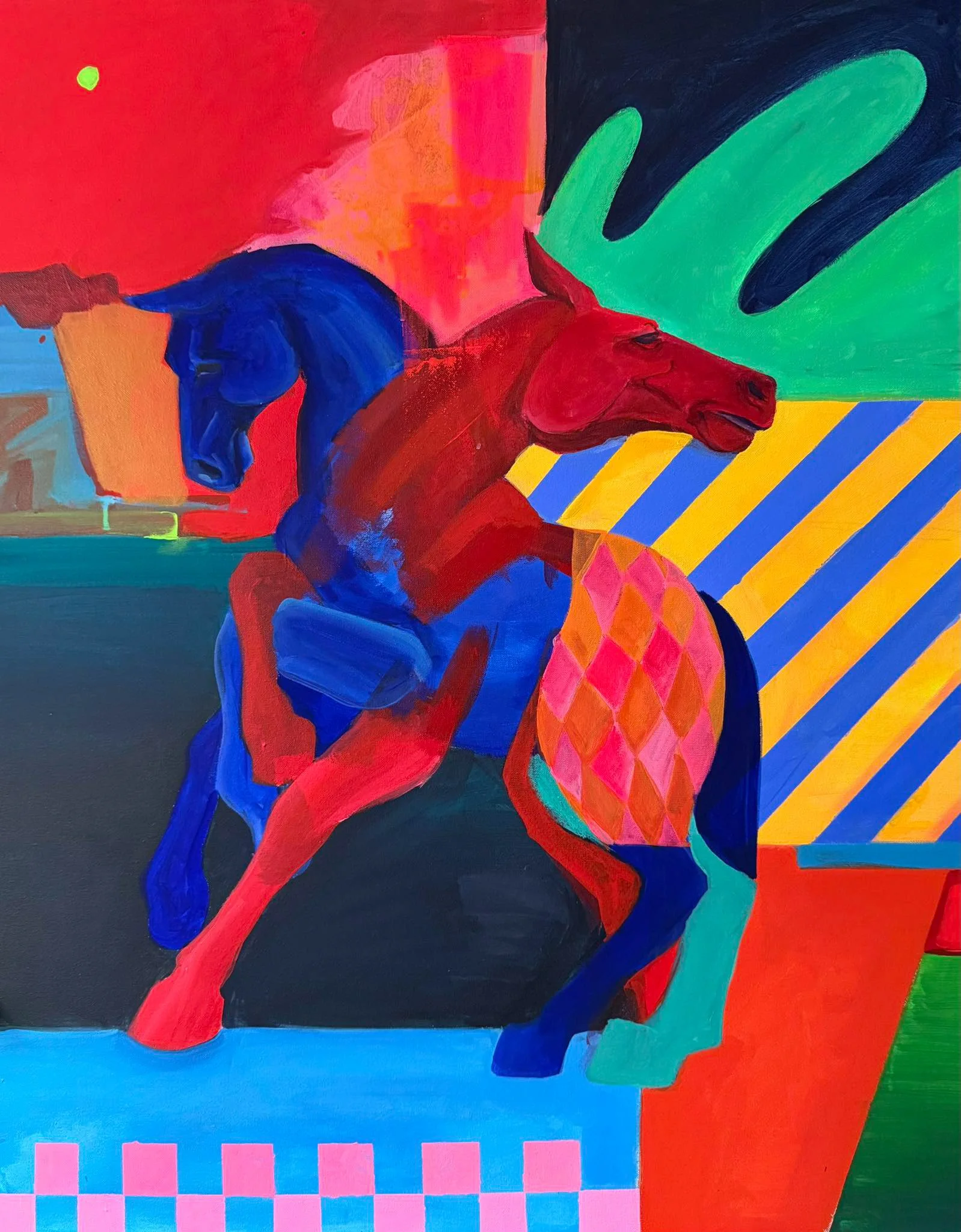
Graphic artist and painter. She completed Art High School in Supraśl with a specialization in artistic printmaking. She is a graduate of the Władysław Strzemiński Academy of Fine Arts in Łódź, where she earned her diploma in Graphic Design in 2022. Since high school, she has been strongly interested in painting and color. Both her paintings and prints are characterized by vibrant, expressive colors.
Her inspiration comes from folk culture, the Polish landscape, and, above all, contemporary social issues. She has participated in exhibitions and international projects, including “Un Ballo in Maschera’ pelo Chiado, Carmo e Paris” in Paris, Lisbon, and Florence, as well as the “1066 Bonn Exhibition” in Bonn. She is a two-time laureate of the prestigious Strzemiński Fine Arts Competition in Łódź (2021 and 2022).
“Emotional Anthropocene - Painting in the Context of Social and Environmental Change”
This project explores the relationships between landscape, memory, and emotional states within the context of environmental transformation. Through expressive and vibrant color palettes, layered forms, and symbolic figures, it aims to capture the impact of ecological shifts on the inner world of human beings. During the residency on Lanzarote, I will work with the local landscape as a source of both observation and inspiration - creating a series of paintings that act as an emotional map of contemporary life and a dialogue between humans and nature.
KRITHA MAKWANA (IN): Jewelry
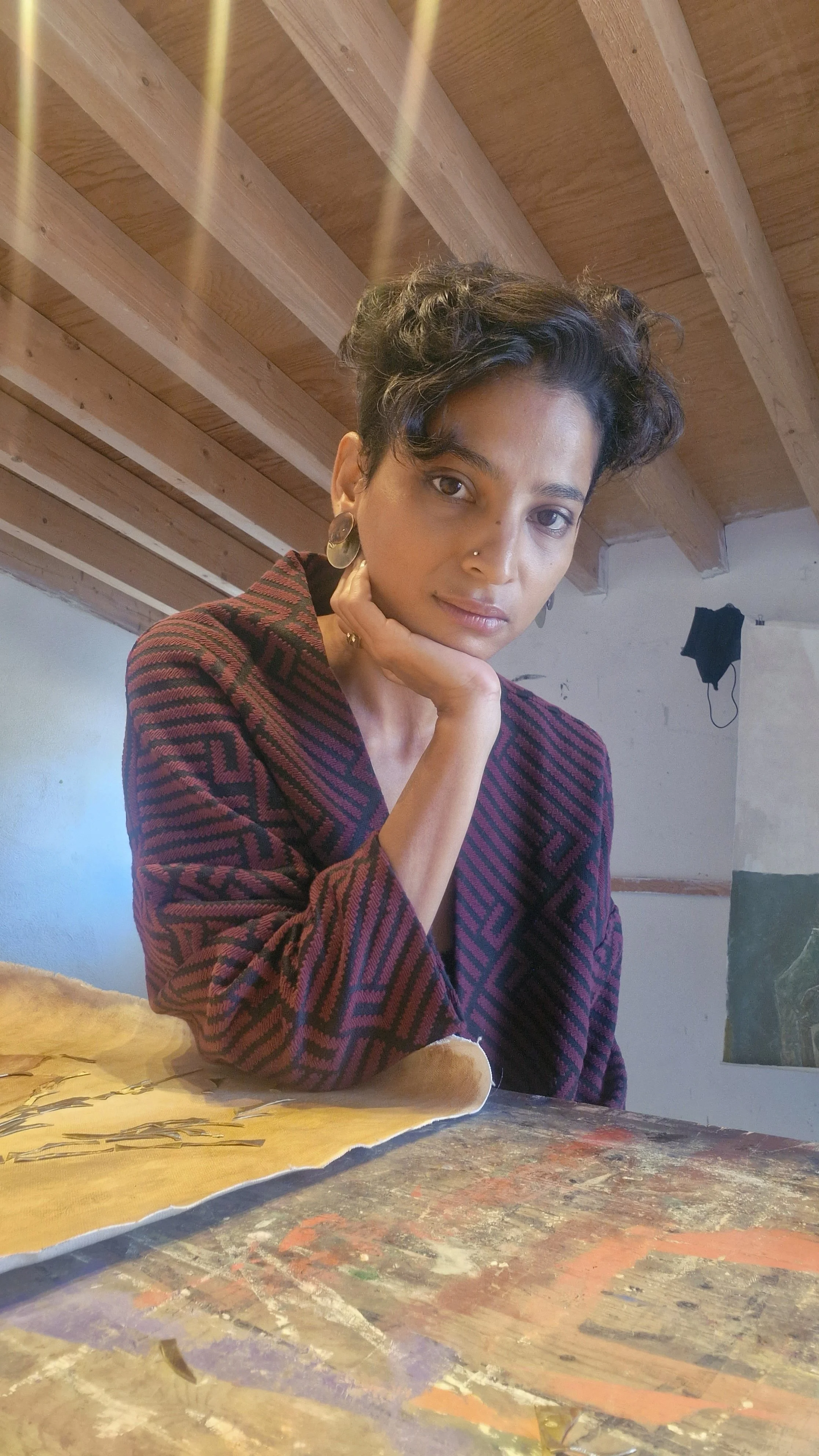
Kritha graduated with a Bachelor's degree in Architecture from CEPT University,Ahmedabad,India and interned with Architecture Studios in Goa & Auroville where she could learn the importance of process driven design practices.
Her interest in jewelry began in 2013 when she started making jewelry from mild-steel hardwares and later using Brass. She has a shy personality; these accessories became a medium of expression for her. Having experienced the subtle power of jewelry in the deep layers of her being, she started/founded her eponymous label ‘KRITHAA’ in 2015. (www.krithaa.com)
x
She had mixed feelings about not continuing work as an architect. Now upon reflection, she feels that her architecture education helped her cultivate a deep reverence for ‘process’.
Kritha is based out of Goa with roots in Ahmedabad, India. Living close to the sea makes her more sensitive to daily rhythms and seasons. Her practice of conscious breathing during her frequent swims in the sea during the winter months invigorated her to start expanding her work beyond the scope of jewellery. Face down, submerged in the medium of water, conscious of each exhalation - she envisions new pieces.
Sometimes she visualises water movements as brass movements. She intuits that her surroundings and her body are a network of brass, a feeling that she carries in her art-practice.
Through the medium of Brass, she connects to her lineage of carpenters and metal-smiths,(called the ‘Luhar-Suthar community in Gujarat) with the feeling that working with metals comes to her in a deeper way. Her male ancestors carried this skill, and as a female of this lineage, she carries this in her feminine approach through Brass.
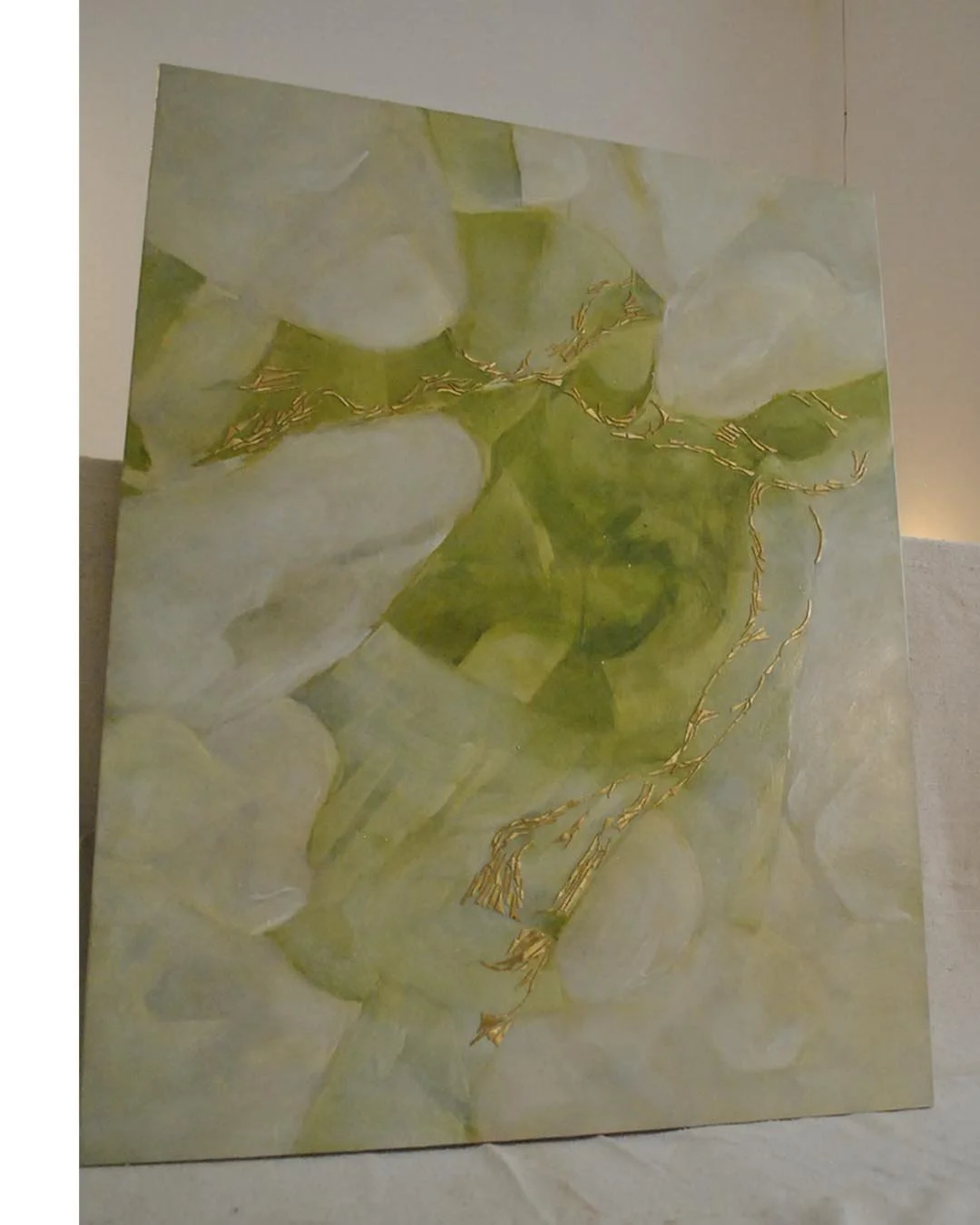
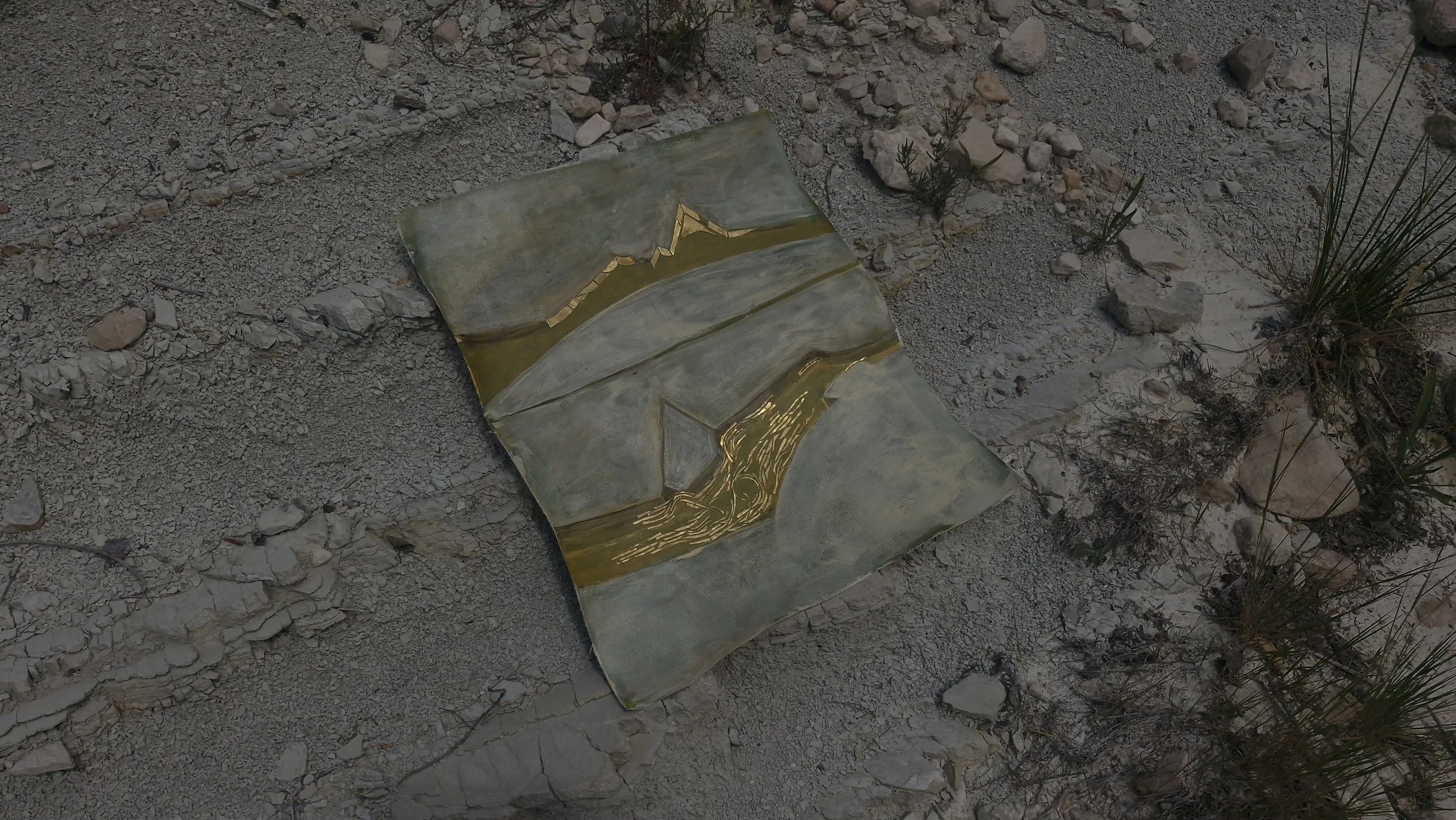
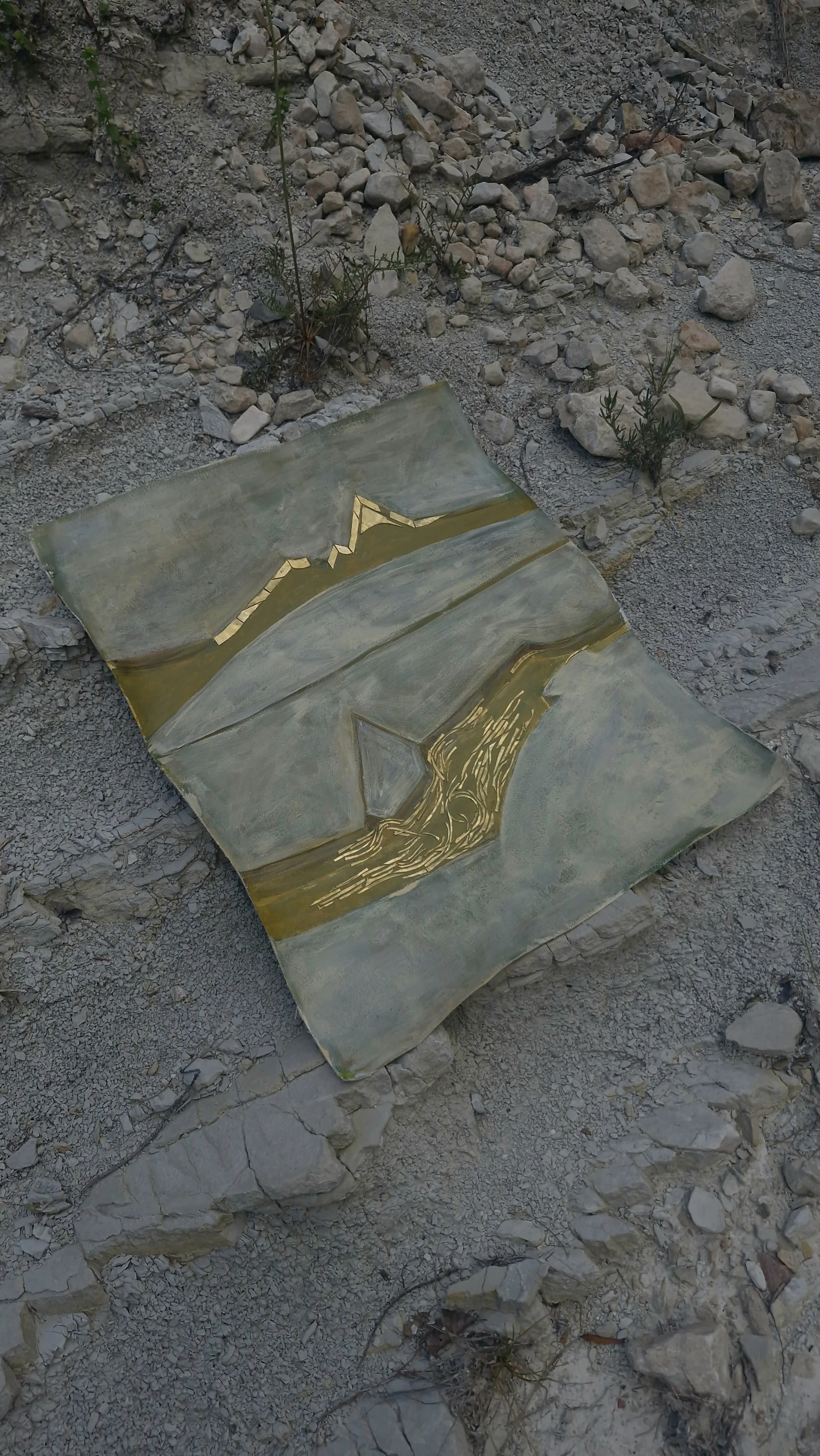
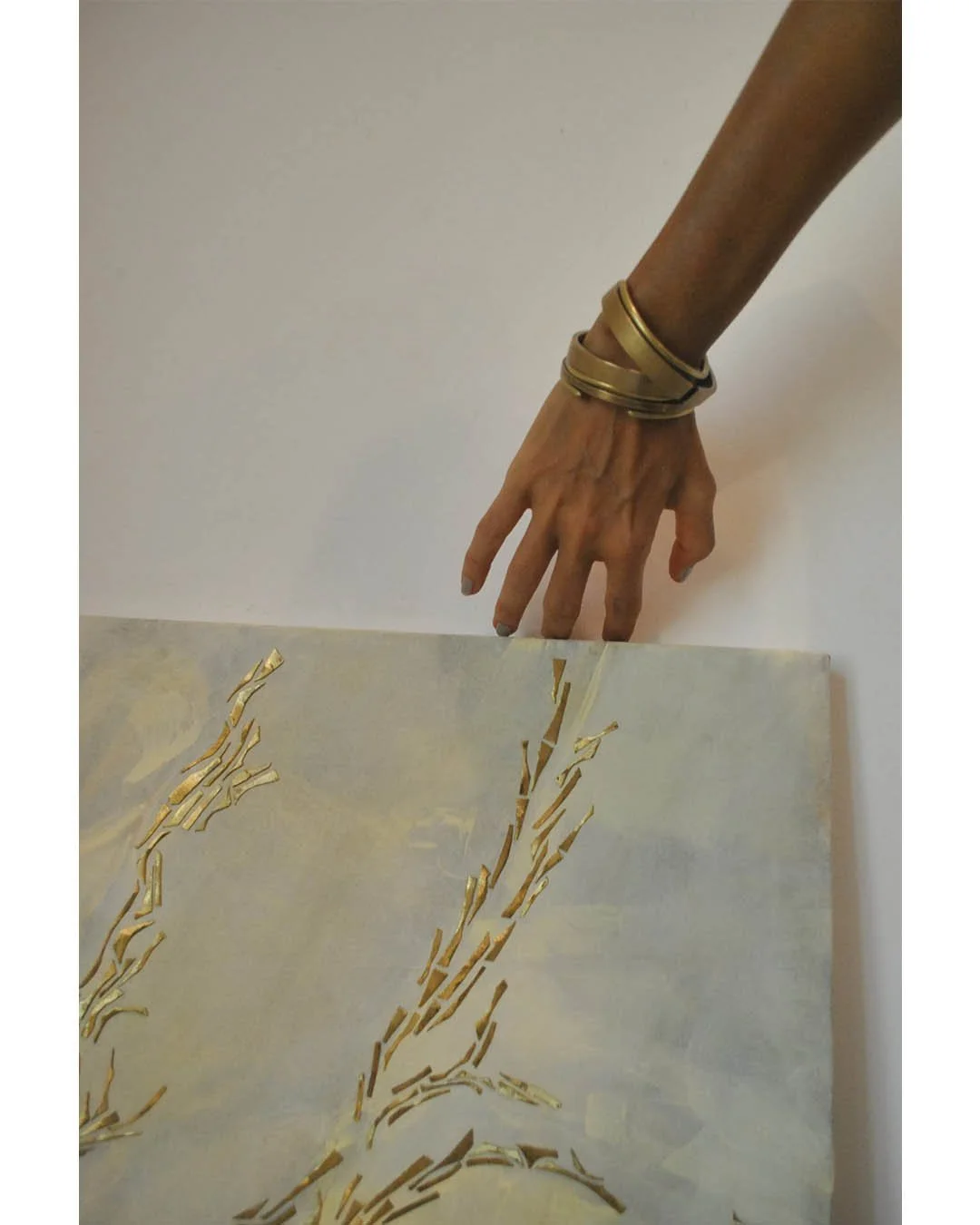
Working as a Jewelry Artist since 2015, I have had recurring micro-moments where I imagine jewelry worn beyond the outer form of the human body.
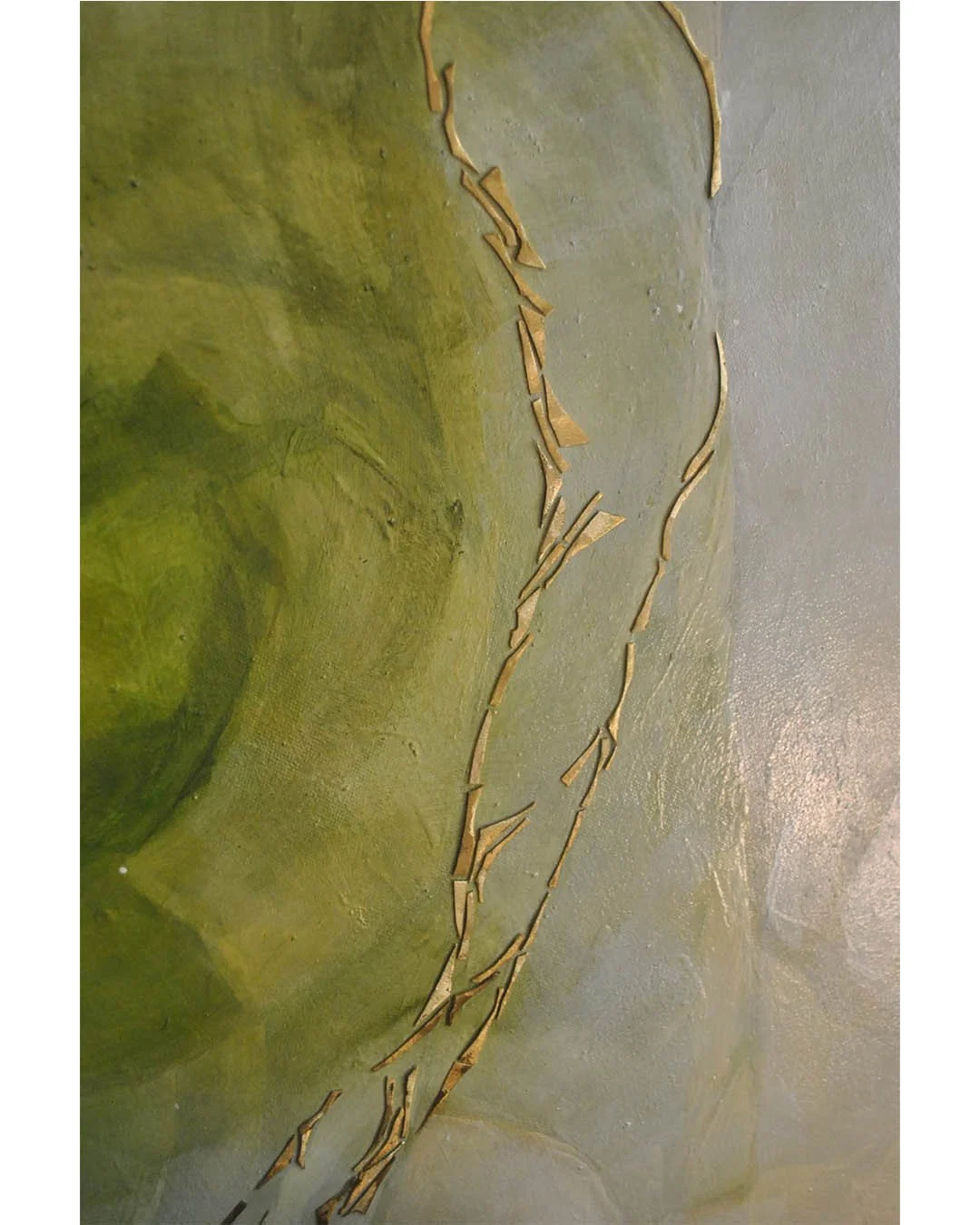
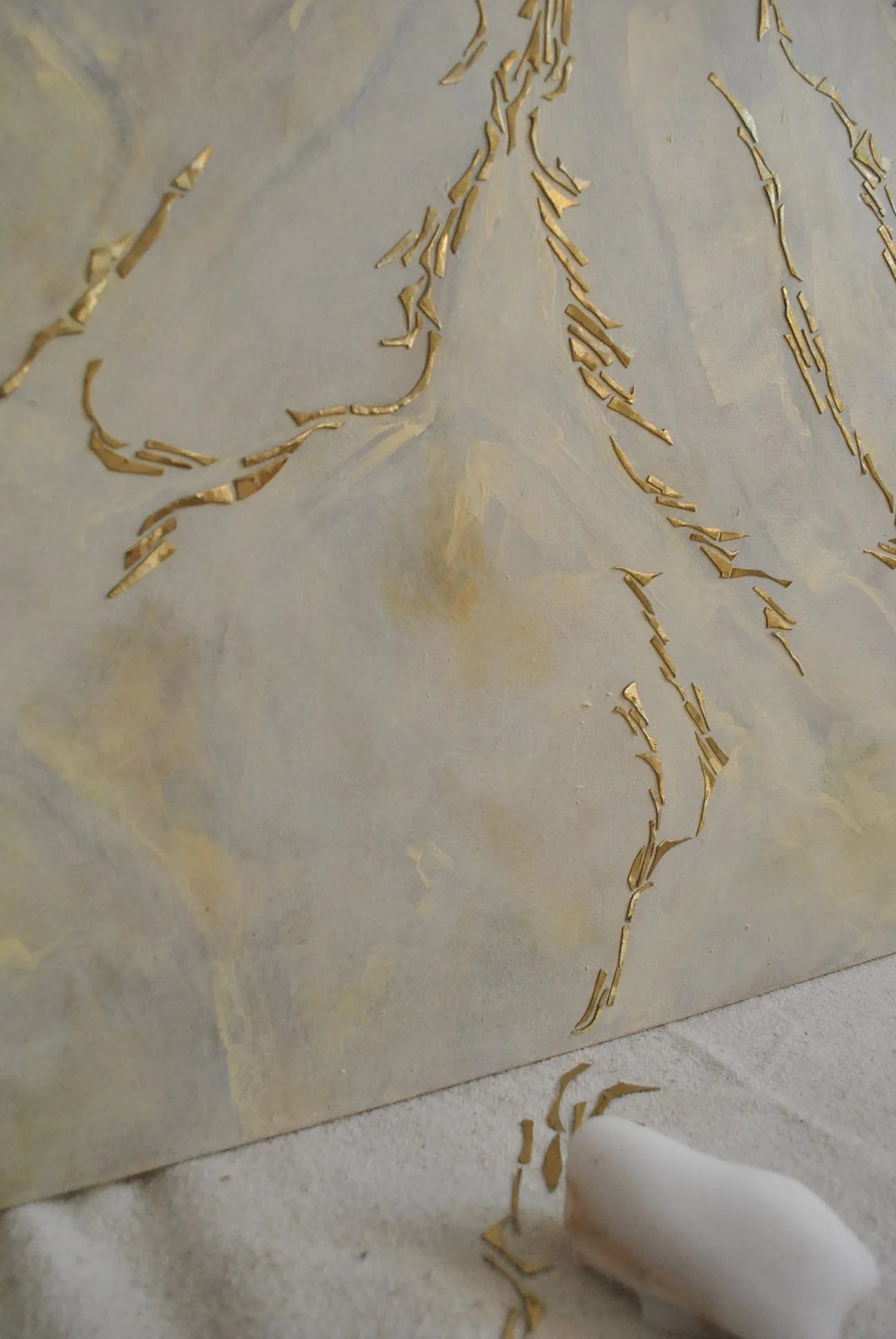
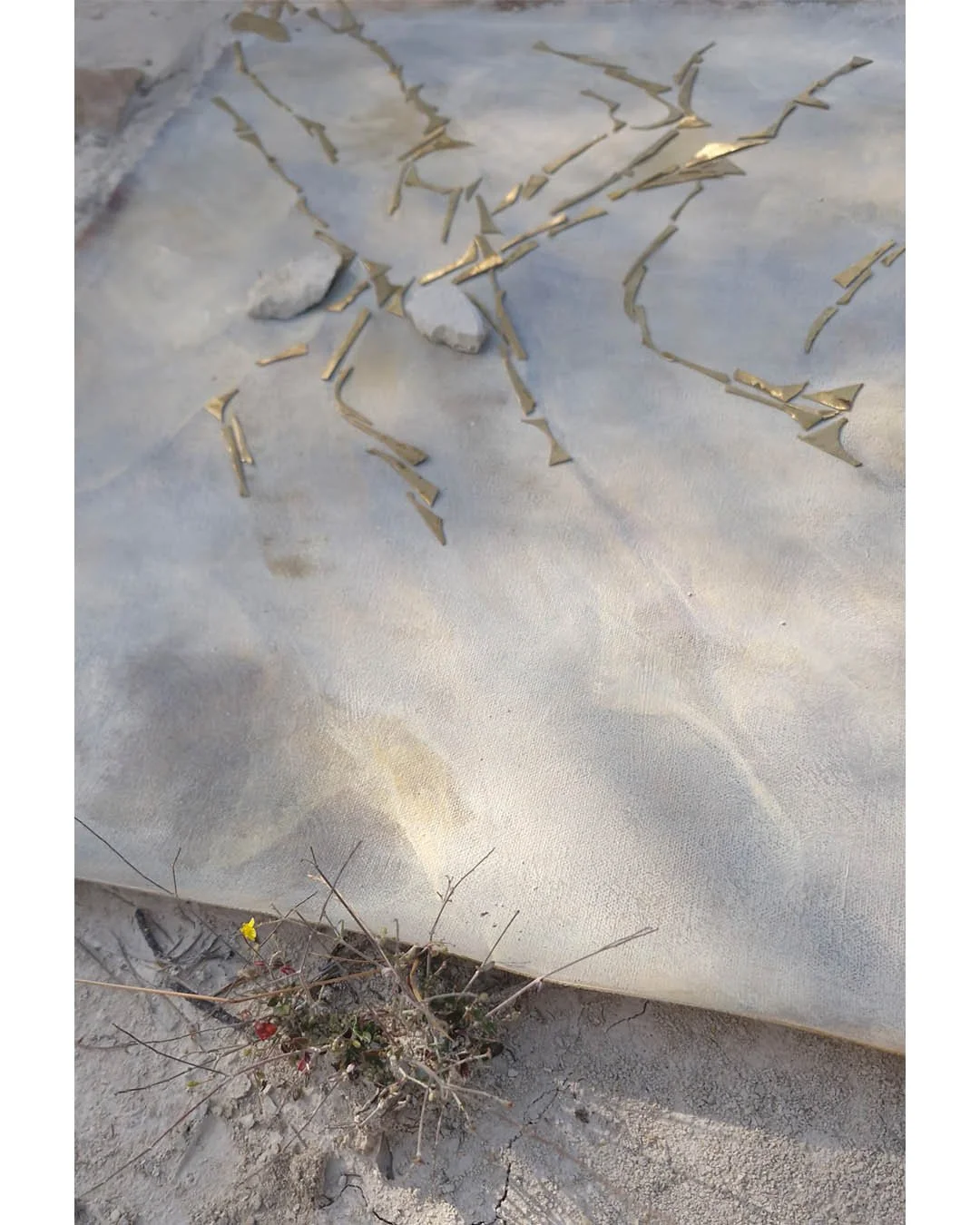
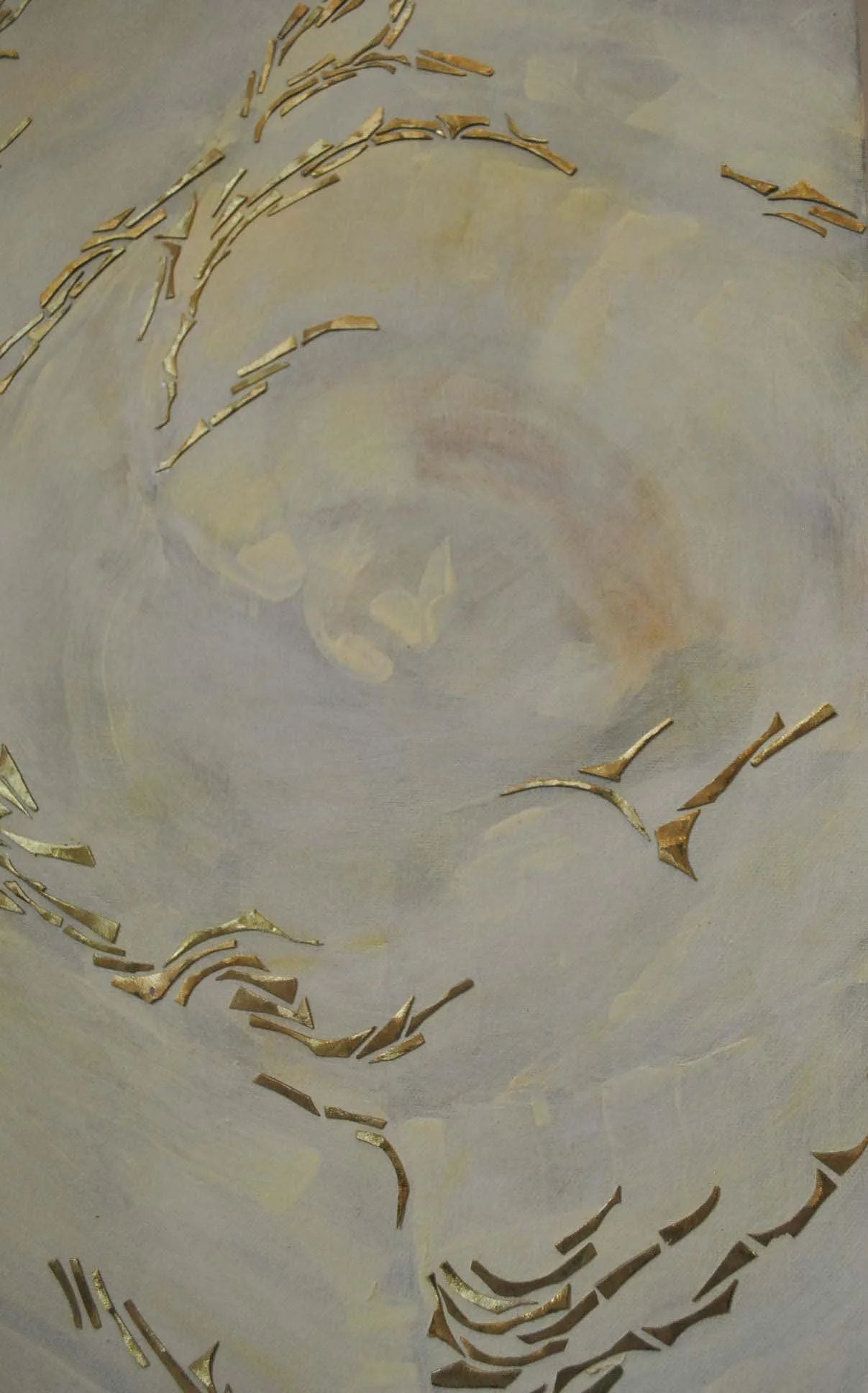
I started working on a project in late 2024, where I create works on canvas using residual Brass pieces of my jewelry work. This new project helps me imagine my body and surroundings that I feel are made of brass as a 6th element. The feeling of Brass as the 6th element doesnot hold a logical base, but to me feel,this material emerges from deep within my body and extends as tendrils in my immediate environment.
Currently I draw heavily from the 'Altiplano' in Perú that I am visiting and creating site-specific works that to me are a small gesture of adornments offered to the landscape.
BILL OLIVER (US): film
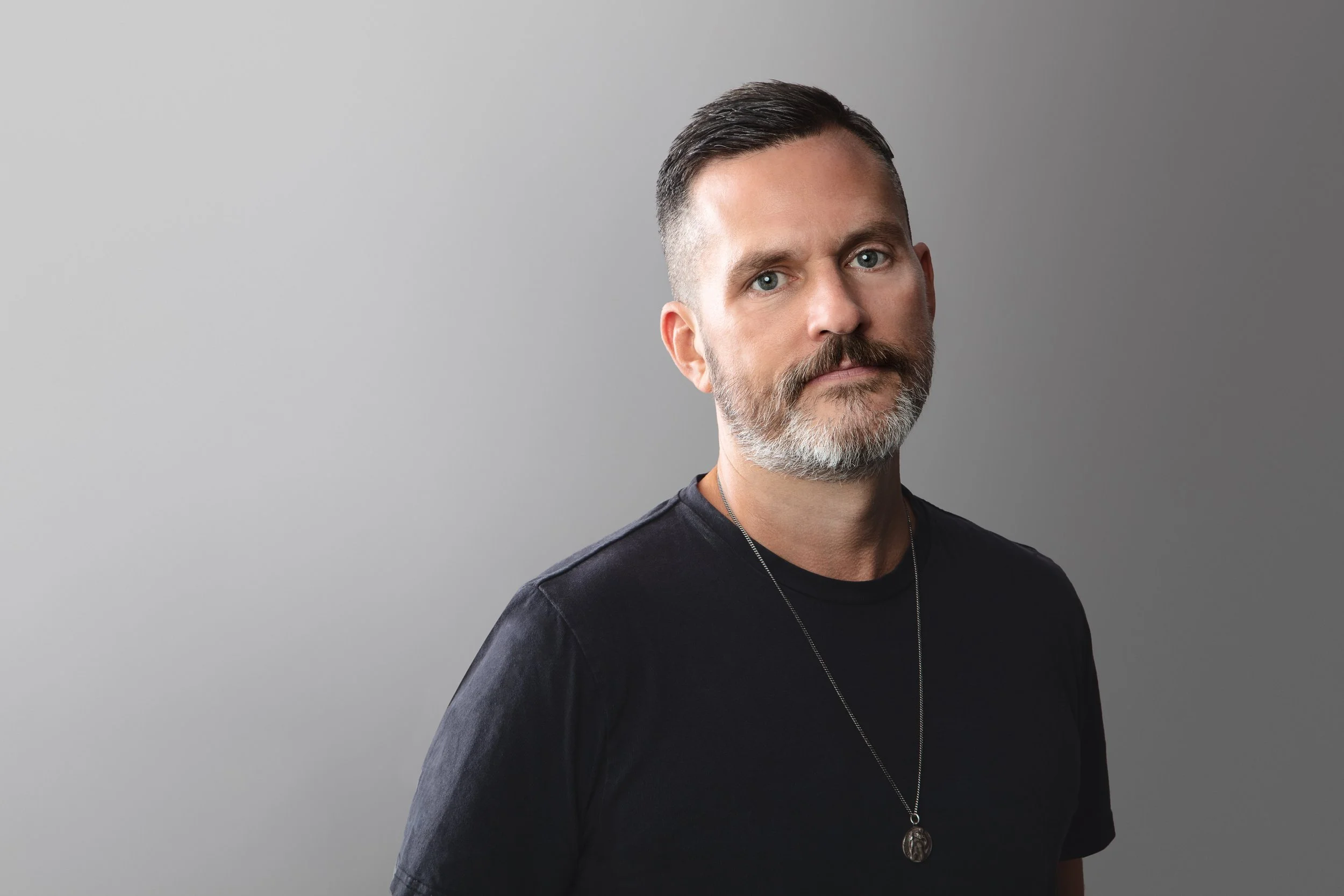
Bill Oliver is the award-winning director of Our Son, starring Billy Porter, Luke Evans, Robin Weigert, Andrew Rannells and Phylicia Rashad, which premiered at the 2023 Tribeca Film Festival, was nominated for a GLAAD Media Award for Outstanding Film - Limited Release, and is distributed by Vertical. His first feature, Jonathan, starring Ansel Elgort, Patricia Clarkson, Suki Waterhouse, and Matt Bomer, won the award for best first feature at the Trieste Science+Fiction Festival and was released theatrically and on-demand by Well Go USA Entertainment. He is a graduate of Princeton University and the American Film Institute.
NICOLA TREMAIN (UK): painting
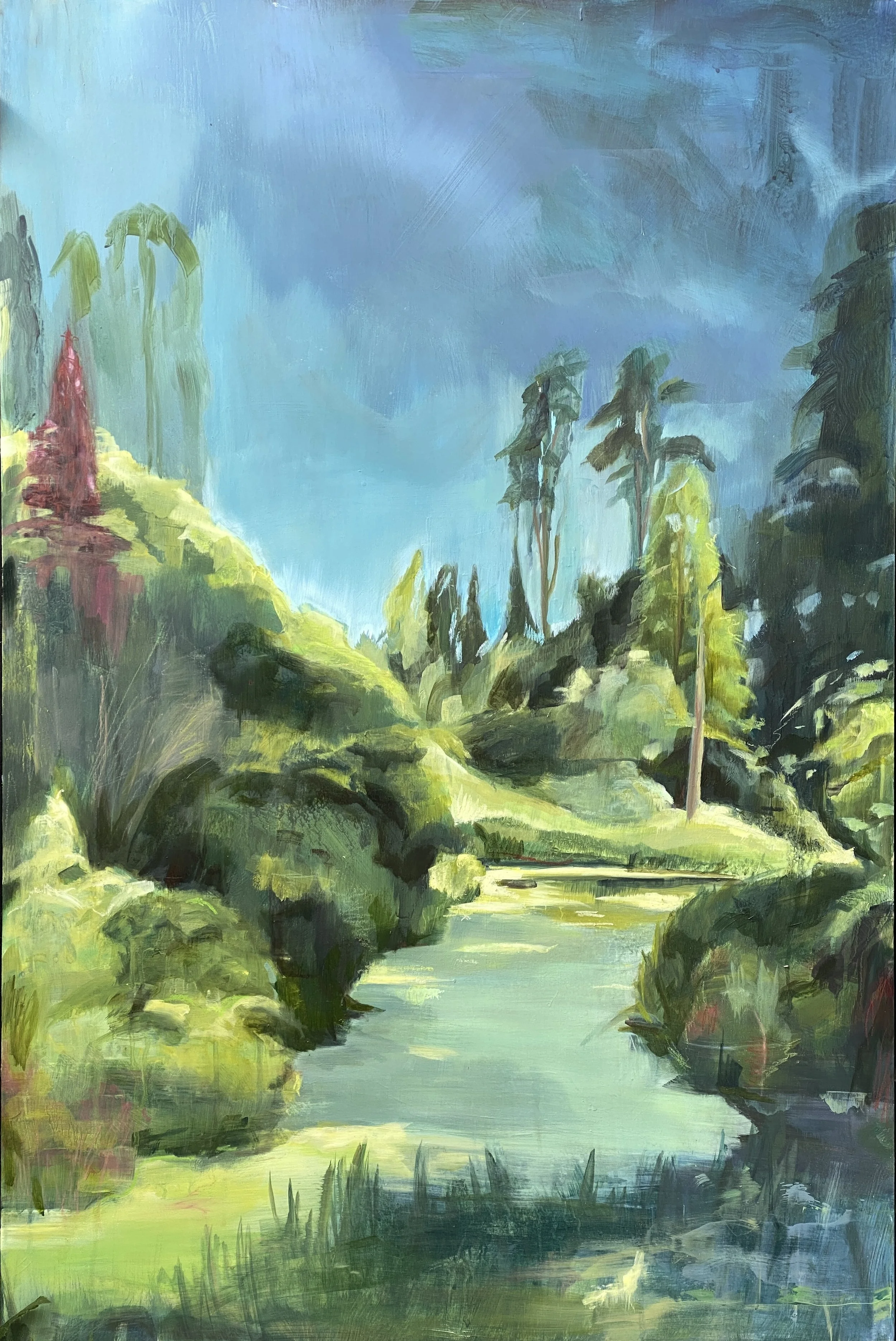
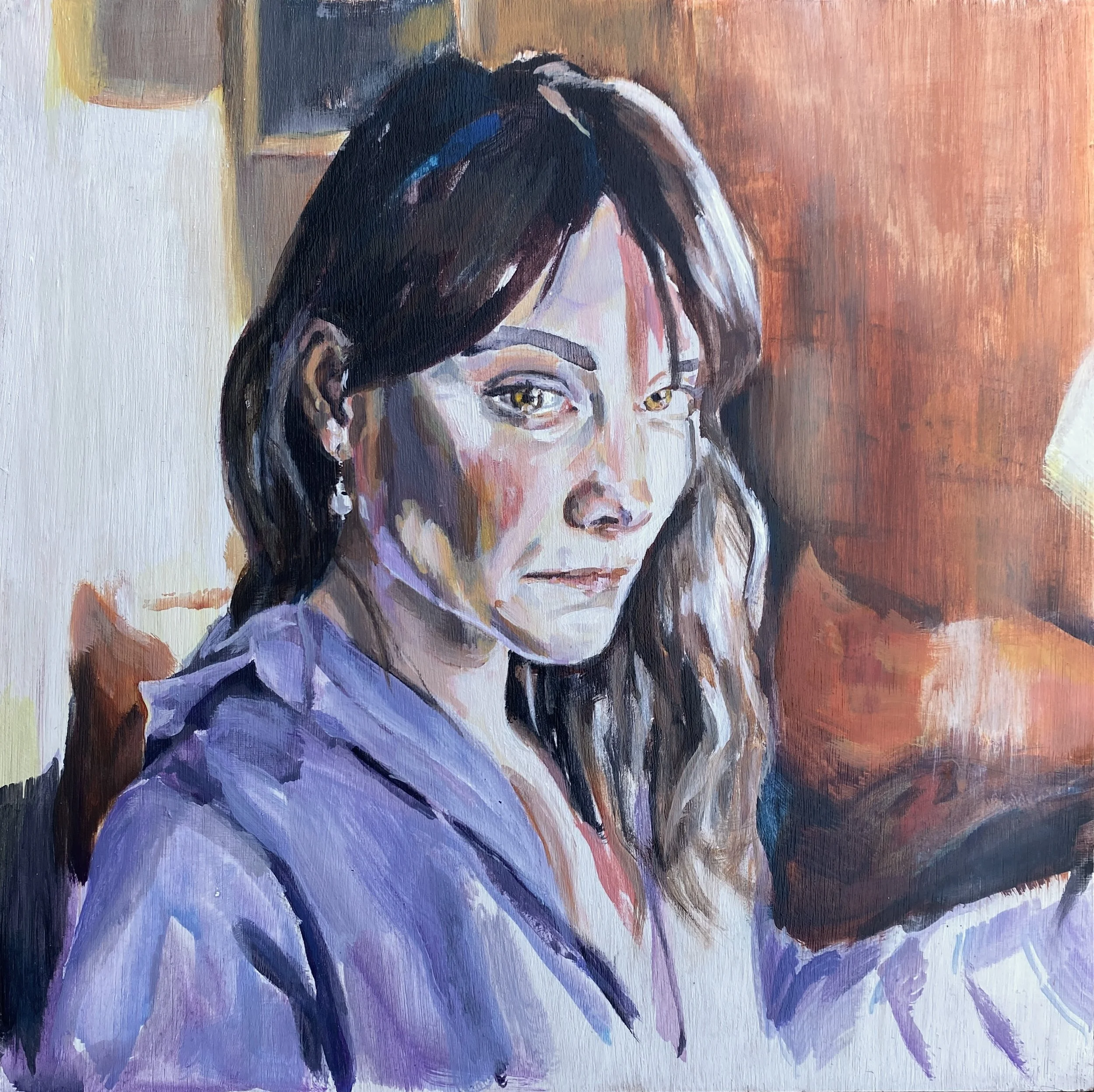
Nicola Tremain is a self-taught artist producing expressive, intuitive work. Each piece begins without a plan, evolving organically on the panel. By spraying, smearing, or scraping paint to relinquish control, she taps into memory and imagination, allowing abstract forms to shift into landscapes, still lifes, or portraits - and sometimes back again. The history of this transformation remains partially visible, adding depth, texture, and unexpected meaning. In this process of evolution, happy accidents often align to reveal deeper symbolism, with the story or lesson behind a piece only becoming clear upon completion.
For her portraits, Nicola works from life. Free-flowing conversation during a sitting enables her to get to the heart of a person. Placing colours freely and intuitively she builds a fleeting frame that captures their essence.
Beyond the studio, Nicola is an Emmy-nominated documentary director, traveling to remote corners of the globe. These immersive experiences inform her artistic exploration of storytelling, bridging the external world with the internal dialogue of envisioning a better future.
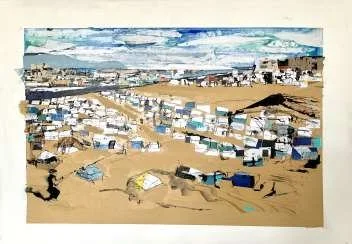
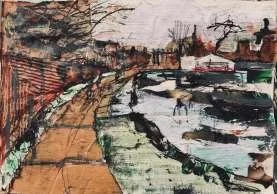
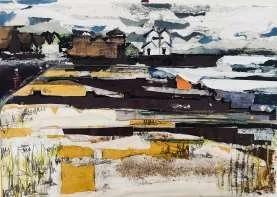
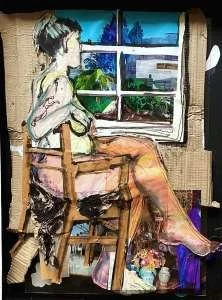
SYLVIETTA (UK): Mixed Media
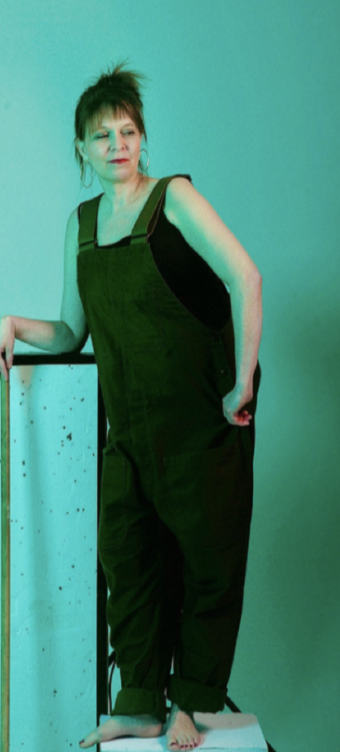
What drives my art? The answer has to be the impulse to create and continually push myself to discover new ways to describe the world within me and around me.
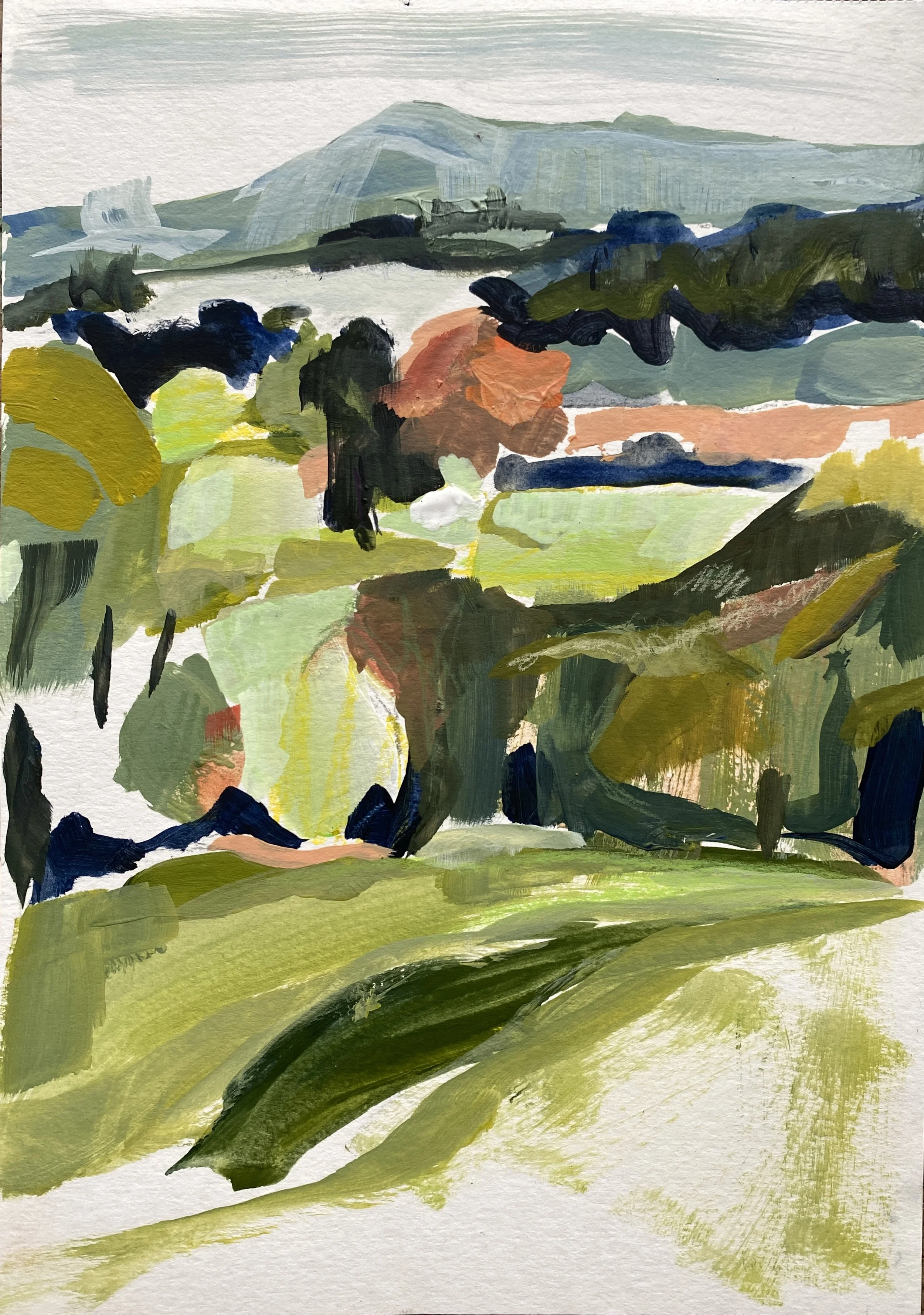
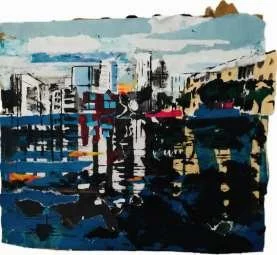
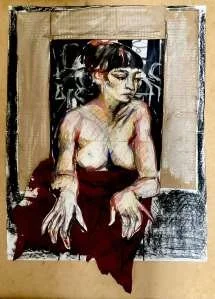
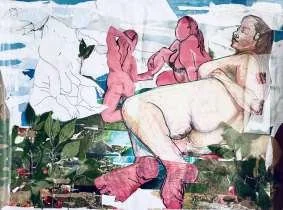
Sylvietta is an artist Based in East London, her mixed media work spans from dynamic cityscapes to expressive portraiture, with each focus evolving along its own creative path.
My work embraces the vibrancy of collage, weaving together layered stories through recycled paper and found materials from her surroundings. This sustainable approach not only reflects her commitment to environmental responsibility but also serves as a defining signature in her art. -a collage can be an infinite work of art, you can add more pieces of paper or figures and go beyond the limit of the piece of paper again and again.
Sylvietta is also part of the #draweachoter art group, a global open community of artists that draw each other's portraits that in London and now is spread all over the world, her artworks are being sold in London and around the world.
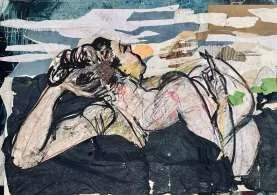
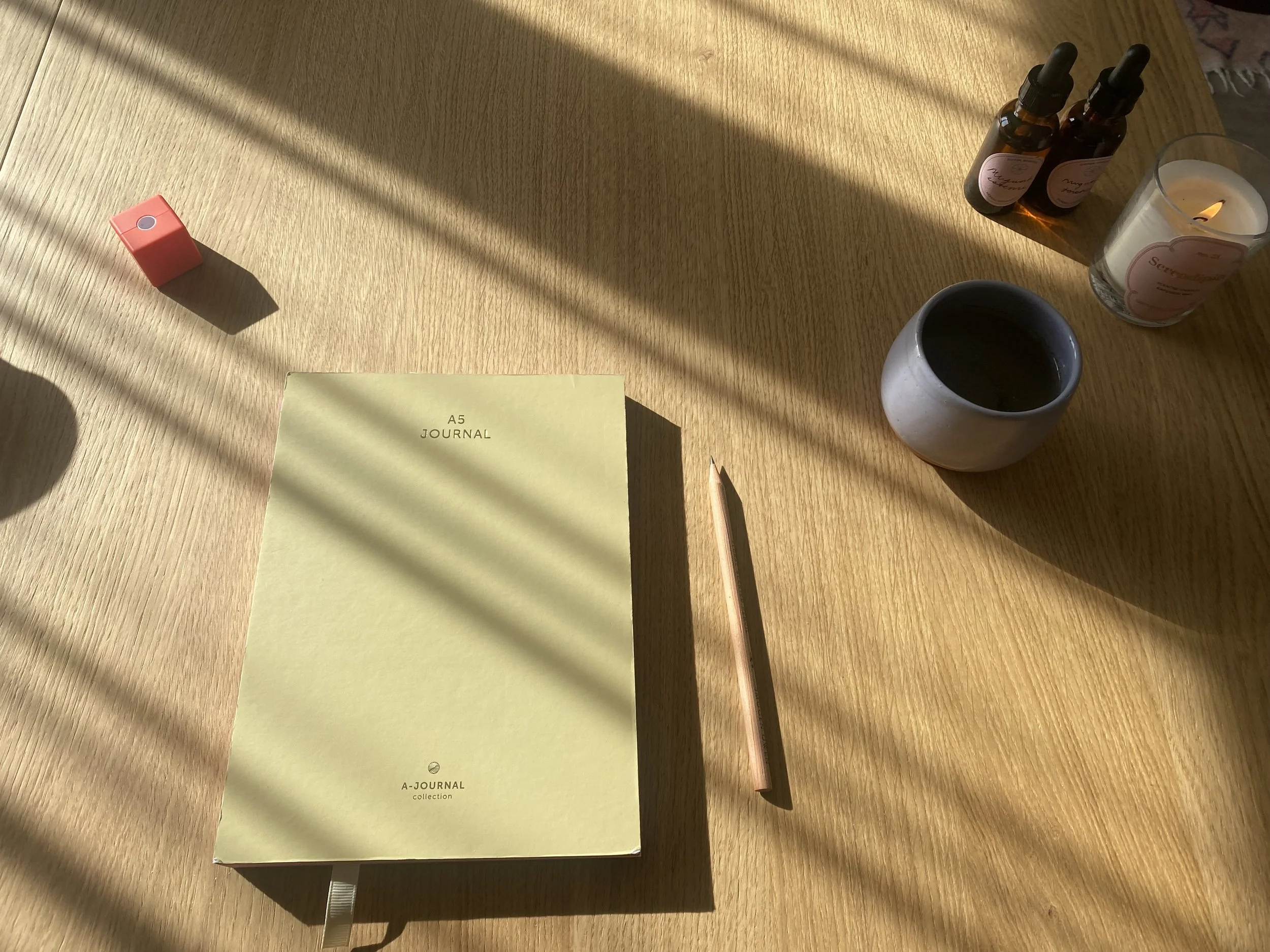
NANOR ABKARIAN (US/IT): writing
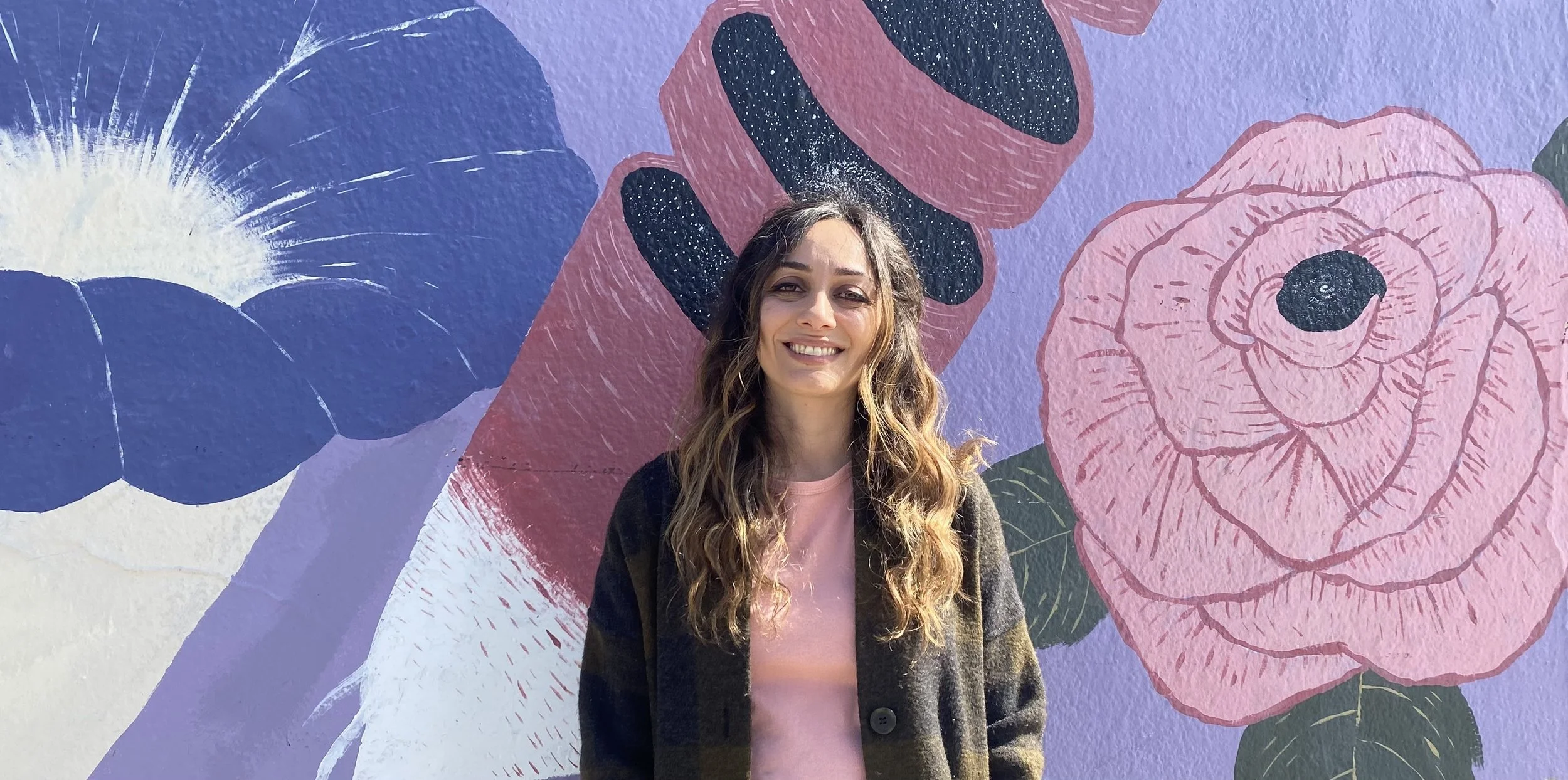
Nanor is a writer based in Los Angeles, currently living in Italy. She works across poetry, food, and wellness, with a focus on cultural memory and place. Her practice is shaped by attention to land, ritual, and sensory experience.
I’ll be developing an ongoing body of material gathered across Los Angeles and the Caucasus, now extending into Los Valles. The fragments and poems are based on flowers and other natural elements encountered in each environment, which I work with through dreams, teas, and essences.
OLGA MAZUR (PL): Painting, Mixed Media
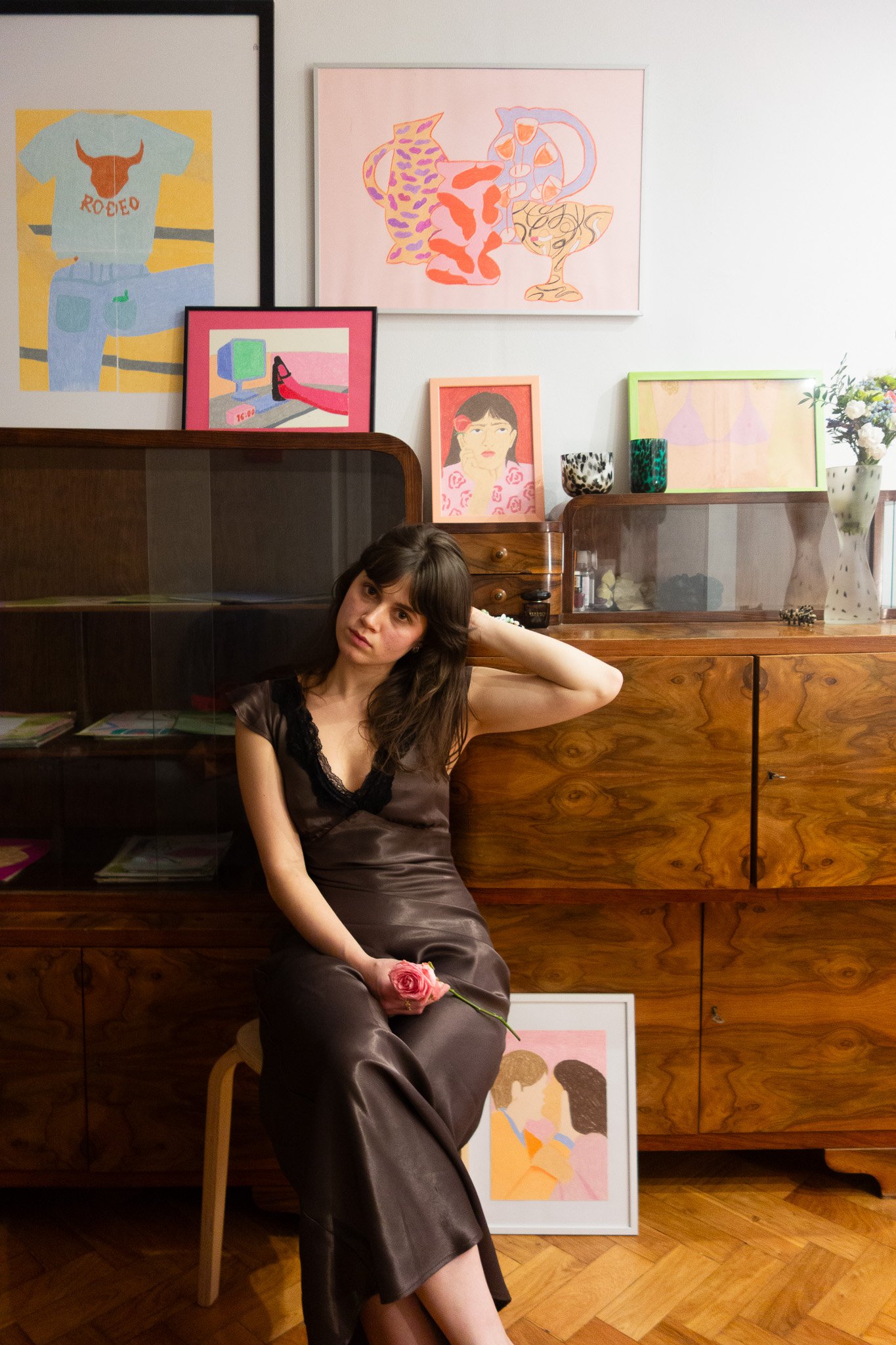
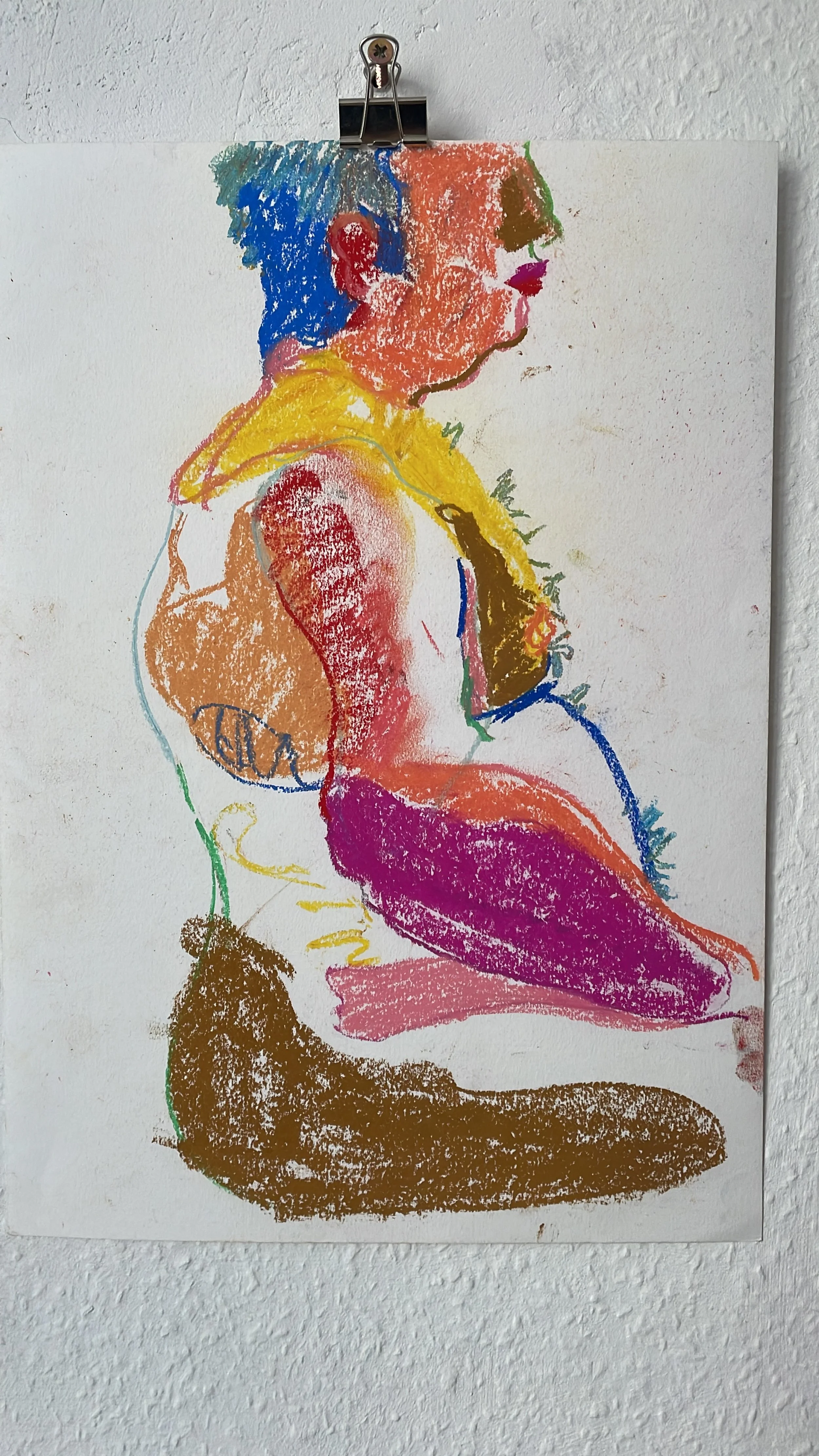
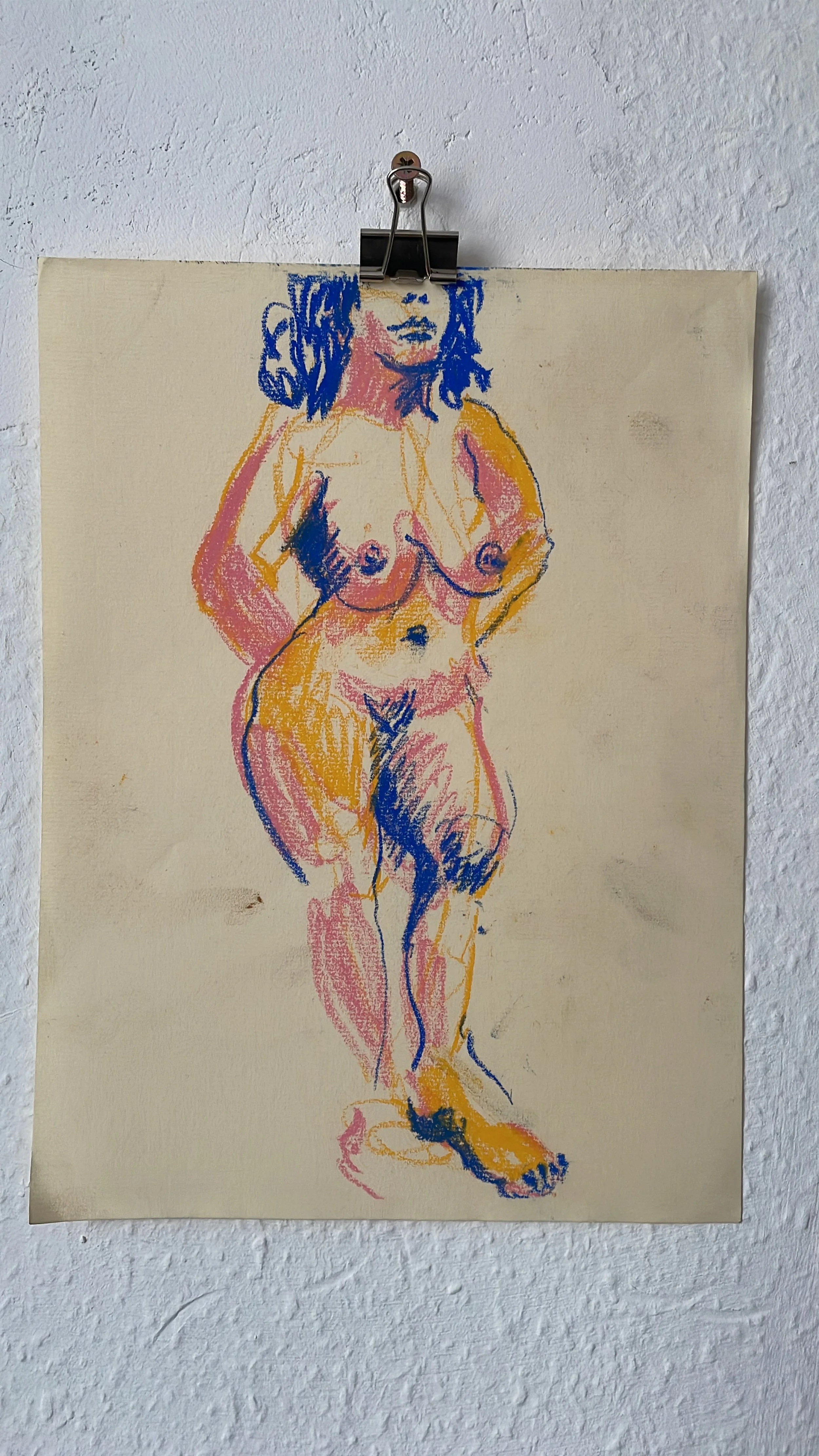
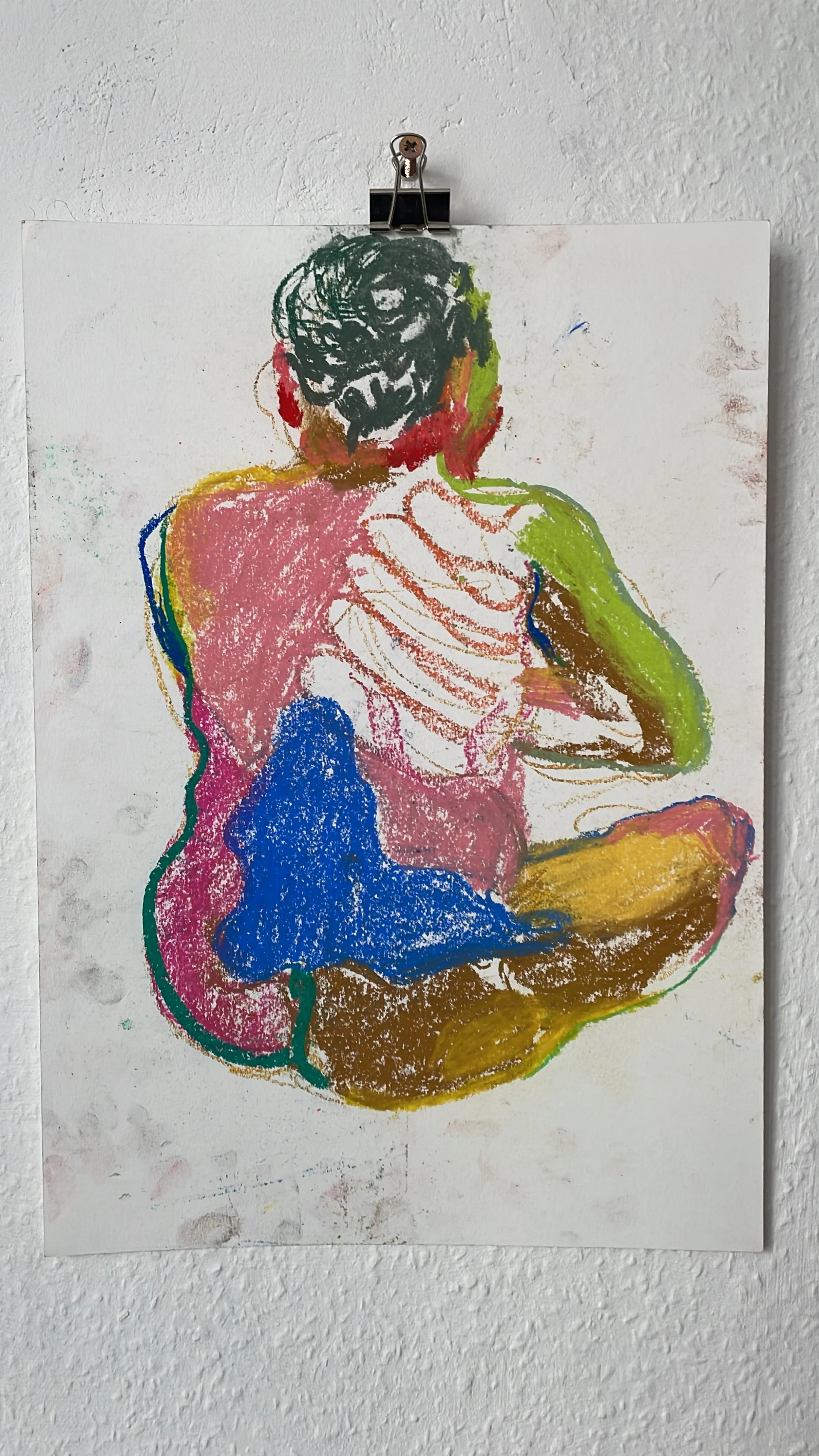
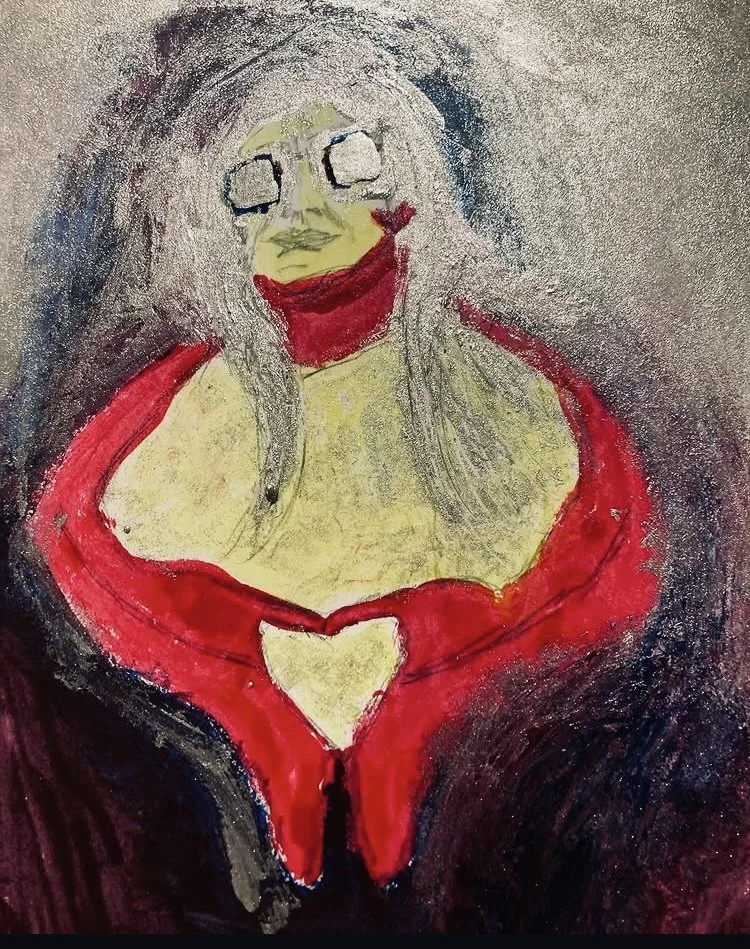
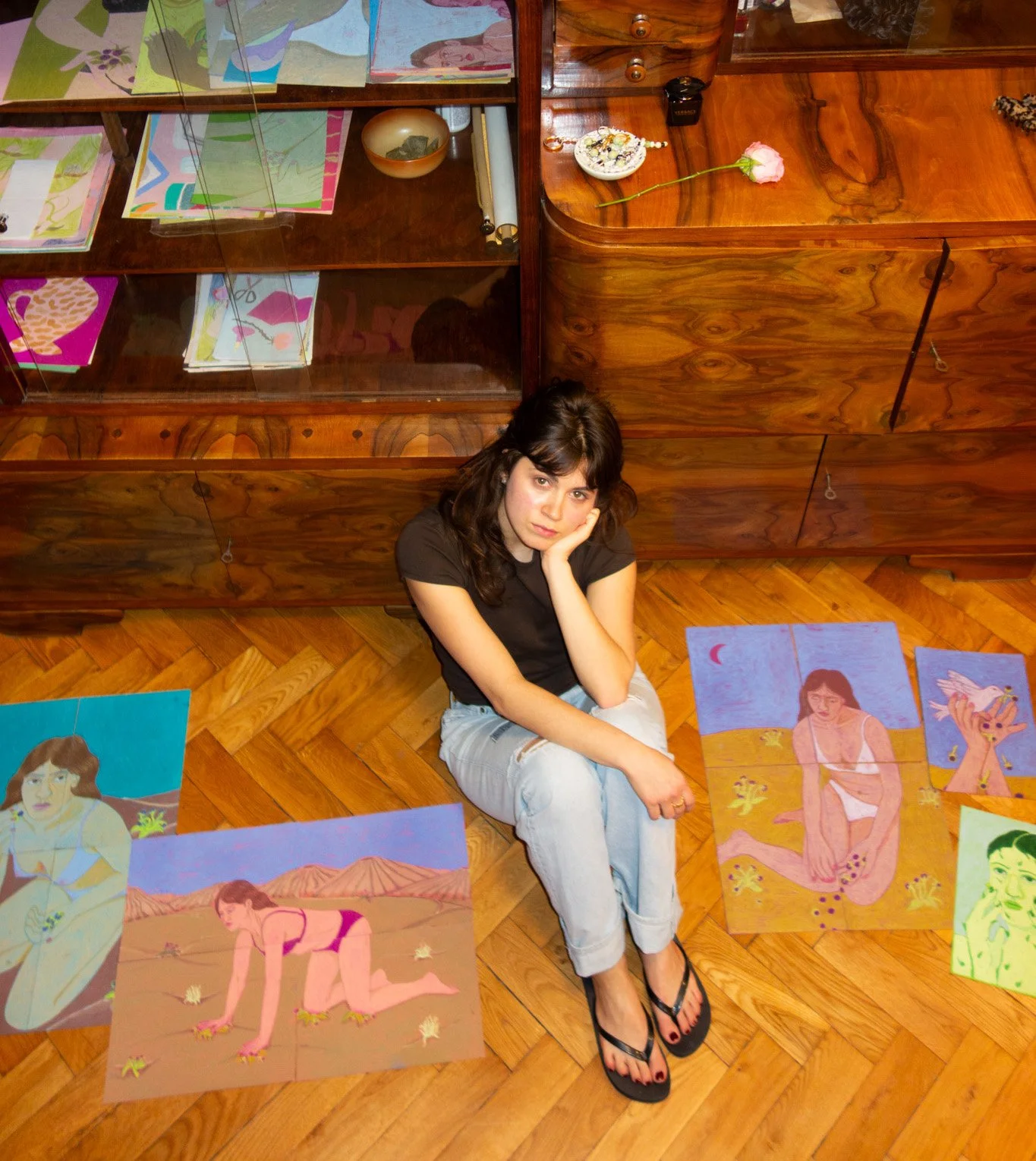
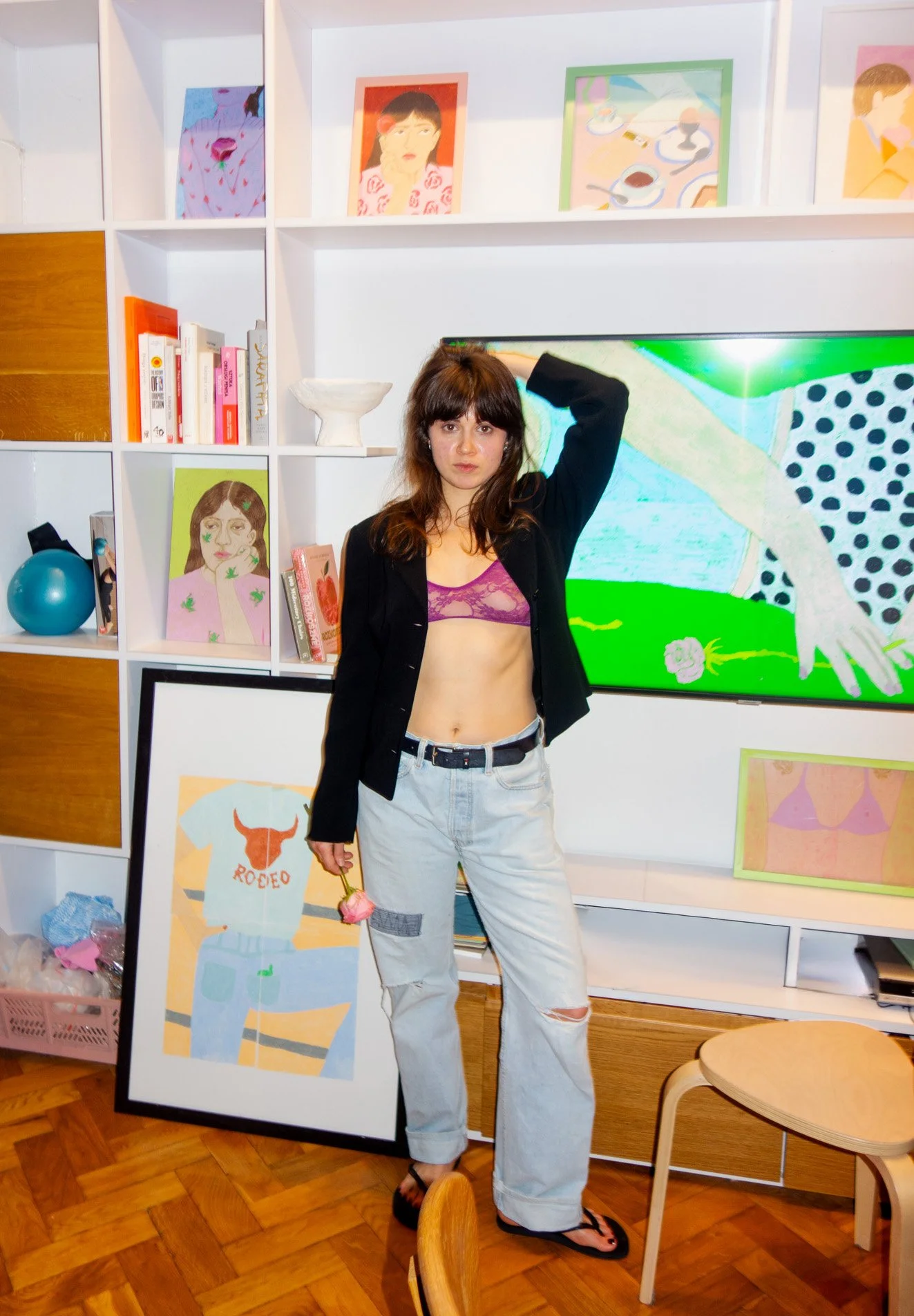
Olga (b. 1998) is an illustrator based in Warsaw, working primarily with oil pastels, crayons and drawing techniques. Her practice focuses on observing everyday life and human body and translating emotions into symbolic, intimate scenes.
Through simplified forms, vibrant colors and a slightly childlike visual language, she explores the relationship between the body, nature and inner emotional landscapes.
Her works often depict figures, gestures and ordinary objects that become carriers of feelings, memories and fleeting moments. Treating illustration as a visual diary, she captures fragments of daily life and transforms them into poetic, sometimes surreal narratives. Her illustrations exist somewhere between a diary and a dream — visual notes that transform ordinary moments into poetic, emotional narratives
.
In my artistic practice, I would like to explore the tension between emotion and emptiness, intimacy and vast landscapes. During the residency at Hektor, I would like to create a series of pastel drawings — hybrid works between illustration and painting — focused on the relationship between human vulnerability and the desert environment.
I see the desert as both a physical landscape and an emotional state: a space of silence, distance, and apparent void. Using pastels, I want to build delicate, almost fragile surfaces where small human figures coexist with expansive, minimal horizons. The powdery, tactile quality of pastel will allow me to express subtle emotional transitions — between presence and absence, isolation and quiet resilience.
BEGUM MALKOCLAR (UK/TR): Mixed Media
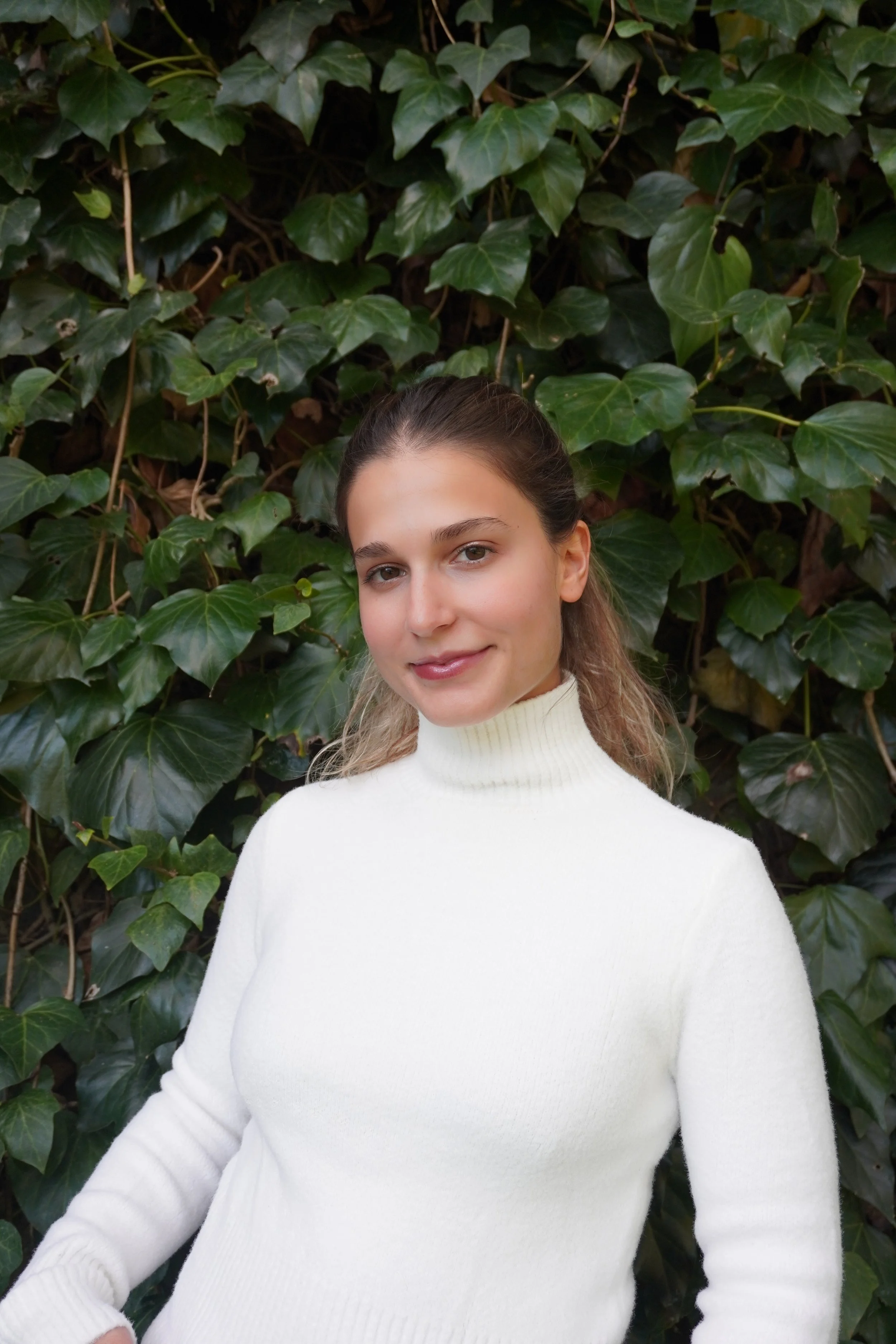
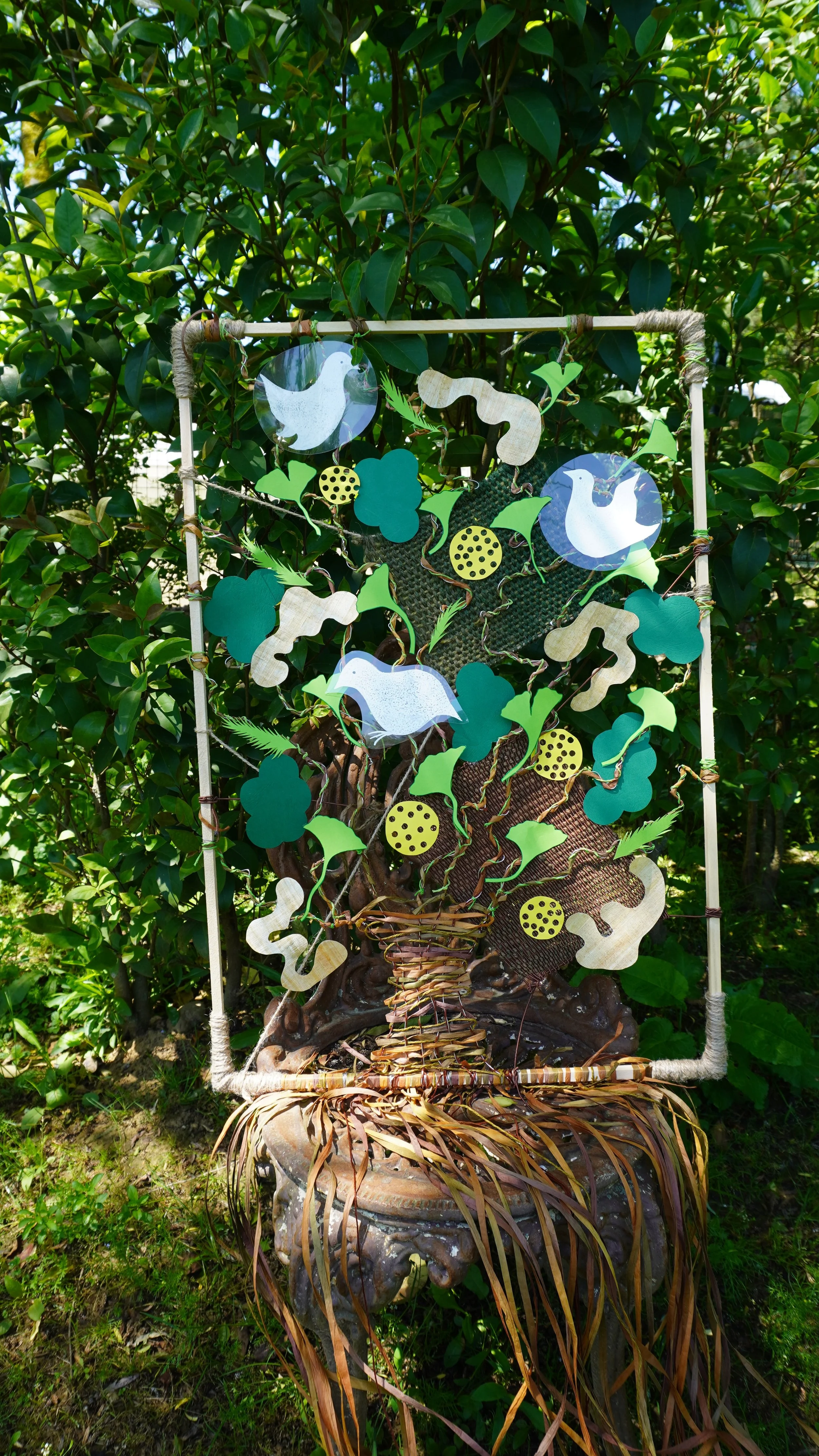
Begum (b. 1999) is a Turkish artist working between Istanbul and London. Her art explores the intrinsic relationship between reality and fiction, reflecting the fluid and dynamic nature of collective memory. Engaging deeply with her cultural heritage, she examines how memories are shaped and transformed through a humanistic and intuitive lens.
In her practice, Begum navigates fundamental themes of existence, investigating the formation of personal and cultural identities and the connections that bind humanity to nature. To bridge the past and present, she employs a diverse array of media, including analog and digital film, hand-drawn and digitally-created illustrations, embroidery, collages, and writing. Her work embodies a playful spirit, intertwining fiction and non-fiction in a theatrical restaging of narratives.
As a contemporary artist, Begum actively seeks to uncover and preserve the past, embracing its vast possibilities while remaining open to new interpretations as her practice evolves. To her, the past is a mystery to be unraveled, one that requires the slow weaving of a tapestry across time and space, reinventing the unknowns through creative storytelling. In this process, she aims to construct a personal archive that examines expressions of memory—dreams, myths, and stories—developing an alternative historical perspective on human experience and deepening her understanding of the self.
Begum Malkoclar earned her BA from Pratt Institute in New York City and a Master’s in Contemporary Art Practice from the Royal College of Art in London. Her work has been featured in group exhibitions across New York, London,and Istanbul. In 2025, she debuted her first solo exhibition, Pale Blue Dot, at Büyükdere35 Gallery in Istanbul. That same year, she was selected for the prestigious 44th Akbank Contemporary Artists Prize exhibition.
Website: bedoojournal.com
ELINE BOON (BE): Writing
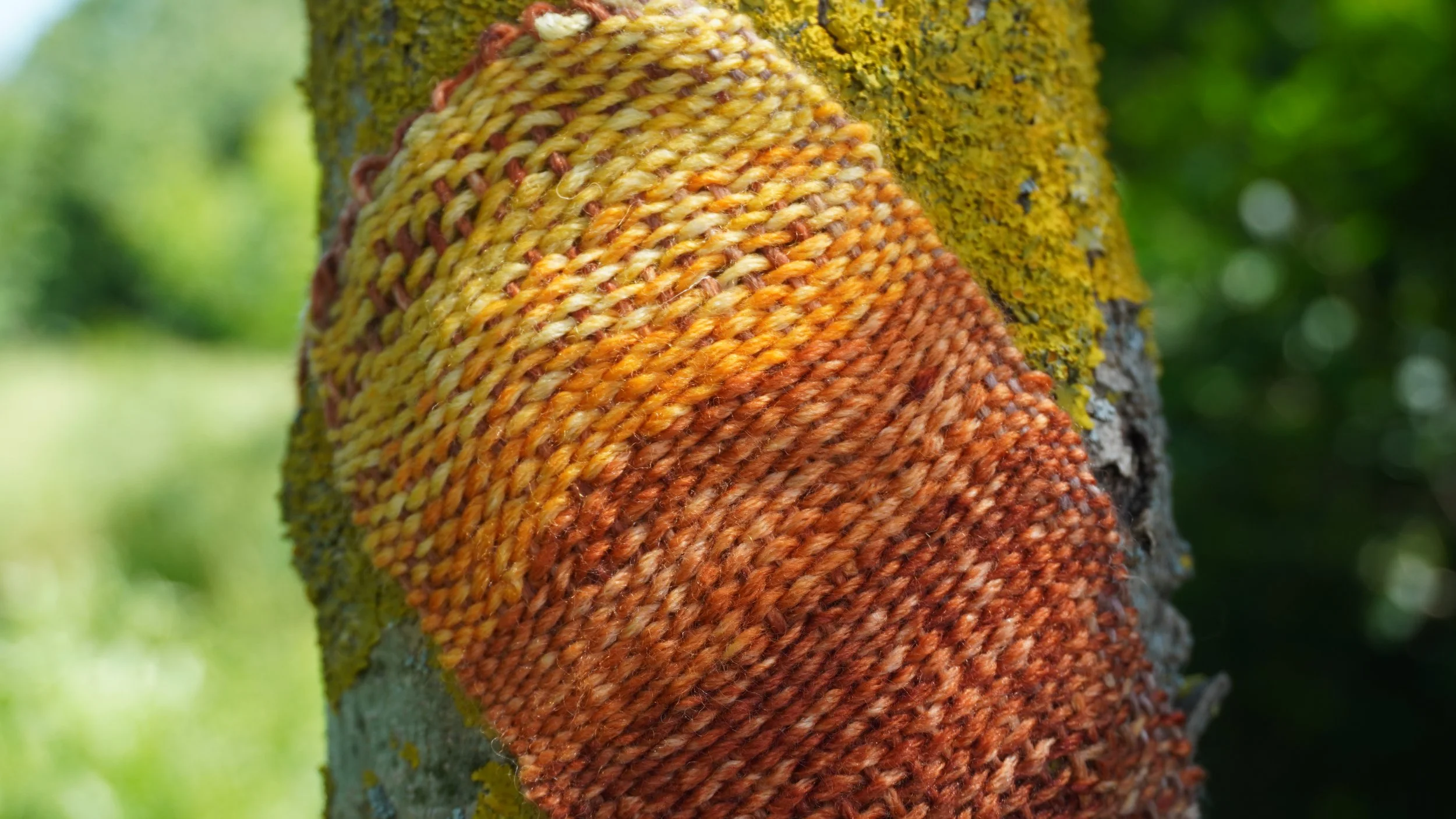
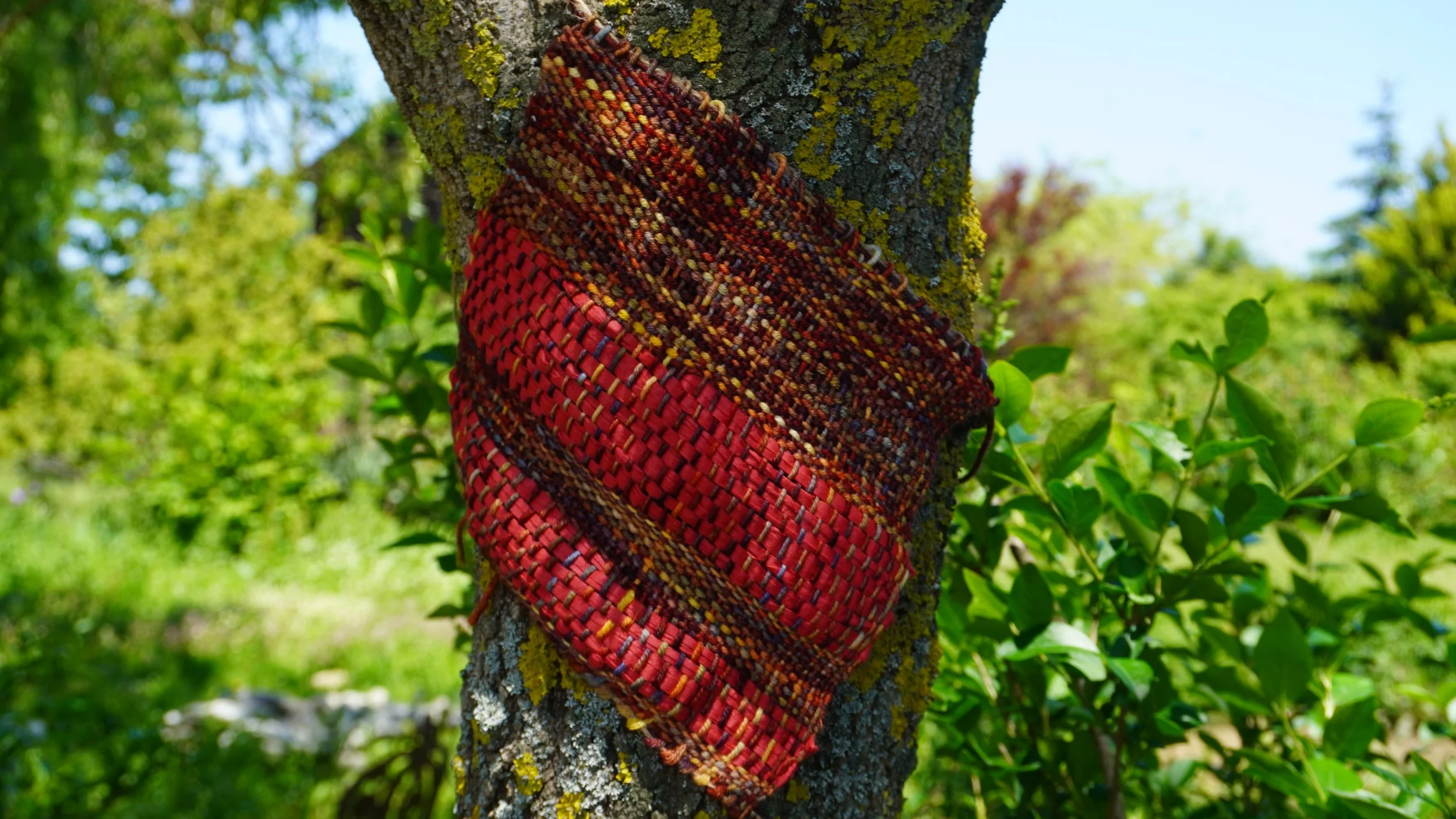
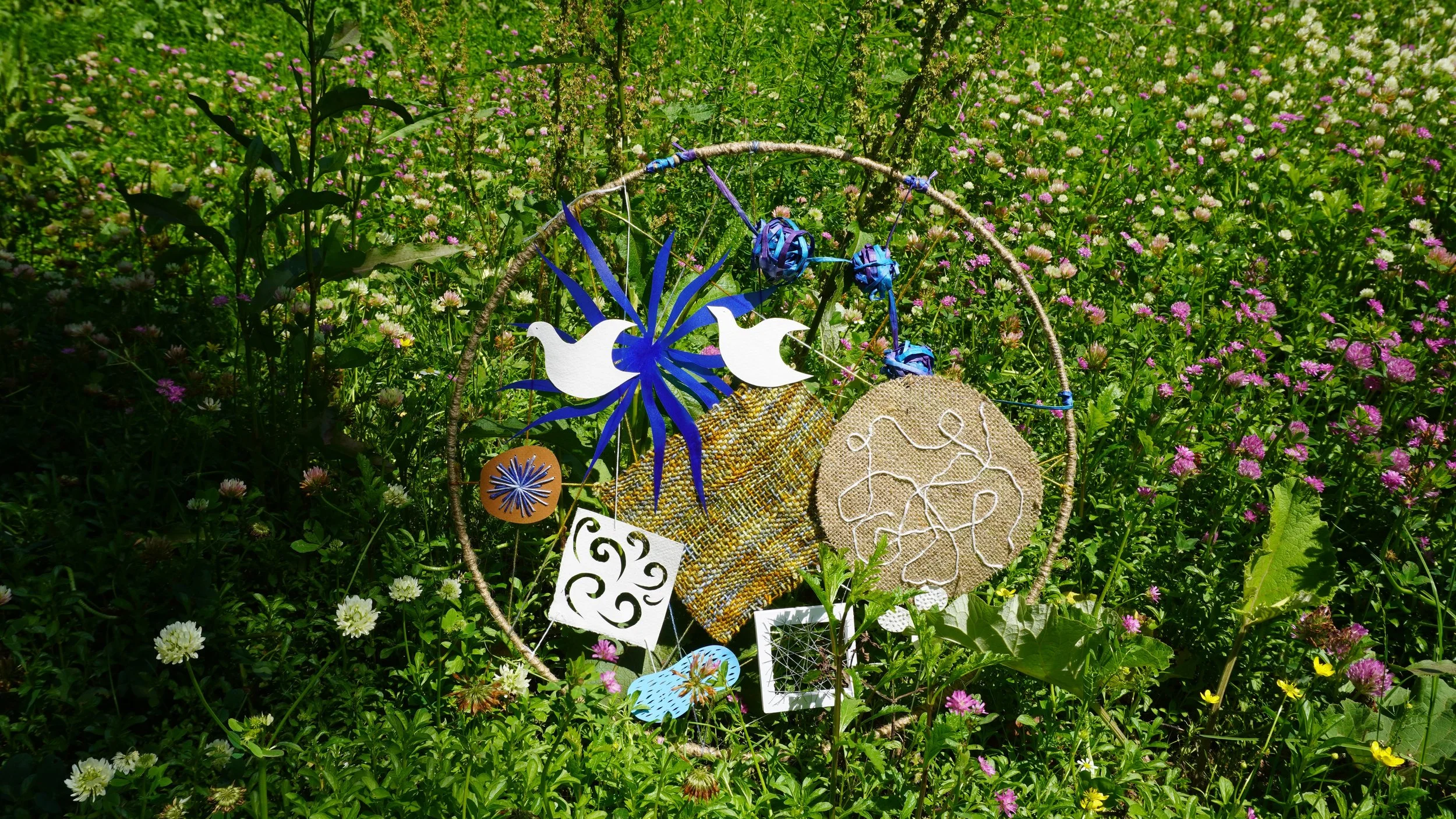
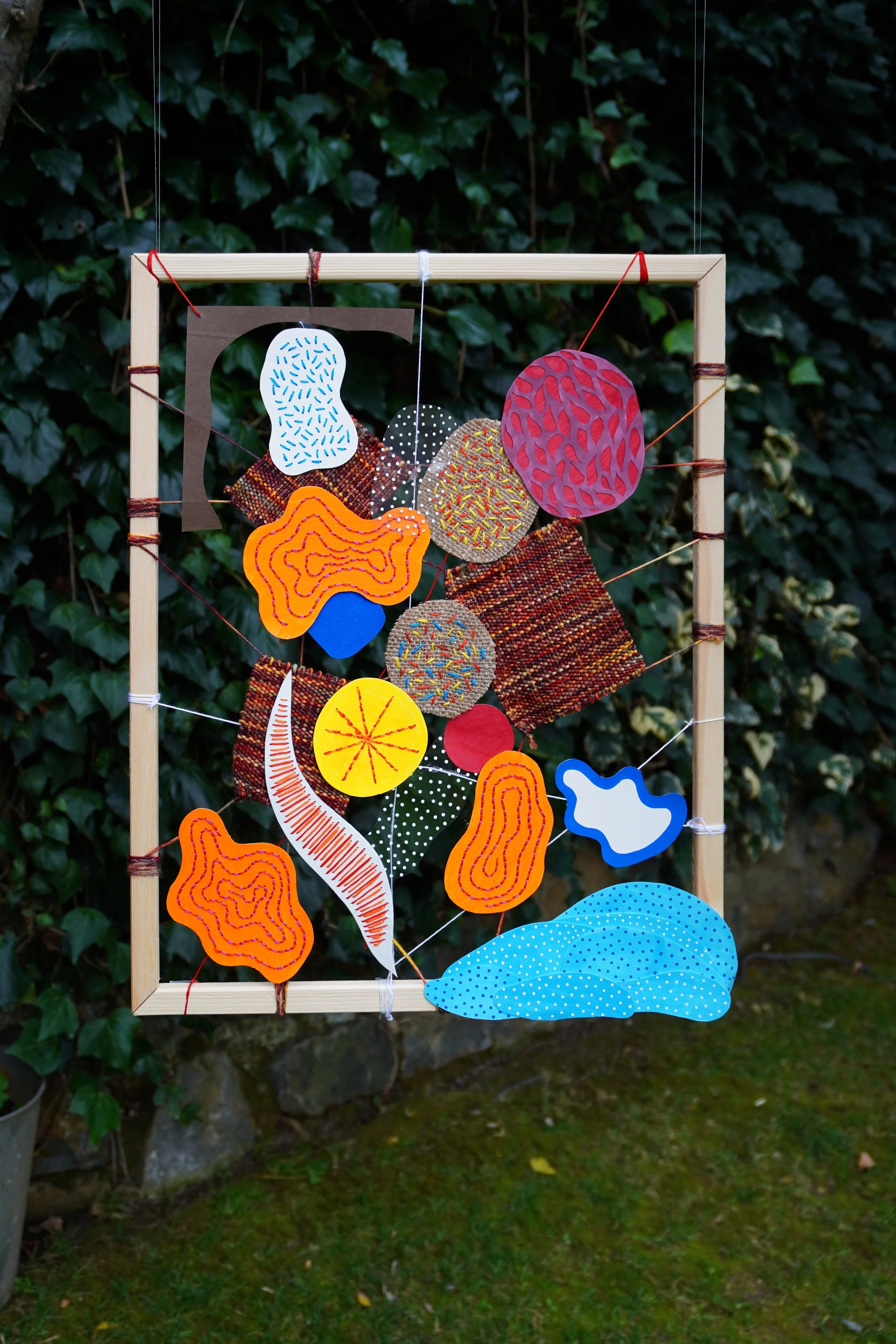
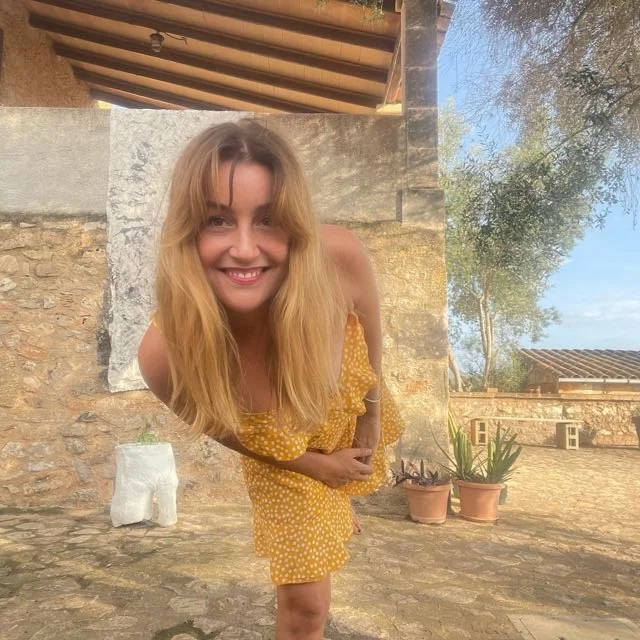
Eline Boon is a writer and EU policy expert based in Brussels, inhabiting the friction between systemic architecture and the human pulse.
Driven by the conviction that the collision of Art and Science is the only catalyst potent enough for our time, her work is a constant act of translation. As an editor at Rephrase Mag and advisor at MUCE, she dismantles the exclusionary jargon of ivory towers, re-authoring the cold mechanics of legislation into narratives that breathe. She treats storytelling as a tool for political disruption—an invitation to move beyond abstract theory and into a visceral, shared reality.
During her residency at Hektor, Eline will be listening to the volcanic resonance of the landscape to craft a sonic voyage. Through a sequence of short stories and field recordings, she seeks to bridge the gap between systemic transition and lived intimacy. Her project is a grounding exercise: an attempt to make a better future audible, shifting it from a distant utopia into a tangible, resonant home.
GLENN SANDERS (BE): painting
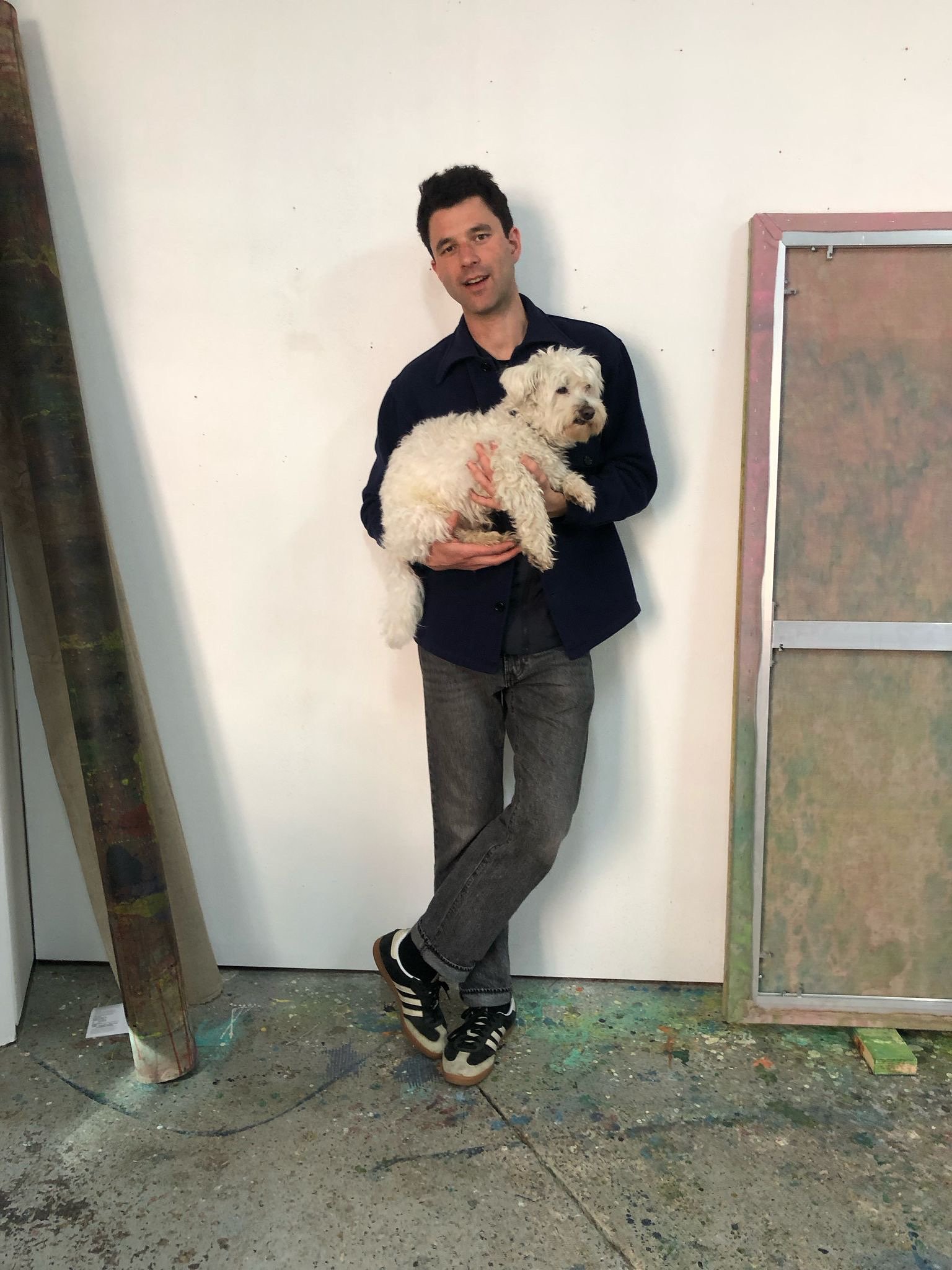
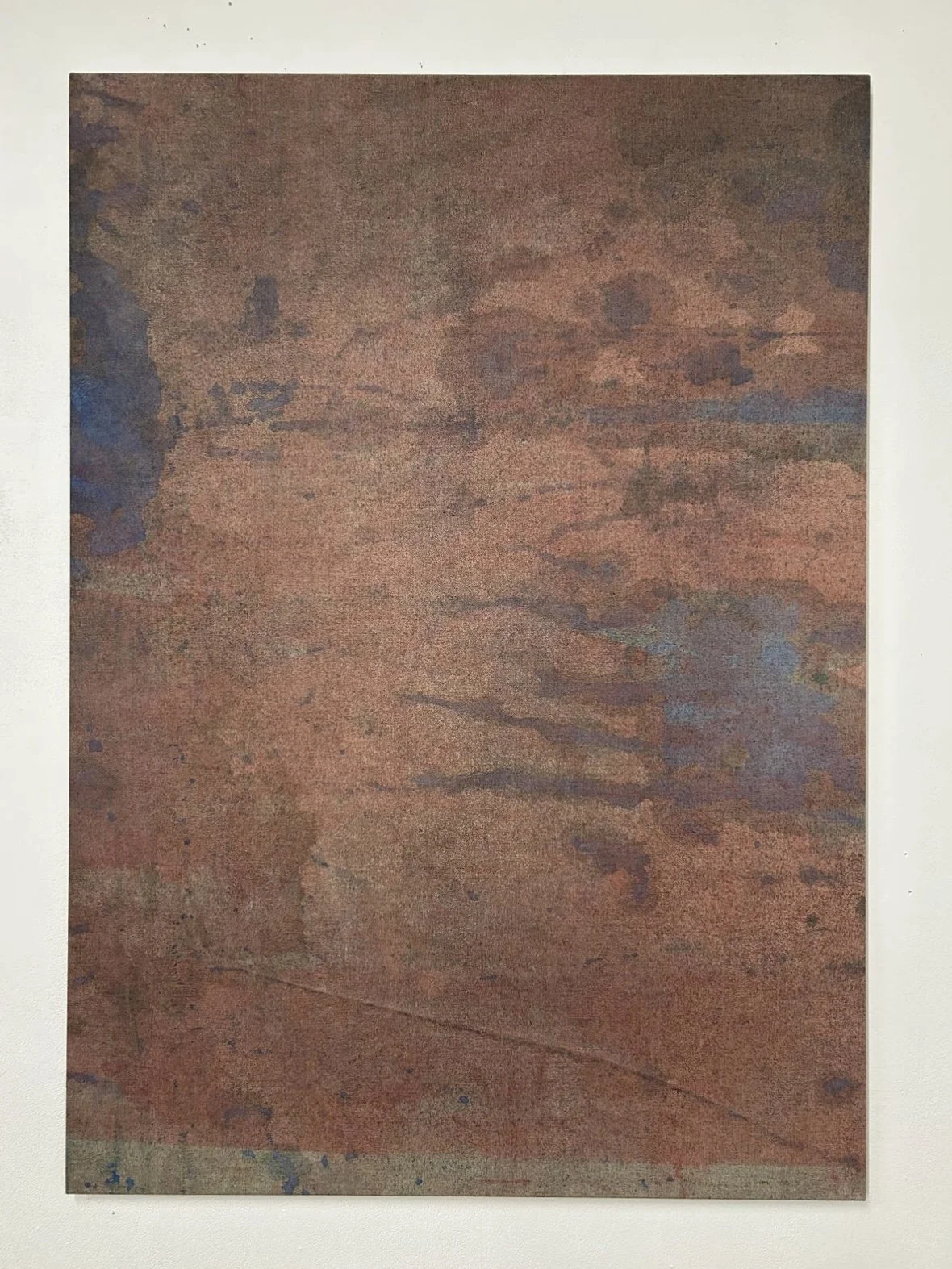
Glenn Sanders (b. 1989, Belgium) is a Brussels-based artist whose practice unfolds through layered explorations of space, perception, and material presence. Educated at the Academie Jan van Eyck in Bruges and later at the School of Arts in Ghent, he holds both a Bachelor and Master in Fine Arts and recently followed a seminar on colour with Félix A. D’Haeseleer.
His work has been featured in exhibitions including Spaces, Superposed States, MANUAL, Dark ’n Stormy, Wandelgangen, A Garden Party, Blue blue blurb blue.. Projects have been shown at Komplot Brussels, L’ Édition populaire Antwerp, Fred&Ferry Gallery Antwerp, Superdeals Brussels, Katapultt Gallery Scheldewindeke, and other venues across Belgium.
He continues expanding the dialogue between artistic research, built environments, and lived experience.
Artist Statement
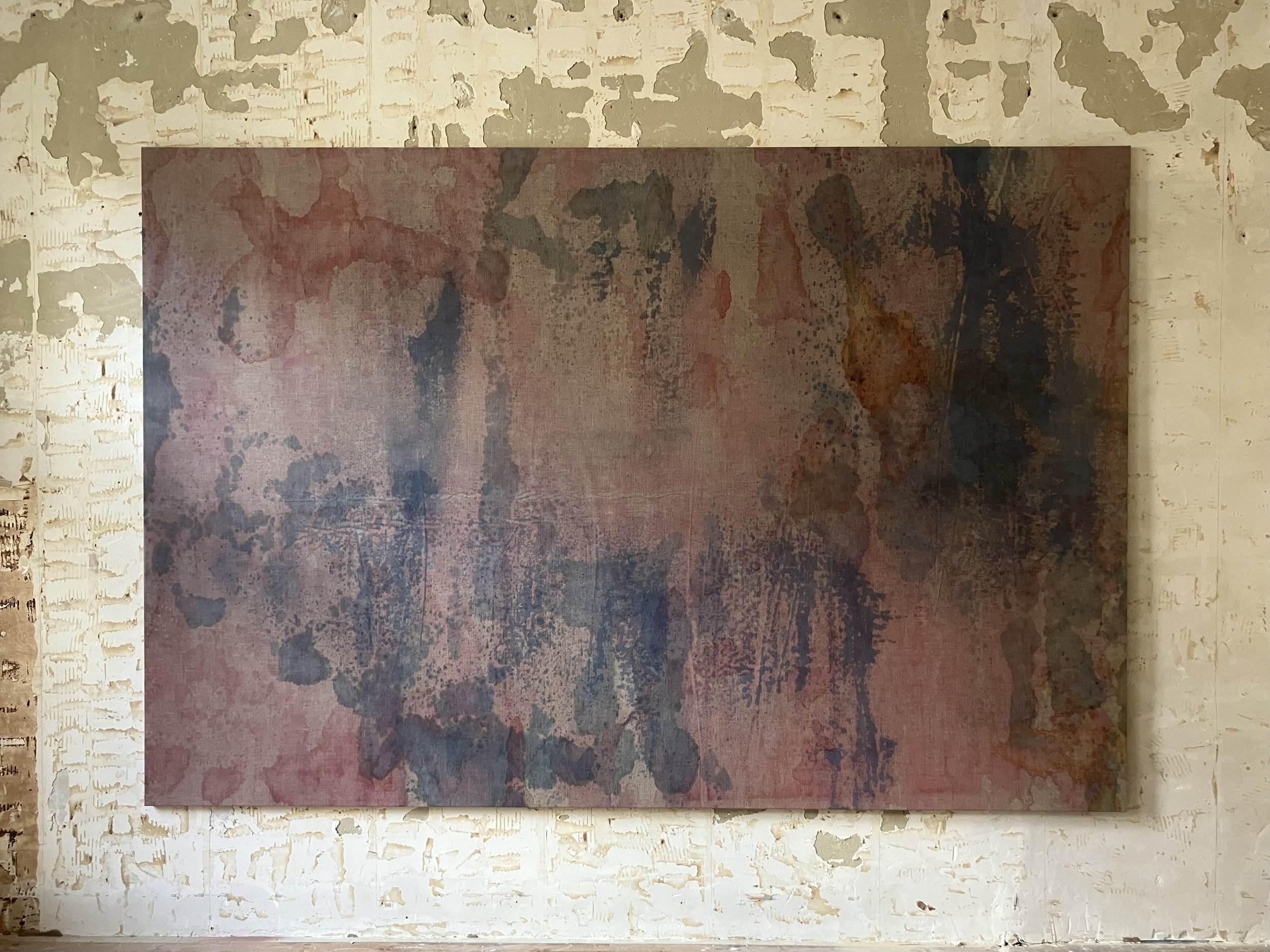
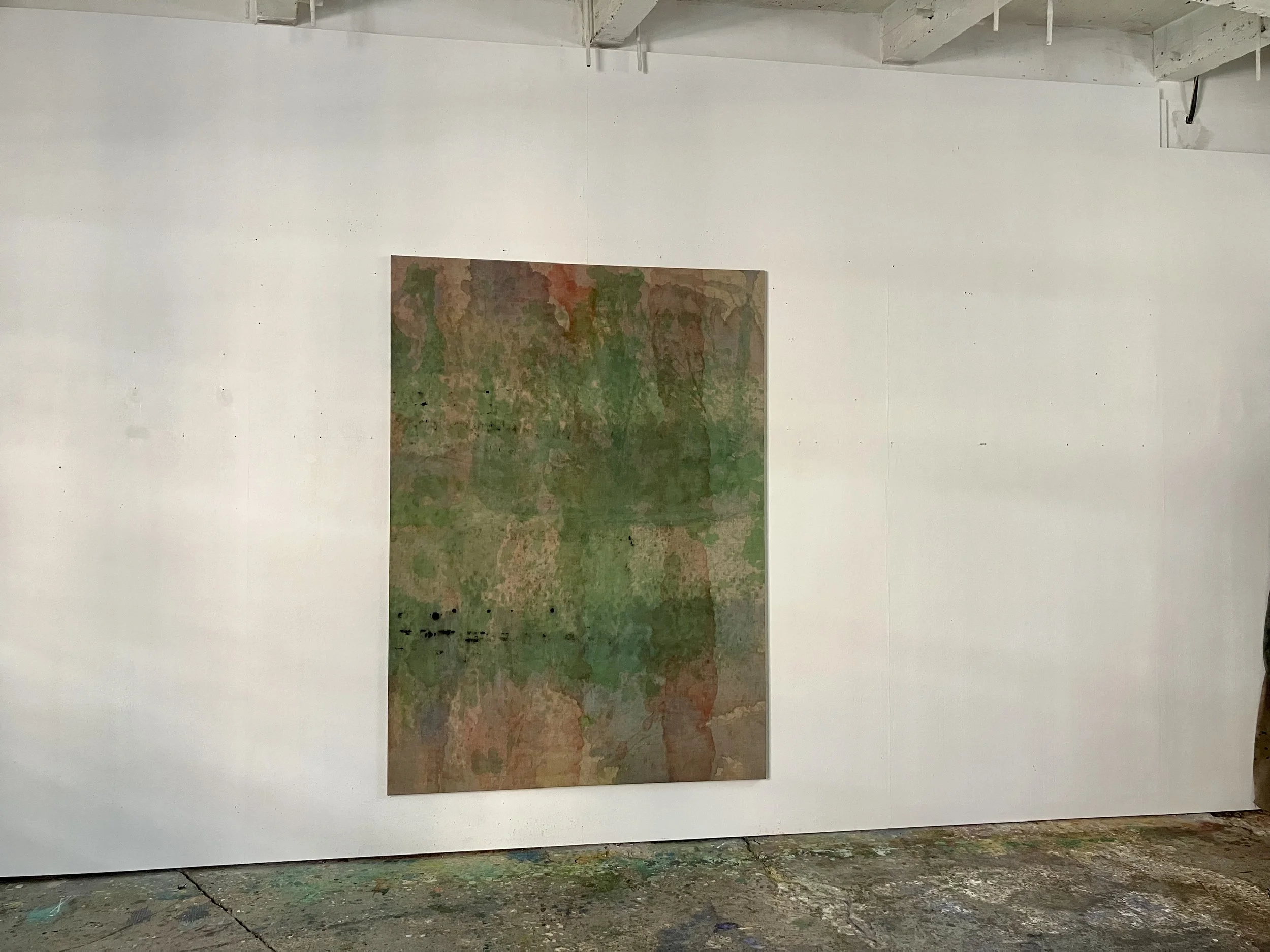
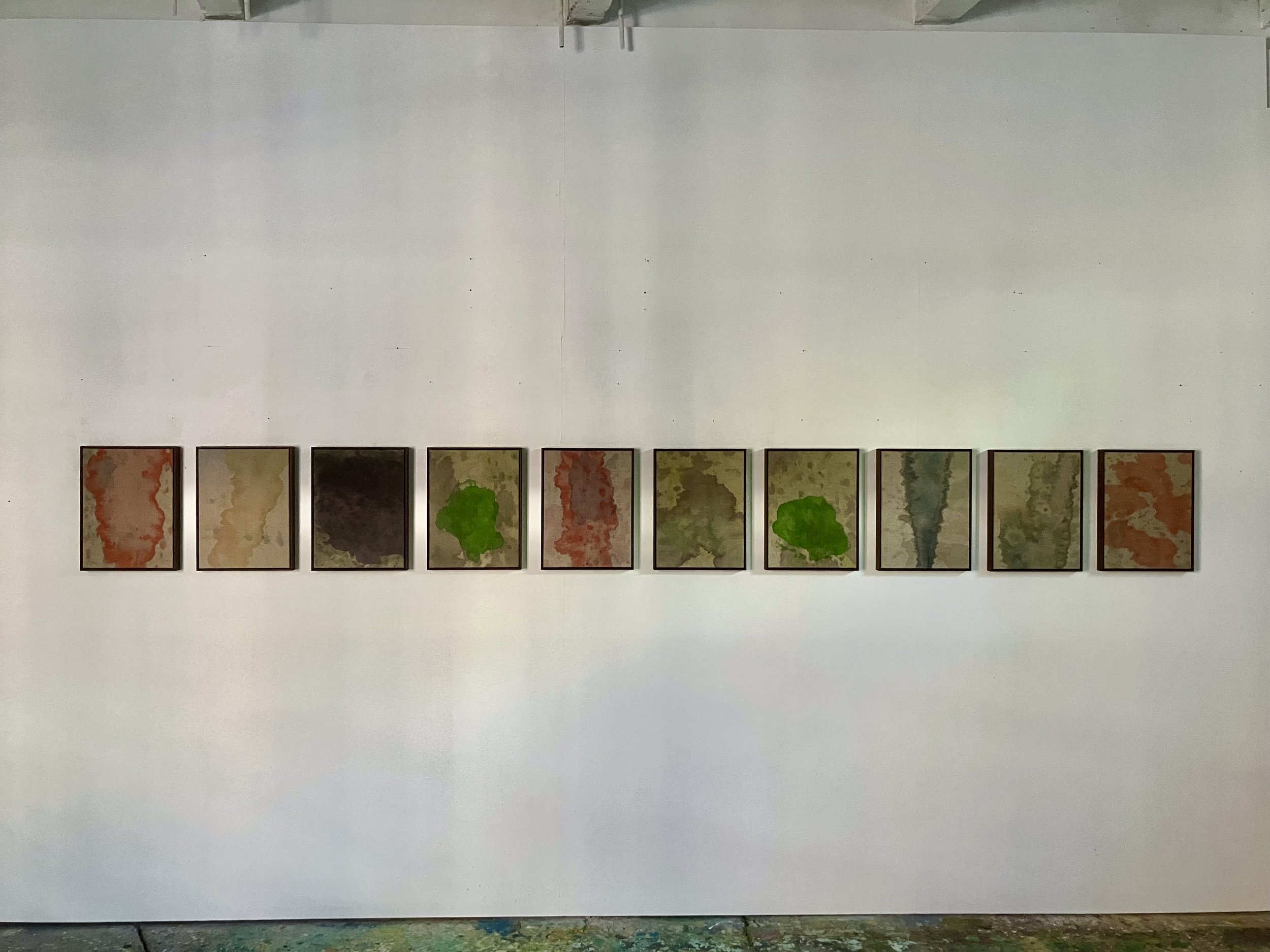
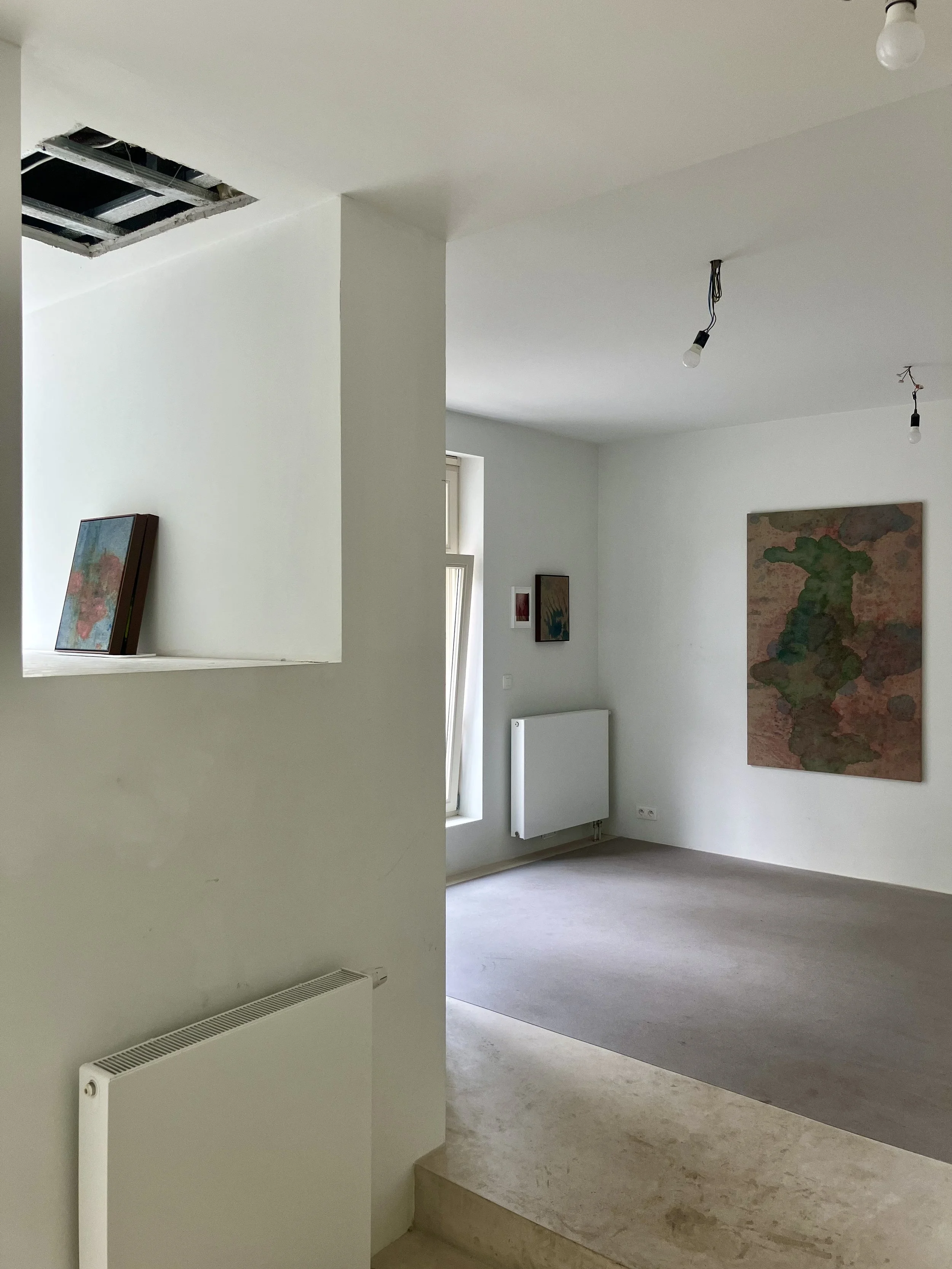
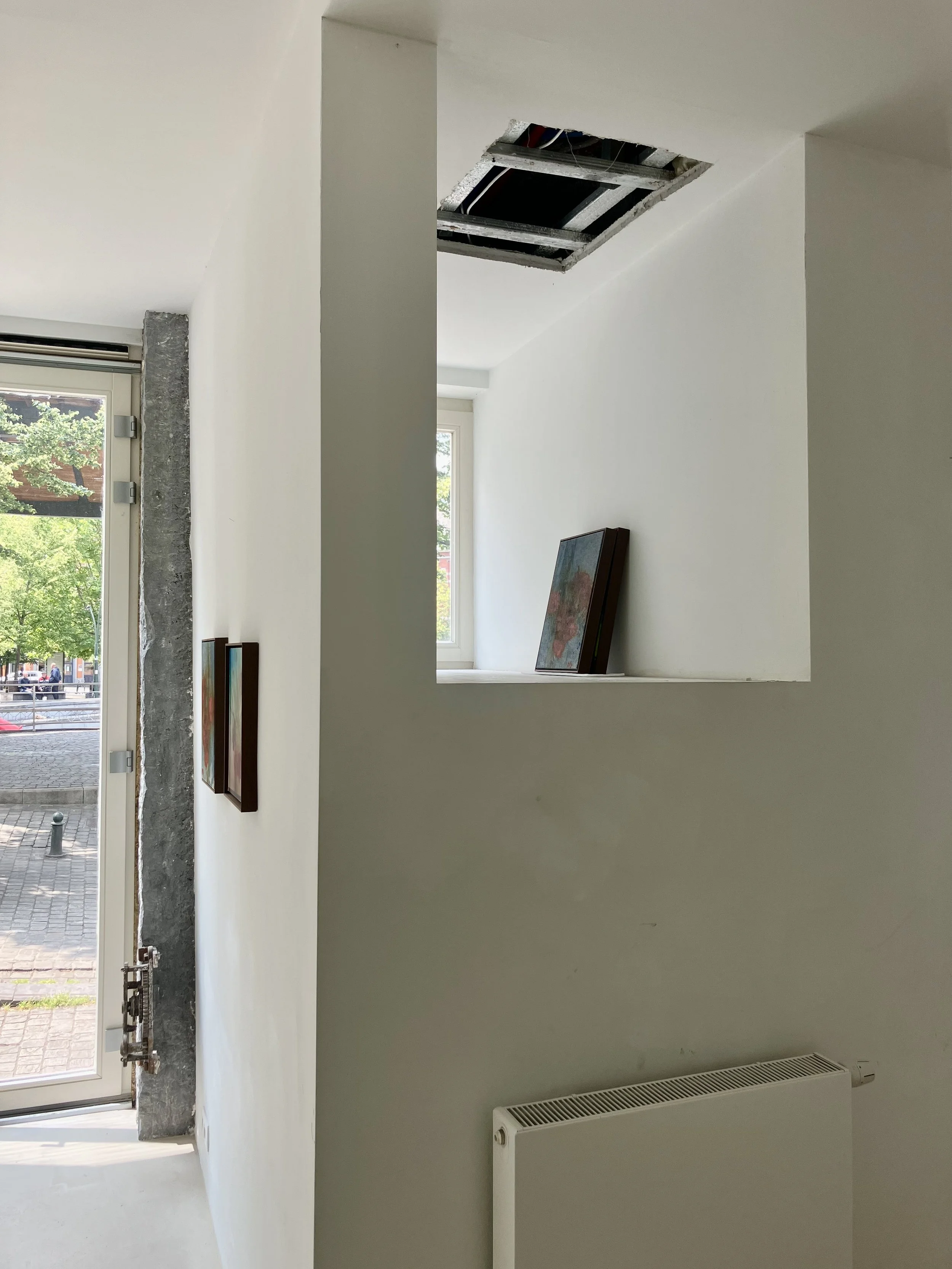
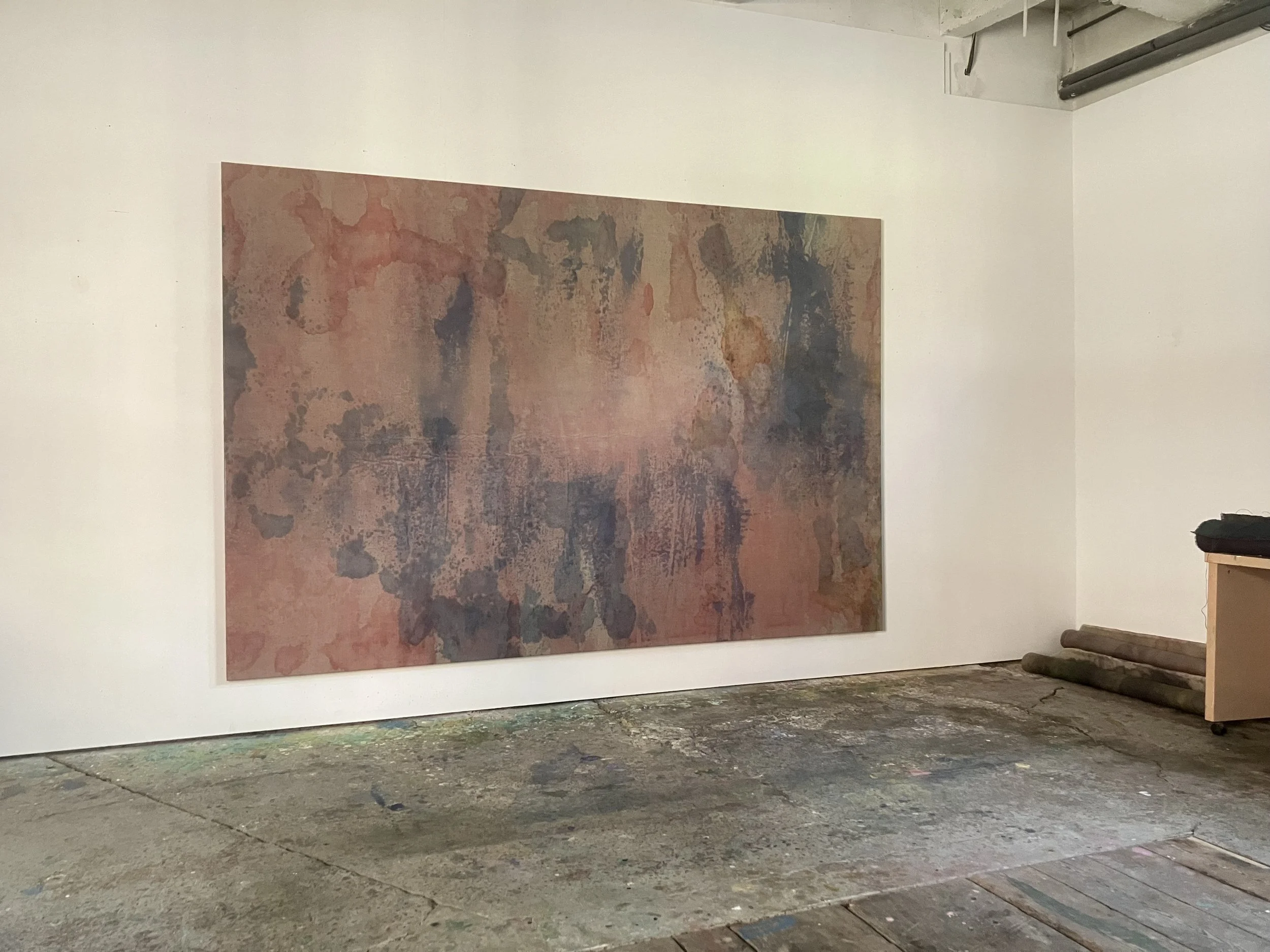
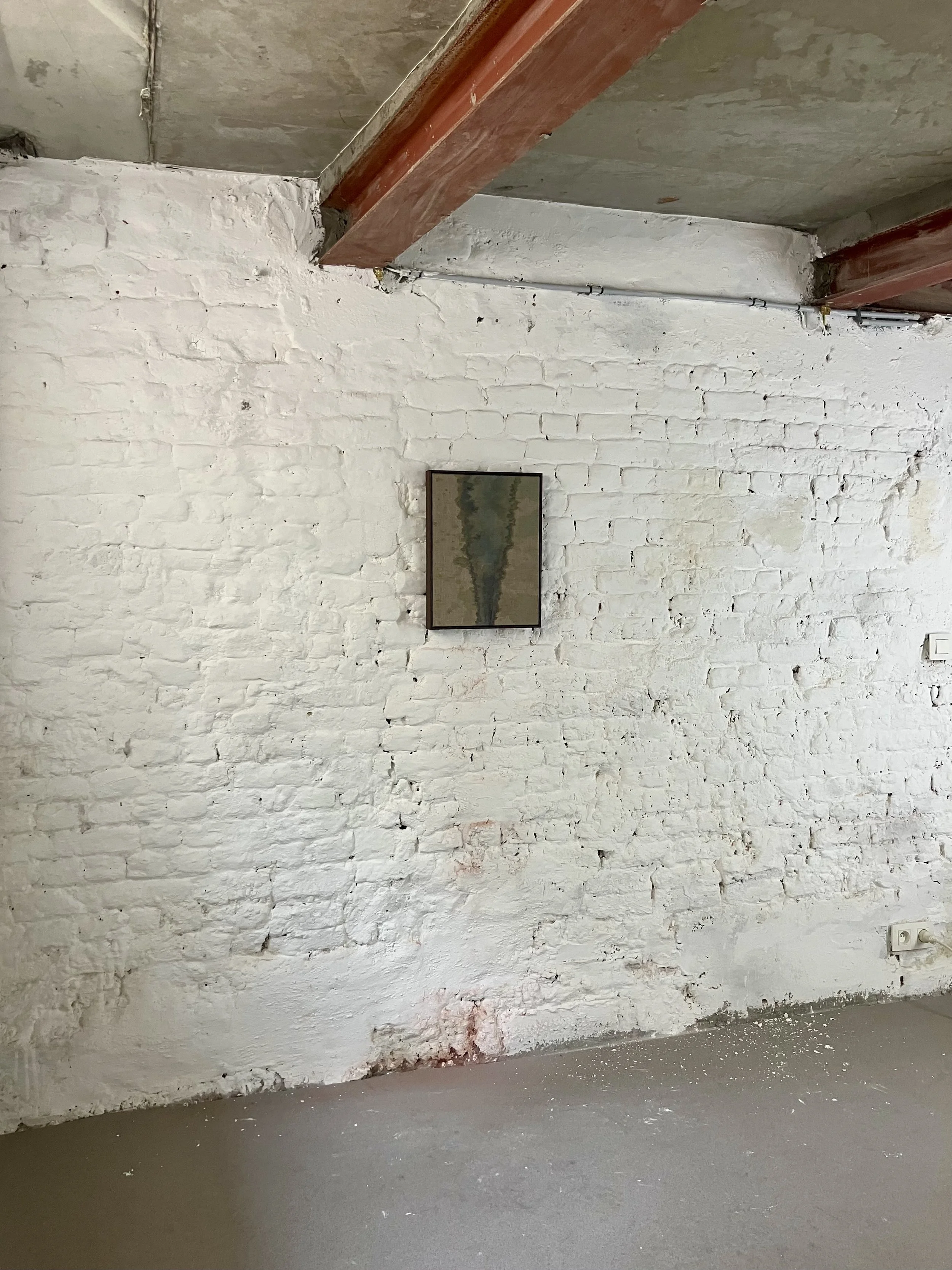
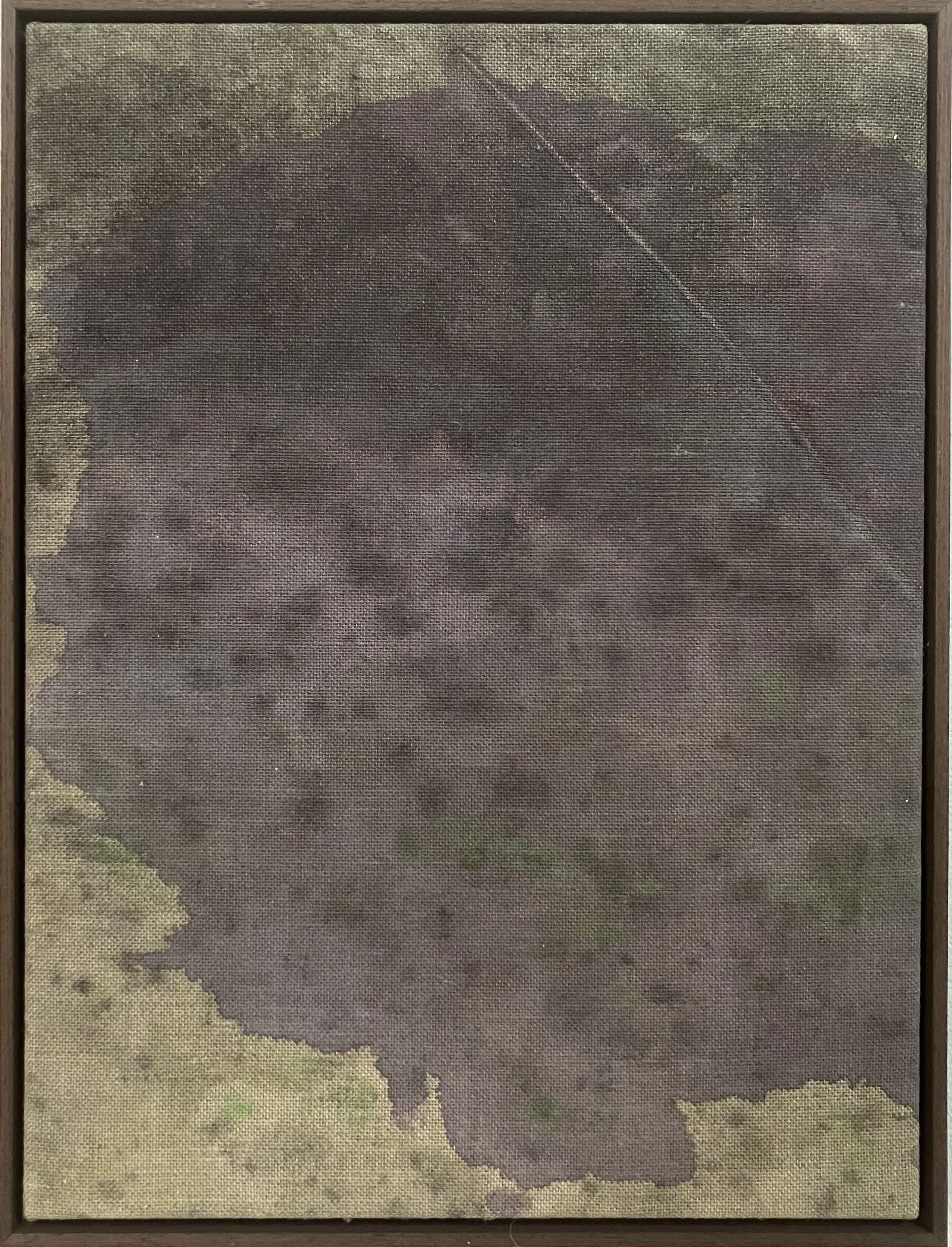
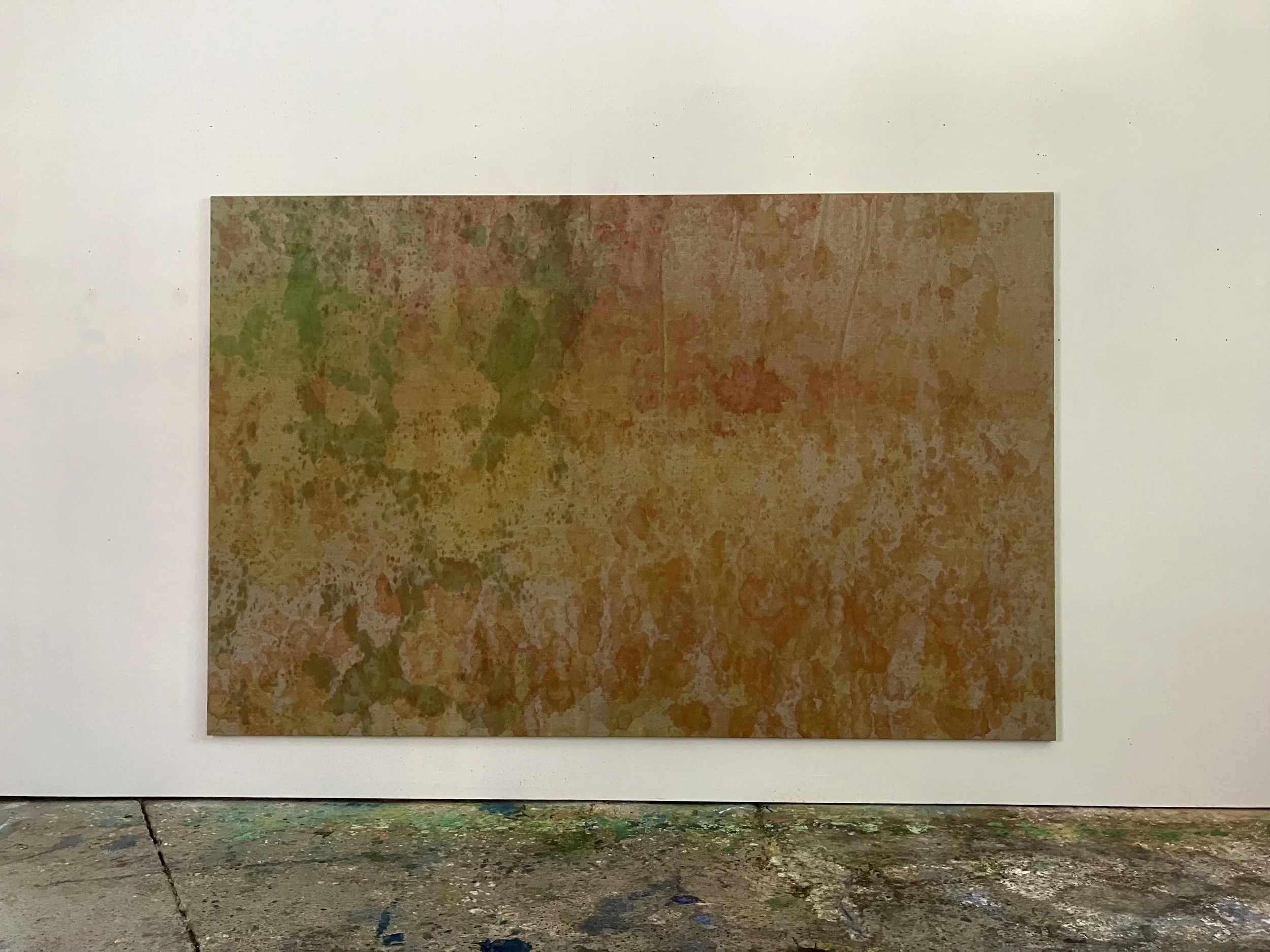
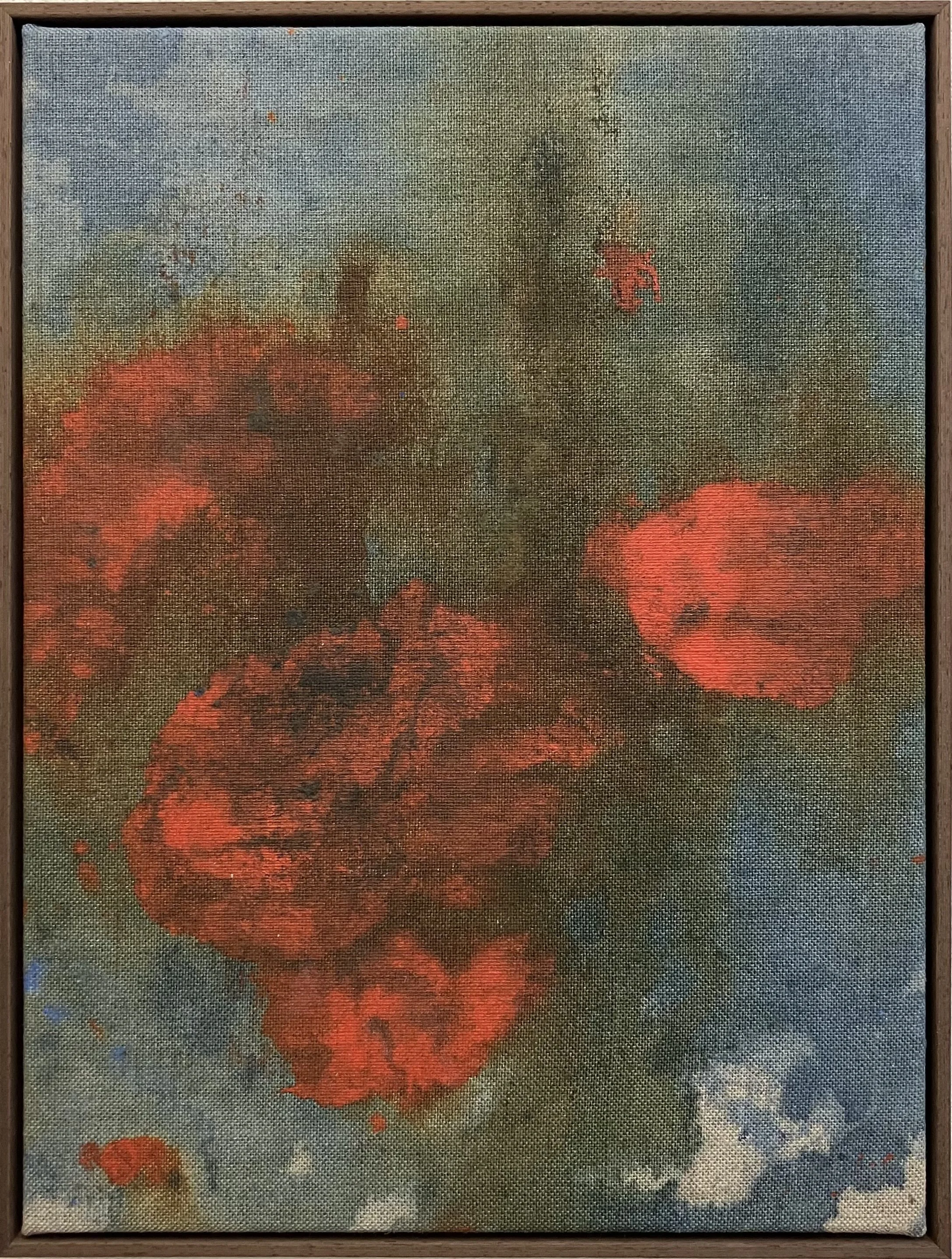
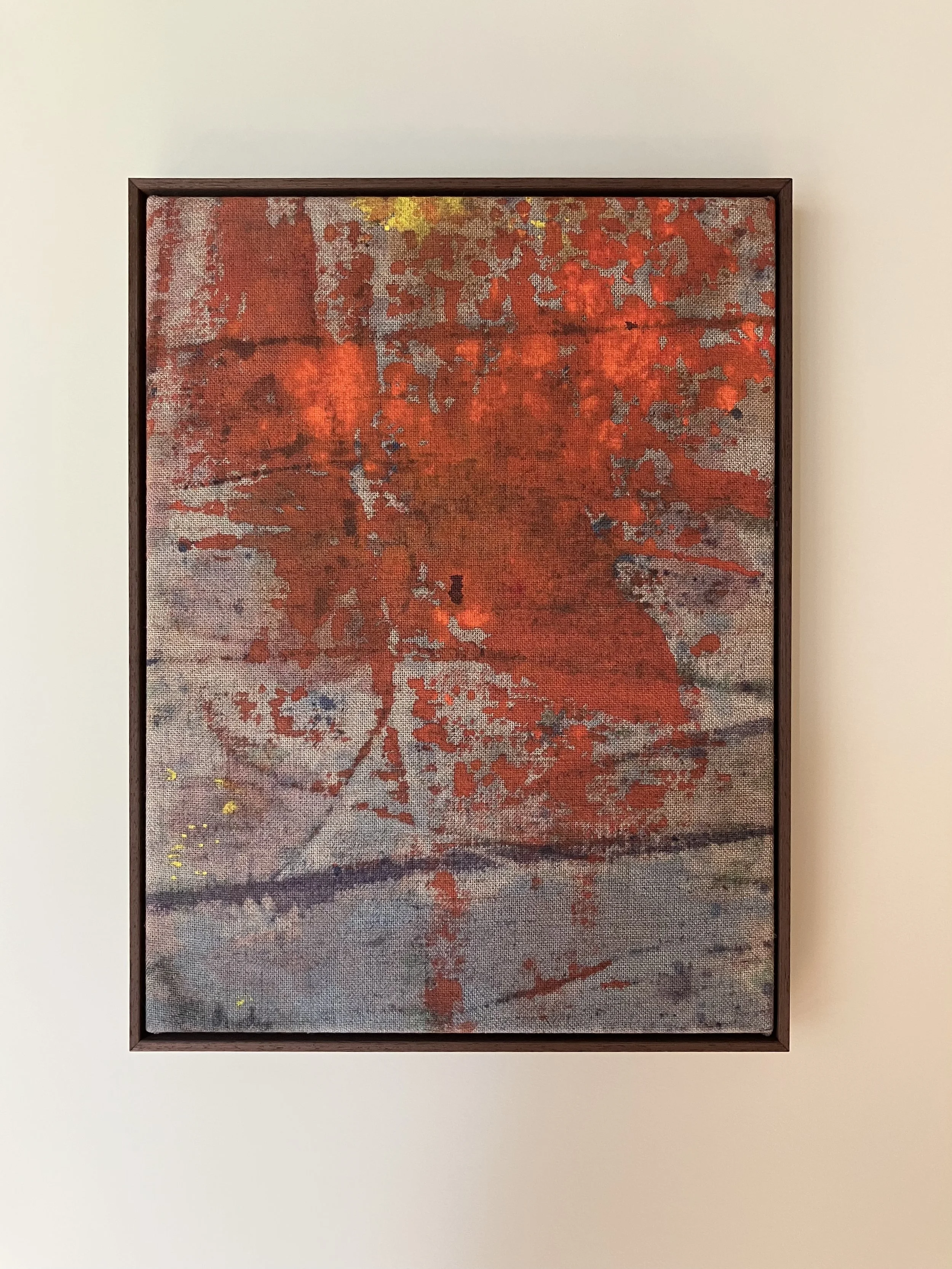
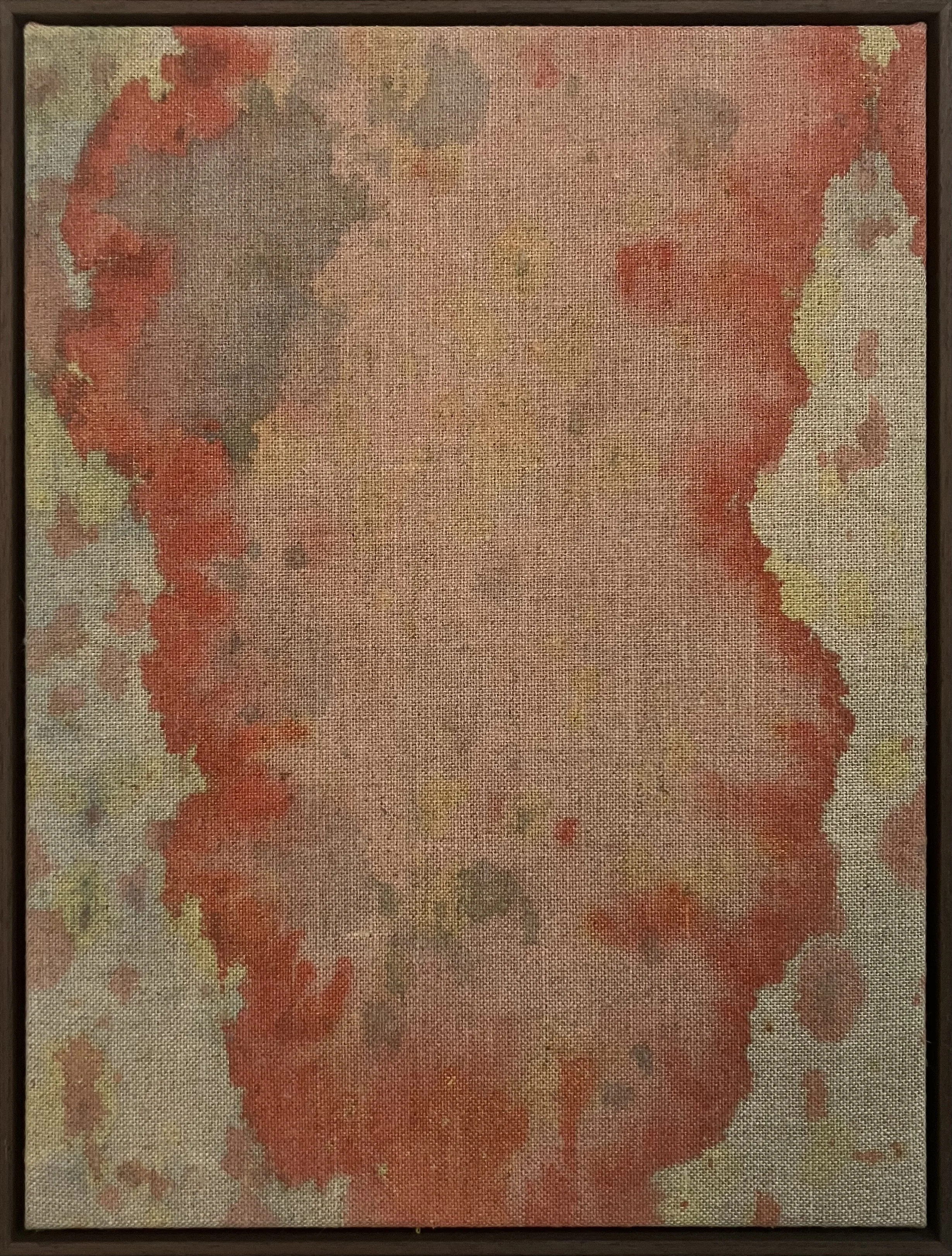
As a studio-based artist, I use observations from my working environment and from the broader processes of material production as points of departure. For example, the repeated rolling and unrolling of linen during manufacturing, storage, or transport becomes a gesture I reintroduce into my practice. By applying diluted paint while manipulating the linen in this way, patterns and traces appear that often escape my control. Only at a later stage—through cropping, cutting, and framing—do I re-claim the image and give it a defined form.
This interplay between control and unpredictability lies at the core of my practice. It allows me to question the relationship between process and outcome, and to explore how material behaviour can shape the final work.


LINE PILLET (BE): Filmmaking
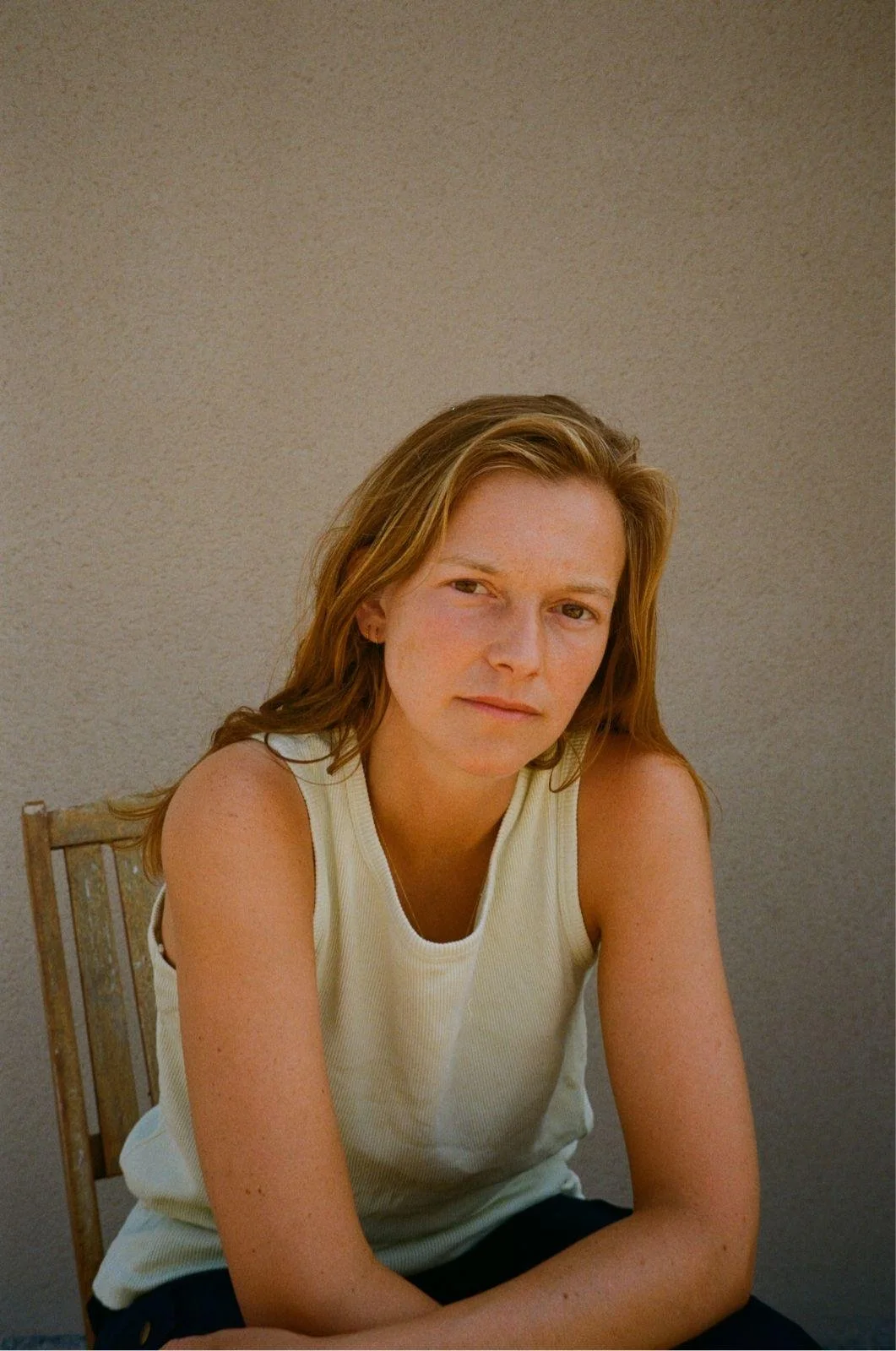
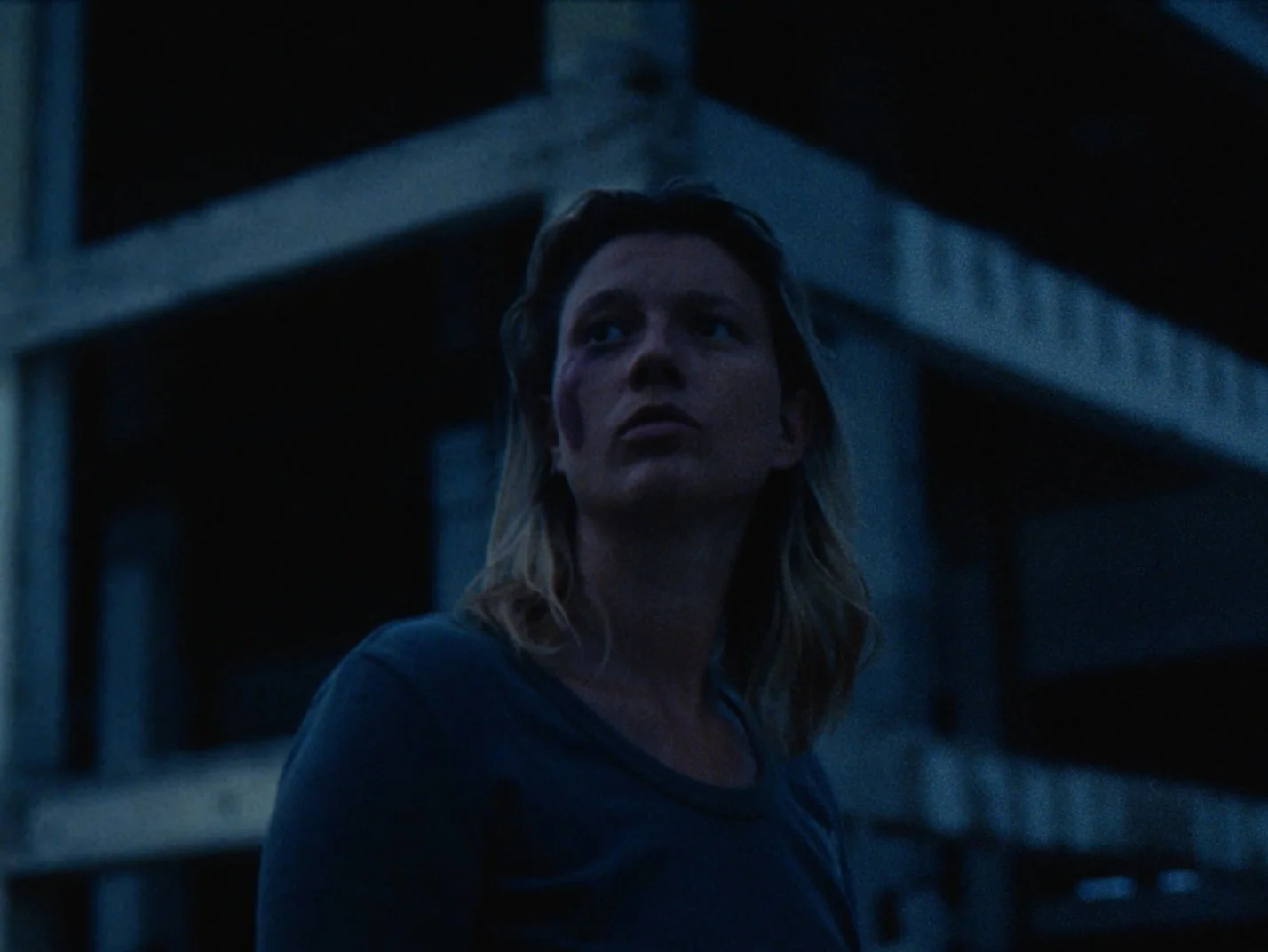
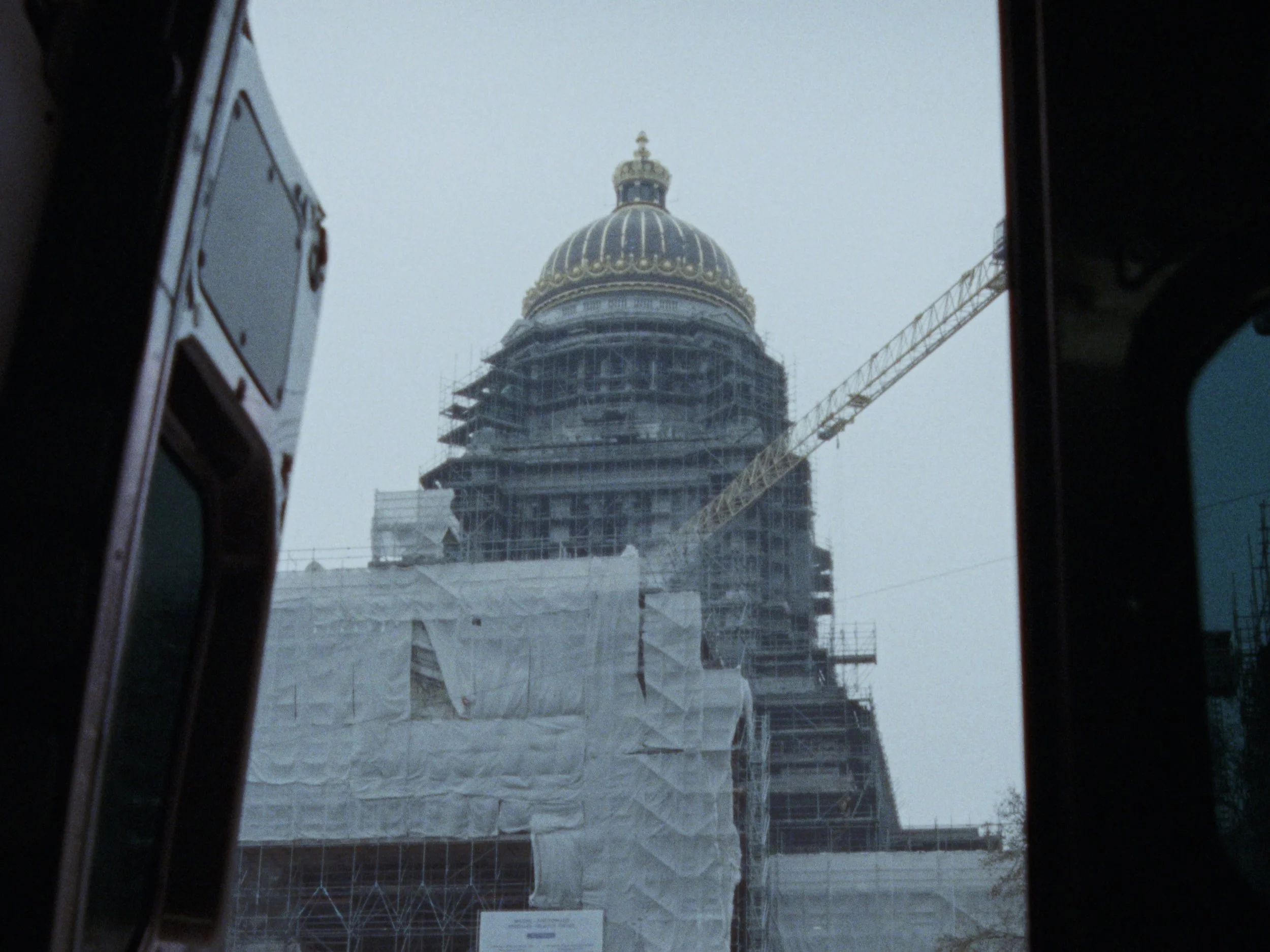
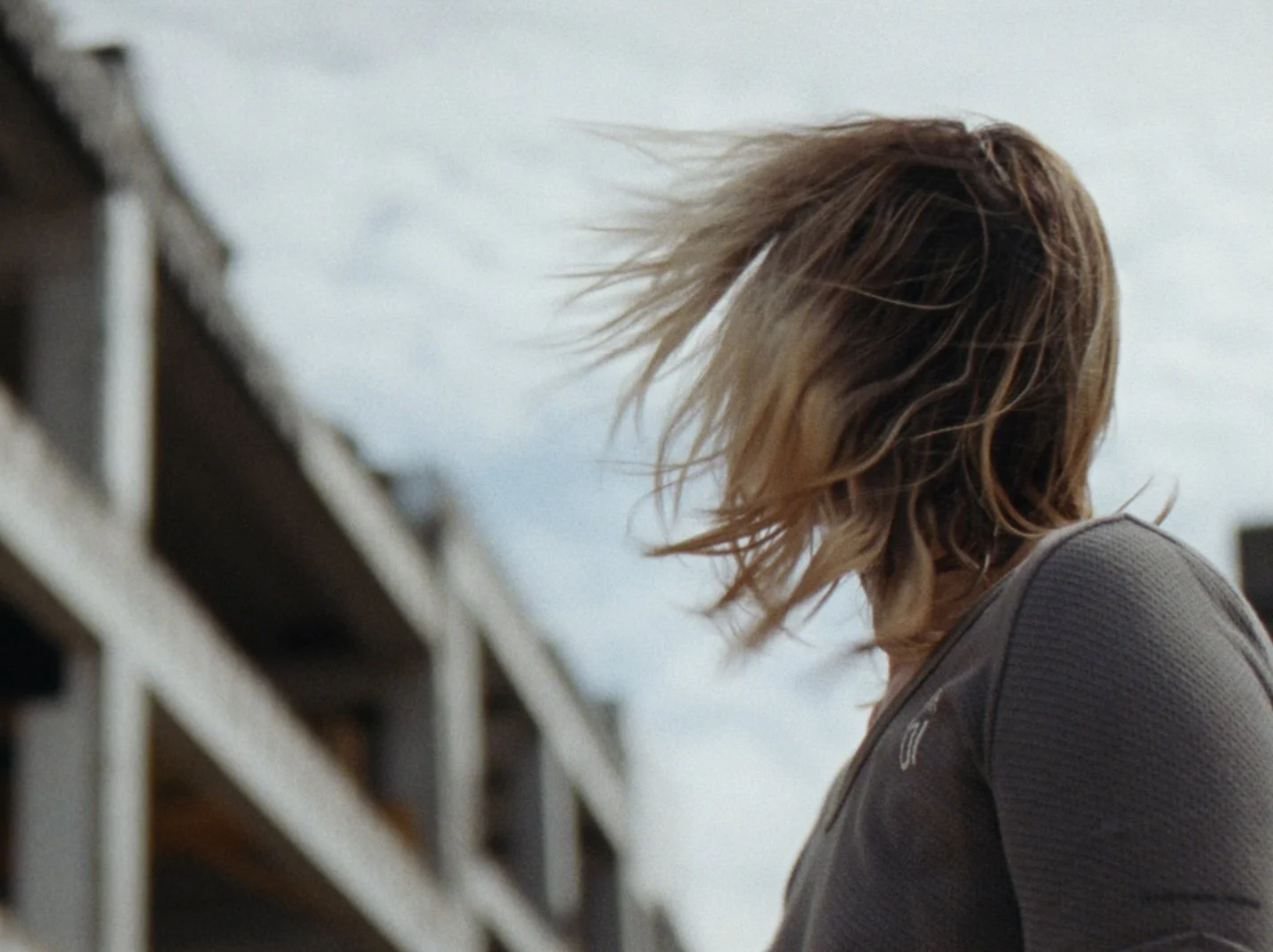
Line Pillet is a filmmaker based in Brussels. Through 16 mm imagery, her work gazes with tenderness at those who live on the margins. In her films vulnerability becomes a source of beauty. Her characters often anonymous or displaced, inhabit a world that excludes them, yet they keep reaching for connection.
In 2020, she was selected by Cité des arts Internationale Paris for a writing residency where she developed the script of her short film Window. The film premiered at Regard Festival 2023 (CA) where it was selected for the official competition. Afterwards, the film had a national premiere at Film Festival Oostende. This was followed by a selection at Cut To: Gent festival where the film won the award for best cinematography.
Her latest short film Un Matin was selected for the official competition of International Short Film Festival Leuven 2024 where it premiered for the opening night. In September 2025 Un Matin was screened as part of the official competition at the Greek Drama International Short Film Festival (DISFF).
WORK
2024 / Un Matin
2023 / Window
2021 / Chorus
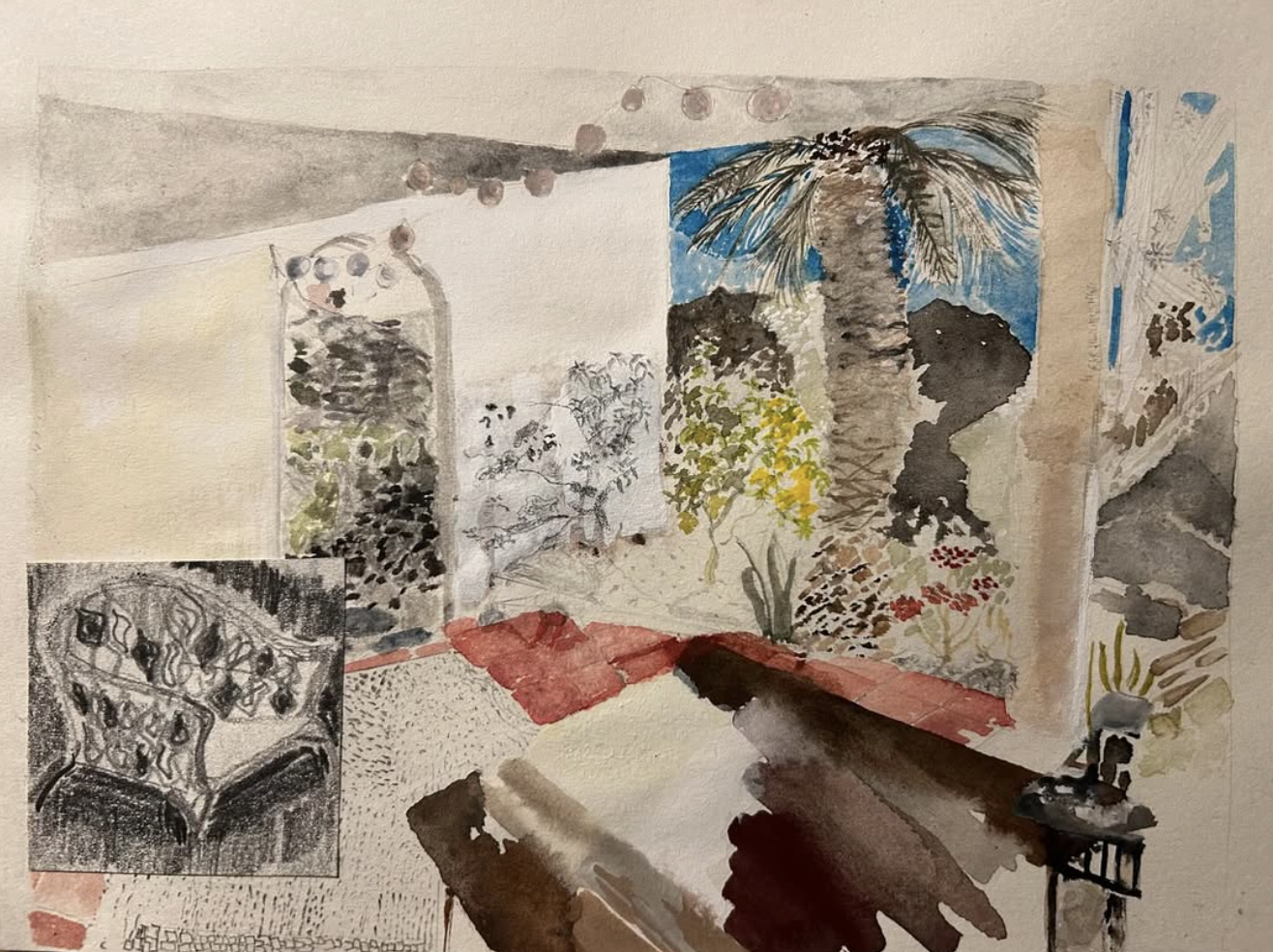
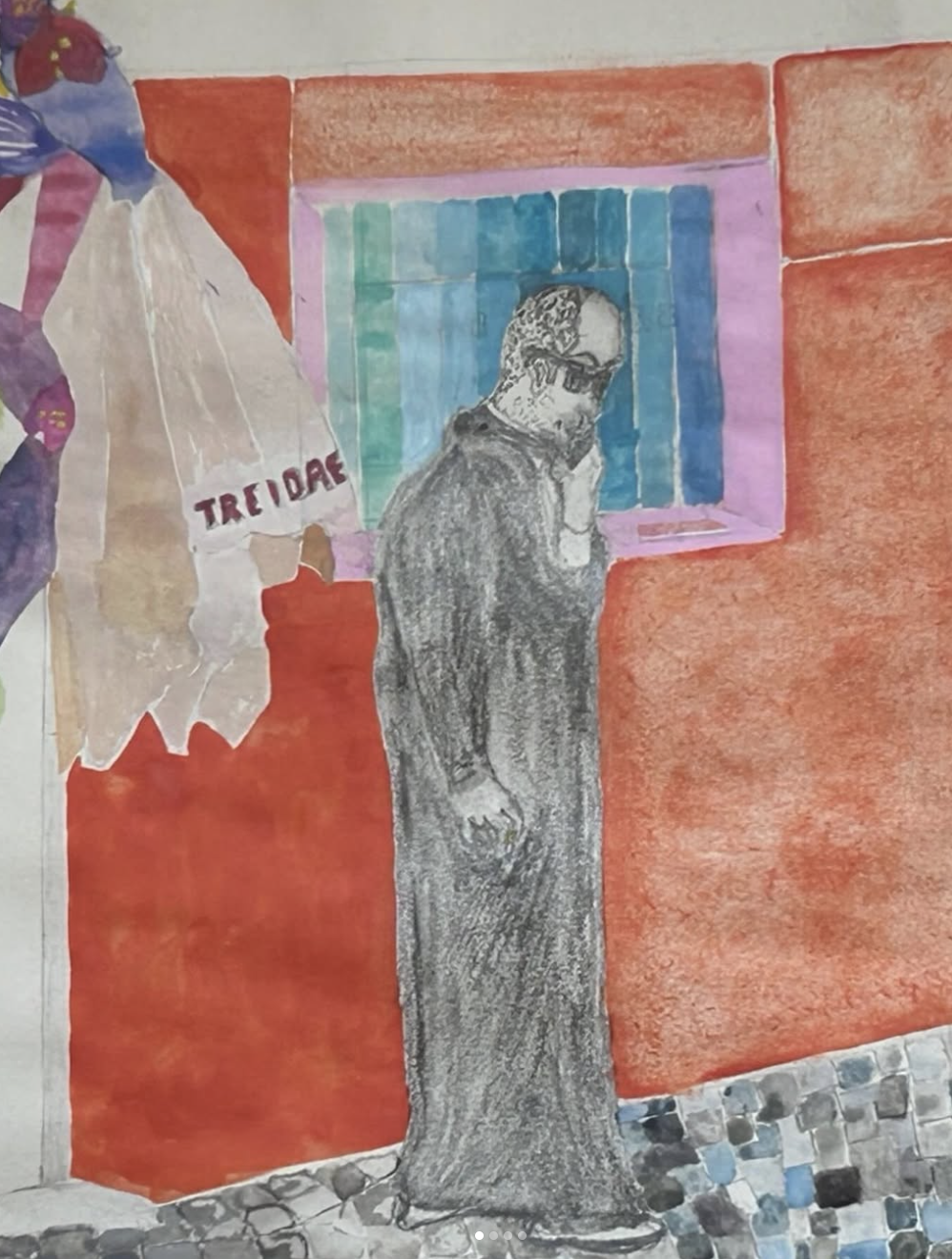
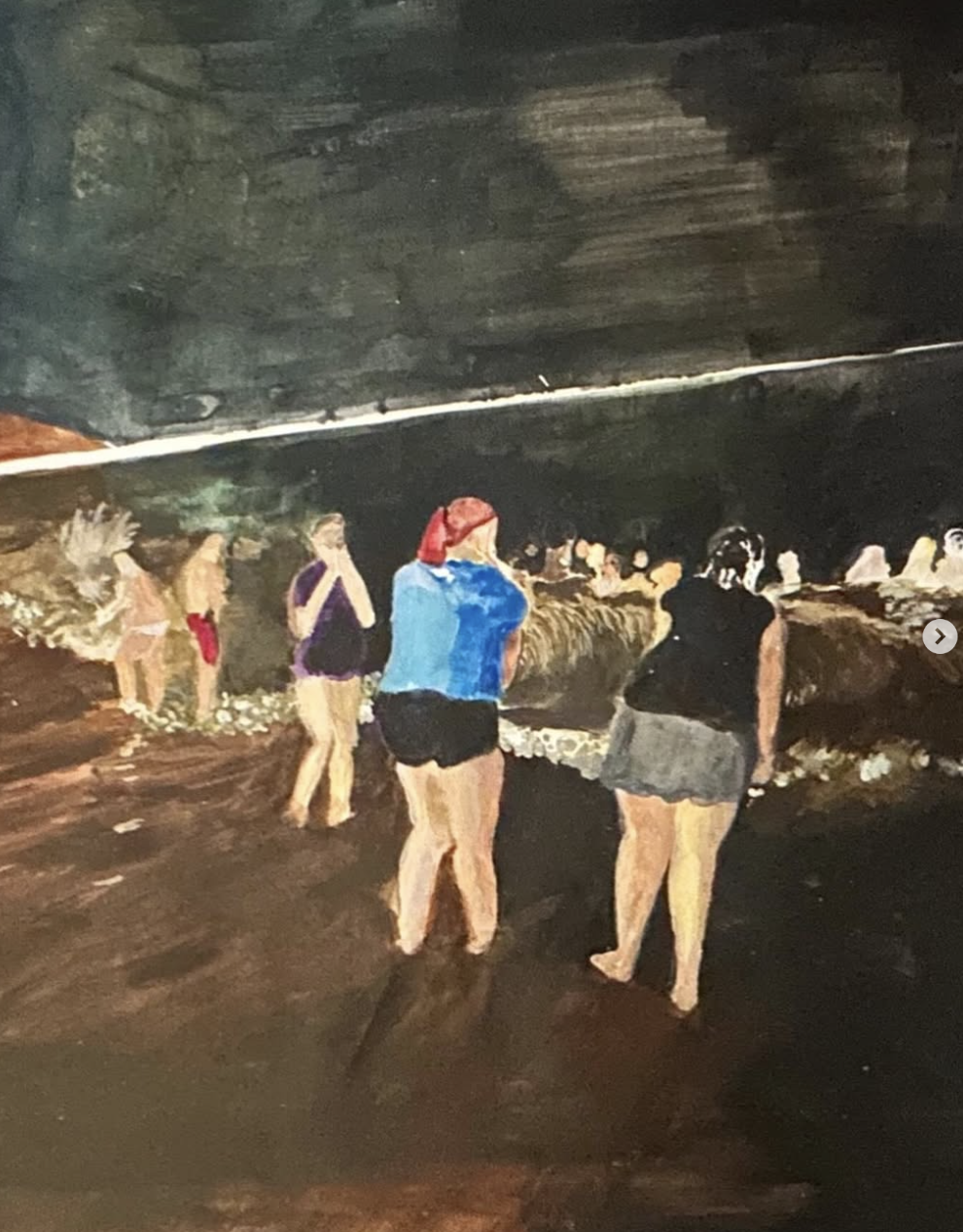
SOPHIE BERLINER (BE): Painting
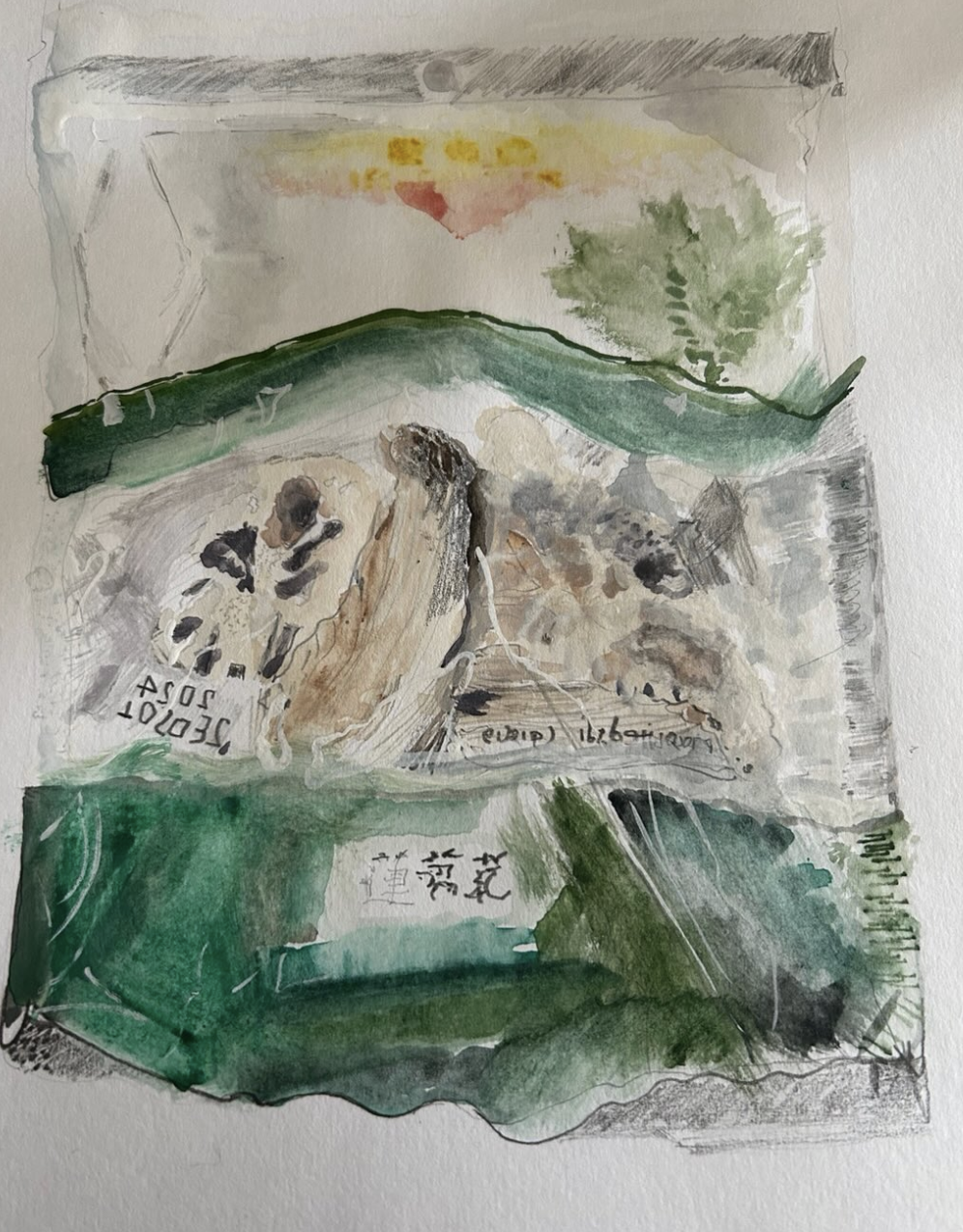
After several years of traveling alone finding time and space for myself and art, I started to have the desire to find a collective place. I’m coming to Hektor to resource my body and soul deeply, in a very different environment, peacefully leaving the city’s stimulation behind.
Being daily connected to nature is a luxurious workshop.
NINA BACKMAN (FI): Multidisciplinary
Nina Backman’s artistic practice explores art as a shared, participatory experience that fosters connection, awareness, and collective responsibility. Her work brings people together through embodied encounters that invite reflection, listening, and action in response to pressing social and environmental challenges.
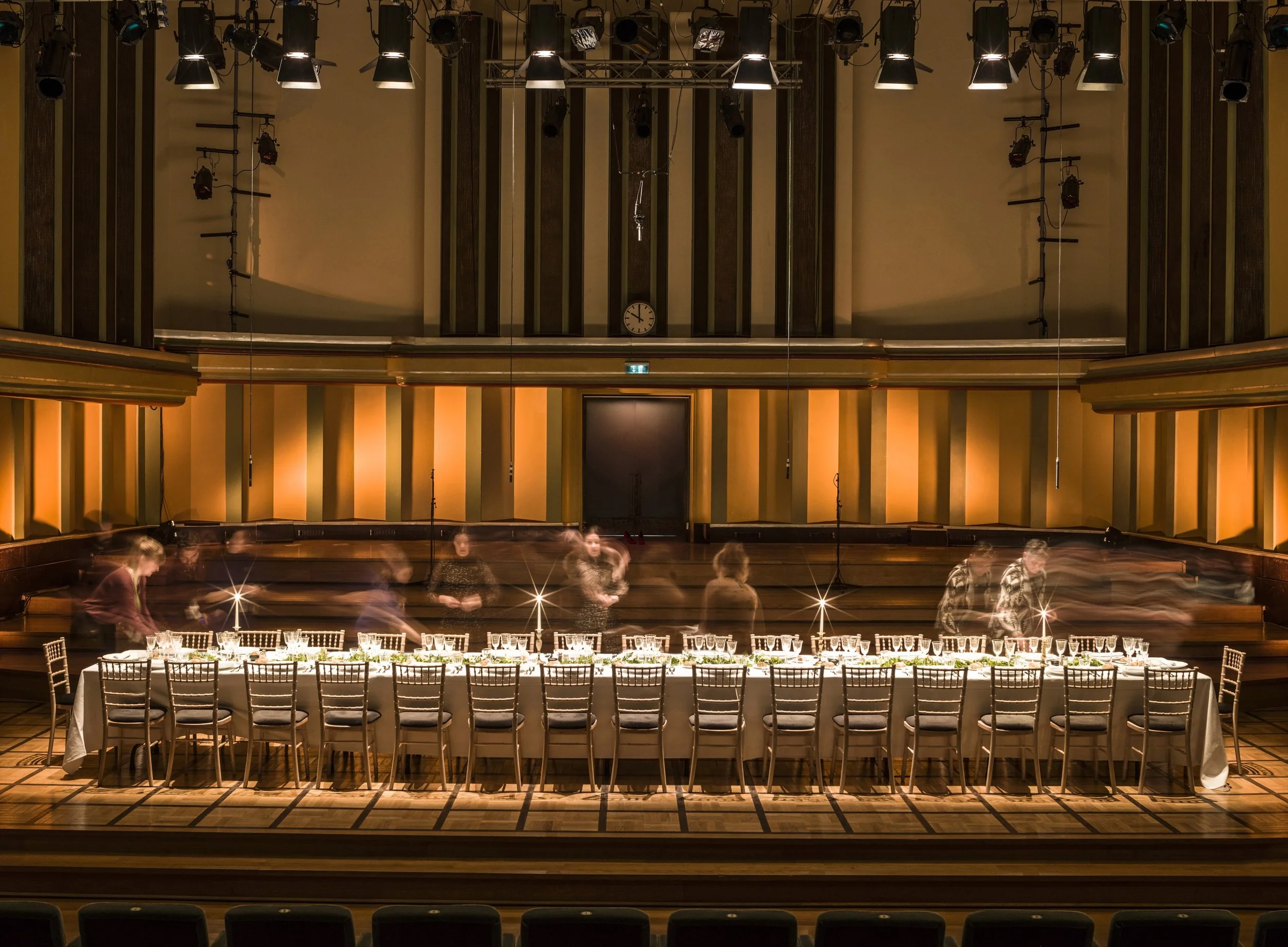
Silence Meal is a performative dining experience centered on shared silence. Participants gather around a table and share a meal without verbal communication, creating a space for deep presence, attentiveness, and non-verbal exchange. The work encourages reflection on how we relate to one another, to food, and to the environment, offering an alternative model for social interaction based on care, listening, and mutual respect.
Alongside Silence Meal, Backman presents the Gift Series, a long-term artistic and environmental initiative based on acts of giving: planting trees, sharing knowledge, and connecting people across communities. The Gift Series functions both as a social artwork and as a concrete environmental action. Tree planting becomes a symbolic and practical gesture of responsibility toward future generations, while workshops, conversations, and shared activities build networks of learning, collaboration, and ecological awareness.
Together, Silence Meal and the Gift Series create a platform for participatory engagement.These initiatives invite diverse audiences to take part in meaningful actions that bridge art, ecology, and everyday life, fostering a sense of shared ownership and agency in shaping a more sustainable and connected society.
Nina Backman is a Finnish-born, Berlin-based artist and curator whose interdisciplinary practice spans performance, installation, and socially engaged art. She is the founder of the Silence Project, which explores the intersections of silence, communication, and shared human experience. She graduated from the Liverpool Institute for Performing Arts (LIPA) in 2000.
Backman’s practice also extends into ecological interventions, most notably her ongoing tree-planting initiative A Million Trees to Finland, which merges art, community participation, and environmental restoration. By combining contemplative social rituals with tangible acts of ecological care, her work invites audiences to slow down, listen, and engage with both one another and the natural world.
Her work is held in both public and private collections, including the Roosen Trinks Collection in Germany and the Finnish Literature Society in Helsinki. She has exhibited internationally at venues such as Nordic House in Iceland, West Bund Art Center in Shanghai, Punkt Ø Galleri F 15 in Norway, Malmö Museum in Sweden, her performative work has been shown in the venues such the Berliner Festspiele, Flagey in Brussels, Aedes Architecture Forum in Berlin, and Punkt Ø Galleri F 15 in Norway. Her environmental tree events have been featured in leading Finnish museums, including Kiasma Museum of Contemporary Art, Amos Rex, Taidehalli, Turku Art Museum, EMMA - Espoo Museum of Modern Art and the Serlachius Museums among others.
In 2023, the Silence Project was awarded the title of Most Innovative Social Art Initiative in Europe by the European Enterprise Awards.
ELLIE FOREMANN-PICK (UK): Painting, Illustration
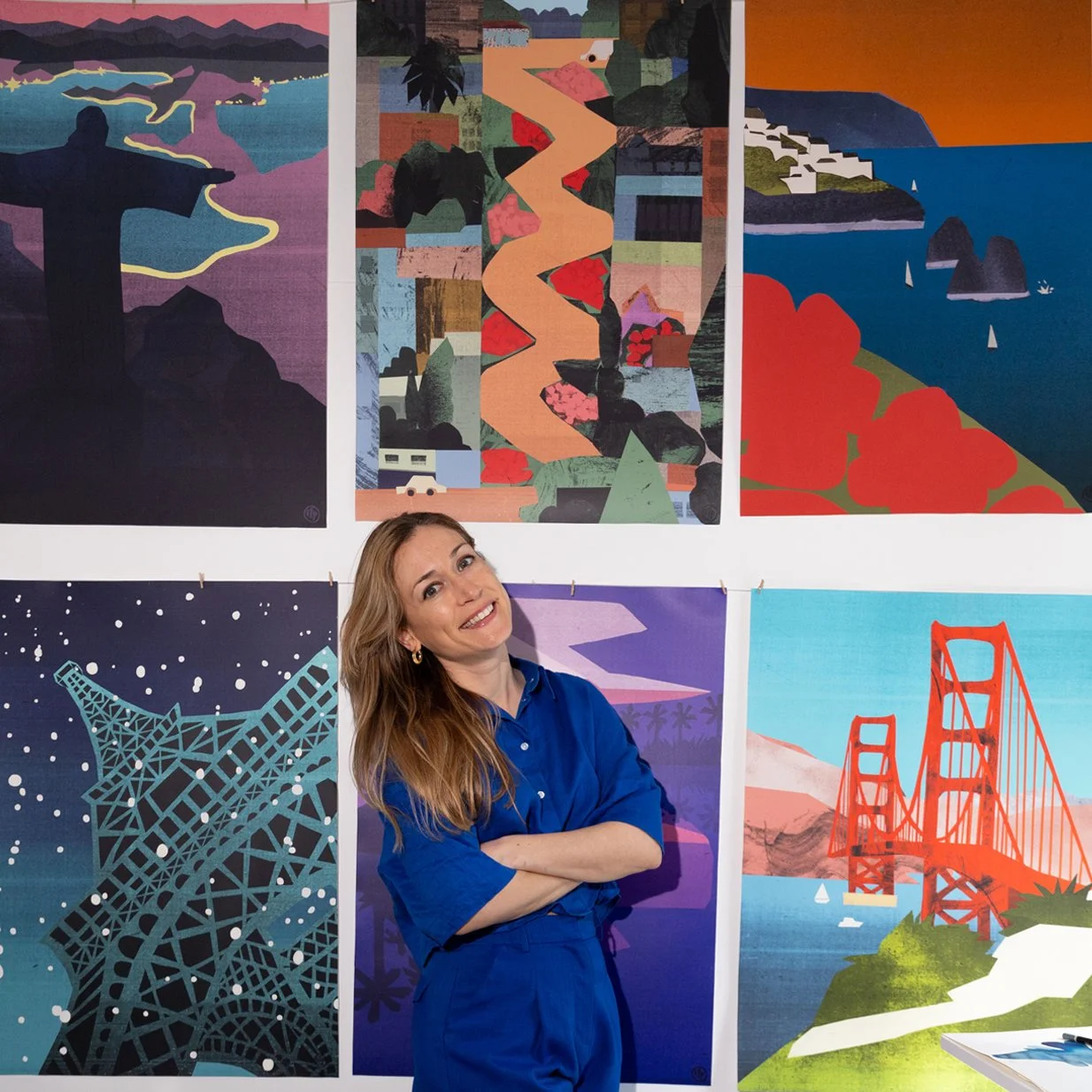
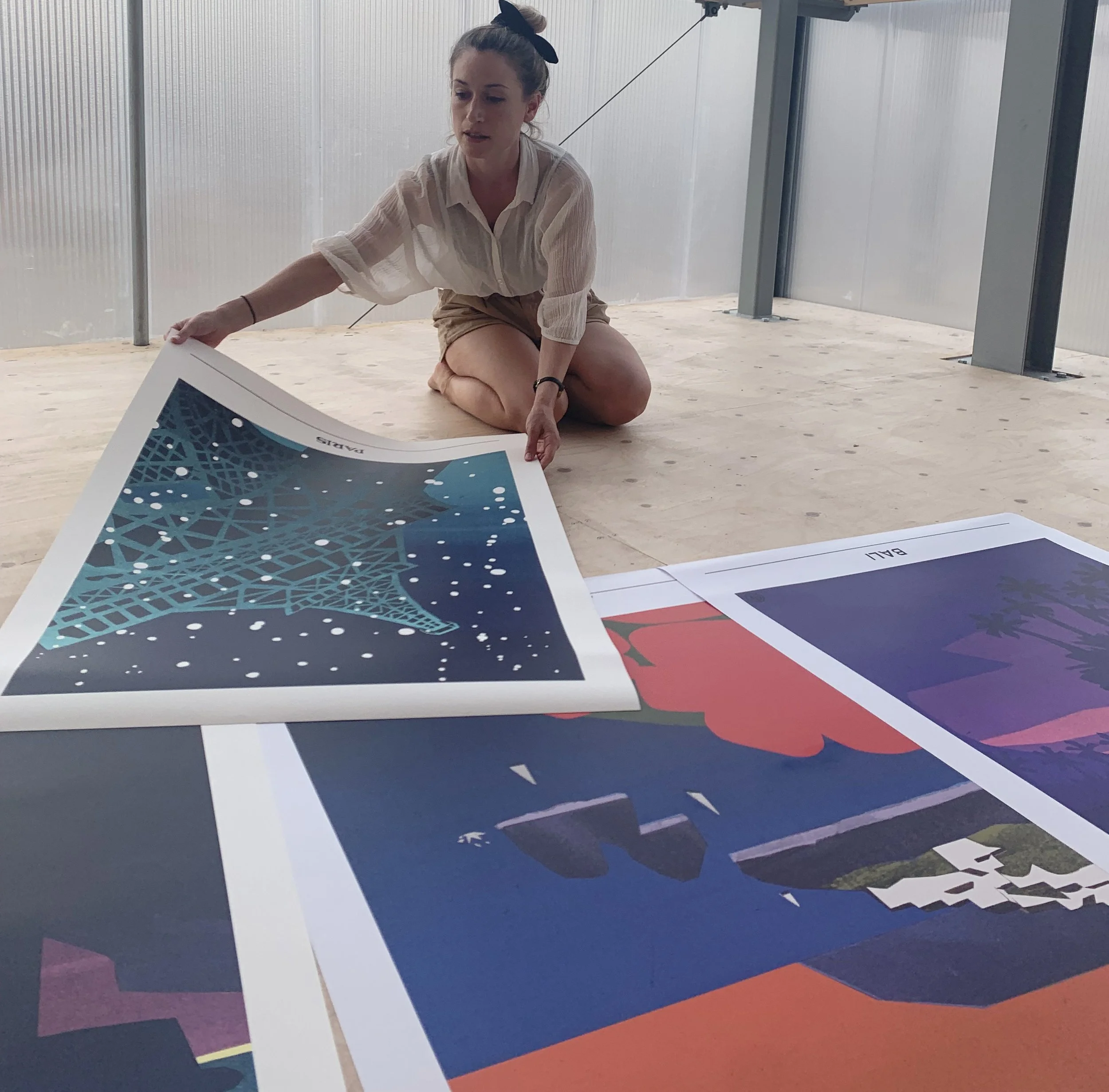
Ellie Foreman-Peck is an artist and illustrator who moved to London after graduating with a degree in illustration from the University of the West of England. Her commercial work ranges from humorous caricatures to bold editorials and prints, visualising narratives and ideas with expressive line work, collage or photomontage. The medium is chosen according to the brief’s required mood or message. As well as editorial and commercial briefs, Ellie’s practice includes painting, ink work, screen and mono printing, animation, book covers, ceramics and posters. Ellie is always searching for new ideas, drawing on nature, people and the apparently mundane. She records and sketches these ideas, some of which end up in exhibitions and in her online print shop which you can see here. Inspiration and influence come from a wide range of places, particularly the work of Hogarth for his sequential visual story telling and Gillray, George Grosz, Daumier and Ralph Steadman for their expressive use of line, lampooned characters and witty satires. She has always greatly admired the traditional Japanese woodcut prints for their story telling, colour, composition and texture along with Aubrey Beardsley for his dark and decorative depictions of narratives. Clients include: The Guardian, The New Statesman, The Economist, The New York Review of books, The Idler, Random House, Pentagram and The New Yorker.
Starting with sketches and ideas taken in my sketchbook, I will explore the surrounding landscape and wildlife of Lanzarote. In the studio I will work these sketches up into large scale drawings and paintings that explore the details and patterns of plants and landscape in a mediation on nature.
These works will culminate in a series to be exhibited and go into my online printshop.
LUCAS LAI (US): Research
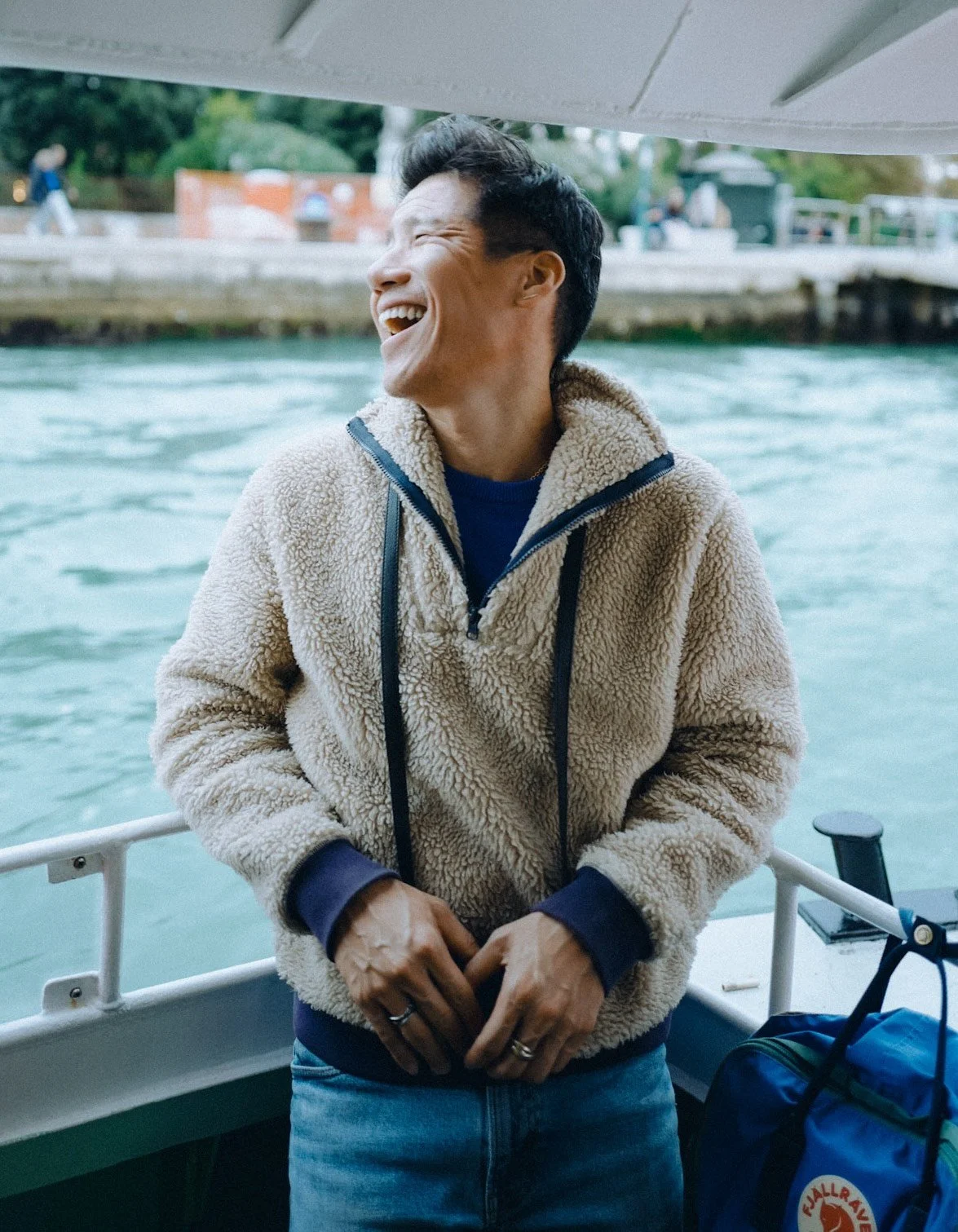
Lucas Lai is a Brooklyn-based artist whose practice explores experimental photographic material processes, informed by a deep appreciation of mono no aware — the awareness of beauty in impermanence. His work engages landscape as both subject and collaborator by using analog and site-responsive techniques to examine ephemerality, place, and time.
During his residency at Hektor, Lucas’ project focuses on alternative photographic processes, including anthotypes and digital-negative contact printing. Drawing pigments and materials directly from the surrounding environment, he works with plants and sunlight to create images that are contingent on ecological conditions and temporal change.
Lucas is also the founder of Curio, a regenerative travel advisory that curates purposeful designed retreats for creatives around the world. Alongside his studio practice, Lucas will be in dialogue with the local community to explore models of tourism that are more sustainable and mutually beneficial, considering not only human stakeholders but also the broader ecological systems of Lanzarote.
EMMA RAYMAEKERS (BE): Multidisciplinary / Graphic design
(c) Alice Dooreman
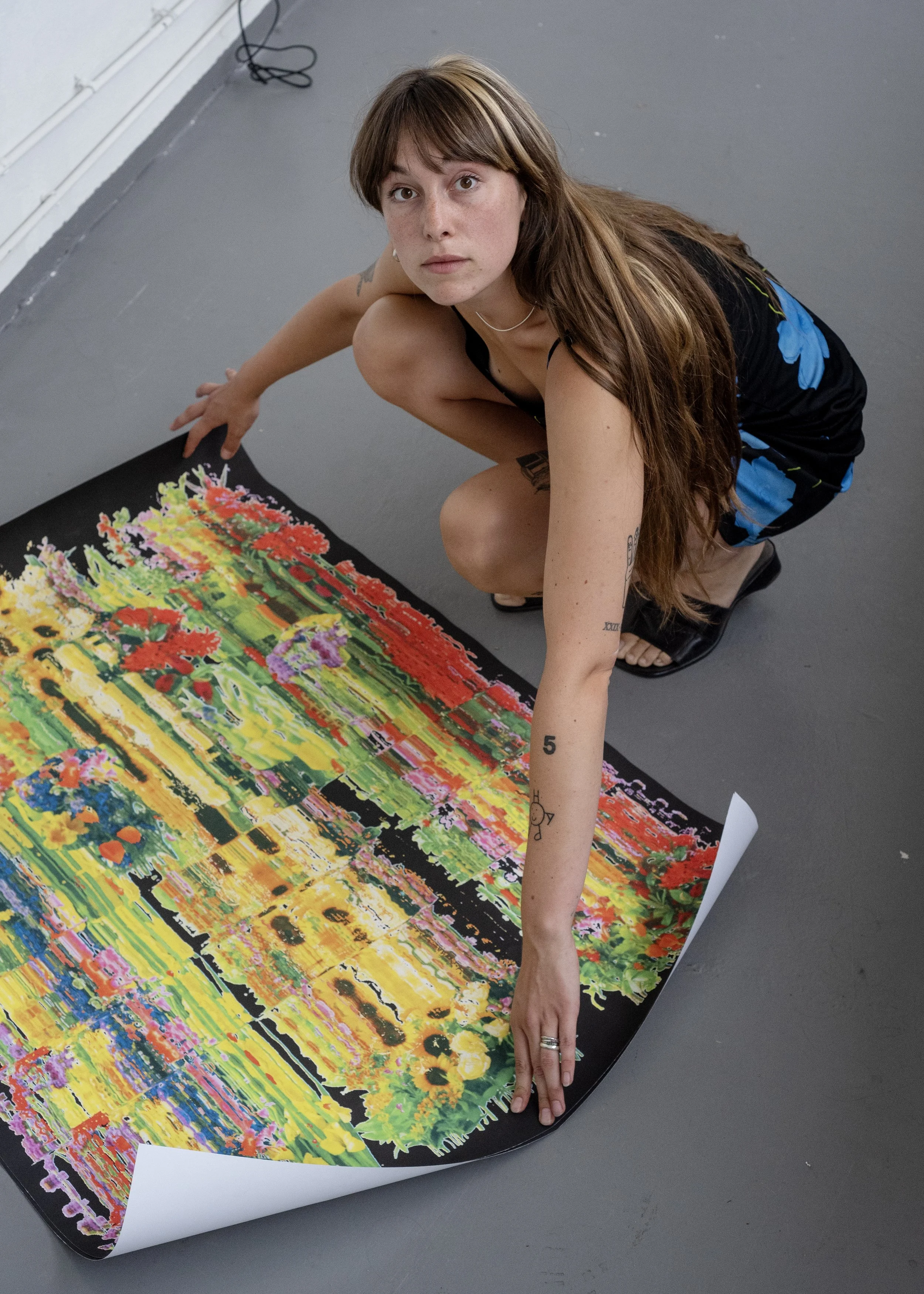
Emma Raymaekers is a multidisciplinary artist with a background in graphic design. In 2020, she graduated from KASK in Ghent (Visual Arts / Graphic Design). Since then, she has been working as a freelance graphic designer and developing her own independent practice.
Her work moves at the intersection of collage, drawing, and digital imaging and is rooted in collecting. Ever since childhood, Emma collects things that touch her visually or emotionally: stickers, comics, images, words. She works with what already exists and rearranges it into something new. When making things she often sets rules for herself to get a grip on the endless possibilities of a blank sheet of paper. Within these rules she finds room to use her intuition.
Her work has been showed at Kunsthal Gent, KOP (Antwerp), Parlor (Ghent), and Paramour (Brussels). She also created the artwork for artists such as Jennifur, Zwangere Guy and Lander Gyselinck, TJE, and Mosley Jr. At the moment shares a studio in Molenbeek with other artists and designers.
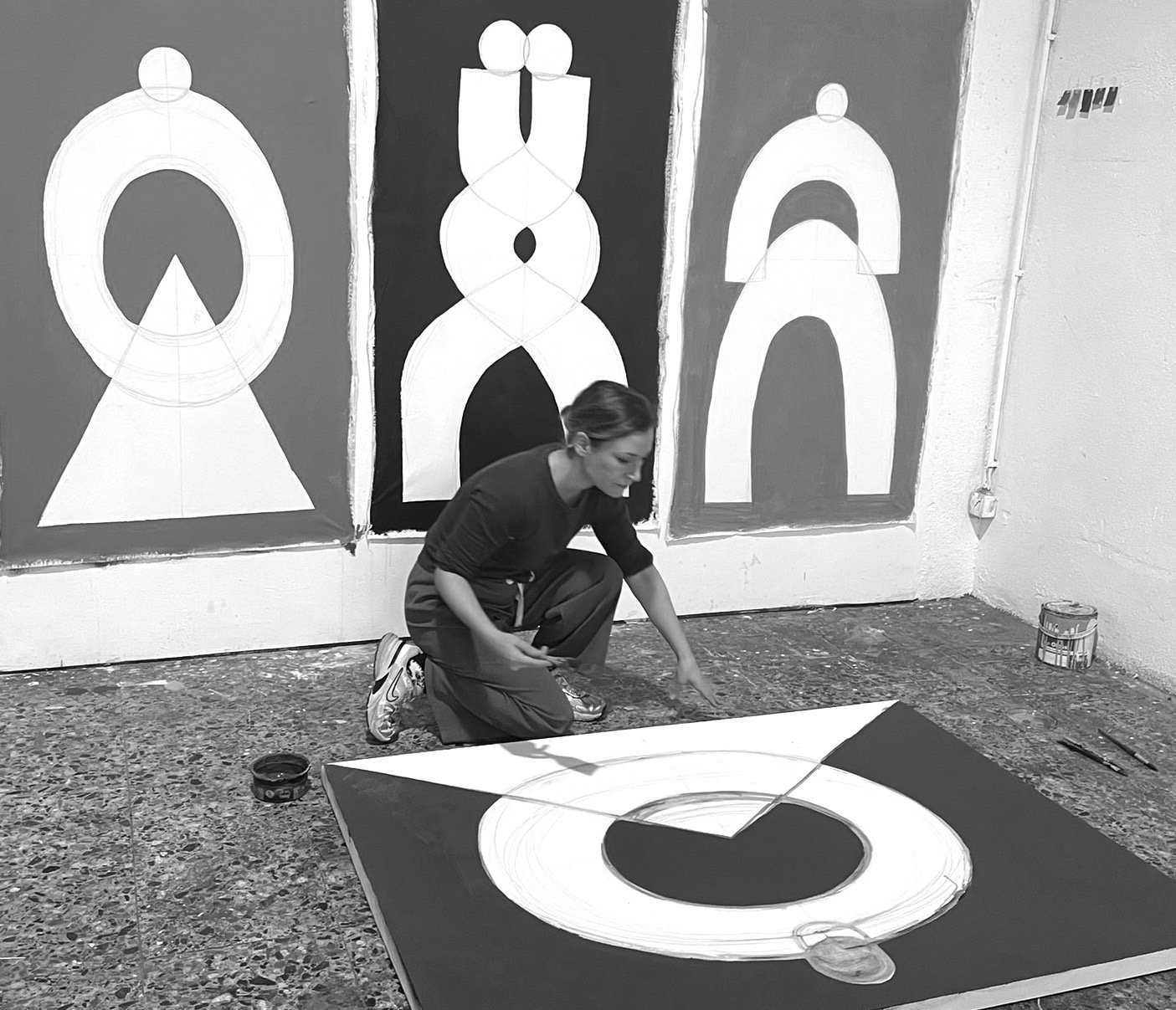
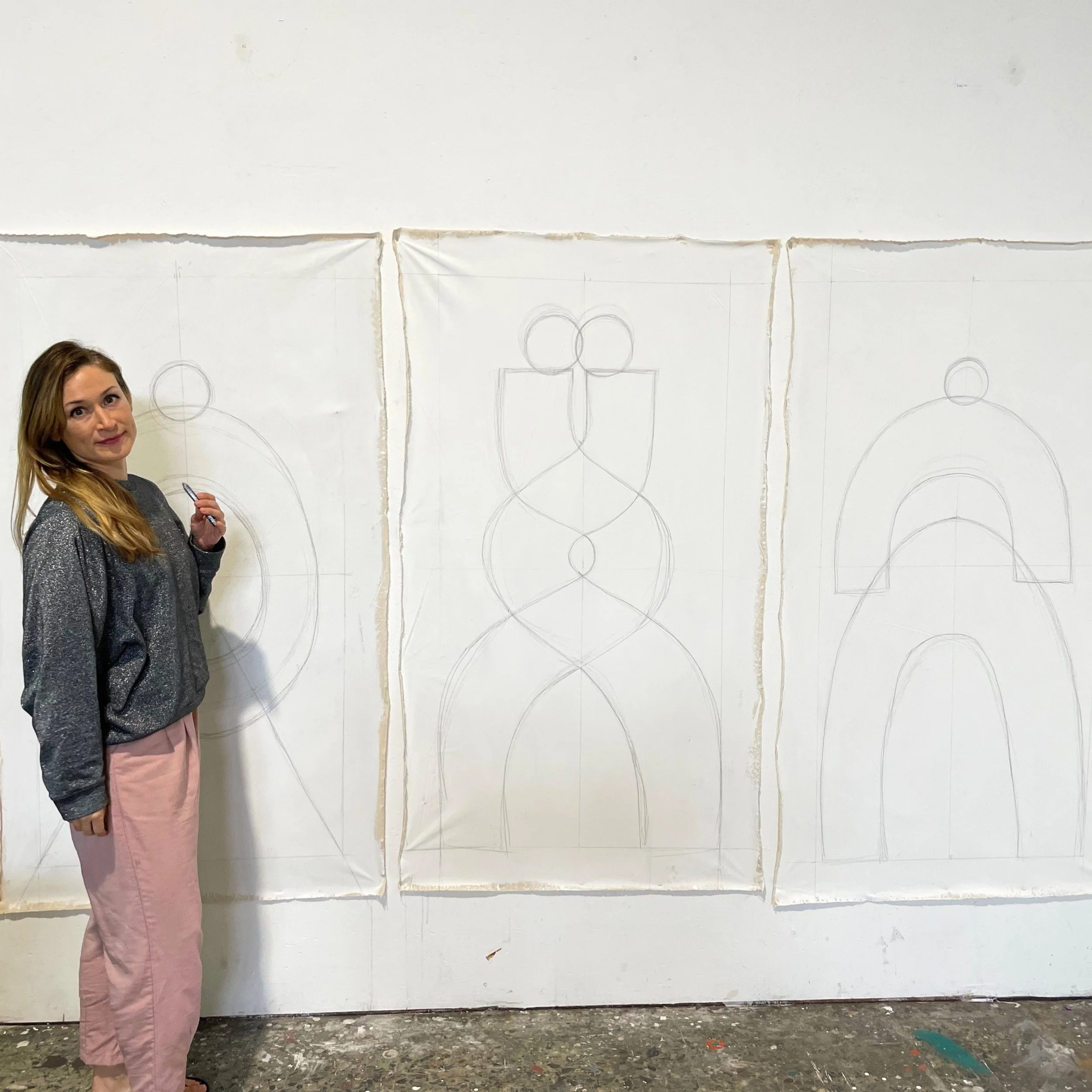
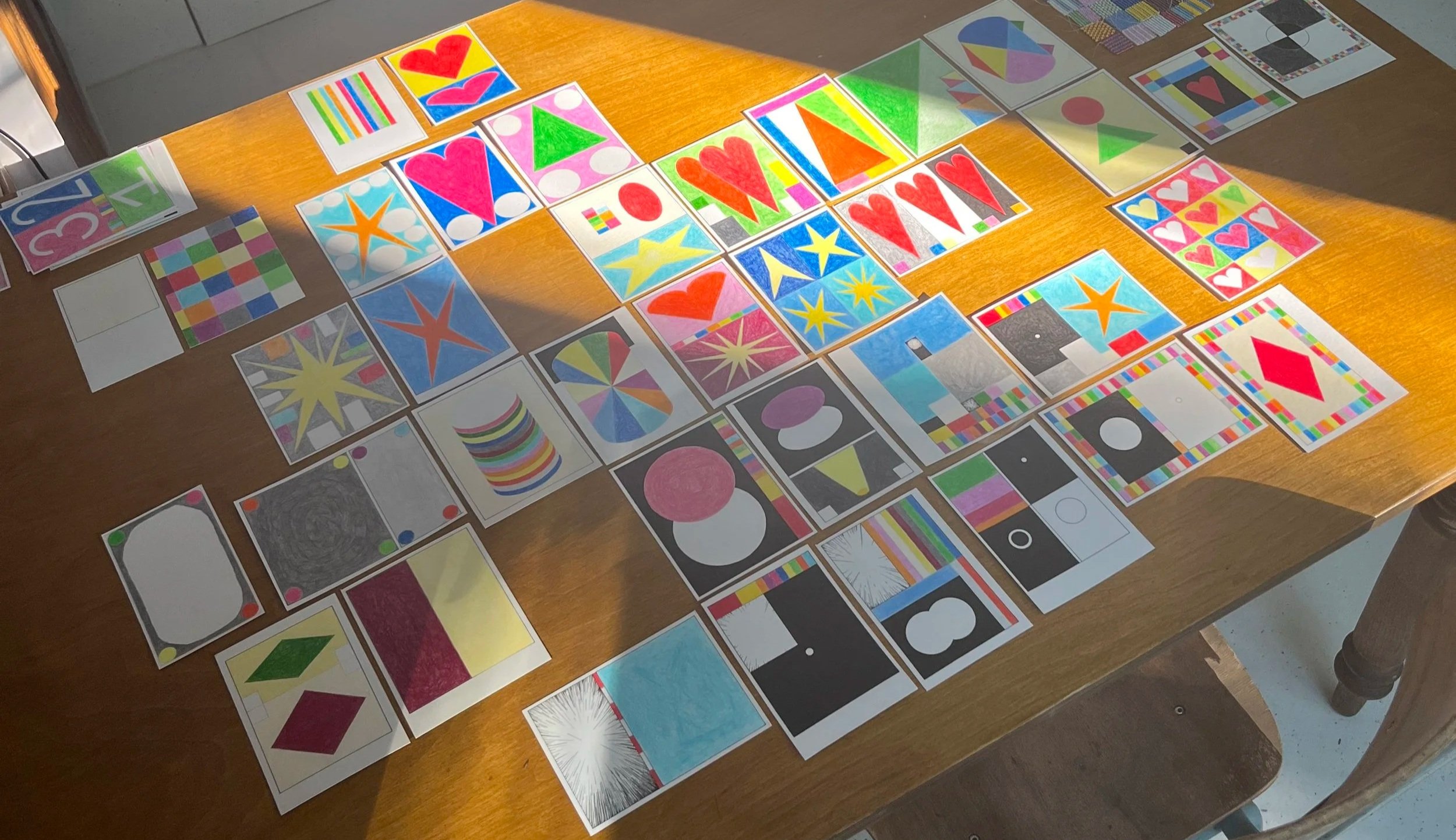
I would like to work on my series “I coloured it for you”. In this series I make drawings using oval and circular stencils and a protractor. When the outlined drawing is complete, I carefully color them in with coloured pencil. I like to see them as these children colouring pages that I make for myself. Sometimes I leave months in between drawing the lines and colouring them in. So that I can forget the drawing before I colour it in and almost forget that it was me who made the line-drawing.
Each drawing is constructed using a set of rules and steps I set for myself. I find it difficult to create something from nothing and these rules provide a structure where I can let my intuition flow. Because of the systematic and playful process, these drawings are a form of introspective order for me.
Though I’ve already created many pieces in this series over the past year, I feel like it’s just the beginning. The rules I set up for myself evolve as the series progresses, making the possibilities feel endless. Currently, the drawings feature simple shapes and symbols like stars and hearts, but what if I introduce more complex forms? Will the drawings retain their impact? Or, what if I focus more on the texture of the coloured pencils to shape the image itself? These questions, and many more, I would like to explore at the residency.
JOANNA COHN (UK): Multidisciplinary
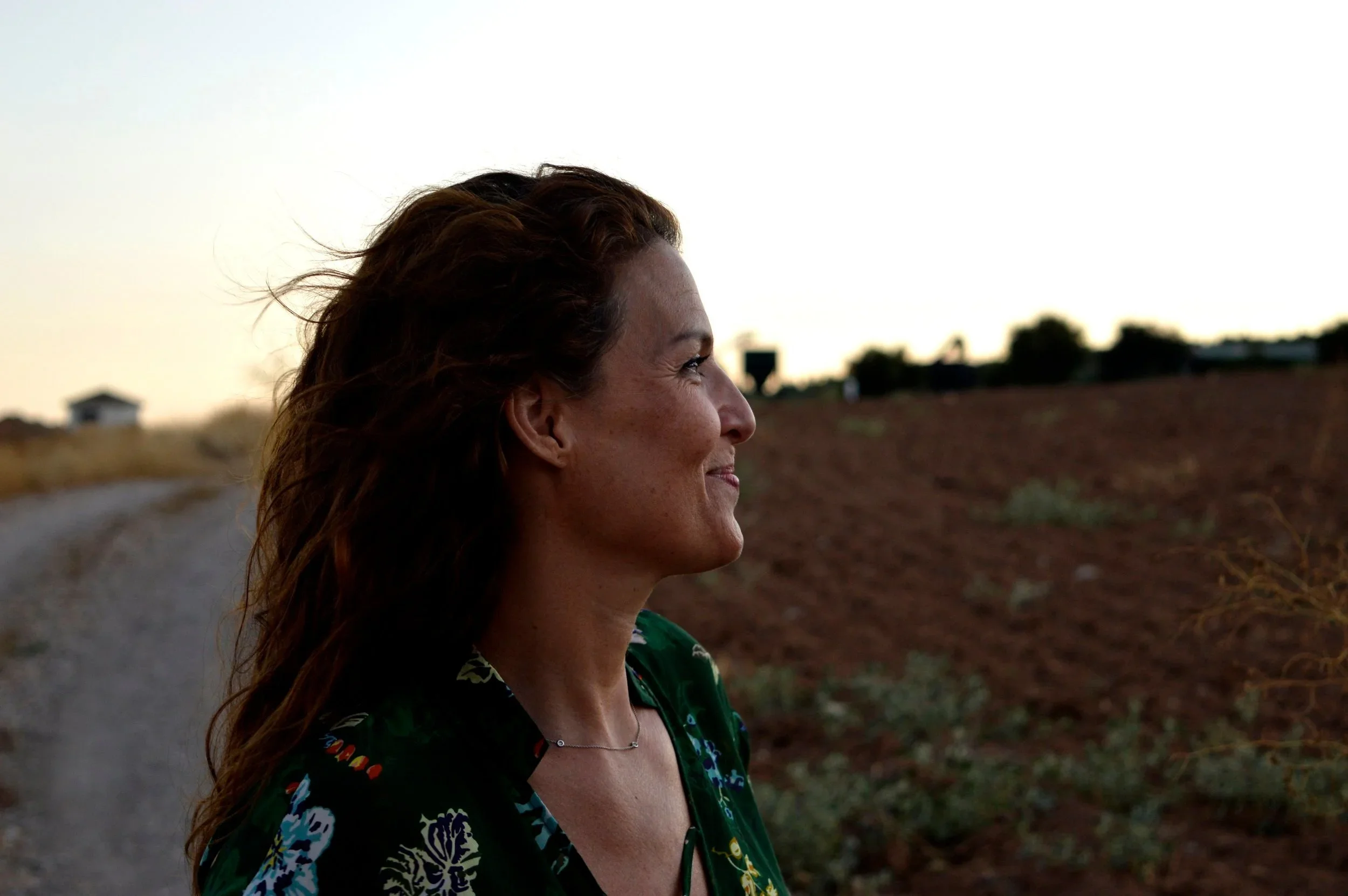
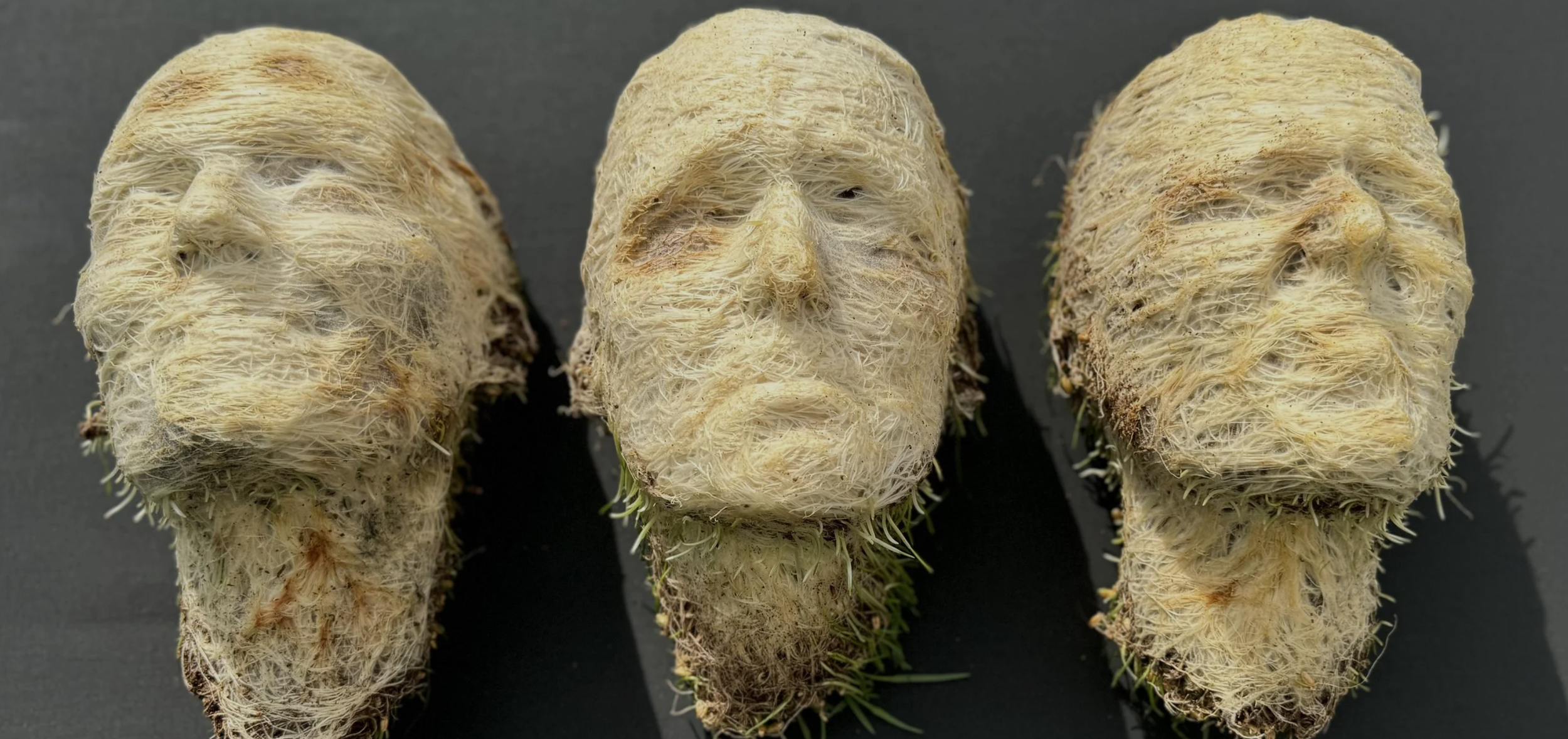
Joanna Cohn is a multidisciplinary artist working across print, painting and installation.
Jo recently won the Nasdaq Art Prize, The Landmark Art Prize, The Graduate Art Prize, Intaglio Printmakers Prize, GBS Fine Art Prize, Rosemary Simmons Lithography Award and her work was selected for the Clifford Chance Printmaking in London show, the V&A Illustration Awards, RCA Hyundai Awards for Excellence in Creativity and Sustainability and RA Summer Exhibition amongst other accolades.
She is the current recipient of the prestigious Tim and Belinda Mara Award at Hampstead School of Art 2025, and is visiting artist at Buckinghamshire New University. Her work is currently on display at The Russell Cotes Gallery, Bournemouth as a finalist for the Ruth Borchard Self Portrait Prize 2025, and at The New Arts Exchange in Nottingham as a selected artist in the 2025 Open.
Jo graduated from The RCA in 2024, where she was awarded an MA in Print supported by The Leverhulme Trust and studied Fine Art at Central Saint Martins where she graduated with Distinction in 2023, supported by The Equity Charitable Trust.
GODA MARIJA GASIUNAITE (LT): Research
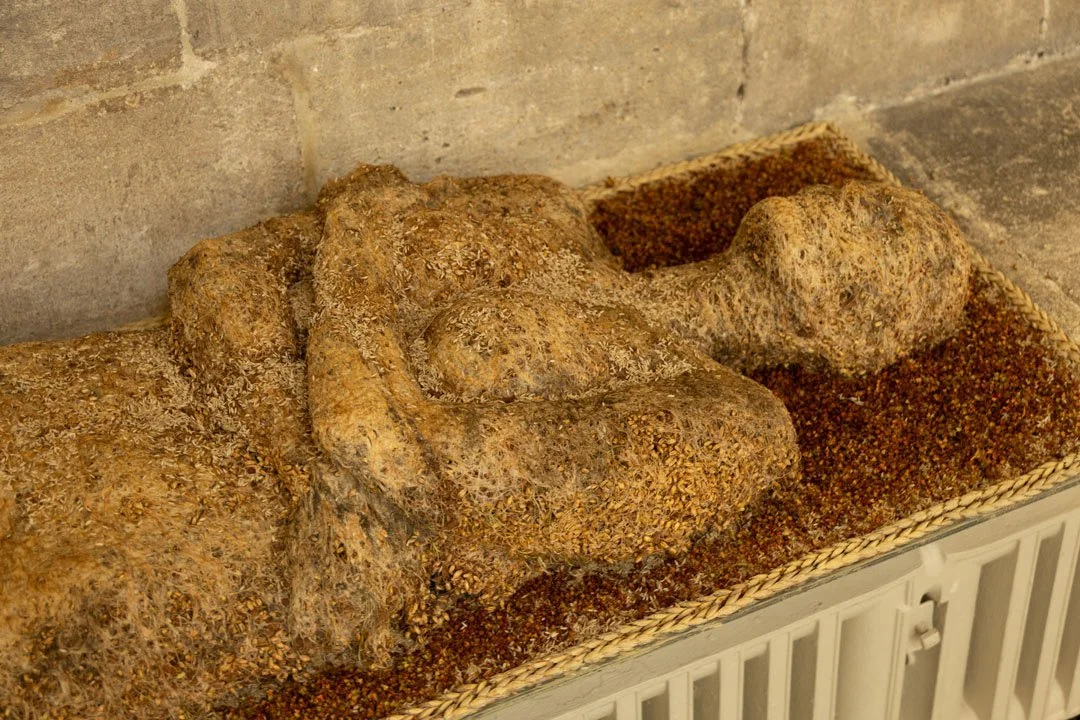
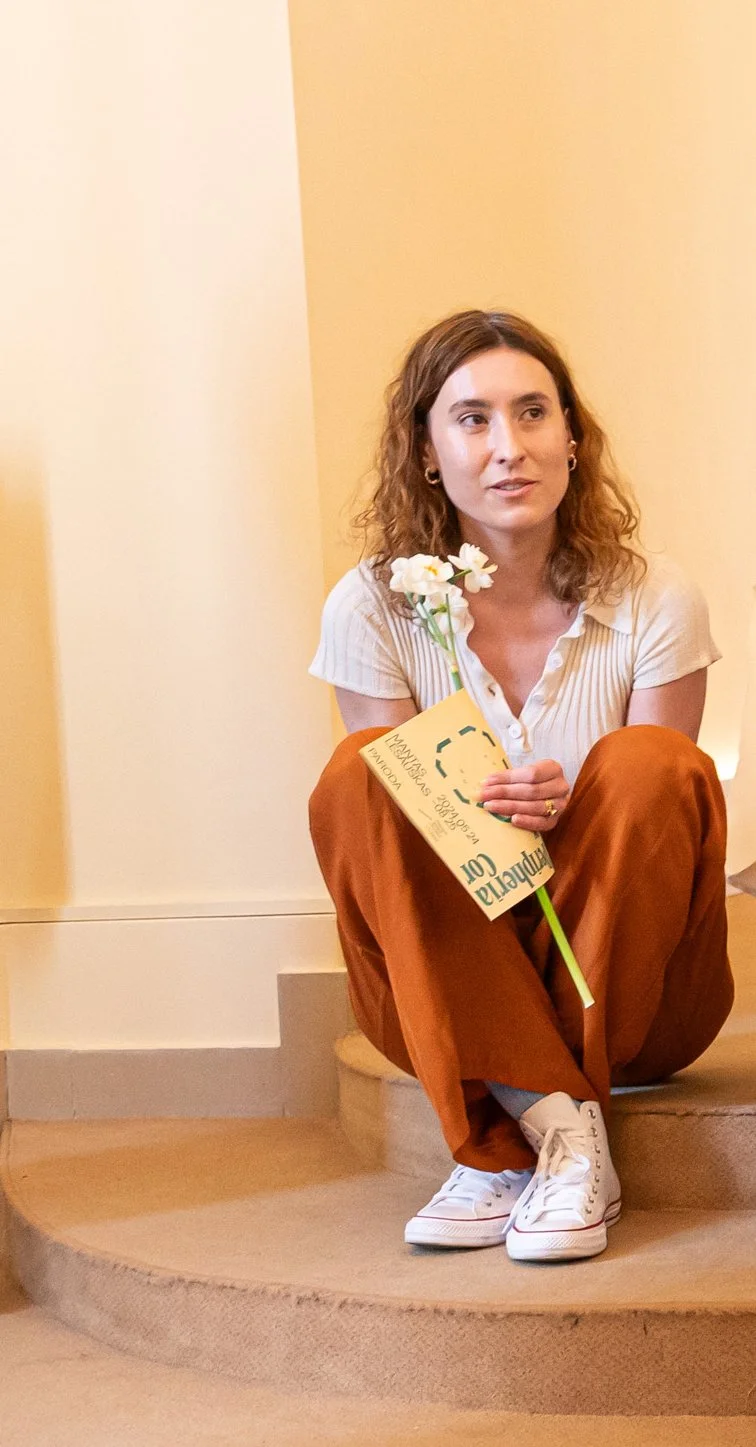
Goda Marija Gasiūnaitė is an artist and historian whose practice explores culinary traditions, gardening, and feminine histories. Through interdisciplinary research and creative work, she traces how everyday practices of care, nourishment, and cultivation shape cultural memory and alternative narratives of history. She holds bath a BA and an MA in Cultural History and Anthropology from Vilnius University.
Goda Marija Gasiūnaitė will carry out material and anthropological research on volcanic matter. Her practice as a designer and researcher often revolves around stone, memory, and nonhuman material agencies. In Lanzarote, she aims to work directly with volcanic ash, experimenting with geopolymer concretes and composites, while also engaging in sensorial ethnographic field walks to attune to the island’s geology. This process will include visiting local volcanic rock carvers, learning from traditional craft, and developing a series of objects and vessels that embody Lanzarote’s volcanic identity. Casting with local ash is, for her, a way of reactivating the island’s geology as designed matter — a contemporary “artificial stone” that parallels ancient traditions of volcanic pozzolana in Roman concrete. Alongside the material practice, she wants to situate this research in a broader cultural and ecological context. Food, gardens, and hospitality will form part of this exploration, understood not only as human culture but as more-than-human gatherings where geology, plants, and species meet. In this sense, she also wishes to revisit the legacy of César Manrique, whose work embodied a unique dialogue between architecture and volcanic landscapes. Finally, her research will be tied to a reflection on the Devil as a cultural figure. In Lithuanian folklore, the Devil is bound to stones and everyday life, often entangled with money and trickery. In Lanzarote, this resonates with volcanic fire and the island’s transformation under tourism and capitalist economies. Following Donna Haraway’s notion of the Capitalocene, she will explore how money and exploitation are today’s devils, and how volcanic matter might help her imagine alternatives beyond them. Through material experimentation, field research, and design-making, she hopes to contribute to the residency by opening a dialogue between geology, culture, and myth — and by making pieces that embody this entanglement.
MANTAS LESAUSKAS (LT): Design / Research
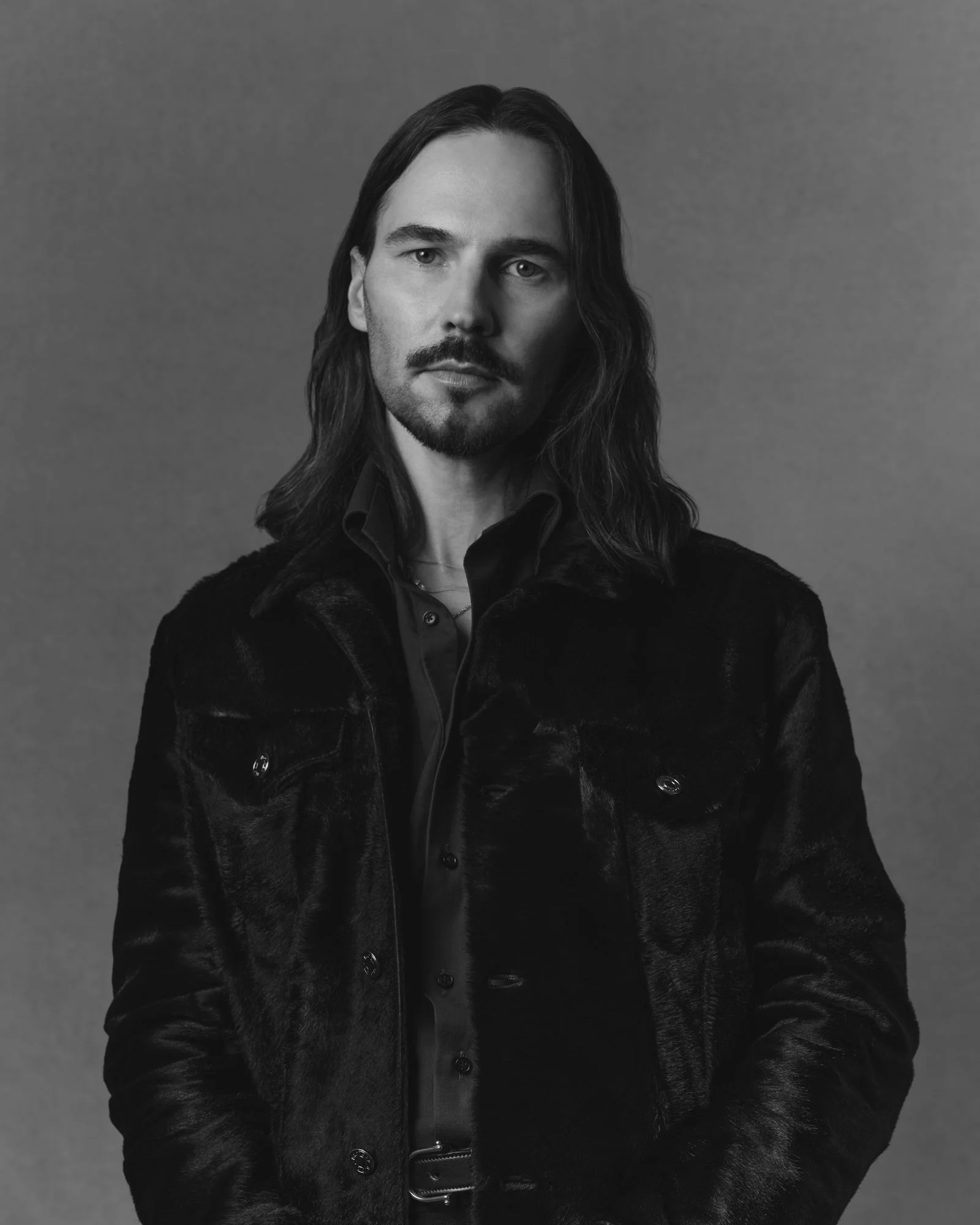
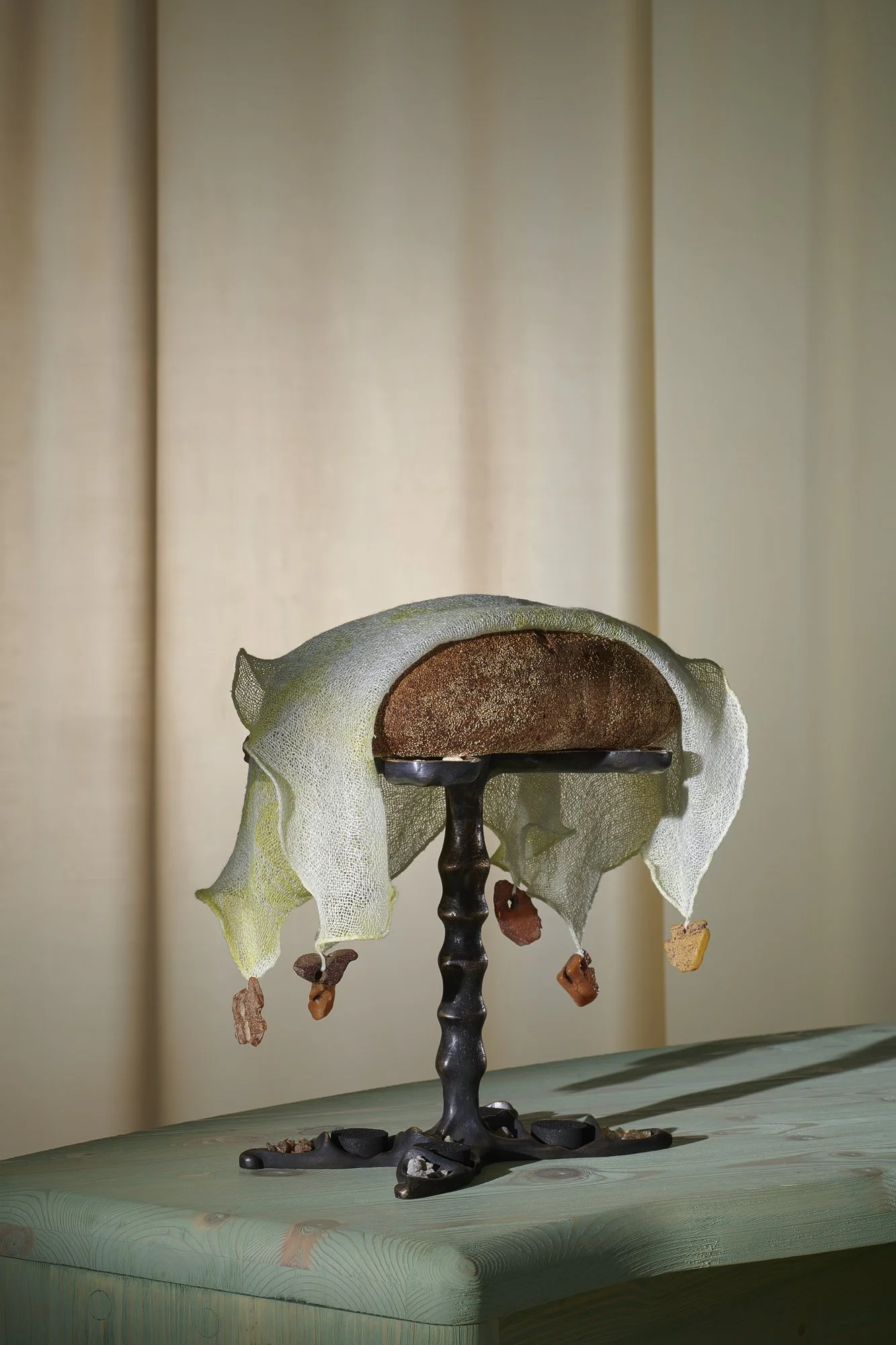
Mantas Lesauskas practice as a designer and researcher often revolves around stone, memory, and nonhuman material agencies. In Lanzarote, he aims to work directly with volcanic ash, experimenting with geopolymer concretes and composites, while also engaging in sensorial ethnographic field walks to attune to the island’s geology. This process will include visiting local volcanic rock carvers, learning from traditional craft, and developing a series of objects and vessels that embody Lanzarote’s volcanic identity. Casting with local ash is, for him, a way of reactivating the island’s geology as designed matter — a contemporary “artificial stone” that parallels ancient traditions of volcanic pozzolana in Roman concrete.
Alongside the material practice, he wants to situate this research in a broader cultural and ecological context. Food, gardens, and hospitality will form part of this exploration, understood not only as human culture but as more-than-human gatherings where geology, plants, and species meet.
In this sense, he also wishes to revisit the legacy of César Manrique, whose work embodied a unique dialogue between architecture and volcanic landscapes. Finally, his research will be tied to a reflection on the Devil as a cultural figure. In Lithuanian folklore, the Devil is bound to stones and everyday life, often entangled with money and trickery. In Lanzarote, this resonates with volcanic fire and the island’s transformation under tourism and capitalist economies. Following Donna Haraway’s notion of the Capitalocene, he will explore how money and exploitation are today’s devils, and how volcanic matter might help him imagine alternatives beyond them. Through material experimentation, field research, and design-making, he hopes to contribute to the residency by opening a dialogue between geology, culture, and myth — and by making pieces that embody this entanglement.